“Enter his gates with thanksgiving and his courts with praise; give thanks to him and praise his name. For the LORD is good and his love endures forever; his faithfulness continues through all generations.”—Psalm 100:5
The Sacrifice of Thanksgiving:
A Table Set in the Wilderness
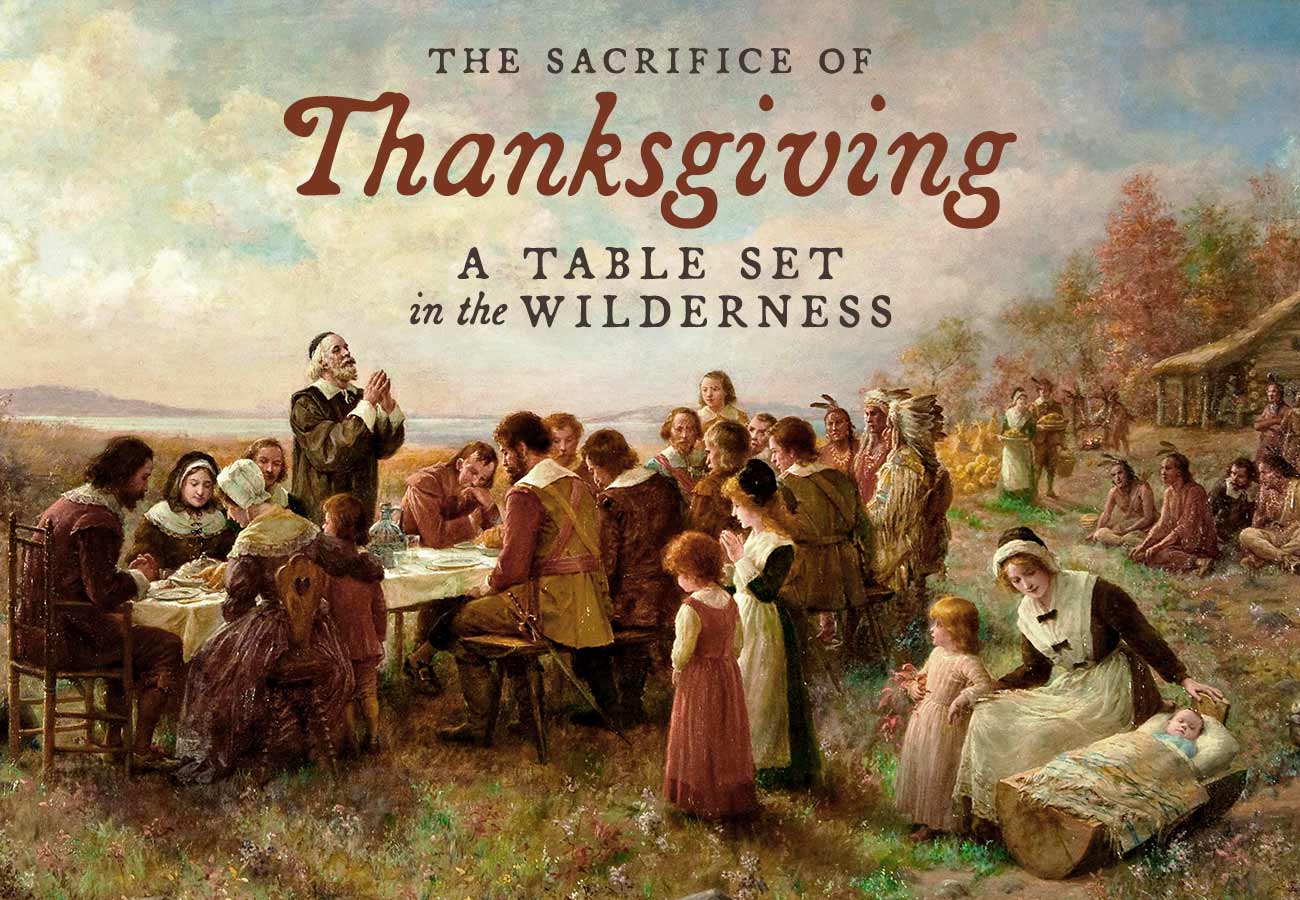
 f the one hundred and two intrepid forbearers who sailed on the Mayflower, only fifty-three survived the first brutal winter. By spring, the living could stand and count seven times more graves than the crude shelters they called home. Yet in November 1621, Governor William Bradford proclaimed a harvest feast—not out of abundance, but as a call to worship the God of deliverance. f the one hundred and two intrepid forbearers who sailed on the Mayflower, only fifty-three survived the first brutal winter. By spring, the living could stand and count seven times more graves than the crude shelters they called home. Yet in November 1621, Governor William Bradford proclaimed a harvest feast—not out of abundance, but as a call to worship the God of deliverance.
Bradford wrote in his journal:
“They began now to gather in the small harvest they had, and to fit up their houses...being all well recovered in health and strength...our governor sent four men on fowling, that so we might after a special manner rejoice together. And although it be not always so plentiful as it was at this time with us, yet by the goodness of God, we are so far from want that we often wish you partakers of our plenty.... Thus they found the Lord to be with them in all their ways...and to bless their outgoings and incomings, for which let His holy name have the praise forever.”
—Of Plymouth Plantation, Book 2, Chapter 11
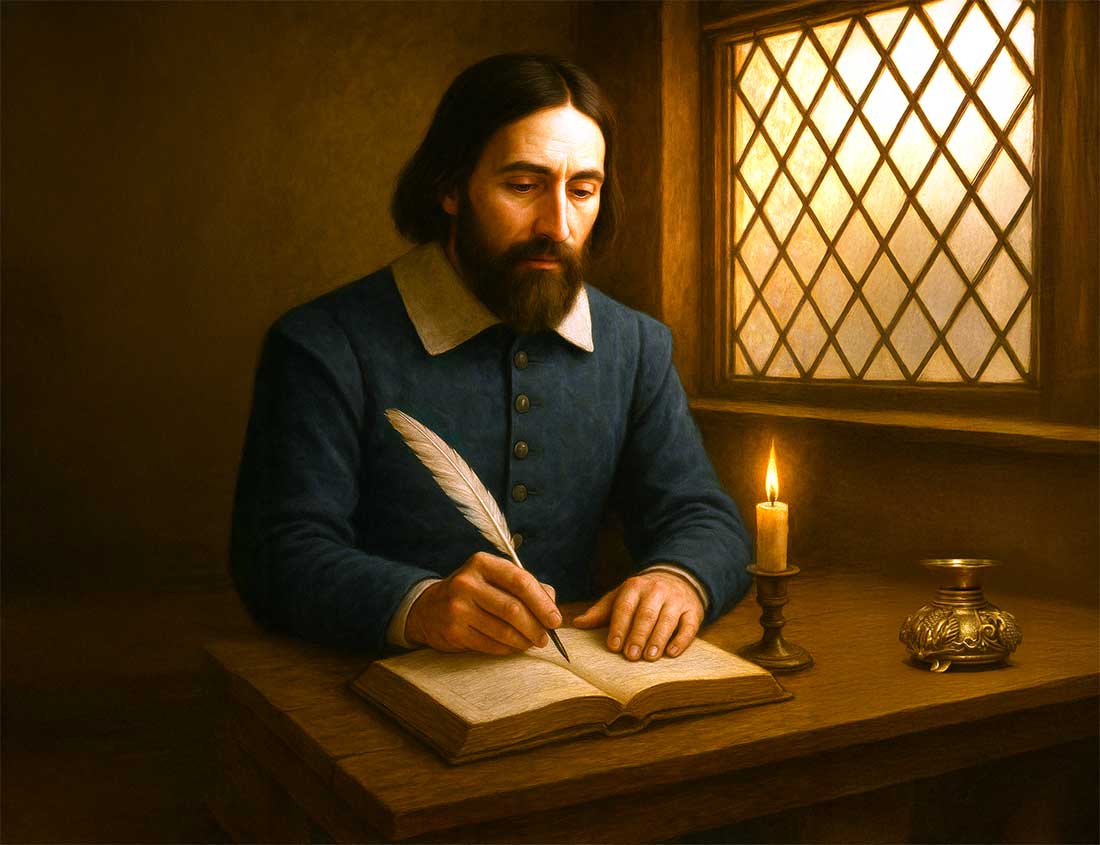
William Bradford (1590-1657), second governor of Plymouth; his journals have been published as Of Plymouth Plantation and remain the most detailed records of early life in Plymouth, as well as the years and events leading to the Pilgrims’ settlement there
That first Thanksgiving was not only a three-day event wherein the Pilgrims fortified their communion with each other, but also an outreach to the ninety Wampanoag guests who attended. It was a Christian act of covenant gratitude—a foretaste of heaven’s banquet amid earth’s sorrow. The Pilgrims sang Psalm 100 from the Ainsworth Psalter, knelt in prayer, feasted on the fruits of their labor and partook in sporting competitions. Their losses were not forgotten, but neither was their faith. What witness do we bear to a hopeless world if we, heirs to an everlasting joy, are cast down in this present time? The Pilgrims believed they would indeed see the goodness of the Lord in the land of the living, and such is the sturdy virtue upon which this nation was grounded.
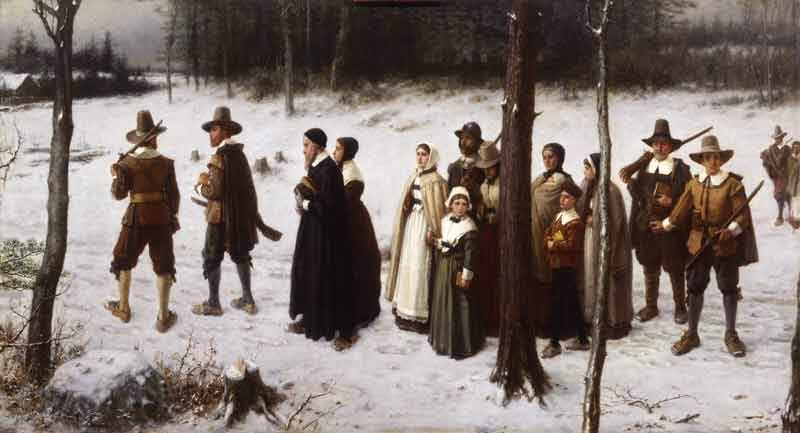
The Pilgrims’ walking to church in the snow, with the men before and behind keeping guard over the women and children
Worship, it could be said, is the language of gratitude. In our commercialized, flippant, distractible culture, it’s no wonder Thanksgiving is a holiday being vigorously sidelined, squeezed out of being consequential, or else losing all potency in an atmosphere where entertainment dispels any chance for reflection. Life can be ever so busy, so sorrowful and so loud—it takes discipline to note the mercies, the victories, the abundant grace that faithfully attends our lives by the merit of God’s unfailing love for us. In the words of the Minister John Flavel, “He who notes providences will have providences to note.”
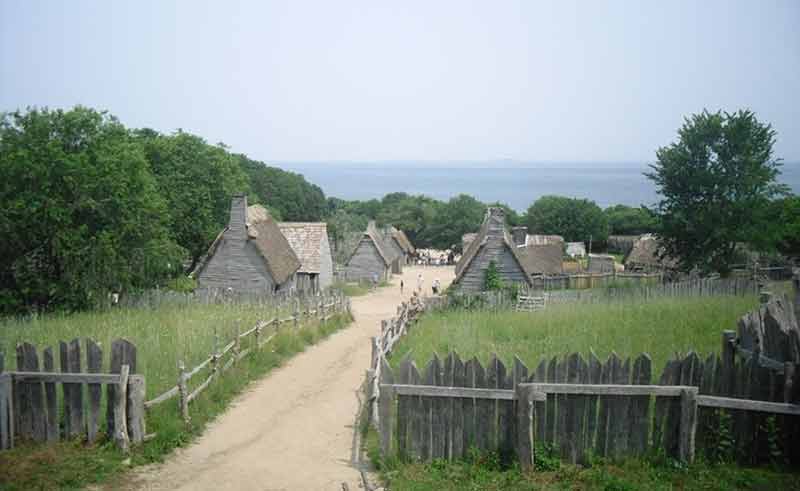
Plimoth Plantation today, recreated and operating as a living history park—one of the stops on Landmark Events’ Plymouth Tour
Let us, with the psalmist, commit to “offer to You the sacrifice of thanksgiving and call on the name of the Lord” this Thanksgiving. The fight looms large, the personal cost is often grueling, but the race is not to the swift, the battle is not to the strong but instead we will rely on the strong arm of our Mighty God. The table is set, come Lord Jesus.
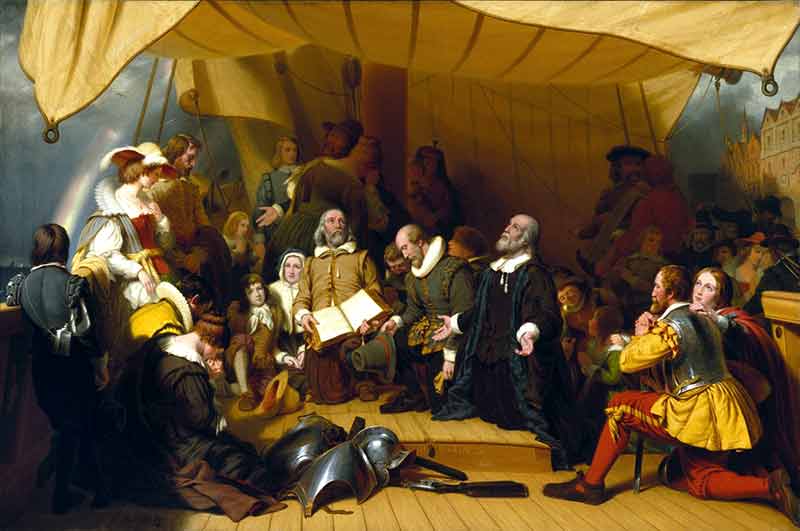
Embarkation of the Pilgrims by Robert Walter Weir

Image Credits:
1 First Thanksgiving in Plymouth (wikipedia.org)
2 William Bradford (AI-generated image)
3 Pilgrims Going to Church (wikipedia.org)
4 Plimoth Plantation (wikipedia.org)
5 Embarkation of the Pilgrims (wikipedia.org)
|