Edward Gibbon Publishes His
Decline and Fall of the Roman Empire,
February 17, 1776
 n describing those kinds of tested works of scholarship that have become cemented in the canon of Western literature, one historian wrote that they are “the true art of memory.” If true, this would mean the pursuit of documenting that which has occurred in times past is the craft of documenting not only fact, but also humanity’s perception of it. n describing those kinds of tested works of scholarship that have become cemented in the canon of Western literature, one historian wrote that they are “the true art of memory.” If true, this would mean the pursuit of documenting that which has occurred in times past is the craft of documenting not only fact, but also humanity’s perception of it.
Bias, as a result, is an almost inescapable aspect of such documentation. An aspect that has only recently been demonized by the emergence of a modern “School of Resentment”, to borrow a phrase from literary critic Harold Bloom, who in their derision of the indelible Christian output of the West now demands that the western canon itself be entirely done away with. That is, the collective, witnessed, agreed-upon record of Western culture, comprised in histories, plays and fiction, should no longer be debated, lauded or remembered by future generations.
Concessions to this rampage of revenge by Marxist ideologues has already been implemented in almost every significant bastion of learning in the Western hemisphere. As disastrous a goal as forgetfulness and ingratitude are, there is something even more crushing beneath their agenda: the intentional desire to thwart any aspiration to repeat what our ancestors have proven possible.
We as Christians are commanded by God to do the opposite; our goal is to remember and inspire. On this day we bring you a brief tribute to one man’s incredible work of scholarship that affected the course of American government, and provided the gold standard for Western historiography for ages to come.
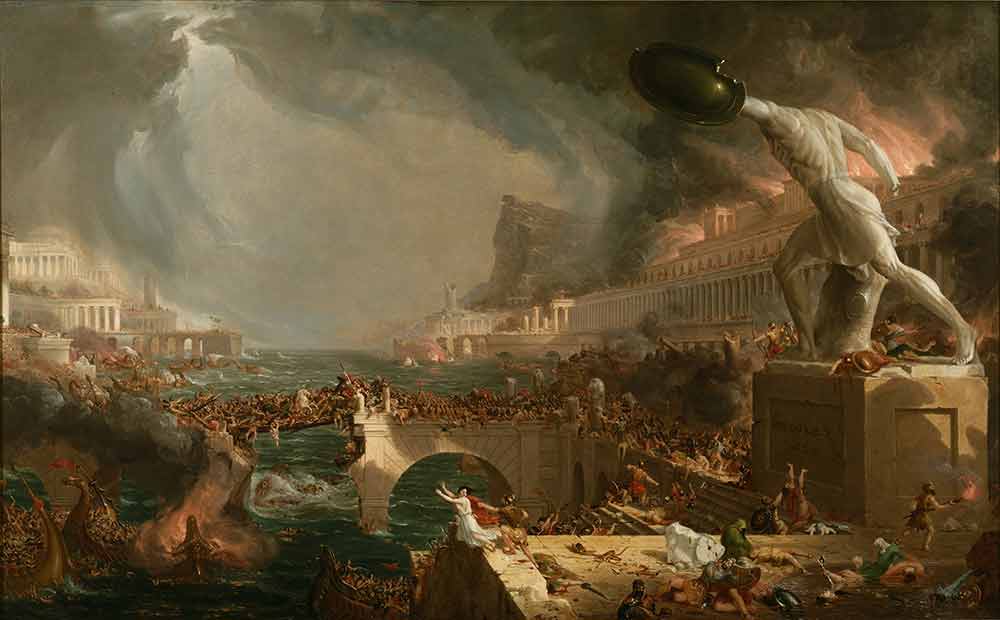
The Course of Empire: Destruction, by artist Thomas Cole (1801-1848)
Poetically it was in Rome, the cradle of Western Civilization herself, that the discipline of what is now called the biography was first refined. And it was under the Romans’ long-enduring empire that many men became literate enough to engage with written works regarding their origins. Not least of these from the Roman period are those glorious epistles and gospels that now comprise our New Testament, and give not only history but identity for all who are in Christ.
In February of 1776, English parliamentarian and historian, Edward Gibbon, published a seminal work of his own: The Decline and Fall of the Roman Empire. This grand, comprehensive work, which would in time include six volumes, has been frequently described as the greatest historical work ever written. It covers the time period from the reign of Trajan in AD 98 to the fall of Constantinople in AD 1453, and as the title suggests, Gibbon seeks not only to document but also uncover what are the elements that brought down one of the greatest powers the world has ever seen.
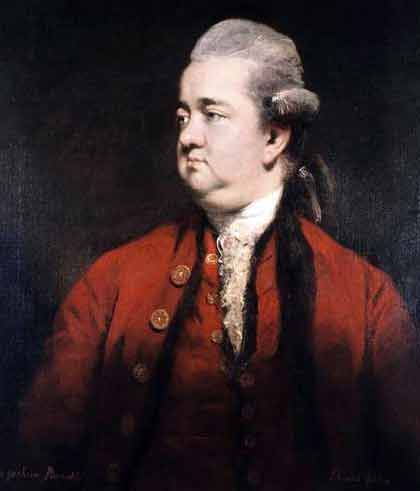
Edward Emily Gibbon (1737-1794)
Controversially, one such element that Gibbon, a strong religious skeptic and Enlightenment devotee, attributed this decline to was the rise of Christianity. What we would consider an astounding providence in the utilization of Roman might for God’s glory—such as the infrastructure of Roman roads used by intrepid missionaries to carry the Gospel to the ends of the earth and the Colosseum’s gruesome displays that watered the seed of the church with the blood of her martyrs—Gibbon would bemoan as a softening of the Roman ethos. One where the state was sublime and all-powerful, and loyalty was not divided between the kingdom of earth and the kingdom of heaven.
But while Gibbon partly blames Christianity’s “patience and pusillanimity” for accelerating Rome’s downfall, he also credits it for softening the fallout. It was Christians who preserved literacy after Rome’s fall, it was Christians who promoted what would now be considered church-run social work, and in many instances they alone preserved the rights and dignity of those who did not share their creed. Such are the paradoxes of Gibbon’s interpretation.
What may interest a modern reader in Gibbon’s work is certainly his genius at covering so grand a topic, his extensive trove of footnotes, and the edifying enlargement of one’s view of a still-looming ancient civilization. But perhaps, more than all that on the 250th anniversary of its debut, is the providential coinciding of its publication with the birth of America’s new republic.
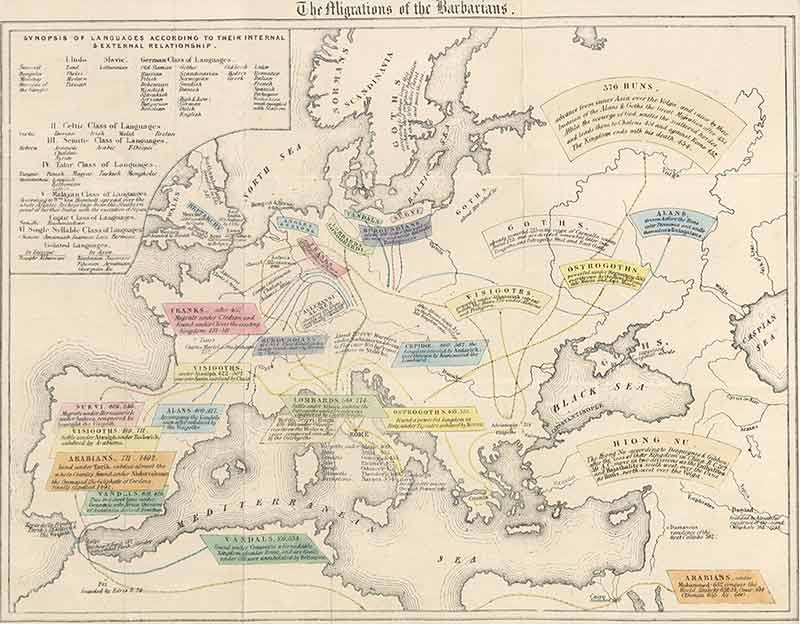
A map entitled “The Migrations of the Barbarians”, taken from Volume II of Gibbon’s Decline and Fall of the Roman Empire
At the two Continental Congresses held in Philadelphia, the examples of Roman and Greek political theory, structure and outcome were discussed on a daily basis. As soon as independence became a strong probability, the men at the helm of America’s destiny had to consider what sort of government should replace that of King and Parliament.
These discussions would, of course, be reignited and bear their remarkable fruit at the Constitutional Convention, after the War for Independence had been victoriously resolved. But in that decade-long period between the Declaration of Independence and the adoption of the Constitution of the United States, the men of America fought, prayed, wrote and devoured Edward Gibbon’s Decline and Fall of the Roman Empire among other works.
John Adams read it while Ambassador to France, as his good friend Thomas Jefferson considered it monumental and collected three copies of the first volume in his personal library; even late in life these elder statesmen enjoyed discussing its merits in their correspondence. The theological father of the Constitution and President of Princeton College, John Witherspoon, explicitly recommended Gibbon’s work in the essential reading list he was tasked with compiling for the “use of the United States in Congress Assembled.” Unsurprisingly then, James Madison cited Gibbon’s analysis of Roman decline in his preparatory notes for the Constitutional Convention, and drew upon them in later writings such as “Notes on Ancient and Modern Confederacies” and in Federalist Papers No. 18 and No. 63 on factionalism and decay.
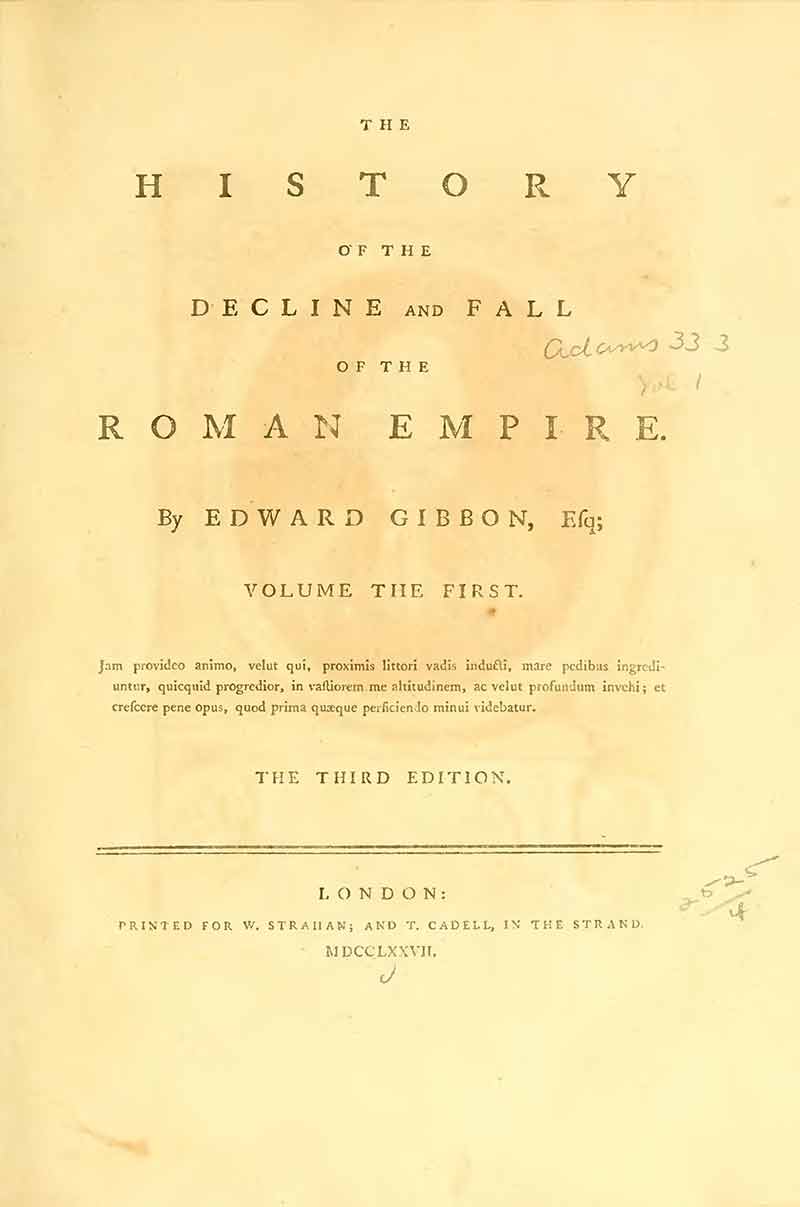
Title page from John Adams’s personal copy of Gibbon’s Decline and Fall of the Roman Empire, Vol I
|
|
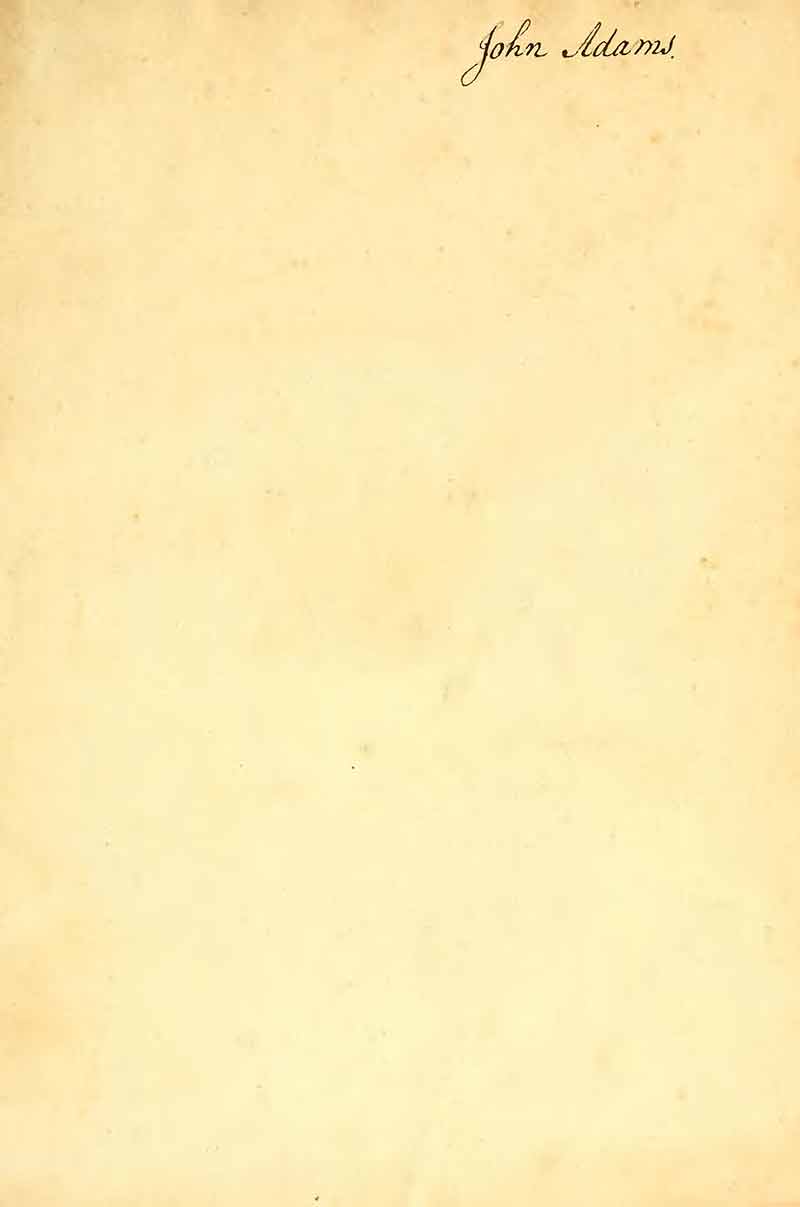
John Adams’s signature inside his personal copy of Gibbon’s Decline and Fall of the Roman Empire, Vol I
|
In part by heeding Gibbon’s warnings and parallels, our Christian founders and their brave cohorts instituted what became our governing system and its hallowed amendments. In this system they imagined a new, untried Christian republic that was, in the words of John Adams, “. . . made only for a moral and religious People. It is wholly inadequate to the government of any other.”

Image Credits:
1 The Course of Empire: Destruction (wikipedia.org)
2 Edward Gibbon (wikipedia.org)
3 The Migrations of the Barbarians (wikipedia.org)
4 Title Page (wikipedia.org)
5 John Adams’s Signature (wikipedia.org)
|