Martin Luther on Peace and Truth
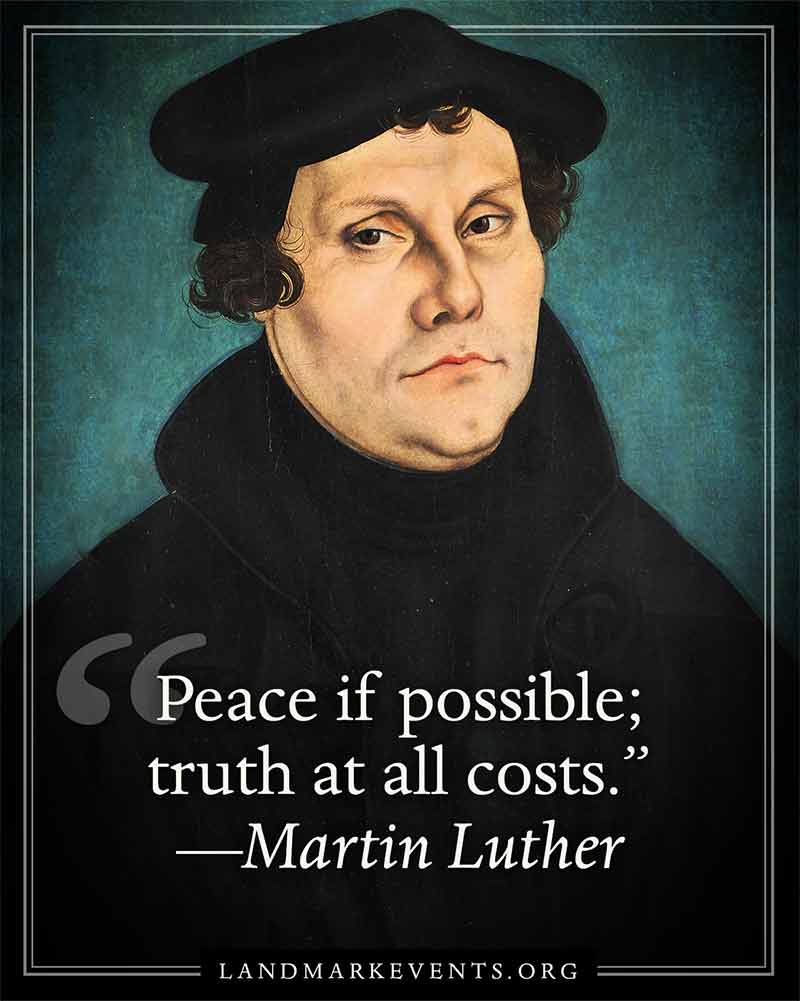
“Peace if possible; truth at all costs.” —Martin Luther


“Peace if possible; truth at all costs.” —Martin Luther
“Then the earth shook and quaked;
And the foundations of the mountains were trembling
And were shaken, because He was angry.”
—Psalm 18:7
 ome historians, theologians and insurance companies of the past attributed “natural disasters” to God’s control over His creation, “Acts of God,” but denied Him any role in the supposed life of free-will autonomous man. Theologians tend to speculate that God uses floods, volcanoes, earthquakes, fires, and hurricanes to prune the human race for assumed transgressions against the Creator. Those who claim to know exactly what God’s ultimate purposes for particular “natural disasters” are, exhibit their own speculative ignorance. See the book of Job. Those who think God has no role in controlling the lives of men, see the 66 canonical books of the Bible.
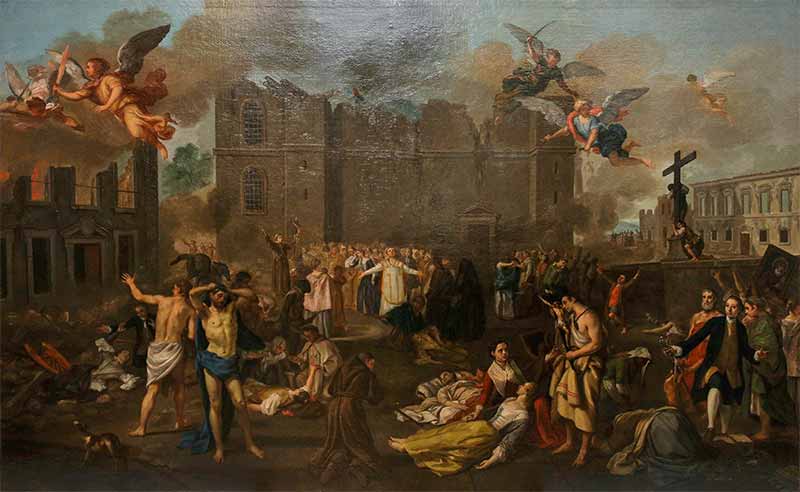
An artist’s allegorical representation of the aftermath of the earthquake—angels of judgment bearing swords are seen flying about, as well as street preachers, priests, and people clinging to crosses, all signifying the perception of God’s judgment through the earthquake
On All Saints’ Day in 1755, an earthquake estimated at up to 9.2 magnitude struck Lisbon, Portugal and northwest Africa about 9:40 in the morning. It lasted about five minutes, opened five-foot-wide fissures in the ground, and caused numerous fires. The water in the bay rushed out to sea and thousands fled to the open docks for safety. Forty minutes later, a tsunami came roaring back landward, engulfing the harbor and all its ships and the downtown business center, as well as rushing up the Tagus River.
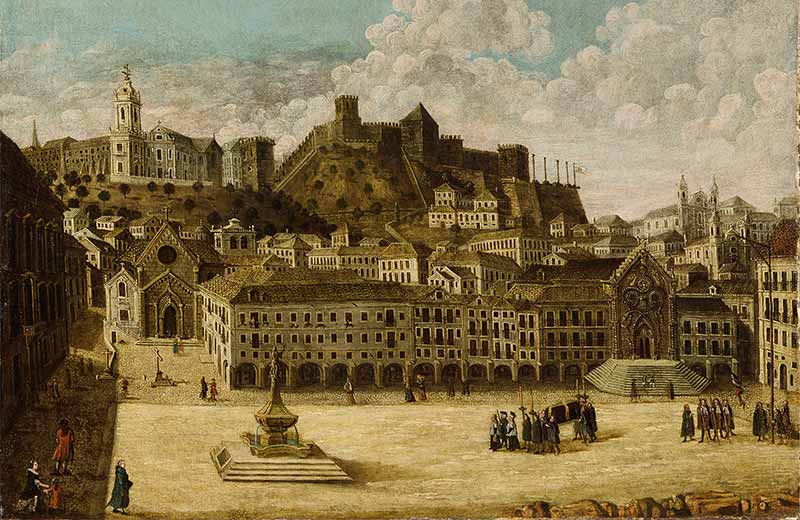
The Rossio Square (facing All Saints’ Royal Hospital, center) and St. George Castle, prior to the 1755 Lisbon earthquake
Thousands who had not been killed by the estimated 9,000 buildings that fell down were drowned by the sea or burned up by the fires started by thousands of upset candles in homes and churches. The conflagration created firestorms rarely seen before in history. The shock-wave destroyed villages along the coast and brought down homes and even castles, previously thought impregnable. Towns and villages of the Azores, including Mediera, were swamped up to five hundred feet inland. The shockwave and tsunamis were felt as far away as Finland and the Caribbean islands. In recent years, references to the effects of the earthquake have been discovered in the archives of Brazil.
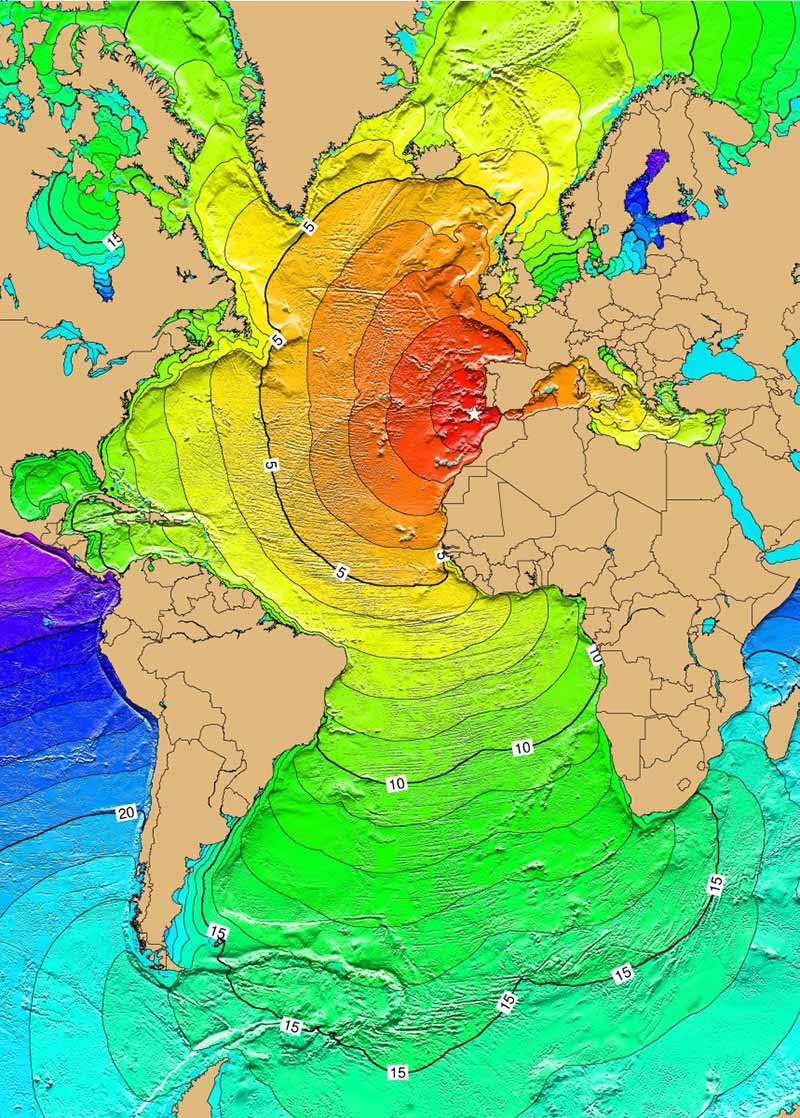
A map showing the point of the quake (marked with a star) and the shockwaves across the world
An animation showing the initial quake, as well as tsunamis and the effects around the world for 24 hours afterwards
Of Lisbon’s population of about 200,000, estimates range from 30-40,000 dead and perhaps as many as 60,000. Another 10,000 died in North Africa. Famous palaces, churches, and libraries were swept away, along with hundreds of priceless art works by painters such as Titian, Reubens, and Correggio. Among the lost works in the Royal library and a private library of 18,000 books were the journals of Vasco de Gama. Hundreds were burned to death in the city’s largest hospital. Few buildings remained undamaged in some way.
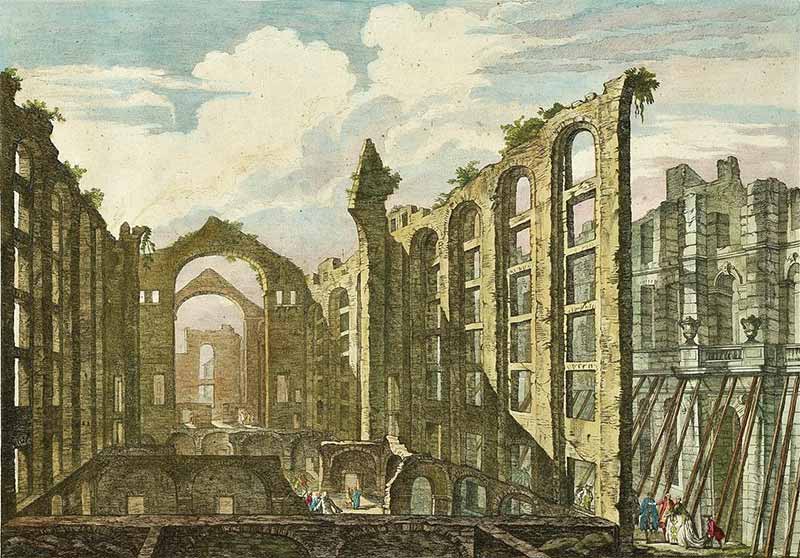
The Ópera do Tejo or Real Casa da Ópera (Royal Opera House) was a luxurious opera house in Lisbon, Portugal. It was inaugurated on March 31, 1755, and destroyed by the 1755 Lisbon earthquake on November 1 of the same year.
Providentially the royal family and the court of King Joseph I, after attending morning mass on All Saints’ Day, acquiesced to the pleas of one of the princesses to celebrate the holiday away from the city. Afterward, the trauma of the event caused the King to suffer from a debilitating claustrophobia for the next twenty-two years. He constructed a Royal tent camp instead of rebuilding the palace, for fear of living indoors ever again. The rescue efforts went into high gear immediately as the firemen attacked the flames, and the injured were brought to safety where medical teams addressed their wounds. They deployed the army to construct gallows in several places, to hang looters. Thirty of them ended their light-fingered earthly sojourns on the gibbets.
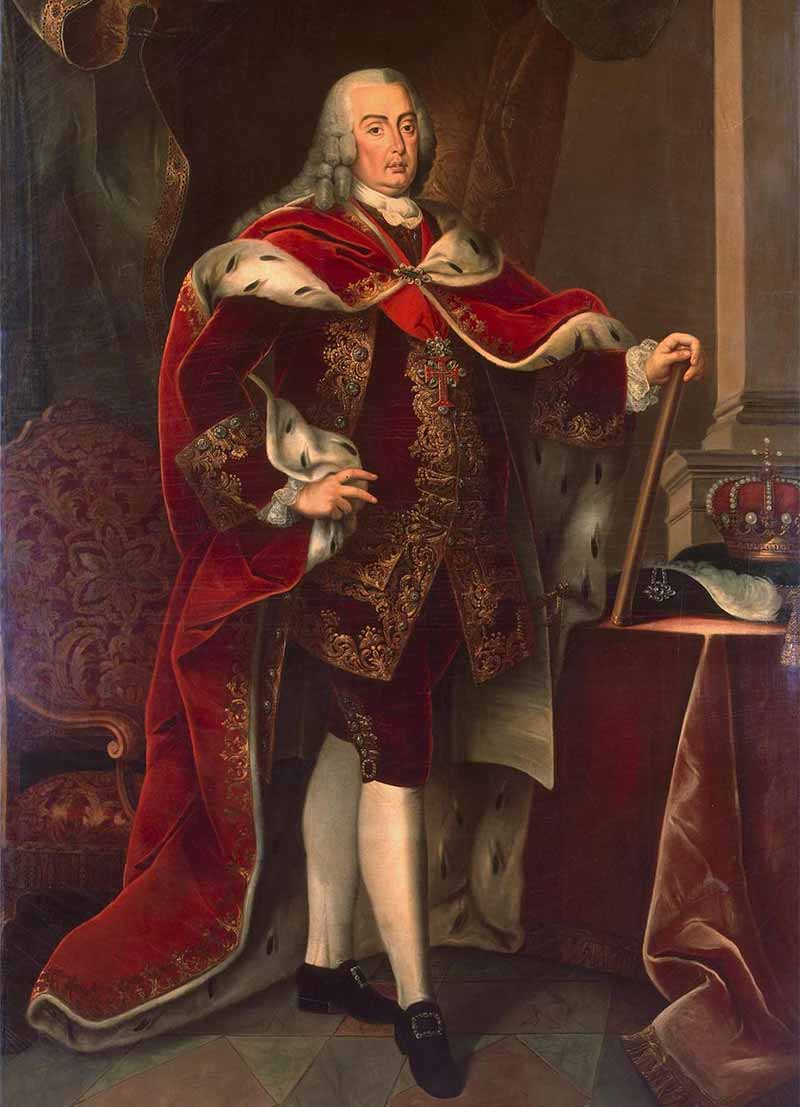
King Joseph I of Portugal (1714-1777)
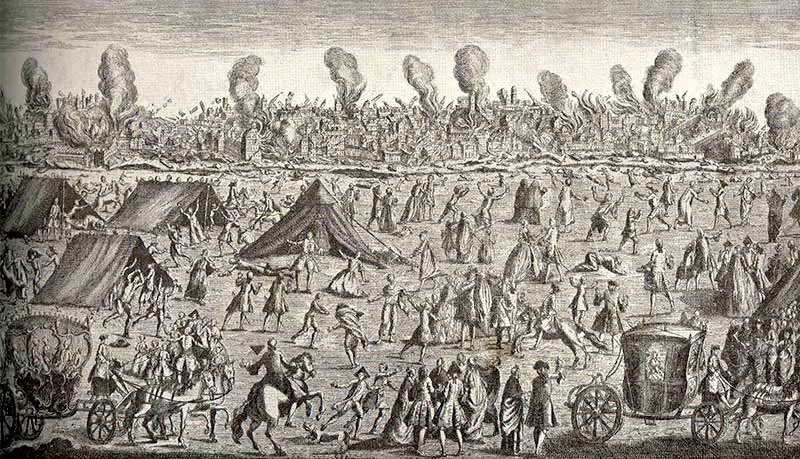
An engraving showing the chaotic tent camp in the foreground, and the ruins of Lisbon burning in the background
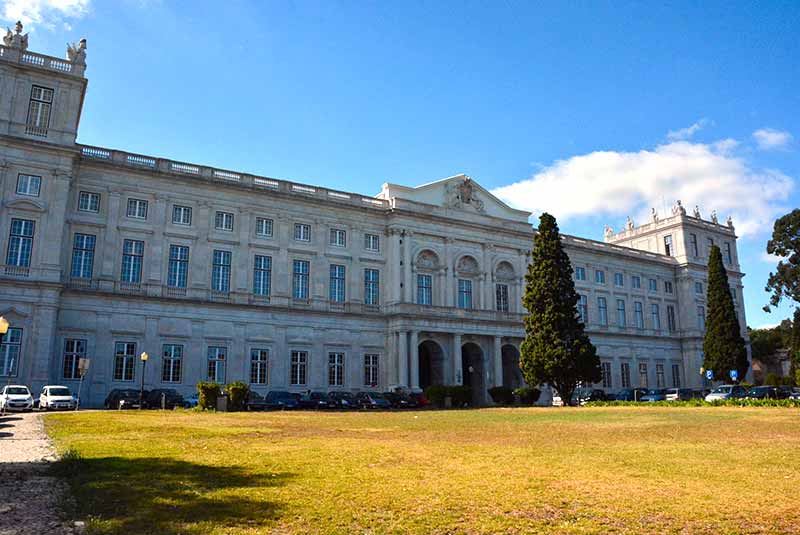
The Palácio da Ajuda, Lisbon, Portugal, built on the site of the former tent city
The troops stopped able-bodied men from fleeing and forced them to work in collecting the bodies and reconstructing living quarters. Many of the dead were loaded on barges and buried at sea, the town authorities ignoring the protests of the Catholic clergy. It took a year to clear all the rubble, and rebuilding the city took several years. Engineers developed ways to build “seismically”-resistant safer structures. The results of the Great Lisbon Earthquake affected all of Europe—and some would argue changed history—in important ways.
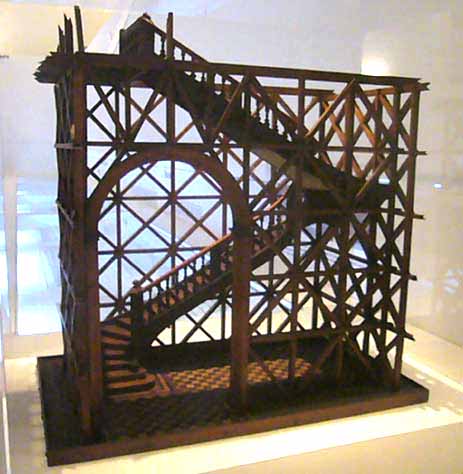
Model of an earthquake-resistant building frame developed for the reconstruction of Lisbon’s downtown after the 1755 earthquake
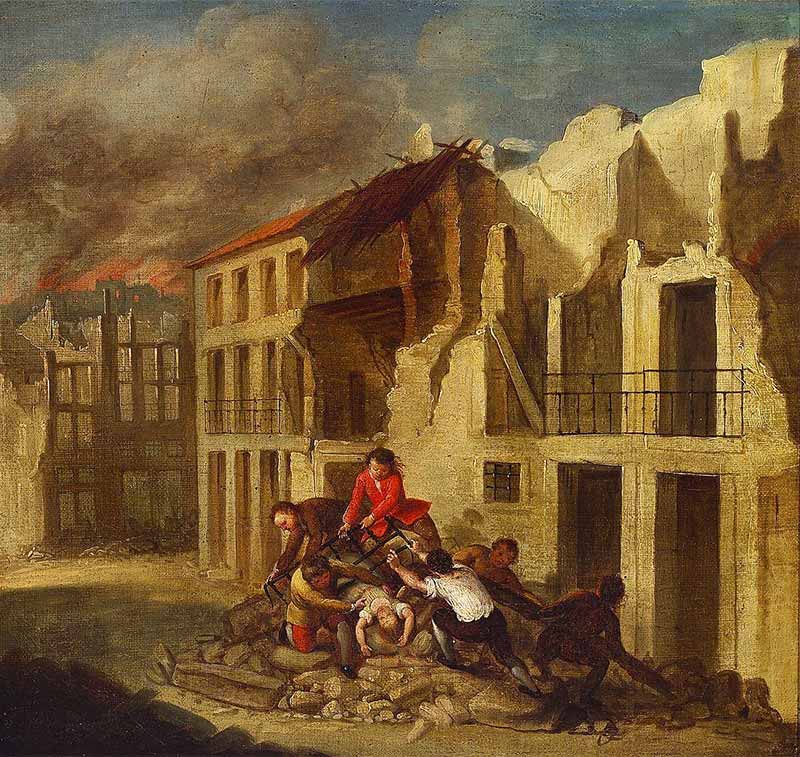
A three-year-old infant being rescued from the rubble of the Lisbon earthquake
As in every natural disaster, everyone sought answers to why such tragedy was visited upon them. The people of a particular religious tradition, in this case overwhelmingly Roman Catholic Portugal, were no different. The Portuguese people saw the disaster as God’s judgement, and the Protestants of Europe were in full agreement, arguing that the backward, superstitious Catholics brought it on themselves. Priests called for repentance and submission to the will of God, while “European Enlightenment” philosophers such as Voltaire and Rousseau weighed in, the first using the disaster to question the benevolence of God, and the latter using the example as an argument against living in cities, and the need to seek a more naturalistic way of life.
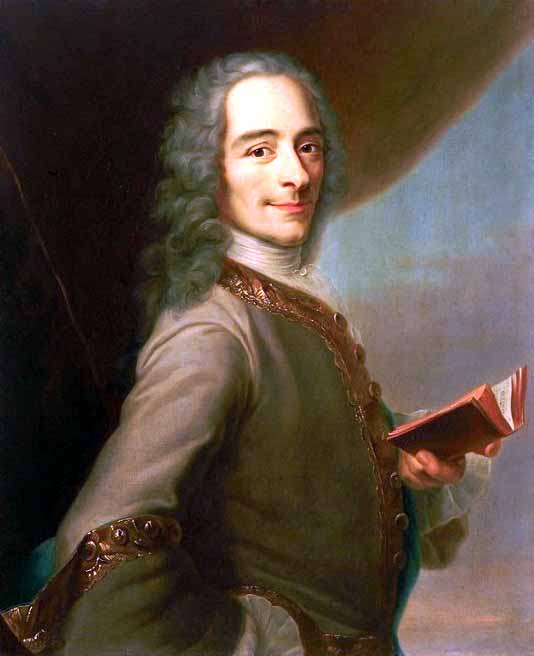
François-Marie Arouet, more commonly known by his nom de plume, Voltaire (1694-1778)
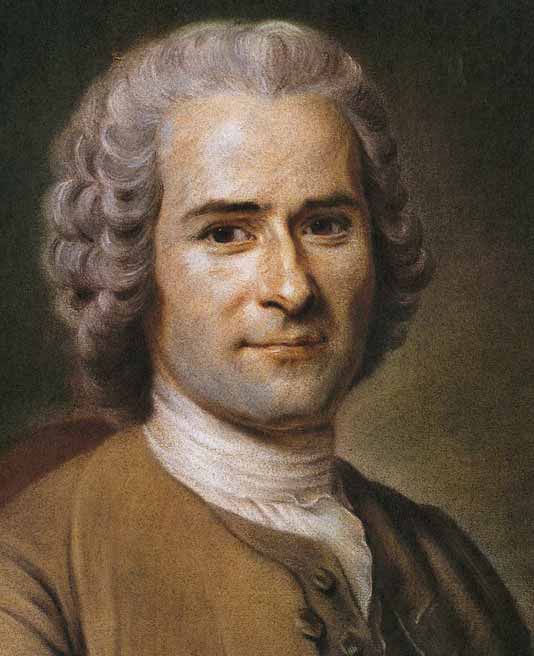
Jean-Jacques Rousseau (1712-1778)
The Minister of State, Sebastião José de Carvalho e Melo—known to history as the Marquis of Pombal—rose to the occasion and took control of Lisbon, with the approval of the king. He, in fact, ruled the country for the next twenty-two years, with the king sitting in his tent, a mere figurehead. Pombal’s two decades of authority brought “innovative reforms” in rebuilding the society, and advancing scientific inquiry into the causes of the damage and the behavior of tsunamis, as he crafted Europe’s “first modern city.” The church was not happy with the controversial Pombal, for he ignored what he considered their questionable explanations and resistance to his sometimes high-handed recovery orders.
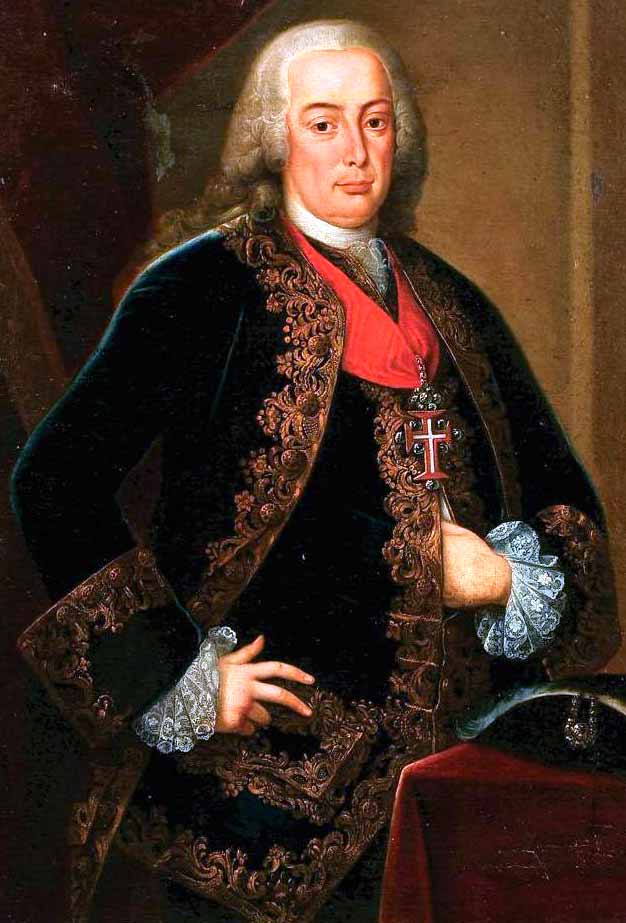
Sebastião José de Carvalho e Melo, the Marquis of Pombal (1699-1782)
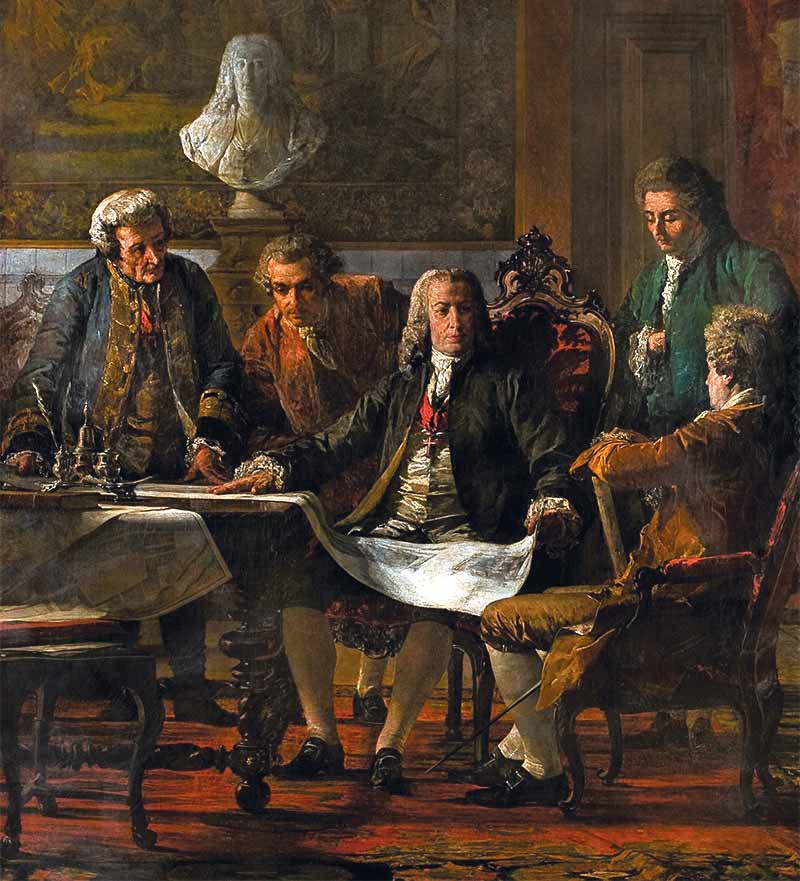
Marquis of Pombal and his counselors reviewing plans for the rebuilding Lisbon
The church was right that God judges sin and repentance is appropriate. Pombal was right that recovery of the city depended on innovation, creative thinking, hard work, and using the means God provided to recover from what is called today, the “first great modern natural disaster.” The people of Lisbon still talk about the quake and pass memorials that remind them of the tragedy. It was not the last one to be visited upon Portugal.
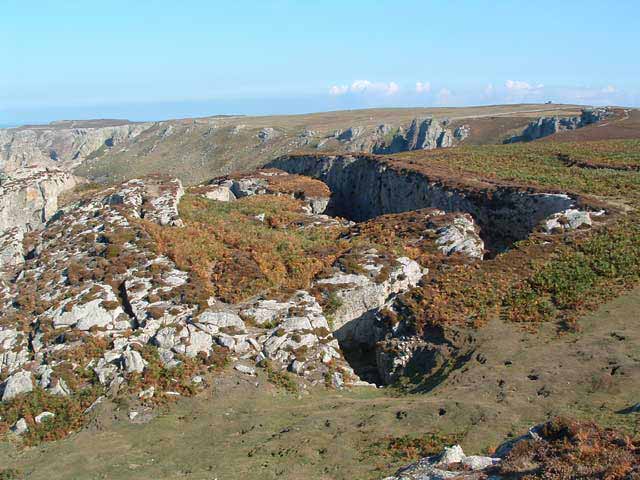
A deep fissure, likely caused by the Lisbon earthquake of 1755, along the coast of Devon, UK
Image Credits: 1 Judgment on Lisbon (wikipedia.org) 2 Rossio Square, Lisbon (wikipedia.org) 3 Tsunami Map (wikipedia.org) 4 Tsunami Animation (wikipedia.org) 5 Royal Opera House Ruins (wikipedia.org) 6 King Joseph I (wikipedia.org) 7 Tent City (wikipedia.org) 8 The Palácio da Ajuda (wikipedia.org) 9 Anti-seismic Construction Model (wikipedia.org) 10 Rescuing Survivors (wikipedia.org) 11 Voltaire (wikipedia.org) 12 Rousseau (wikipedia.org) 13 Pombal (wikipedia.org) 14 Pombal Reviewing Plans (wikipedia.org) 15 Devon Fissure (wikipedia.org)
 he colony and state of Virginia was the birthplace of nine Presidents. Seven were Tidewater or Piedmont Planters, one was a preacher’s kid, just passing through, and one became the President of a different Republic other than the United States. He was a Scots-Irish frontiersman whose providential history is almost unbelievable, and one of a most unpredictable and difficult life. Samuel Houston of Lexington, Virginia became the President of the Republic of Texas on the October 22, 1836.
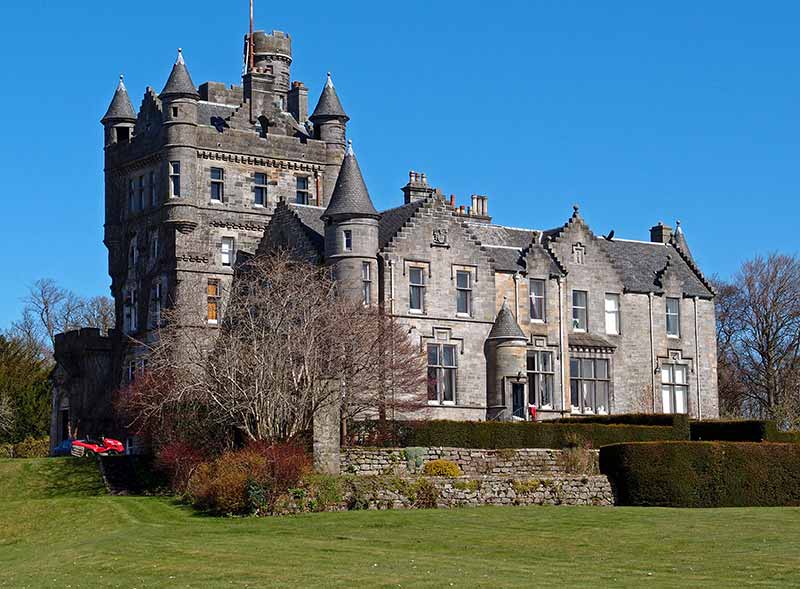
Houston House, Houston, Renfrewshire, Scotland
His ancestry dates to a knight and retainer of William the Conqueror, Sir Hugh of Padivan. His noble ancestor raced through a battlefield to save Malcolm, King of Scotland and was in turn given an estate and a coat of arms with two greyhounds and three ravens with the motto “In Tempore.” Sir Hugh’s estate became known as “Hugh’s Town,” and thus the surname of Houston was born. In America many generations later, now known as the “Scots-Irish”, Sam was born the namesake of his father and the fifth of six sons and three daughters. The hardy Presbyterian Houstons had moved down the great wagon road which ran from Philadelphia through the wilderness and up the Shenandoah Valley, settling near Lexington, Virginia. They were instrumental in founding Liberty Academy, later called Washington College. Sam’s father served as a captain in Daniel Morgan’s Rifle Brigade in the War for Independence, and no one became more independent than his son, young Sam Houston.
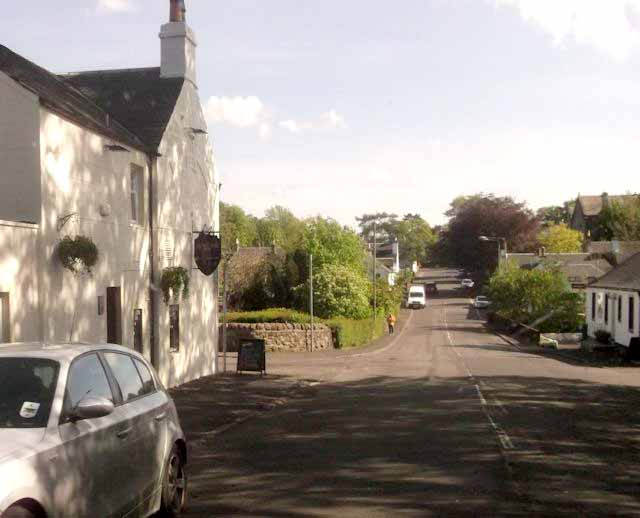
The village of Houston, Renfrewshire, Scotland

A monument marks the location of Sam Houston’s birthplace in Rockbridge County, Virginia
His mother loaded up two wagons and hauled her brood to live among relatives in Maryville, Tennessee after the death of Sam, Sr. in 1807. Young Sam was a tall, handsome thirteen-year-old, self-educated from his father’s library, and stubbornly independent and resistant to discipline and formal education. Upon settling in Tennessee, Sam absconded at the age of sixteen to the Cherokee nation (a people he admired), emulated their frontier lives, and adopted their cultural appurtenances. Guiding a plow or stocking shelves would never satisfy Sam Houston. The Cherokee named him Hiwassee, the Raven, in their cosmology a sign of good luck. He returned home every few months to “wheedle money from his mother” and buy gifts for his Cherokee friends.
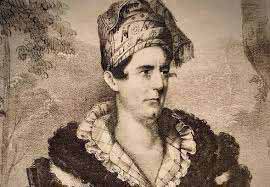
Houston during his days as a citizen of the Cherokee Nation
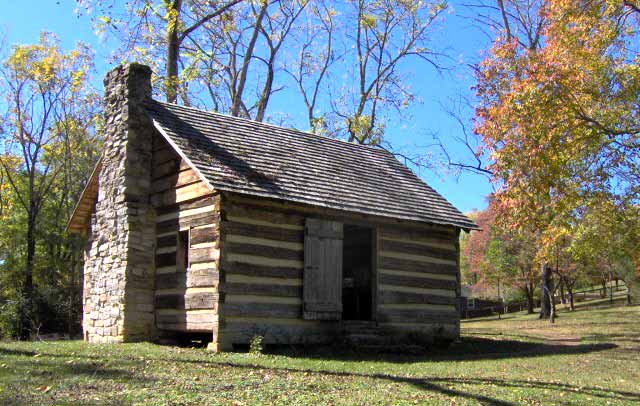
The one-room cabin school in Maryville, Virginia where Sam Houston briefly taught
Now fluent in the Cherokee language, at nineteen he returned to Marysville and announced he was opening a school! When his pedagogical career faltered, and like his father before him, constantly in debt, Sam Houston joined the army. Quoting Shakespeare and dressed like a Cherokee, Houston entered service as a twenty-one-year-old sergeant, with his mother’s admonition to never disgrace his rifle or turn his back on an enemy. She gave him a gold ring with the word “Honor” etched on it, which he wore till his dying day when it was removed by his widow.
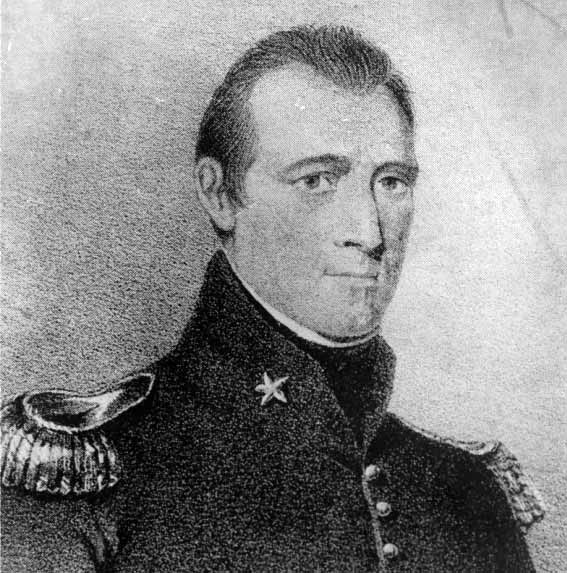
Houston in uniform
With an aptitude for drill and a natural-born ability for leadership, Sam entered the army as the War of 1812 heated up on the Tennessee/Alabama frontier. General Andrew Jackson called up Houston’s regiment for action against the Red Stick Creeks. Sam’s Colonel, Thomas Hart Benton—who also would play a significant role in the future history of the country—promoted the young man to lieutenant, noting him as a man “frank, generous, brave, ready to do and prompt to answer the call.” When his regiment was called to storm the first barricade in the final battle with the Creeks at Horse Shoe Bend, Alabama, Houston was first over the top with four other officers, three of whom were killed quickly. He took an arrow in the right groin, and compelled a fellow soldier to rip it out. The blood gushed. Jackson ordered a final assault, but told the young lieutenant to stay still. Houston, remembering his promise to his family that they would hear from him, disobeyed orders, and made the final charge holding the wound closed with his hand, and took a bullet in the shoulder. Barely alive, and septicemia setting in, he was hauled back the 275 miles to his mother’s home in Tennessee on a litter between two horses.
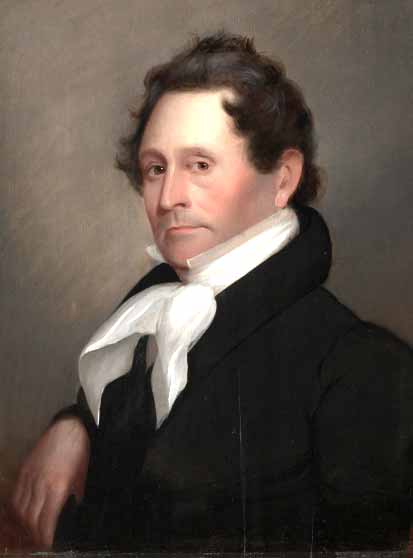
Thomas Hart Benton (1782-1858)
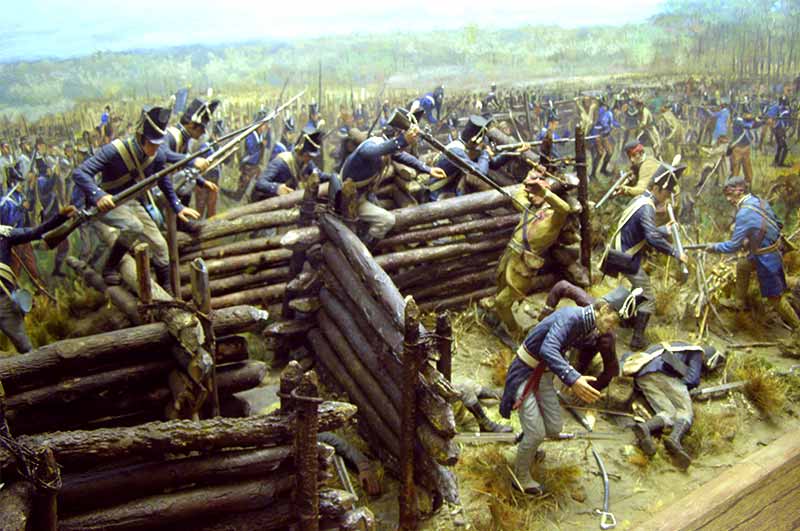
Diorama of the Battle of Horseshoe Bend
Upon his recovery, Sam Houston served as an Indian agent, began an apprenticeship with a judge in Nashville, and then opened a legal practice in Lebanon, Tennessee. His friend and patron Governor McMinn appointed the twenty-six-year-old lawyer a major-general in the Tennessee militia. By the 1820 census, his state was granted three representatives to Congress, and Houston’s political party, led by Andrew Jackson, enabled him to run unopposed for the 9th district seat. As an excellent public speaker and aggressive Congressman, Sam Houston won election to the governorship of Tennessee in 1827, from which office he helped Jackson get elected to the Presidency the following year.
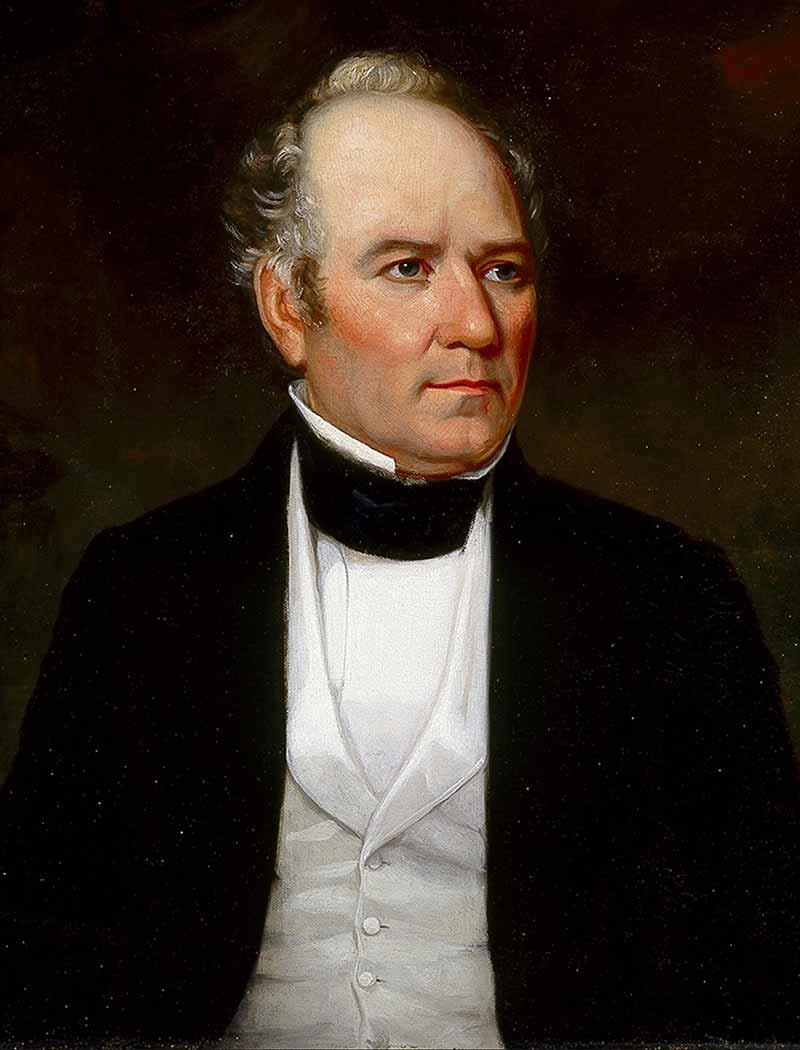
Formal portrait of Sam Houston (1793-1863)
Sam’s first marriage fell apart, and he abandoned politics to move to Arkansas and live among the Cherokee once again, where he was accorded tribal membership and became a negotiator between the tribe and the national government. After election to Congress once again, the occasionally volatile Tennessean was involved in an “affaire d’honneur” in which he beat unconscious with a cane a fellow representative, and left office once more for the west.
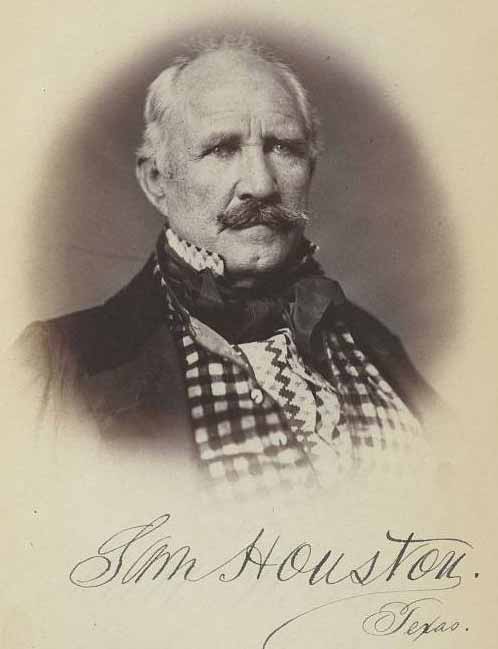
A signed portrait of Houston as Senator from Texas, 1859
In 1832, with rumors of alcoholism and uncontrolled temper following him, Sam Houston made the fateful decision to settle in Mexican Texas. He wrote a petition to their government for independence and supported Texas statehood. When the new President of Mexico, Antonio de Santa Anna invaded Texas with an army, Houston helped organize the resistance and to write up a provisional constitution. The story of the War for Texas independence is well known, as Houston led the Texian Army to victory and played a decisive role in creating a successful government.
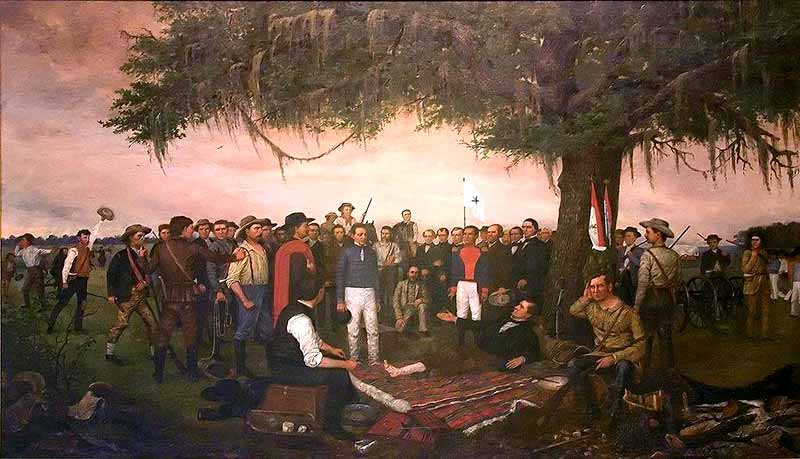
Mexican President Santa Anna surrenders to a wounded Sam Houston after the Battle of San Jacinto, 1836
In subsequent years he served as the Lone Star Republic’s President and then as Governor of the State of Texas and United States Senator. The largest city in Texas—600 square miles—is named for the well-read but “uneducated” Scots-Irish boy from Virginia. He overcame his weaknesses over a lifetime of struggle, and his accomplishments certainly would have made Sir Hugh proud of his descendant. The Providence of God often seems to be an inscrutable puzzle when occurring, but a fascinating wisdom when we reflect on the past.
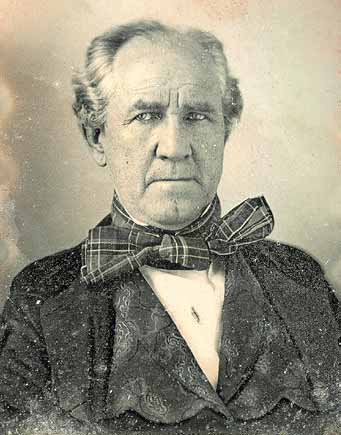
Sam Houston in 1850
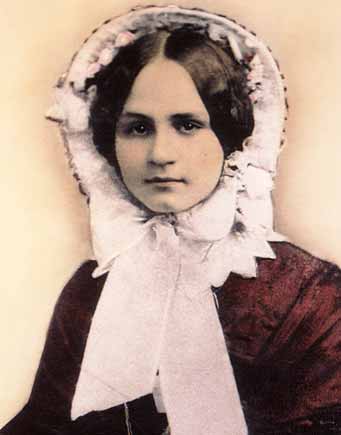
Margaret Lea Houston (1819-1867), third wife of Sam Houston, married in 1840 when she was 21 and he was 47

Image Credits: 1 Houston House, Scotland (wikipedia.org) 2 Village of Houston, Scotland (wikipedia.org) 3 Birthplace of Sam Houston (wikipedia.org) 4 Houston as a Cherokee citizen (wikipedia.org) 5 Schoolhouse in Maryville, VA (wikipedia.org) 6 Houston in uniform (wikipedia.org) 7 Battle of Horseshoe Bend (wikipedia.org) 8 Thomas Hart Benton (wikipedia.org) 9 Sam Houston (wikipedia.org) 10 Texas Senator Houston (wikipedia.org) 11 Santa Anna Surrenders (wikipedia.org) 12 Houston in 1850 (wikipedia.org) 13 Margaret Lea Houston (wikipedia.org)
“For God knows that in the day you eat of it, you will be like God, knowing good and evil.”—Genesis 3:5
“But he who sins against me injures himself, all those who hate me love death.”—Proverbs 8:36
There is an old joke that goes something like this:
“God is dead.”—Friedrich Nietzsche
ZAP
“Nietzsche is dead.”—God
 ccording to Christian historian Paul Johnson, the ideas of four men shaped the intellectual world of the 20th, and now 21st, centuries: Nietzsche, Marx, Darwin, and Freud. Two were German Jews, one a Protestant pastor’s son, and the fourth studied for the Anglican ministry. They were born in 1844, 1818, 1809, and 1856 respectively. They influenced the world in a variety of disciplines. Nietzsche’s works spanned philosophical polemics, poetry, cultural criticism, and fiction. His ideas dramatically affected religion, philology, music, art, tragedy, and science.
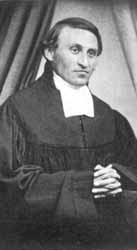
Carl Ludwig Nietzsche (1813-1849), father of Friedrich
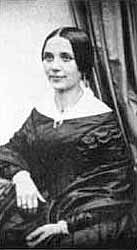
Franziska Nietzsche (1826–1897), mother of Friedrich
Born October 15, 1844, Friedrich Nietzsche grew up near Leipzig in Saxony, not far from Martin Luther’s hometown, a forty-two minute drive today. His father was a Lutheran pastor who named his son after the King of Prussia and died when Friedrich was five years old. He was educated in private schools, excelling in Christian theology. In high school he learned Greek, Latin, Hebrew and French and wrote poetry and composed music. After graduation from school, Nietzsche attended Bonn University, hoping to follow in his father’s footsteps as a minister. In his first semester, the Prussian college boy turned his back on the faith, dropped divinity studies, and wrote an essay declaring that history discredited the central tenets of Christianity.
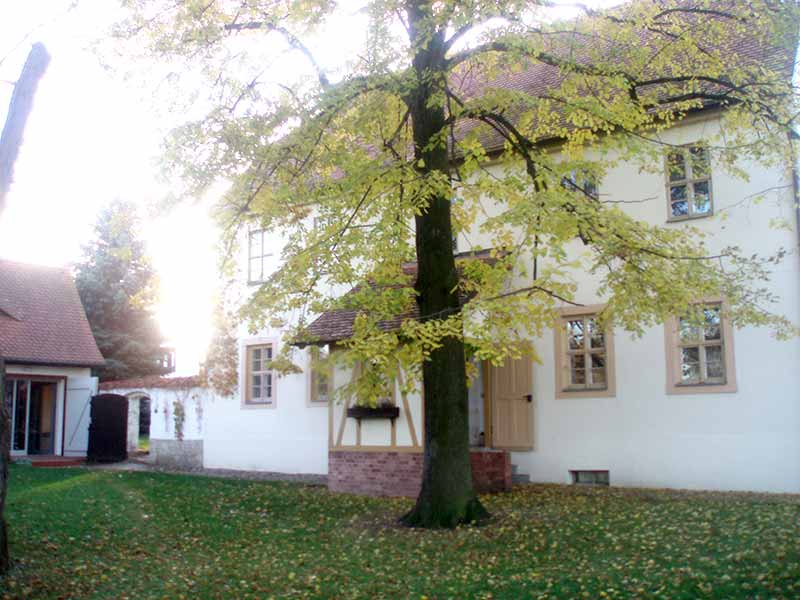
Nietzsche’s birthplace in the German town of Röcken
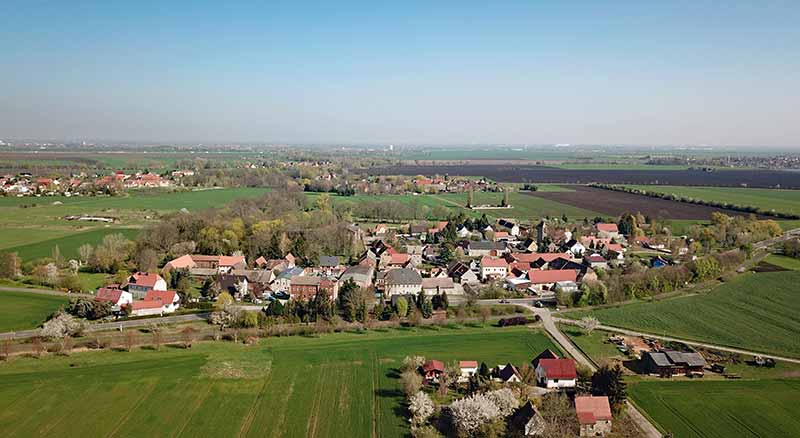
The town of Röcken, Lützen, Saxony-Anhalt, Germany—birthplace of Friedrich Nietzsche
Adopting the higher criticism and infidelity of the theologians/philosophers Feuerbach and Schopenhauer, and the “scientific” ideas of Darwin, young Nietzsche learned philosophy and philology, as well as mastered classical Greek thought. In 1869 he became Professor of Classical Philology at the University of Basel and was that same year awarded an honorary doctorate. He served in the Franco-Prussian war in which he contracted diphtheria, dysentery, and the syphilis that would eventually drive him mad and likely contribute to his death in 1900. Coupled with childhood health problems that persisted, Nietzsche was pensioned for disability in 1879. His most influential books and essays poured out of him over the following decade. His influence over European and American intellectuals would henceforth help provide the philosophical framework for the two 20th Century World Wars and the dissolution of Christian cultural hegemony until this very day.
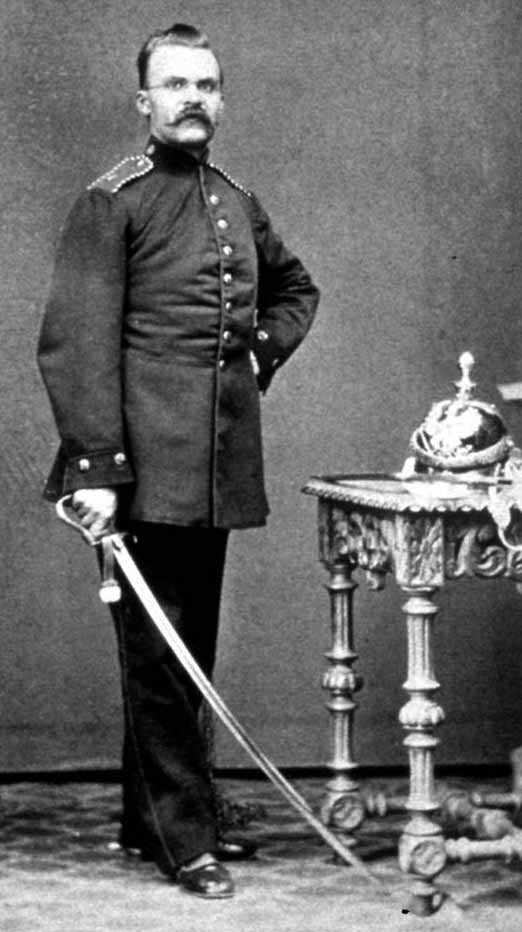
Nietzsche in Prussian uniform, 1868
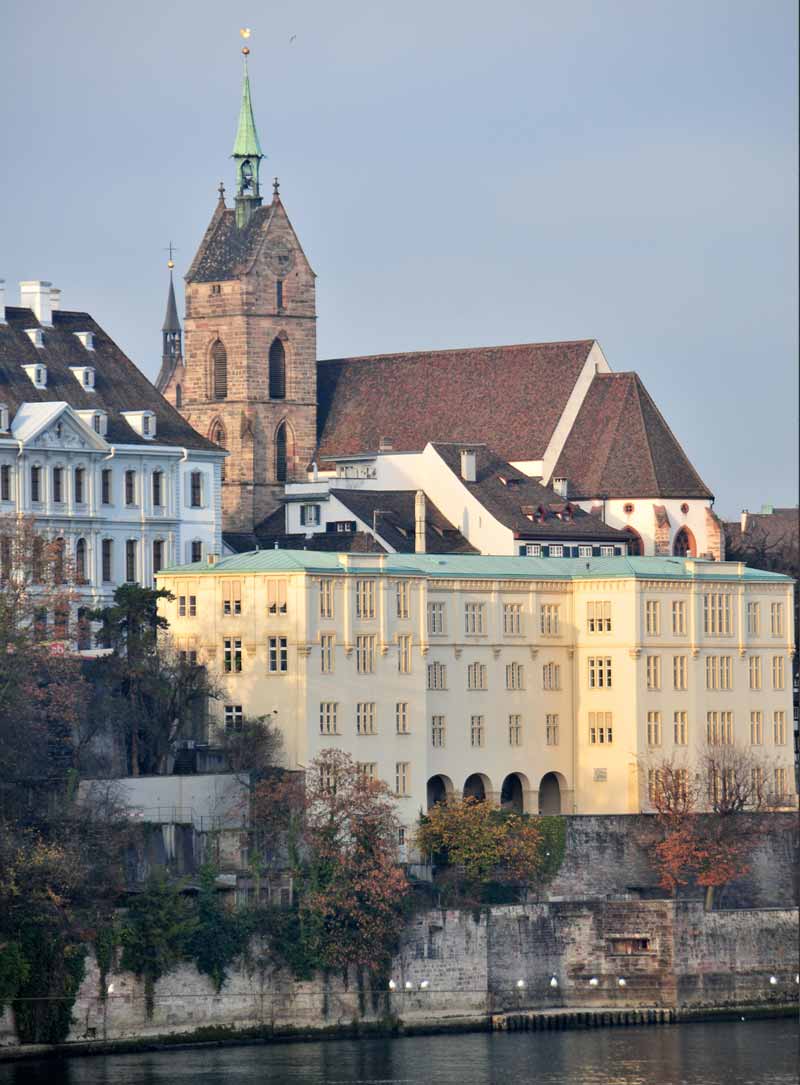
University of Basel, Switzerland, where Nietzsche was Professor of Classical Philology
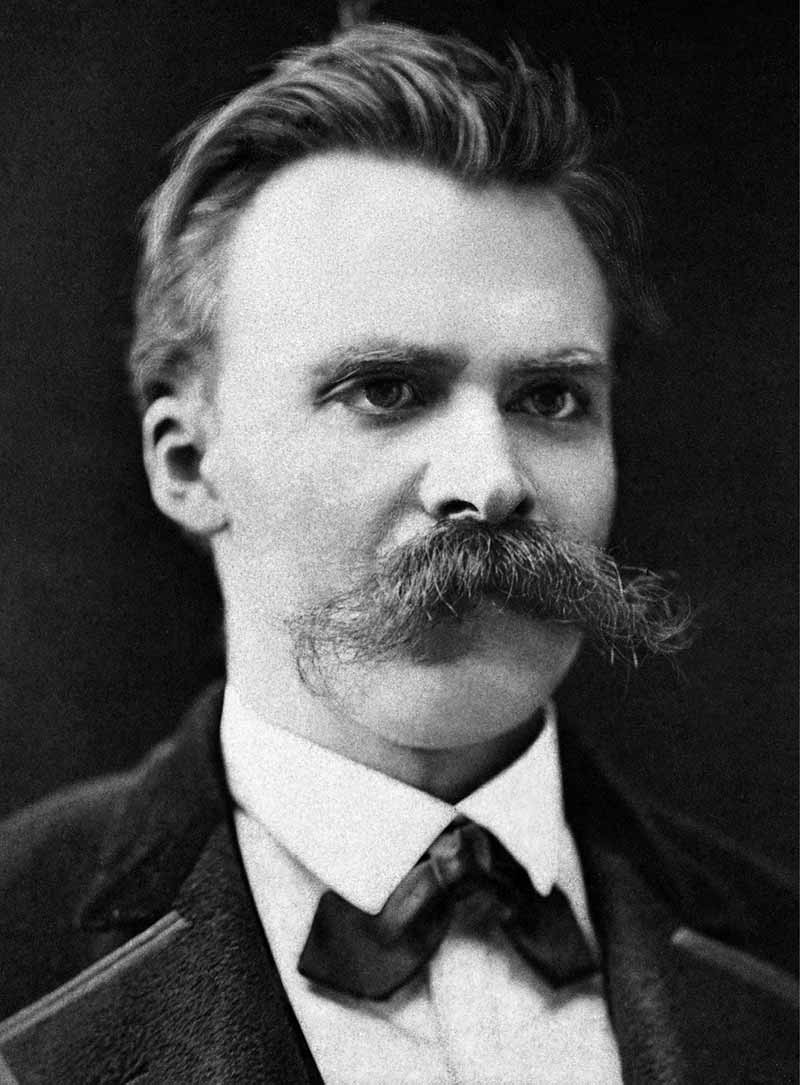
Nietzsche in 1875 in Basel
Like his idol, Ralph Waldo Emerson, Nietzsche’s solution to the lukewarm Christianity of his day was to transcend the belief in good and evil and make man free of all morality. He outlined his philosophy in Beyond Good and Evil, his 1885 classic read by all philosophy students. At the heart of Nietzsche’s belief was a realization of the total depravity of man, the only reality being the “Will to Power.” For him, to be beyond good and evil “is to recognize that God is dead and morality a myth.” (Rushdoony, p. 167). To the German philosopher, “Christianity was a sick neurotic pretension.” If life is beyond good and evil, and there is no truth, there is no reason to prefer life over death. Not ironically, in the last decade of the 19th century, especially in Europe, suicide became a common practice among intellectuals (but only once each).
With God dead and truth and morality mere myths, Nietzsche advocated the creation of a new elite, the ubermensch, patterned on his ideas. Supermen who had overcome the slave-morality of Christian civilization could determine for themselves a new master-morality and determine for themselves what is good. The contradictions of his philosophy and impossibility of living in a world of unreality bothered him not a bit.
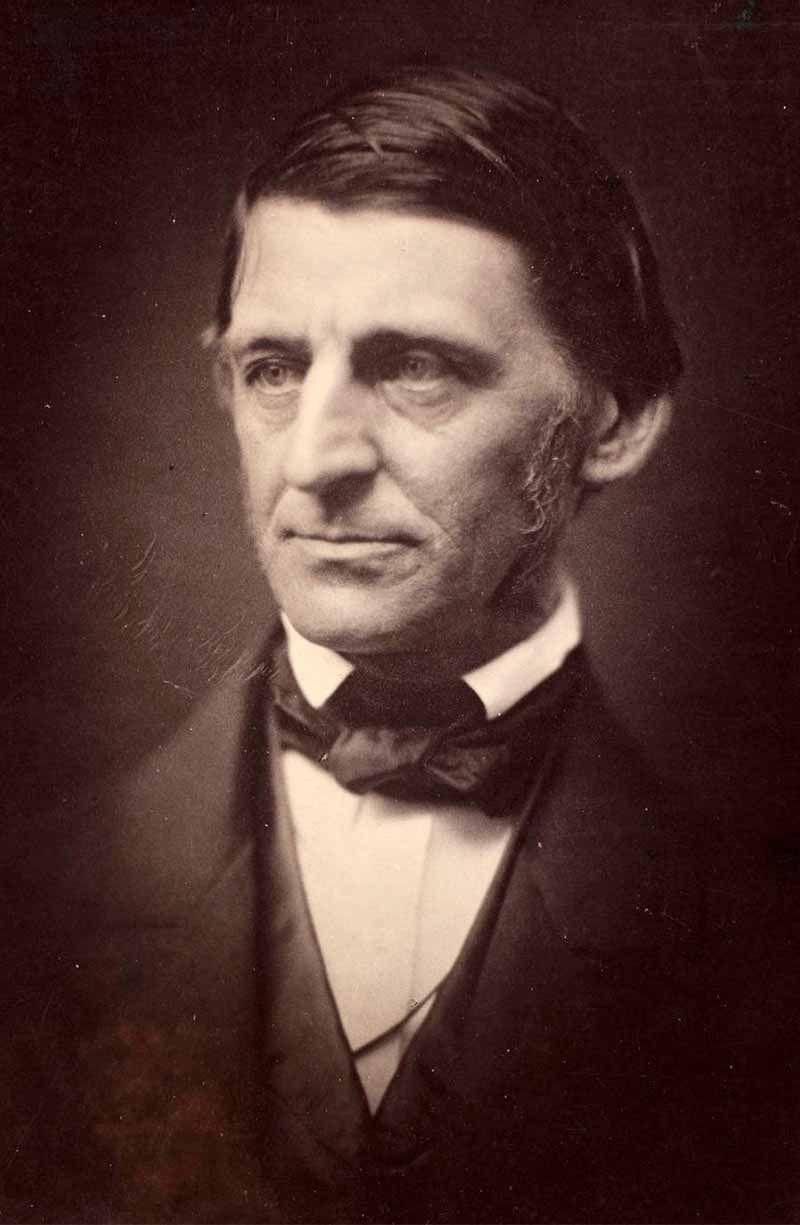
Ralph Waldo Emerson (1803-1882)
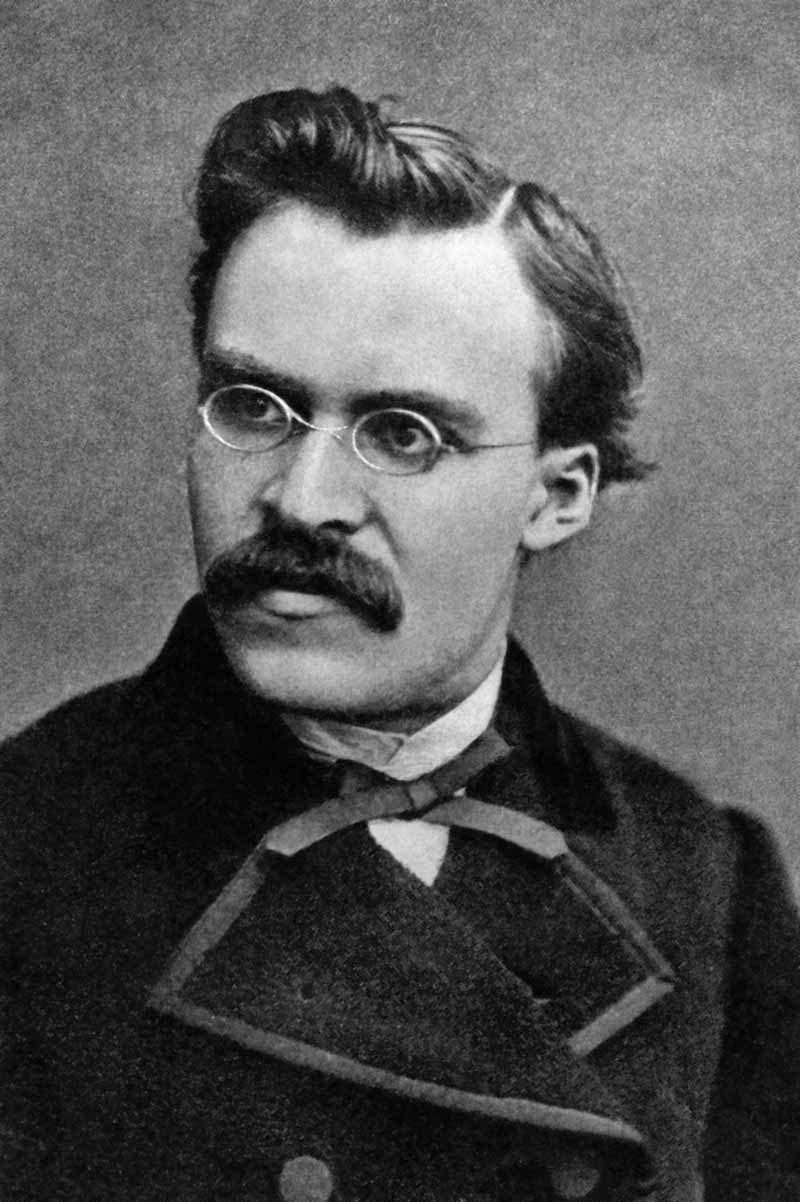
Nietzsche in 1869
Twentieth Century states would attempt to put his ideas into practice as the supermen whose warped and unnatural idealism have brought about wars and destruction of unprecedented magnitude. The historic Christian faith, for him, had produced a “false and unrealistic” morality. Mankind must realize that bad consciences were imprisoned by a biblical worldview which must be overcome by the elite supermen of the future who will free men from their false ideas. “Mankind must realize it owes nothing to a mythical God.”
“In his 1883 book Thus Spake Zarathustra, Nietzsche affirmed that all that proceeds from power is good, all that springs from weakness is bad. He expressed one aspect of that idea this way: ‘Once blasphemy against God was the greatest blasphemy, but God died and therewith also those blasphemers. To blaspheme the earth is now the deadliest sin and to rate the heart of the unknowable higher than the meaning of the earth.’”
Rushdoony observes that modern environmentalists are children of Nietzsche, “although he would have despised them as he did everyone and everything.”
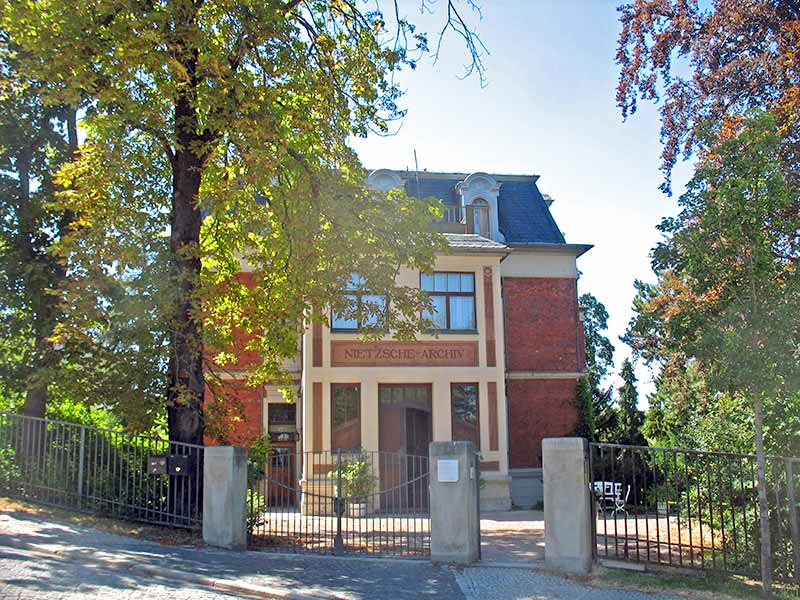
Nietzsche’s home the last three years of his life in Weimar, Germany, and the location of the Nietzsche Archives
In an autobiographical essay entitled “Ecce Homo” Nietzsche proclaimed his immortality, for he was more learned and clever than most people because he had no sense of sin. “To read Nietzsche is to realize how many moderns have borrowed his ideas! Many academicians are merely housebroken versions of Nietzsche.” He opposed the “moral channels” of life such as love and marriage and was a life-long advocate of sexual revolution. It becomes obvious he was haunted by conscience and history, for he fought so hard to erase them. You cannot erase what God has ordained. He said he was too proud to have friends and no one living was of the same rank in his world of elites, although he actually had a few good friends and probably millions of admirers. He was declared clinically insane in 1889 and committed to an asylum for his last eleven years. His sister saw to the publishing of many of his writings.
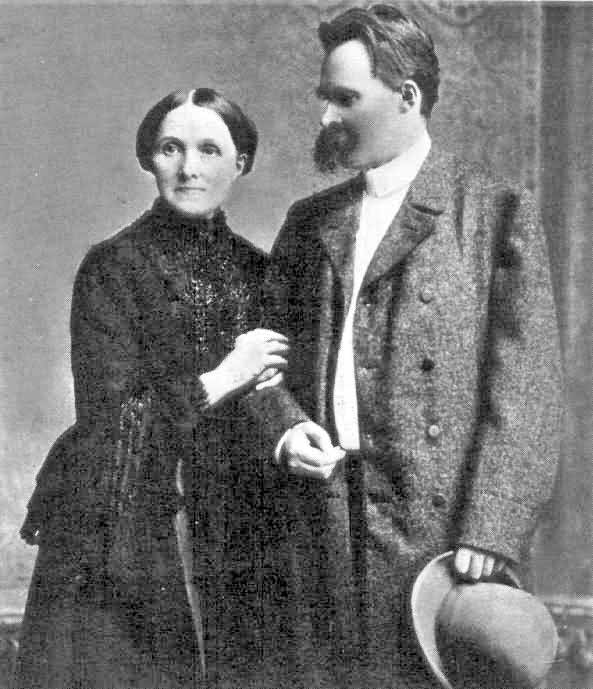
Nietzsche with his mother in 1892
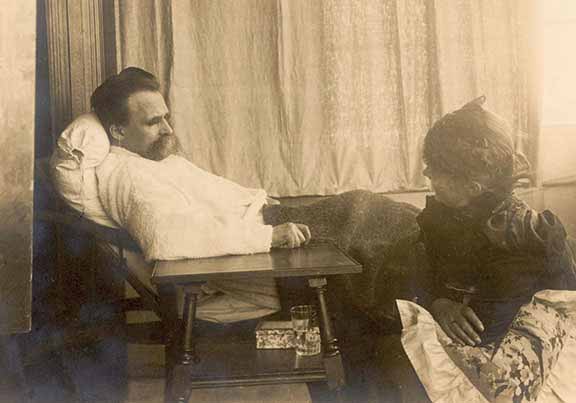
Nietzsche under the care of his sister Elisabeth during a lengthy and ultimately terminal illness
Although there are no major statues to honor his contributions to the 20th Century, as a good classicist he “helped recreate the priority of the State and the 20th Century world wars over the articles of statist faith.” (Rushdoony) His real disciples were embodied in Stalin, Hitler, Pol Pot and Chairman Mao. In his secretary’s oration at Nietzsche’s funeral he proclaimed “Holy be your name to all future generations.”
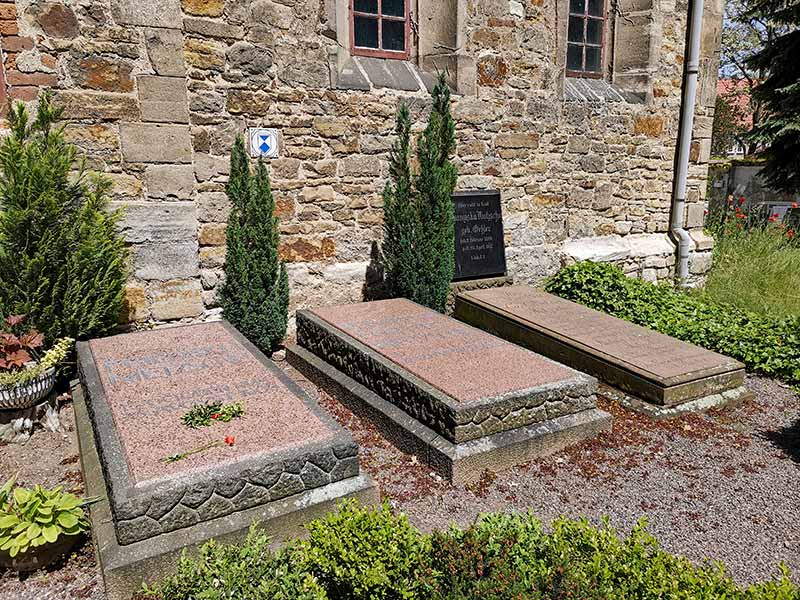
The graves of Friedrich Nietzsche (left), his father Carl (center), and mother Franziska (right)
Image Credits: 1 Carl Nietzsche (wikipedia.org) 2 Franziska Nietzsche (wikipedia.org) 3 Birthplace (wikipedia.org) 4 Röcken (wikipedia.org) 5 Prussian soldier (wikipedia.org) 6 University of Basel (wikipedia.org) 7 Nietzsche, 1875 (wikipedia.org) 8 Ralph Waldo Emerson (wikipedia.org) 9 Nietzsche, 1869 (wikipedia.org) 10 Nietzsche Archives (wikipedia.org) 11 Nietzsche & Mother (wikipedia.org) 12 Nietzsche & Sister Elisabeth (wikipedia.org) 13 Nietzsche Graves (wikipedia.org)
“For the Kingdom is the Lord’s and He shall rule over the nations.”
—Psalm 22:28
 od ceased direct and written revelation in the era between the Old Testament and the New Testament, but He did not stop His providential disposition of history. Some astounding events occurred in that interim period that changed the course of history through the rise and conquests of the Greeks and Romans, some of which would have profound implications for the Church and for the future of all mankind. Alexander III of Macedon, known to history as the “Great,” conquered and administered the most extensive empire since that of the Persians.
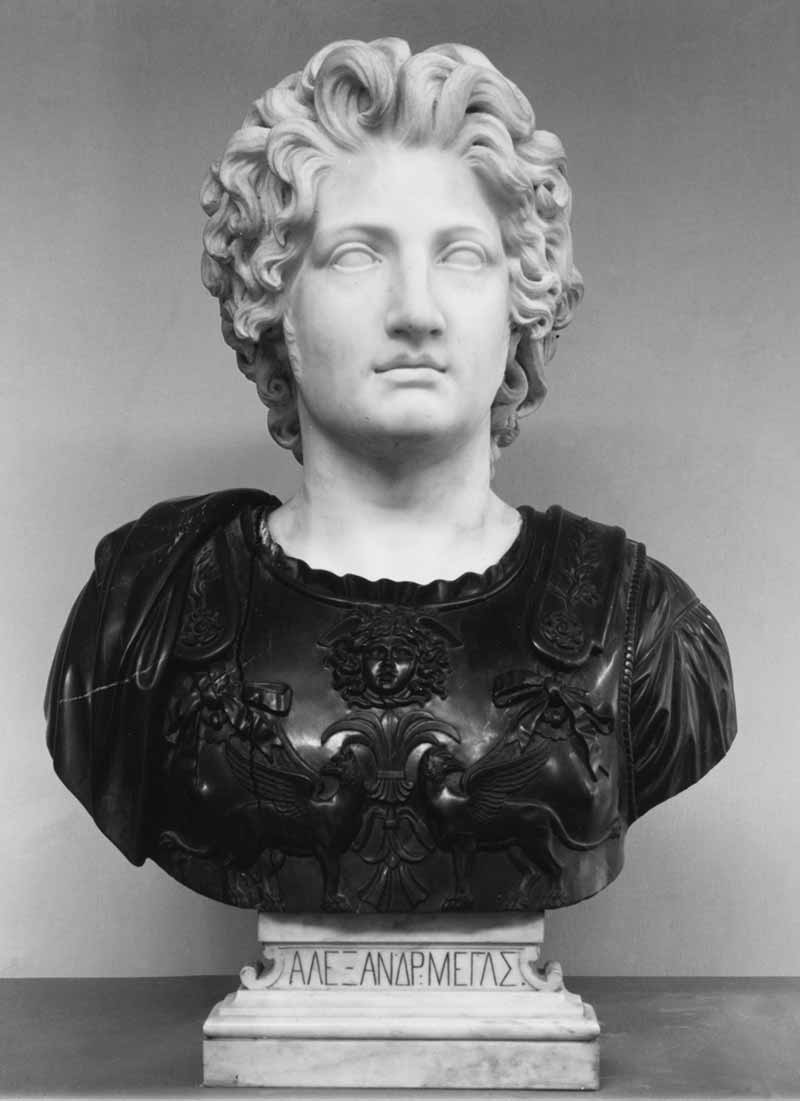
Bust of Alexander the Great (356-323 BC) in white and red marble
Olympias, one of the eight wives of Phillip of Macedon, gave birth to Alexander in 356 BC. Many myths surround his birth, likely recorded to create the illusion that he was more of a god than a man. The royal court provided the education of a prince, teaching him to read, fight, ride and hunt. At one point, the Greek philosopher Aristotle tutored him in logic and philosophy. Alexander proved both courageous and ambitious, as well as a masterful student. He trained a wild horse himself, which he named Bucephalus, and rode him to victory for more than twenty-five years.
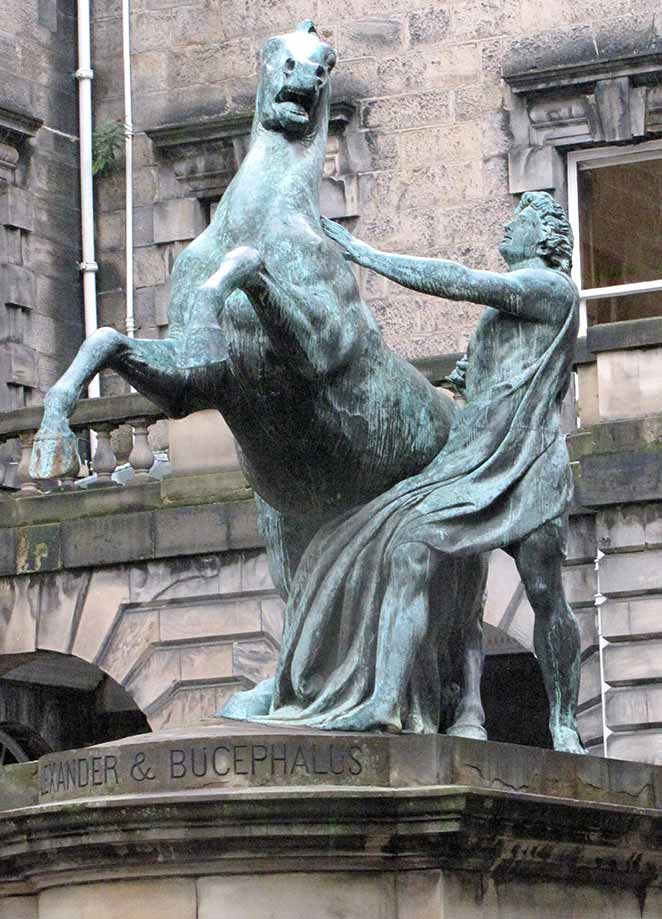
Alexander and Bucephalus, the legendary warhorse of Alexander
When King Phillip carried out military campaigns, he left sixteen-year-old Alexander in charge as regent and heir-apparent. In that capacity, the teenaged prince put down a Thracian rebellion, for which deed his father colonized the conquered territory and founded a city named after his son. Determined to invade Greece, Alexander organized an army and, with his father, marched through the pass at Thermopylae in 338 BC. They defeated both the Athenians and Thebans in bitter and tactically clever battles. Alexander led an entire wing of the army, proving once again he would be a worthy successor of his father. They created a Pan-Hellenic (i.e. Greek) alliance and outlined plans to cross into Asia and attack the Persian Empire.
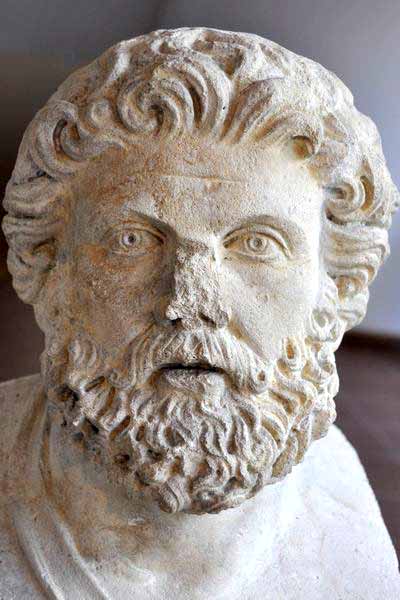
Philip II of Macedon (382-336 BC), father of Alexander
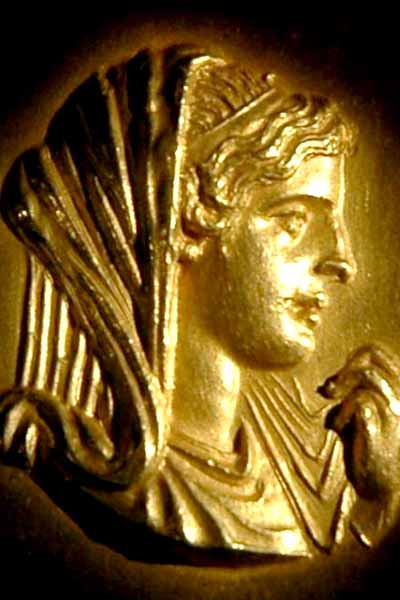
Olympias (375–316 BC), mother of Alexander
Twenty-year-old Alexander was proclaimed king when Pausanius, the Captain of Phillip’s guard, assassinated him at his daughter’s wedding. The new king moved quickly to eliminate any possible rivals to the throne. When news of Phillip’s death made the rounds of the burgeoning Macedonian Empire, revolts broke out in several Greek city-states, in bids to throw off their imperial yokes. Alexander moved swiftly south with his 3,000-man cavalry and compelled the revolting armies to yield and join his forces against each of the other rebel armies. He showed mercy to the leaders and they all joined him.
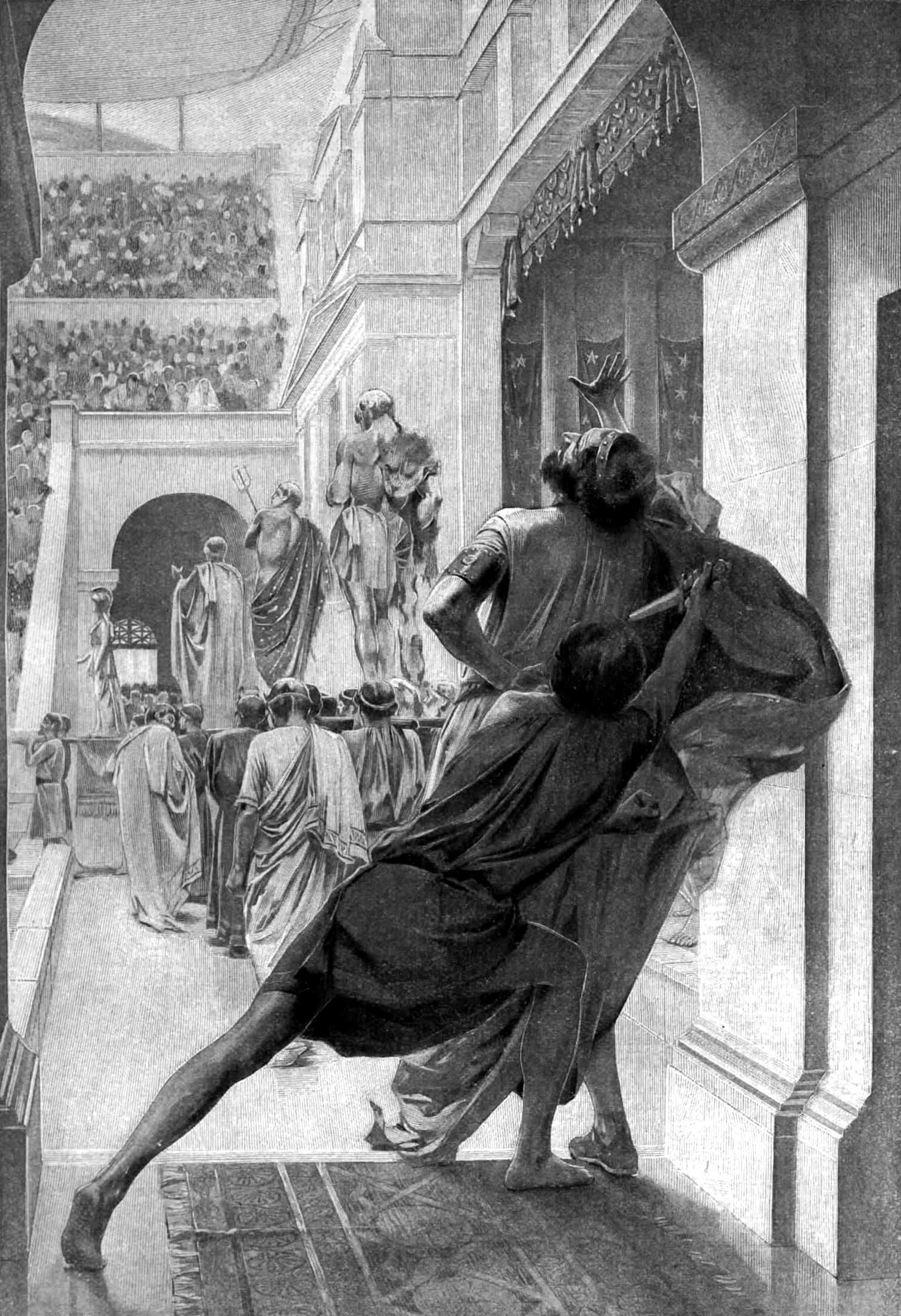
The assassination of Philip II of Macedon by the captain of his guard, Pausanius
In 334 BC Alexander crossed the Hellespont, the narrows between Europe and Anatolia (modern Turkey). He threw a spear into the soil and thanked the gods for giving him Asia. With more than 48,000 infantry, 6,000 cavalry, and a 120-ship navy, Alexander united the Greek trading cities of the Anatolian coast and marched inland to confront the Persians. In his expeditionary army marched Macedonians and Greek mercenaries from conquered city-states trained by Alexander in the tactics so effectively deployed in his conquests.
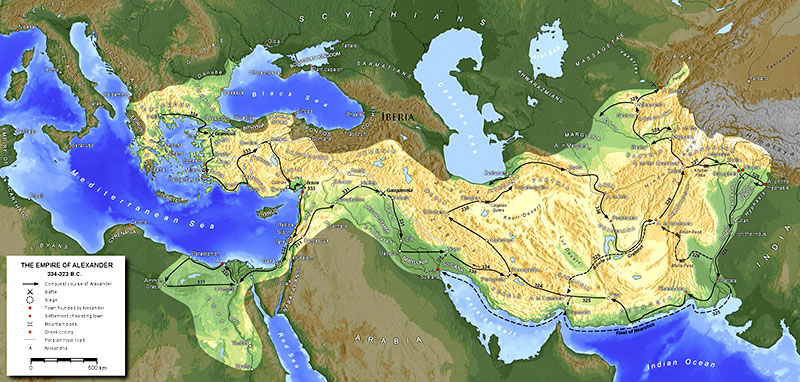
A map of Alexander the Great’s empire at its greatest extent c. 323 BC, including details of key roads, locations, and battles
The basic formation was known as a phalanx; the front line infantry, known as Hypaspists, consisted of six or seven lines of men carrying a pike (sarissa) fourteen to twenty feet long with a leaf-shaped steel point. The first five lines presented their sarissa thrust forward, but each line a little higher in elevation than the one in front of them. The formation created a hedgehog of impenetrable spears that no infantry or cavalry—except elephants—could withstand. The heart of the cavalry force were the 1,300 “Companions,” commanded in person by Alexander. They marshalled for battle behind the javelin throwers and archers of Macedon. The 1,800 Thessalian cavalry were among the best in the world, and the balance of mounted forces represented the other Greek states. Their young emperor-general was infused with an unquenchable desire to conquer the world.
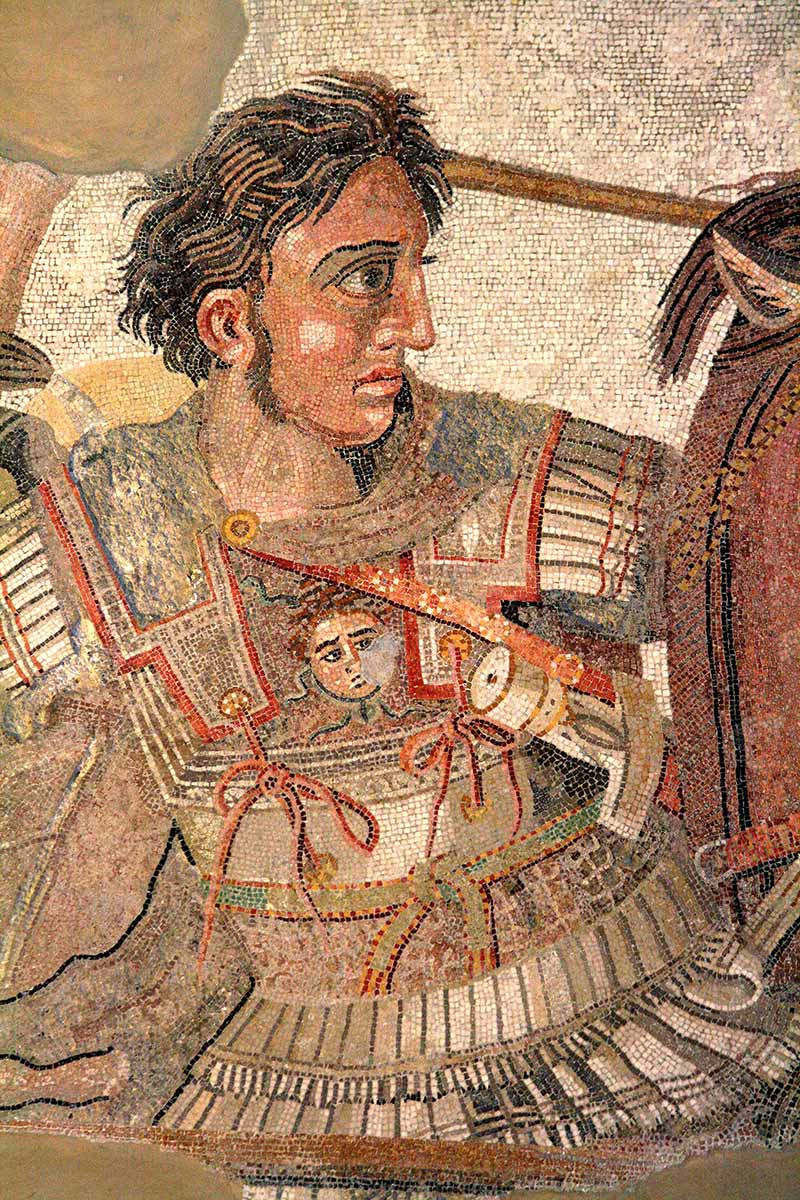
A mosaic of Alexander in battle against Darius, showing Alexander’s armor in detail
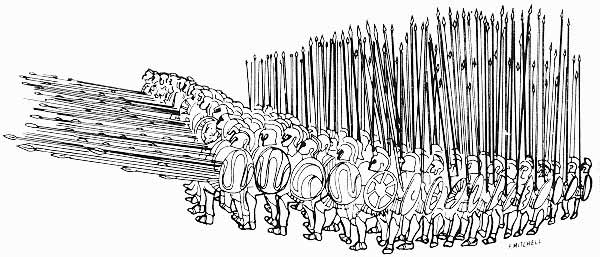
An illustration of the Macedonian phalanx formation
Alexander’s Persian campaign proved irresistible. He defeated Persian King Darius’s armies in the successive field battles of Granicus and Issus, and took the island city-fortress of Tyre after a six-month siege and the brilliant engineering feat of building a sixty-foot-wide mole from the shore to the island to storm the citadel, shelling with catapult bolts, and assaults by storming parties, in conjunction with a naval victory against the ships defending the harbor. Alexander crucified the two thousand captured survivors. He conquered Egypt and established a city which took his name, Alexandria.
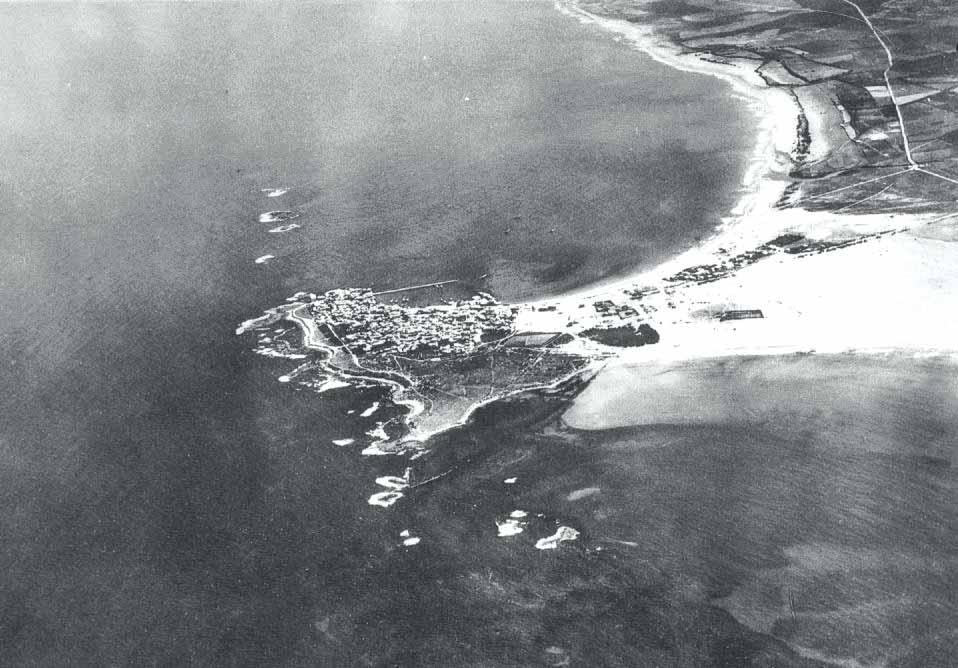
An aerial view of Tyre showing Alexander’s landbridge that still exists to this day
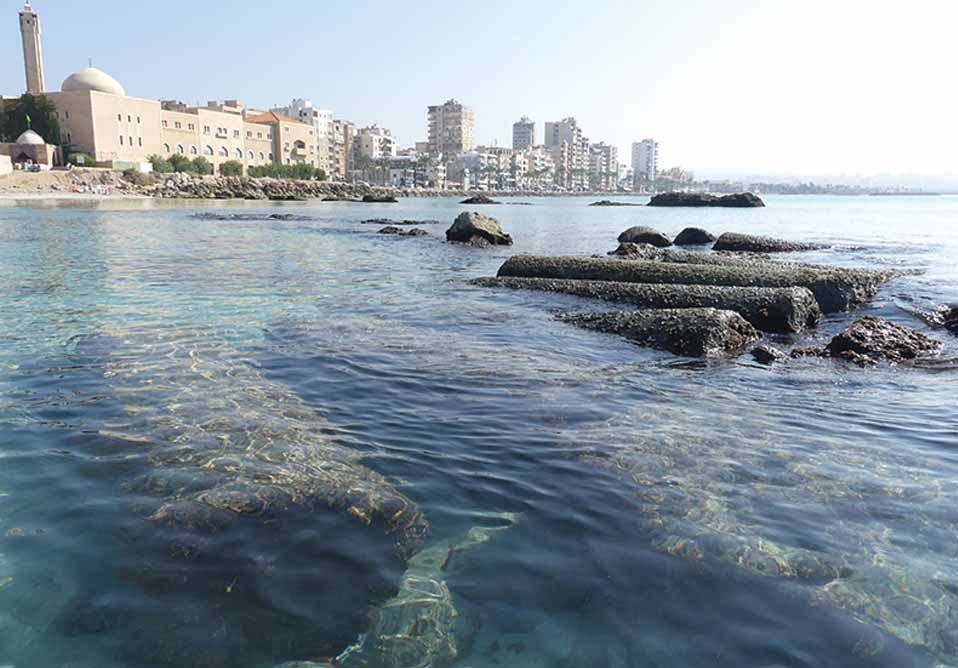
Ancient columns can be seen submerged in the foreground, with modern-day Tyre in the background
The Macedonian king finally brought the Persian monarch to bay at the Battle of Guagamela on October 1, 331 BC. Darius deployed about equal numbers, but the Persians also used fifteen elephants and fifty scythe chariots. Both commanders chose to direct the battle from the center of their line behind the heavy infantry. Alexander positioned two lines facing to the left flank and lines facing the rear, since the classic Persian tactics were to attack from two or three sides simultaneously. When the Persians opened a gap on their own flank, Alexander led a multi-thousands wedge into the gap and Darius fled the field. After an unsuccessful pursuit of the Persian commander, Alexander marched to Babylon to claim the fruits of victory over the Persian Empire. The Great King Darius died at the hands of his own citizens.
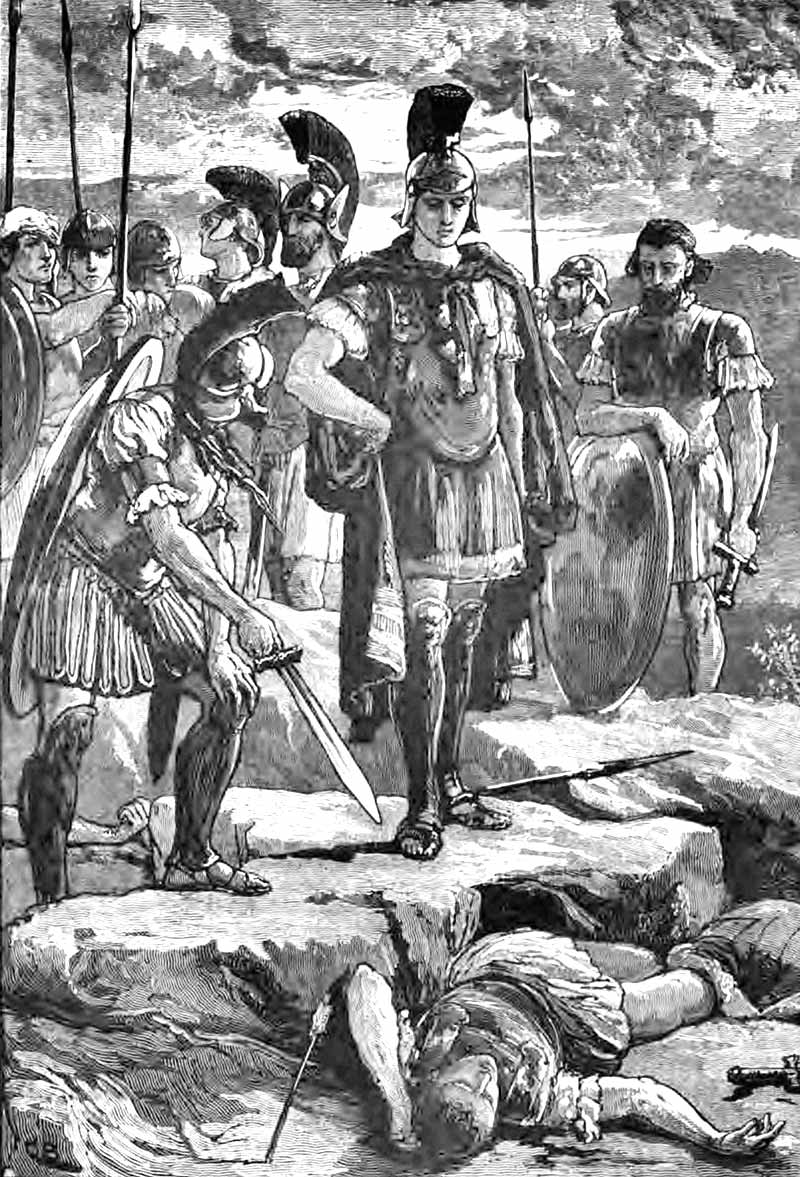
Alexander viewing the body of Darius
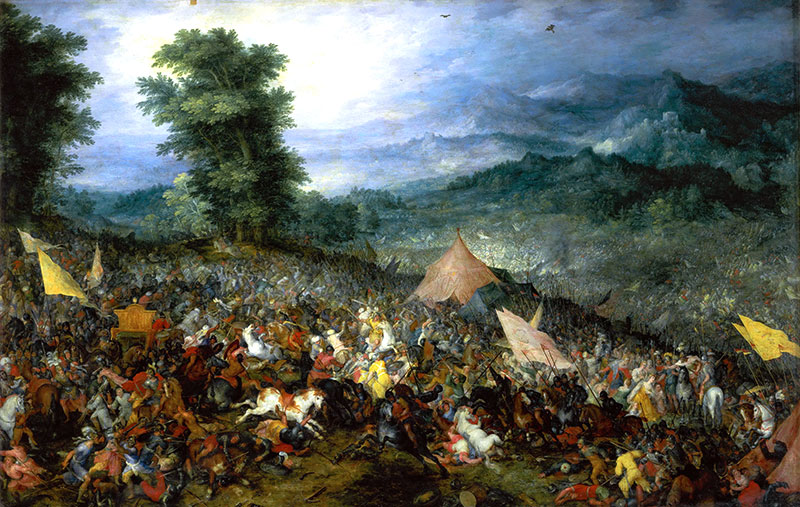
An artist’s depiction of the Battle of Guagamela on October 1, 331 BC
The victory over the Persians resulted in Alexander’s successful campaign against India, after which he decided to return to Babylon and consolidate his unprecedented expansion of Greek civilization and culture, and to plan a campaign against North Africa and Carthage. Although often outnumbered, he never lost a battle. He established military strategies and tactics that are worth study today. His central values were honor and personal glory and he believed he was a son of Zeus. Alexander’s boundless ambition stimulated his desire to rule the world. Alexander died, probably of foul play, in 323 BC, in Nebuchadnezzar’s Palace in Babylon at the age of thirty-two.
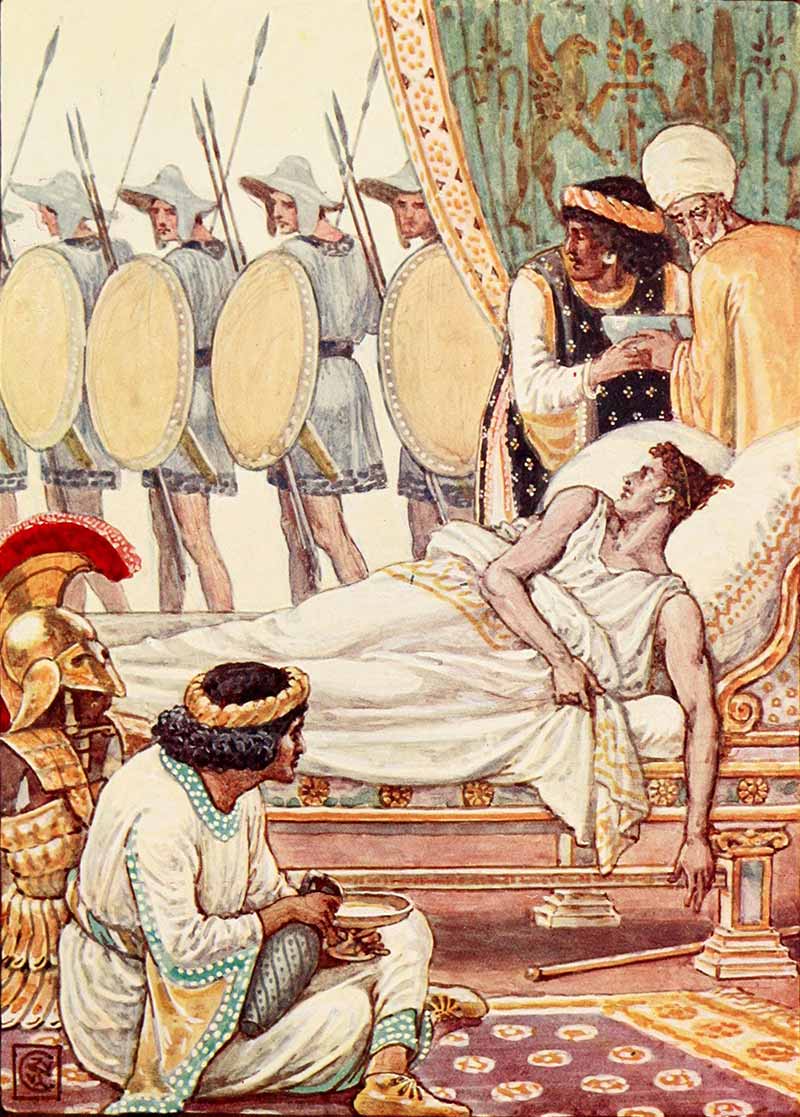
One version of the record of Alexander’s death has his men parading by him in silence as he lay dying in the palace of Nebuchadnezzar II in Babylon
A forty-year civil war ensued, ending with the Greek empire divided among three of Alexander’s generals, each with his own territorial jurisdiction. As a result of his enormous success, the middle east was still dominated by Greek language, culture, and philosophy, despite Roman domination, three hundred years later when another King was born in Bethlehem, whose Kingdom will know no end.
Image Credits: 1 Marble bust of Alexander (wikipedia.org) 2 Alexander & Bucephalus (wikipedia.org) 3 Philip II (wikipedia.org) 4 Olympias (wikipedia.org) 5 Assassination of Philip (wikipedia.org) 6 Map of the extent of Alexander’s Empire (wikipedia.org) 7 Mosaic of Alexander (wikipedia.org) 8 Macedonian phalanx formation (wikipedia.org) 9 Tyre, aerial (wikipedia.org) 10 Tyre, coast (wikipedia.org) 11 Death of Darius (wikipedia.org) 12 Battle of Guagamela (wikipedia.org) 13 Death of Alexander (wikipedia.org)