Joseph Reed | Profiles of 1776

2026-05-09T14:59:35-05:00May 9, 2026|HH 2026|

“Whatever you do, do your work heartily, as for the Lord rather than for men, knowing that from the Lord you will receive the reward of the inheritance. It is the Lord Christ whom you serve.”—Colossians 3:23

Joseph Reed | Profiles of 1776

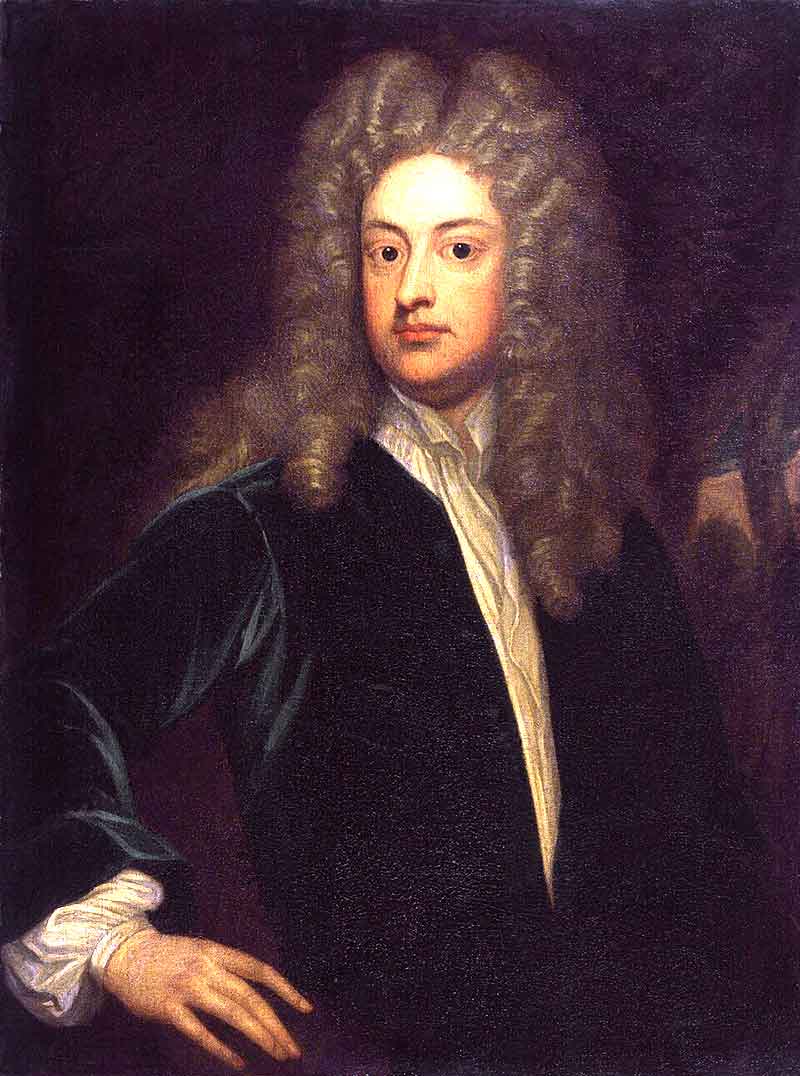
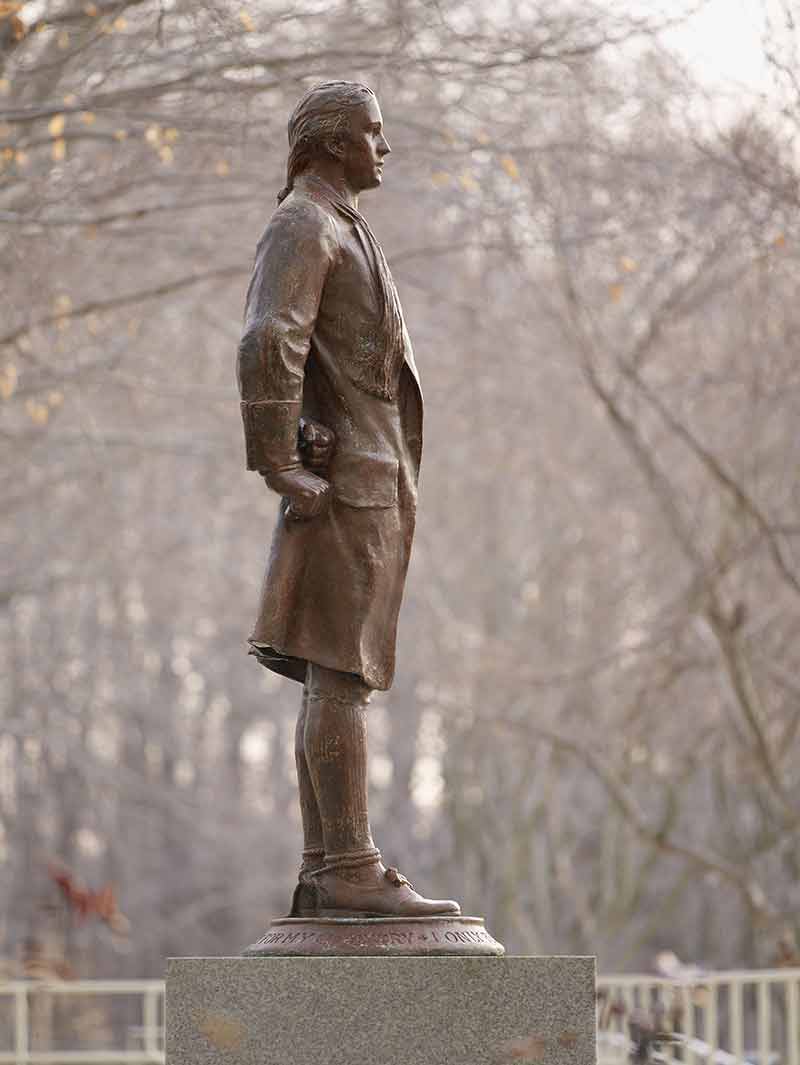
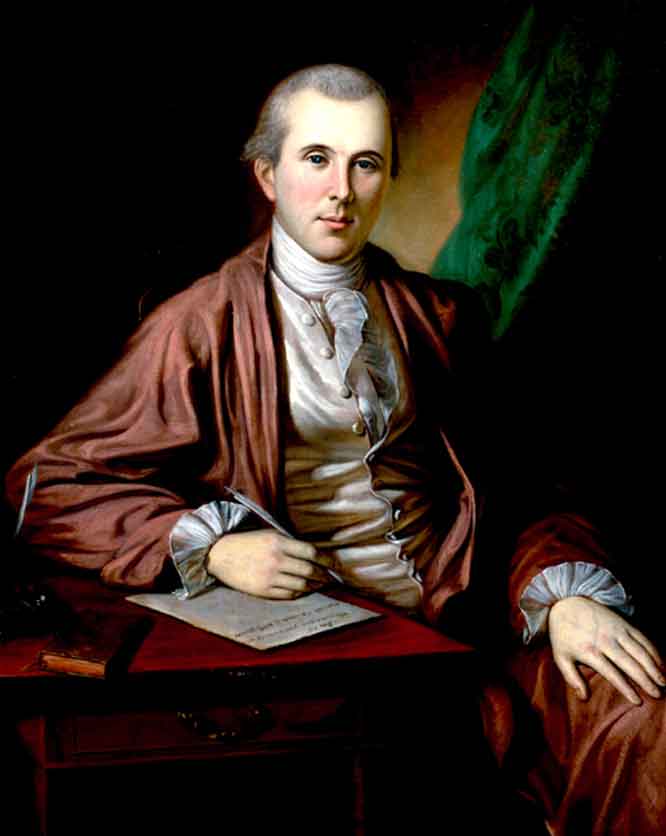
Joseph Reed was a charming and proficient London-trained attorney residing in Philadelphia when George Washington accepted command of the American Army in 1775. With the Continental Congress deliberating in his city of residence, and Reed serving as the president of Pennsylvania’s second Provincial Congress, he followed the progress of the various committees with great interest.


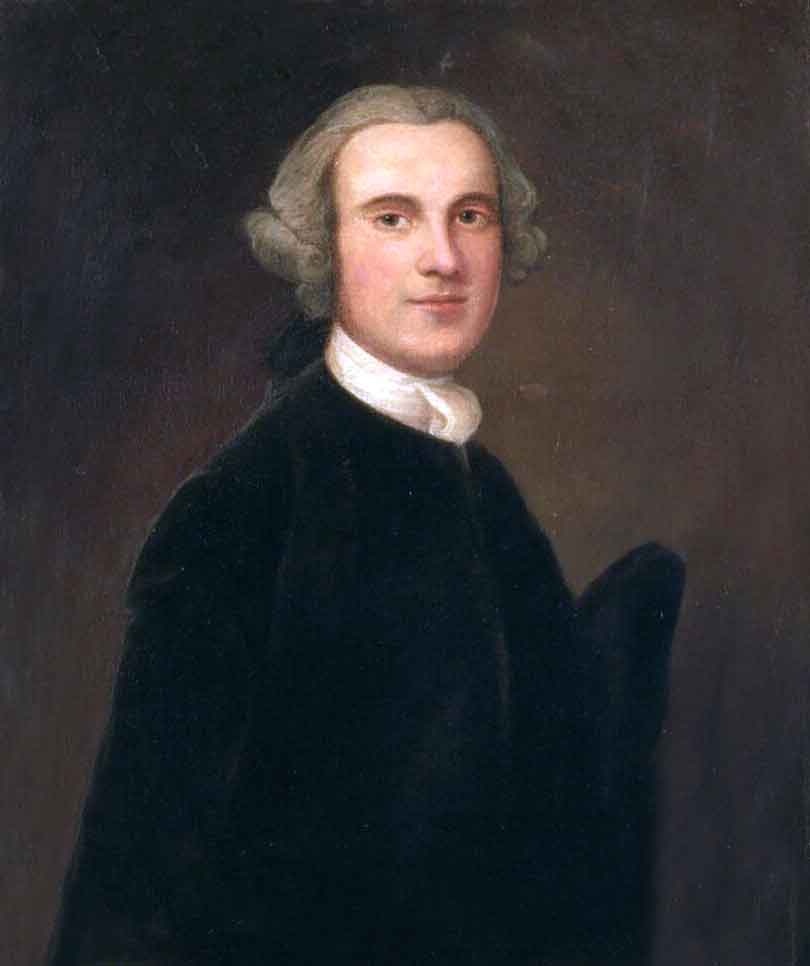
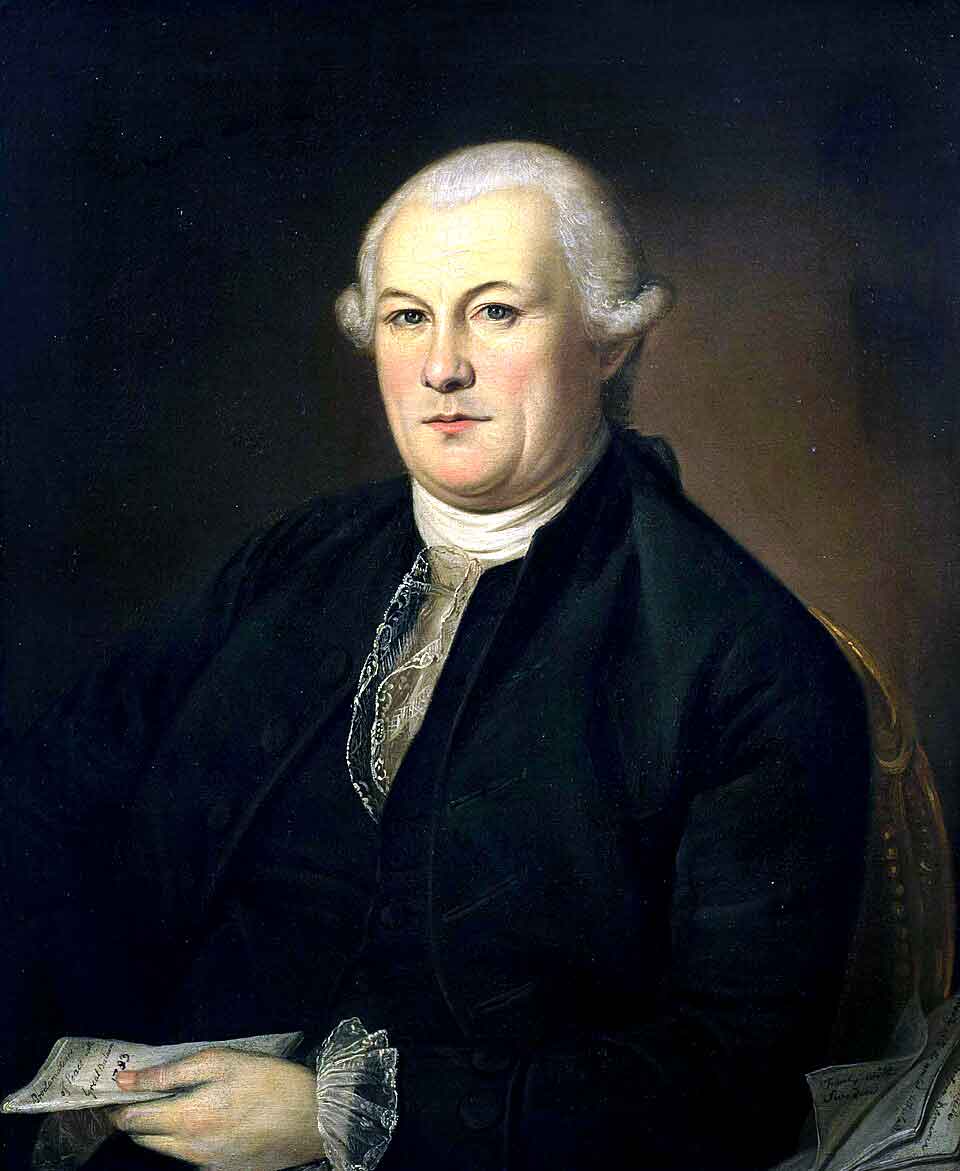
Joseph Reed (1741-1785)

When an honorary escort was organized to accompany General Washington to his new command at Boston, Joseph Reed was one of those chosen to ride with him. Reed intended to go only as far as New York, but a deep attachment sprung up between commander and lawyer, and soon Reed found himself writing a letter to his wife explaining that he had indeed gone on to Boston, had joined the militia, was serving as Washington’s main secretary, and had no imminent plans to return home! As Reed explained it, Washington had “expressed himself to me in such terms that I thought myself bound by every tie of duty and honor to comply with his request to help him through this sea of difficulties.”

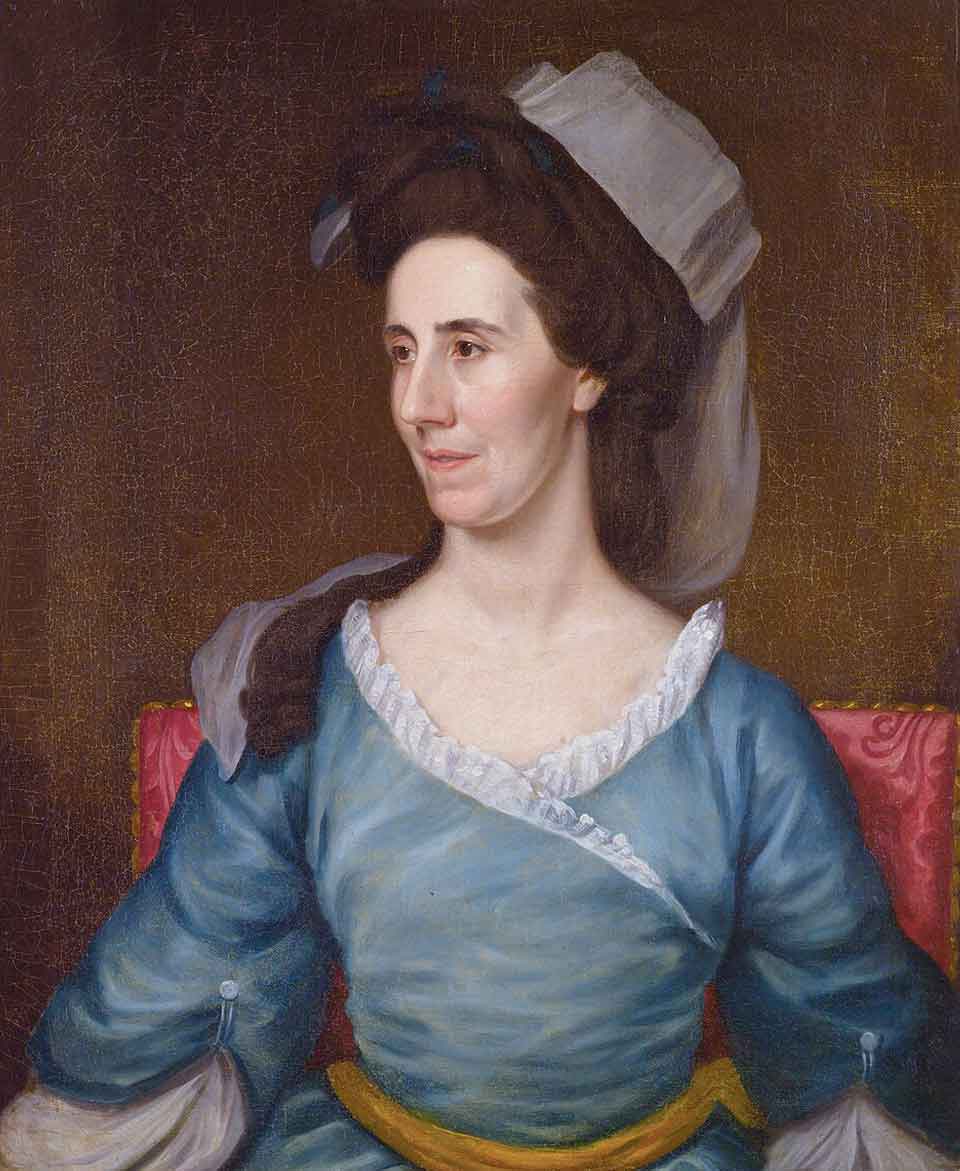
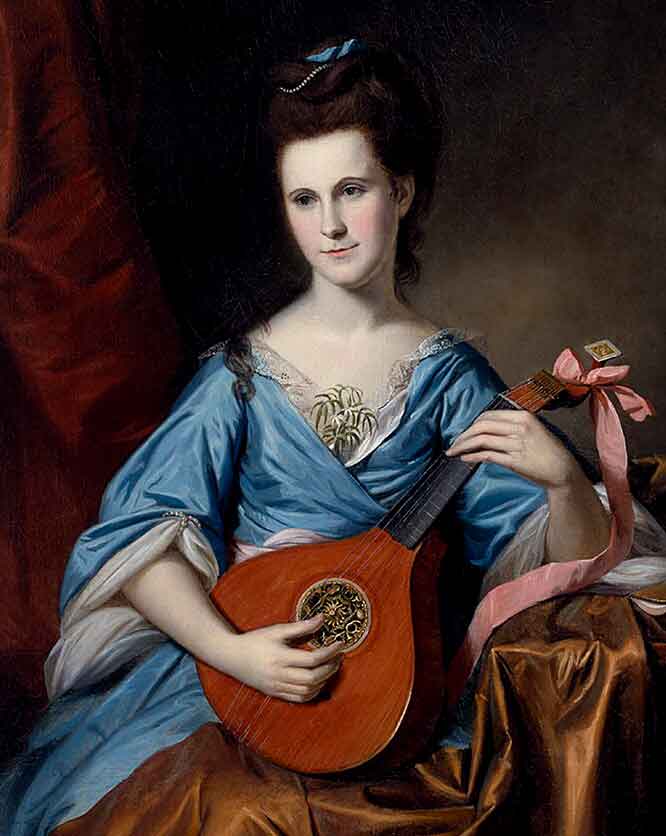
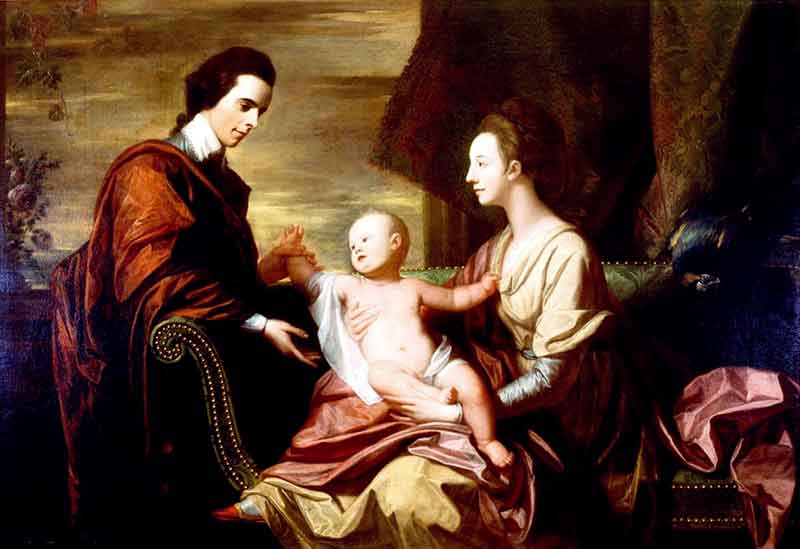
To her everlasting credit, Mrs. Esther Reed then managed the welfare of her three young children and her husband’s law practice without him or any provision being made by him. And while doing so, she remained stalwartly supportive of her husband’s spontaneous dedication to the call of duty, evidenced by her answering correspondence.


Esther Reed, née de Berdt (1746-1780)

In this particular chain of events, the Reeds were particularly representative of the hundreds—if not thousands—of Americans whose hearts and vision were slow to awaken to the weight of this struggle and their responsibility in it, but once aware they answered it with appropriate ferocity and devout courage to the great expense of their comfort and security. It also exemplified the unparalleled draw that George Washington’s bearing and character had on those men he encountered and thus recruited.

In the scales of history, Joseph Reed’s place among the first of Washington’s Indispensable Men proved incalculable. Beyond becoming a trusted advisor on deeply confidential matters and proving himself an abiding source of encouragement during bleak circumstances—of which the year 1776 was never lacking—, Washington came to rely upon Reed to “think for me, as well as execute orders.”

Much of the ingenuity on display during the siege of Boston, the occupation of Dorchester Heights, and the fortification of New York, can be traced in part to the advice of Joseph Reed who rode everywhere with Washington, jotting down observations and orders from the saddle. But it was in New York, with the full might of the British fleet, the British army and their Hessian mercenaries choking Washington’s entrenchments on Long Island, that Reed’s ebullient spirit at last faced demoralization.


Boston, viewed from Dorchester Heights

To his wife he raged about the Tory population, the feckless militiamen, and the rampant rate of desertion. He wrote:

“When I look round, and see how few of the numbers who talked so largely of death and honor are around me, and that those who are here are those from whom it was least expected… I am lost in wonder and surprise… Your noisy sons of liberty are, I find, the quietest in the field… An engagement, or even the expectation of one, gives a wonderful insight into character.”

For her part, Esther Reed dared only to hope her husband might return home in time for the birth of their fourth child. Instead, throughout the Battle of Brooklyn, Joseph Reed was with Washington and for six days there was no time even for a change of clothes, much less any sleep to be had for several nights.

During this summer of despair, Washington not only talked Reed out of quitting the army multiple times but in turn promoted him to the rank of colonel, while making him adjutant general—administrative head—of the rapidly disintegrating Continental Army. Within days Reed wanted to quit again, but Washington needed him and reports from the countryside of the rapacious attitude of the British toward civilians cemented the terms of the war—there was no going back for anyone, it was do or die.

Then there came a day in mid-September 1776 that required from Reed a display of martial courage and steely nerve hitherto untried in his secretarial role. With reliable officers in shorter supply than healthy soldiers, Washington sent Reed into the heat of battle to lead the men forward personally. In the midst of this mêlée, Reed saw the first of his soldiers to turn and run from the enemy. Ordered to stop and return to the front, the deserter, a Connecticut private named Ebenezer Leffingwell, raised his musket, took aim at Reed from a distance of only a few yards, and pulled the trigger on his own colonel.

By God’s will, the deserter’s gun lock merely snapped, and no bullet was fired. Reed’s own pistol jammed when he drew it to return fire. Then Joseph Reed, this mild mannered Philadelphia lawyer, drew his unblemished sword and, striking twice, wounded Leffingwell on the head, severed a thumb, and forced him to at last surrender.

“I should have shot him, could I have got my gun off,” Reed admitted at Leffingwell’s court-martial held two days later. He would have been perfectly justified in doing so, and the court martial found Leffingwell guilty not only of desertion but of “presenting his firelock at his superior officer.” He was sentenced to be executed before the assembled troops the following day.

“To attempt to introduce discipline and subordination into a new army must always be a work of much difficulty,” Reed mused quite generously to his wife about the incident. This constant balancing act between personal independence and lawful subordination to those in authority was an inner struggle that marked the American experiment from its outset.

Perhaps influenced by such philosophizing, at the very last moment of the execution, indeed at the very moment Private Leffingwell knelt to be shot, Joseph Reed begged General Washington to pardon the man. Washington granted Reed’s request, although he remained doubtful of the merit of this mercy, and hard-line disciplinarians like General Nathanael Greene noted such benevolence was not for one man alone to withhold or dispense.

But as Providence would ordain it, by late fall Joseph Reed himself became the needful recipient of such mercy. After the disastrous fall of New York to the British, yet more calamities befell the Continental Army in devastating succession, many of them brought upon themselves by poor planning and indecision.

Reed was in a most intimate position to observe all deficiencies and blundering in his commander up close, and being terrified of the outcome of this collapsing cause, Reed took it upon himself to write to Washington’s second-in-command, General Charles Lee, and divulge to him how spent his erstwhile faith was in Washington’s abilities. He even hinted in plaintive language that Lee should perhaps take charge of the army instead. “As soon as the season will permit, I think yourself and some others should go to Congress and form the plan of a new army” he wrote.


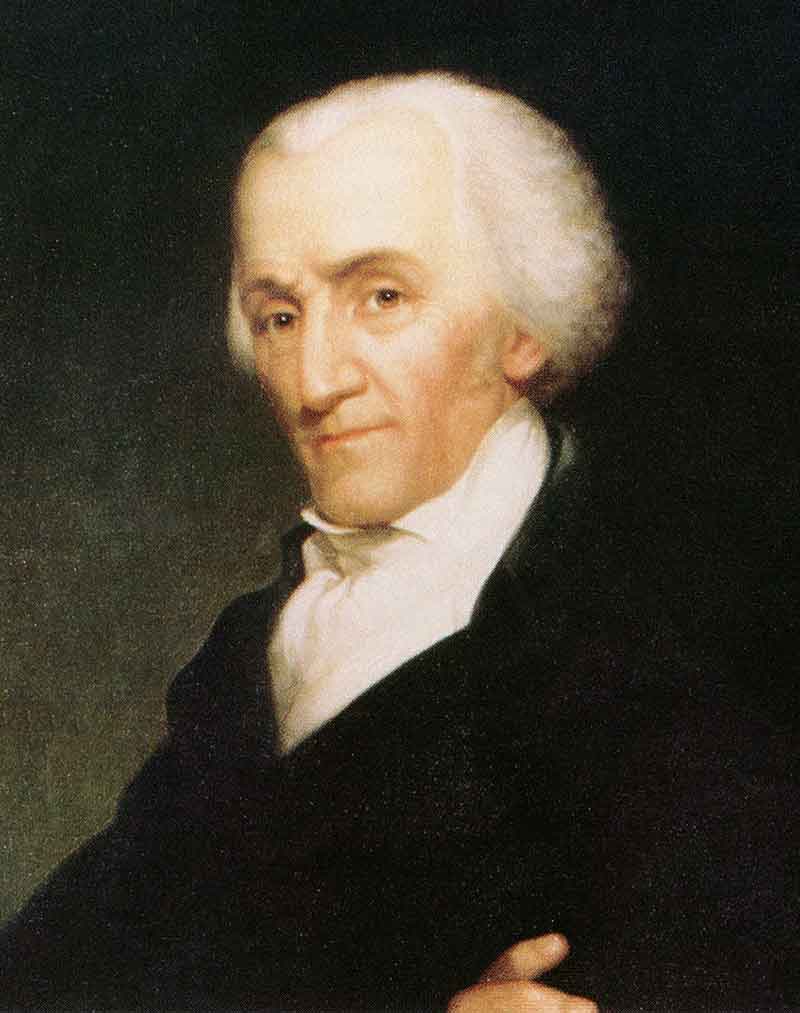
Charles Lee (1732-1782)

Charles Lee, an easily flattered man who proved traitor and informant for the British later in the war, wrote Reed a lengthy letter in response. This letter arrived at Washington’s headquarters while Reed was absent. With all communications being shared between the men, and indeed many missives being addressed to both, Washington thought nothing of tearing open a letter from one of his trusted generals addressed to his secretary. It surely held news of a relief party or else scouting reports.

Instead, it revealed a most crushing betrayal of trust, compounded by an indictment of his capabilities by his closest advisor and friend. What Washington thought upon discovering this letter is unknown; in the typical fashion of his ever restrained and composed character, we only know that he forwarded the letter to Reed with a scribbled note: “The enclosed was put into my hands by an express [rider]… Having no idea of its being a private letter.. I opened it…. This, as it is the truth, must be my excuse for seeing the contents of a letter which neither inclination or intention would have prompted me to.”

Strikingly we also have little record of a resolution between the two men, although one was seemingly achieved. We do have an account from Reed relaying how Washington took almost uncharacteristic pains to divulge his feelings on the subject once reunited: “I was hurt not because I thought my judgment wronged by the expressions contained in it [the letter], but because the same sentiments were not communicated immediately to myself.”

In short order, we see a resumption of the old trust and reliance that Washington placed in Reed. By the close of 1776 the Commander in Chief once again depended upon his secretary to arrange what became the famous Crossing of the Delaware on Christmas night. Those who are merciful will be shown mercy, perhaps, but it didn’t spare Reed from one last amusing hint at his old indelicacy when Washington wrote him the night of December 25, “For Heaven’s sake keep this to yourself, as discovery of it may prove fatal to us… but necessity, dire necessity, will, nay must, justify this attempt.“


Pine Tree Flag

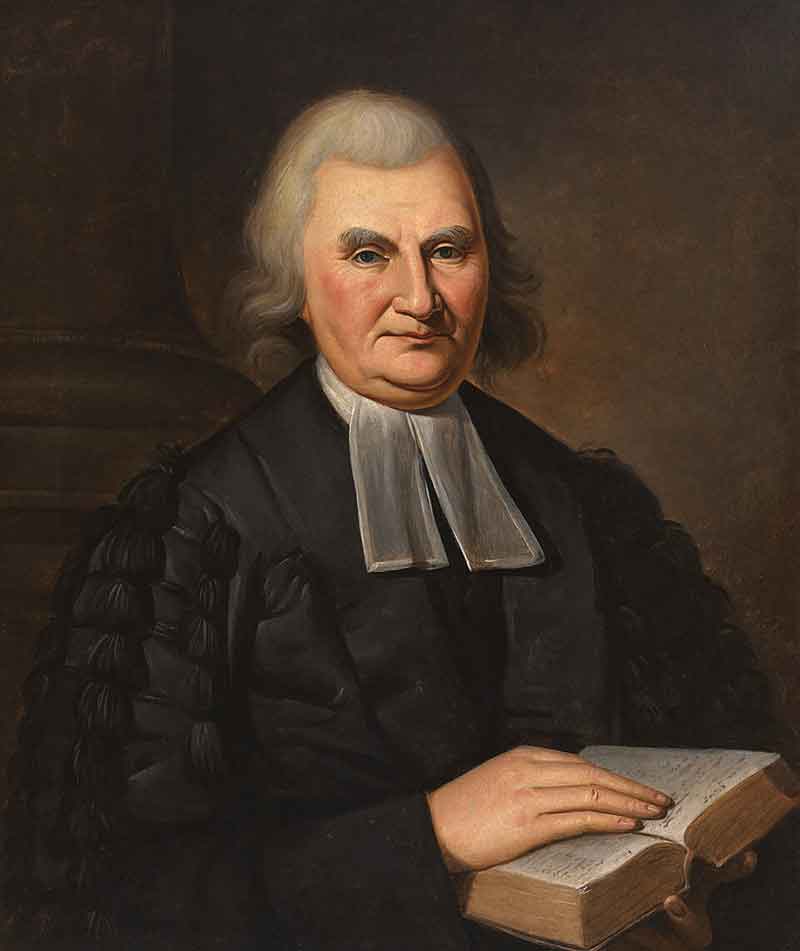
Joseph Reed served loyally in a variety of roles both in the army and congress for the remainder of the war. He is credited with designing the Pine Tree flag which bears the motto “An Appeal to Heaven”, and touchingly named his third son George Washington Reed in 1780. In the same year his wife Esther Reed co-founded the Ladies Association of Philadelphia with Sarah Franklin Bache, Benjamin Franklin’s daughter, to provide monetary support for Washington’s troops; Esther died later that year. Joseph followed her in 1786 at age forty-three, having enjoyed only two years of the Independent country he had given so much to see preserved.


Sarah Bache, née Franklin (1743-1808)

Nathanael Greene | Profiles of 1776

2026-05-09T15:00:48-05:00May 9, 2026|HH 2026|

“Then you will understand what is right and just and fair—every good path. For wisdom will enter your heart, and knowledge will be pleasant to your soul. Discretion will protect you, and understanding will guard you.”
—Proverbs 2:9-11

Nathanael Greene | Profiles of 1776

The American Revolution was a “young man’s cause,” as historian David McCullough observed, noting that the average patriot was under the age of forty-five—with the commander-in-chief of the Continental forces himself only forty-three, the architect of the Declaration of Independence just thirty-three, and the president of the Continental Congress not yet forty. These were extraordinary times, full of remarkable men who had stewarded their youth well, and thus found themselves still in the full flush of their prime while possessing the long-acquired wisdom of their elders.

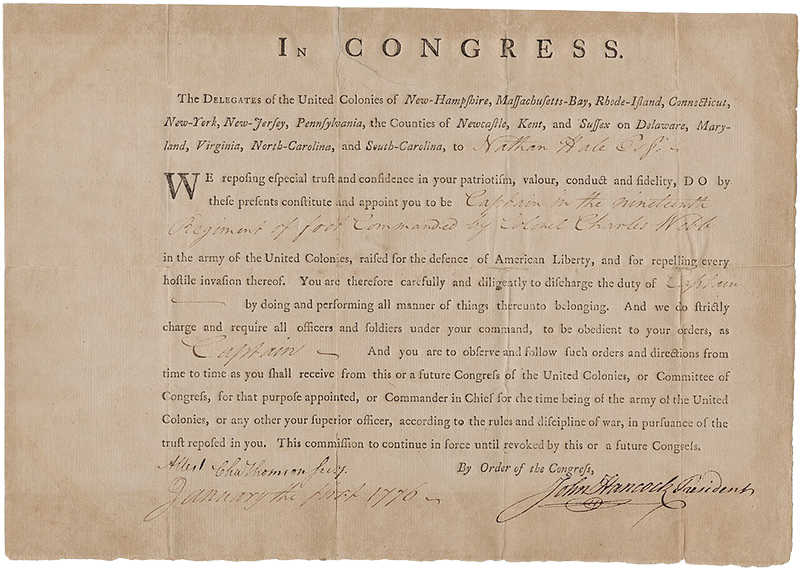
It was par for the course then that in 1775, when George Washington took charge of the “rabble in arms” that then comprised the new American army, a well-read blacksmith was the youngest of his officers at age thirty-three. But being young was hardly the greatest unlikelihood of Nathanael Greene—he was also a fighting Quaker.


Nathanael Green (1742-1786)

Born in Rhode Island to a family that forged their success in the foundry trade, Greene showed great diligence and promise from an early age. Appreciative of his father’s monumental efforts that ensured a comfortable position among the colony’s elite, Greene yet differed with him in many beliefs and practices. As a youth he sought out the guidance of Congregationalist minister Ezra Stiles—later a president of Yale—to serve as his mentor in that broadened form of classical education he felt his Quaker upbringing had thus deprived him. While yet attending to his duties at his father’s forges, amidst the clamor of fashioning anchors and chains for his predominately naval colony, Greene devoured Caesar, Horace, Swift, Pope and Locke—all staples of the Western Canon that greatly influenced his more traditionally educated contemporaries.


Forge Farm, Warwick, Rhode Island, birthplace of Nathanael Green

In his pursuit of such intellectual betterment he frequented the well-stocked bookshops of Boston, including the specially curated one owned by a certain Mr. Henry Knox. These two became fast friends and in only a few short years, Greene the self-taught foundry man and Knox the jovial bookseller, would become two of General Washington’s most trusted commanders. They would remain so until the end of the eight year War for Independence. To say they never saw such a future coming would do their intellects a disservice, for these two visionary and voracious students of history saw the signs of the times, and thus anticipated and readied themselves for a conflict with the Mother Country long before the first shots were fired. They both devoted themselves to studying the art of war and joined their local militias. In Greene’s case he organized a unit himself, the Kentish Guards, only for his services as an officer to be rejected due to a limp he carried from an injury. For Knox his own service was made awkward by his father-in-law being the king’s Royal Secretary of the Treasury for the province.


Henry Knox (1750-1806)

Greene found the militia’s objection to his disability a deep “mortification” beyond anything he had known, but being fervently devoted to the Glorious Cause, he served for eight months as a private until the ramshackle and bumbling Continental Army realized his genius was without parallel amongst his peers, and universally agreed to forget about the limp. He was put in charge of almost all the Rhode Island units by the end of the siege of Boston in 1776.

With the same foresight that anticipated a struggle between the two countries, Greene yearned for a formal separation from Great Britain upwards of a year before the Declaration of Independence was signed. Greene and Knox’s letters to each other and between their wives divulge an almost antsy need for the conflict to have a greater purpose than Parliamentary capitulation. While Knox’s letters tended towards the more loquacious on the subject, Greene’s terse concerns about the lassitude of those engaged in the cause were often directed straight to John Adams on the Board of War, articulating clearly the uncertainty of the moment:

“Suppose this army should be defeated, two or three of the leading generals killed, our stores and magazines all lost, I would not be answerable for the consequences that such a stroke might produce in American politics. Permit me then to recommend from the sincerity of my heart, ready at all times to bleed in my country’s cause, a Declaration of Independence, and call upon the world and the Great God who governs it to witness the necessity, propriety and rectitude thereof.”

Keenly conscious of his civilian shortcomings in this epic struggle, Greene set himself to make up for what he might lack in knowledge by, as he put it, “industry and watchfulness”. Indeed, he was a stickler for hygiene and order in his camp, was a strict disciplinarian who would appeal to congress for harsher sentencing against deserters and rapists, and was unparalleled in his study of a battleground’s topography. This latter trait became the key component in most of Washington’s winning strategies and enabled Greene to outmaneuver and crush the British Empire’s vastly superior force in the southern campaigns. In turn Greene admired Washington to an extreme, never wavering in his confidence in him despite many grueling setbacks and failures, and such loyalty became the loadstar of the entire cause, the effect trickling downward even to the men in the ranks.


Greene in uniform

When times came that many in congress and in stations below Washington sought to replace him as commander, Greene played his part as both anecdote and informer on any who sought to undermine his chief, even when he himself was put forward for promotion. “His Excellency George Washington” he wrote of his leader, “never appeared to so much advantage as in the hour of distress.” In turn, Washington adamantly retained his faith in Greene during the young general’s early blunders, assuring him constantly of his dependence on him. Both men inspired a great zeal in those who encountered them or served under them, and throughout the war they had an ongoing and entirely cordial fight between them to retain staff officers, and often shared quarters making for an easier and intimate merger of business and friendship.

The uncommon resolve and adaptable intelligence that marked the victories and survival of the American Cause throughout the crucible year of 1776 were in so many ways owed to General Nathanael Greene, who embodied them personally when he famously said, “We fight, get beat, rise, and fight again.”


Greene Homestead in Coventry, Rhode Island

This formative year was only the beginning of Greene’s impeccable career that would establish him as second only to Washington in respect and success; he would prove crucial in the northern battles of Trenton, Brandywine, Germantown and Monmouth, he weathered the miseries of Valley Forge with the company of his wife Caty and, when necessity required it, served briefly as Quartermaster General to almost singlehandedly reform the army’s dysfunctional and corrupt supply system. Greene was the one who brought Lord Cornwallis to his knees at Guilford Courthouse in the Southern Campaign of the 1780’s—paving the way for the British Surrender at Yorktown. These are only a smattering of his wartime contributions, and mention nothing of his many personal sacrifices and instances of bravery, his magnanimity in the face of infighting and jealousy, or his bankrupting himself to ensure his soldiers received their pensions, all of which deserve study but must needs be the topic of another day.

John Winthrop’s Model of Christian Charity: A Vision for America, April 25, 1630

2026-04-24T17:48:31-05:00April 24, 2026|HH 2026|

“This day I call the heavens and the earth as witnesses against you that I have set before you life and death, blessings and curses. Now choose life, so that you and your children may live.”—Deuteronomy 30:19

John Winthrop’s Model of Christian Charity: A Vision for America, April 25, 1630

The spring of 1630 found England restless under a king seemingly bent on stamping out the pure, gospel-based worship so many devout souls practiced and desired to maintain. King Charles I and his archbishop, William Laud, had tightened the screws on the Puritan Reformers by banning their meetings, silencing their preachers, and enforcing ceremonies that became increasingly popish in practice and trappings. King Charles had also suspended Parliament indefinitely, causing grave concern for the security of the rule of common law.

For parishioners who believed the Church of England had not gone far enough in its Reformation, that both churches and courts should be brought under the law of God, the only honorable path left was to consider departure.


Arbella in the Winthrop fleet

And so a fleet of eleven ships carrying nearly a thousand souls set sail for the untamed shores of Massachusetts Bay, determined to build a commonwealth ordered entirely by Scripture. At the head of that company stood John Winthrop. Quiet, scholarly, and profoundly devout, he was a forty-two-year-old lawyer and gentleman of Groton, Suffolk, and had been elected governor by the shareholders of the Massachusetts Bay Company before the ships ever left English waters.


Arbella, flagship of the fleet—Winthrop’s sermon was preached on board

It is important to keep this context in mind—that Winthrop was an elected public official sent to establish the rule of law in the new country while it disintegrated in the old—when he delivered his now famous lay-sermon aboard the flagship Arbella. He titled it “A Model of Christian Charity.”

His subject was not a call to obey civil magistrates, a warning against laziness or even an encouragement to bravely face the trials ahead, but rather it was a solemn charge to model for all the world the chief attribute of the Christian Religion: charity.


John Winthrop (1588-1649)

Winthrop began, as the sermon itself opens, with the plain fact of Providence:

“God Almighty in His most holy and wise providence hath so disposed of the condition of mankind, as in all times some must be rich, some poor, some high and eminent in power and dignity, others mean and in submission.”

Why this inequality? Not, he insisted, for the sake of the individuals themselves, but for the glory of the Creator and the common good of the creature, and so their experiment was first and foremost to be a model society rooted in graciousness.

The reasons were, he said, threefold:

“First, to hold conformity with the rest of His works, being delighted to show forth the glory of His wisdom in the variety and difference of the Creatures and the glory of His power, in ordering all these differences for the preservation and good of the whole, and the glory of His greatness, that as it is the glory of princes to have many officers, so this great King will have many stewards counting Himself more honored in dispensing His gifts to man by man, than if He did it by His own immediate hand.”

Second, he said,

“That He might have the more occasion to manifest the work of His Spirit: first, upon the wicked in moderating and restraining them: so that the rich and mighty should not eat up the poor, and amongst the regenerate in exercising His graces in them.”

Third, he asserted,

“That every man might have need of the other, and from hence they might be all knit more nearly together in the bond of brotherly affection; from hence it appears plainly that no man is made more honorable than another or more wealthy but for the glory of his Creator and the common good of the creature, man.”

The heart of his appeal was contained in the closing paragraphs where Winthrop warned his listeners that they had entered into a special covenant with God, that the eyes of the world were upon their endeavor, but greater still the eyes of Heaven. If they dealt truly with one another, loved their brethren as themselves, and labored together for the common good, then in the beauty of God Almighty’s economy they would become “a praise and glory” in the earth. But if they failed—if selfishness, greed, or coldness crept in—they would become an infamous “by-word throughout the world.”


Winthrop meets with a Narragansett warrior, c. 1631–1639

Theirs was the holy “duty of mercy” which was to be the hallmark of the new American colonies. Winslow gave them a profound charge:

“Beloved, there is now set before us life, and good, death and evil in that we are commanded this day to love the Lord our God, and to love one another and walk in His ways and to keep His Commandments and His ordinance, and His laws, and the articles of our Covenant with Him that we may live and be multiplied, and that the Lord our God may bless us in the land wether we go to possess it. But If our hearts shall turn away so that we will not obey, but shall be seduced and worship other gods, our pleasures and profits, and serve them; it is propounded unto us this day, we shall surely perish out of the good land wither we pass over this vast sea to possess it. Therefore let us choose life that we, and our seed may live, by obeying His voice, and cleaving to Him, for He is our life and our prosperity.”

Then came the immortal, vision-casting line that has echoed down four centuries: “We shall be as a city set upon a hill. The eyes of all people are upon us.”

What followed that April address was the slow, arduous work of turning this vision into the renowned, devout, industrious colony that would, in future generations, become the Massachusetts of Harvard, Lexington Green, and Bunker Hill fame. By the influence of this ideal, Massachusetts was the first state to establish a board for American Foreign Missions, and America entire would produce more missionaries in her short 250 years than all the rest of the Christian world.

Winthrop himself would serve as governor for twelve non-consecutive terms in the colony’s first nineteen years, guiding the settlers through famine, disease, and the constant temptation to scatter or compromise. The Massachusetts Bay Colony never became the perfect society he desired—human frailty saw to that, his own included—but its founding ideal endured.

Though the sermon itself lay unpublished until 1838 and was little known for two hundred years, its essence shaped New England’s churches, schools, and laws. Later generations would reach back to that “city upon a hill” imagery and apply it, sometimes loosely, to the whole American experiment. Presidents from John F. Kennedy to Ronald Reagan would quote Winthrop’s words when recalling the nation’s divine purpose.


John Winthrop’s “Modell of Christian Charity” sermon, as published in 1838

Winthrop himself would write in his journal, years later, that the colony’s survival had been “a wonder of wonders,” and he gave glory to the Most High for this mercy. Winthrop’s charge is as applicable today as it was in 1630, that to be a city set upon a hill we must reclaim our Christian duty to charity, for we are commanded to “not neglect to do good and to share what you have, for such sacrifices are pleasing to God.”

The Other Side of the Night: RMS Carpathia, April 14-15, 1912

2026-04-11T12:30:57-05:00April 13, 2026|HH 2026|

“For we are God’s handiwork, created in Christ Jesus to do good works, which God prepared in advance for us to do.”—Ephesians 2:10

The Other Side of the Night: RMS Carpathia, April 14-15, 1912

The tragedy and heroism that marked the sinking of the RMS Titanic amidst the vast ice fields of the North Atlantic has rightly kept our fascination and admiration for over a century. Among the stirring stories often repeated are those of the two telegraph operators, Jack Phillips and Harold Bride. Both bravely stayed at their posts, sending out the chilling distress call, until the electricity gave out and the ship split in two—one perished, the other lived on with health complications.


John George “Jack” Phillips (1887-1912)


Harold Sydney Bride (1890-1956)

But who were these brave operators trying so desperately to contact? Cape Race on the Nova Scotia coast, for one, but more opportune were any vessels in the nearby vicinity. For the three hours it took the mighty vessel to sink, they sent messages begging for anyone to come alongside and help take on passengers who would be without seats in the too few lifeboats. Did they successfully make contact with anyone in that late hour? They did, and that is the other side of that dreadful night, as D.A. Butler called it in his book, The Other Side of the Night, in which he explores the subject in depth. It highlights a deeply stirring drama of human nature, and of the often gigantic impact that our moral responses hold when calamity strikes.

It turns out there were multiple ships who answered and heard Titanic’s call for help. Among them was Titanic’s sister ship, the RMS Olympic who, after picking up Phillips’ report of a collision, telegraphed back with the placid inquiry, “So are you steering south to meet us?” Phillips tapped back in exasperation, “We are putting the women in the boats,” feeling that should convey the dire situation to anyone listening. Far away the Frankfurt’s operator, who had previously ignored any communication not addressed directly to his ship, broke in with, “Are there any ships around you already?” Then, a few seconds later: “The Frankfurt wishes to know what is the matter? We are ten hours away.”

All this as the water rushed into the lower levels in a torrent and the electricity began to flicker.


The Californian on the morning after Titanic sank; photo taken from Carpathia

Infamously, the Californian was an estimated mere six miles away, which in the event of a rescue would have enabled them to reach the Titanic with plenty of time to spare before her sinking. Close enough that her senior officers were witness to five successive distress rockets that Titanic sent up, and had time to observe and comment that the distant ships’ lights “looked queer” through their telescopes—Titanic was listing to such a degree by that time that six floors were already submerged on her stern. Close enough that Titanic’s fourth officer Mr. Boxhall, who was sending the rockets up personally amidst the pandemonium of loading the lifeboats, was witnessed to swear directly at the Californian’s distant lights for their fatal inertia.

The Californian’s captain, Stanley Lord, had been asleep already when notified by his officers that a ship appeared to be firing distress rockets in the distance. He encouraged his men to use the method of flashing a morse lamp at the distant ship, but declined to wake up his own telegraph operator to check the comms. Captain Lord then retired back to bed, possibly inebriated, leaving his crew with a great disincentive to wake him for any news.


Stanley Phillip Lord (1877-1962), captain of the SS Californian

Meanwhile, some fifty-eight miles away from the site of unfolding disaster, the Cunard liner RMS Carpathia was steaming peacefully toward the Mediterranean under the command of Captain Arthur Rostron. The Cunard Line was a respectable but modest rival of the Titanic’s White Star Line, but like all good passenger steamers of day, she was fitted with the revolutionary wireless technology that enabled ships to pass radio messages between themselves even at great distances. To work this luxury innovation, Carpathia had a single wireless operator, twenty-one-year-old Harold Cottam.

It was a little after midnight on the 15th that Cottam left Carpathia’s bridge and returned to his wireless office, having just handed several routine messages to First Officer Horace Dean. Once there he decided against going to sleep and instead sat down to his telegraph device to relay a number of messages in need of forwarding for the new White Star Liner Titanic. He thought he would remind Jack Phillips, Titanic’s senior operator whom he knew professionally, about those waiting messages. It took a few minutes for his telegraph set to warm up, then he politely tapped out a call to the Titanic, quickly receiving a curt go ahead.


Harold Thomas Cottam (1891-1984)

“Good morning, old man [GM OM].” Cottam typed out cheerily, “Do you know there are messages for you at Cape Race?”

What Cottam heard next made his blood run cold. Instead of the expected jaunty reply came the dreaded “CQD…CQD…SOS…SOS…CQD…MGY. Come at once. We have struck a berg. It’s a CQD (come quick, danger), old man. Position 41.46 N, 50.14 W.”

Cottam later reported being so stunned he did nothing for a moment, then tapped back asking Phillips if he should tell Carpathia’s captain. The reply was immediate: “Yes, quick.”

Cottam then raced to the bridge and breathlessly told First Officer Dean. Dean didn’t hesitate—he bolted down the ladder, through the chart-room and into their captain’s cabin with Cottam hard on his heels. Without the slightest prevarication upon hearing the dire report, Captain Rostron told Dean to order the ship around, and only after doing so grilled Cottam on the details. Being a moderate man, and as informed as any of Titanic’s boasted engineering, he seemed to find the possibility of her sinking as incredible as the rest. He inquired twice if Cottam had not misunderstood. His young telegraph operator insisted he had not, Titanic was sending out every distress call in the books, old and new. Never once did Rostron ask if any other ship was nearer or better suited to answer the call and once convinced of his duty, Captain Rostron swung into action, immediately ordering Cottam to assure Jack Phillips they were coming as fast as they could.


Sir Arthur Henry Rostron (1869-1940), captain of the RMS Carpathia

What followed was one of the most remarkable acts of seamanship and courage in maritime history.

Carpathia was a modest fourteen-knot ship, built for comfortable service rather than speed. Yet to rescue her rival, Rostron demanded every ounce of power her engines could produce. He ordered the off-duty stokers roused and made to shovel coal, the ship’s heating and hot water were cut off from passengers so that every scrap of steam could be diverted to the boilers, and the vessel was thus pushed in every way beyond her normal limits. Titanic carried three thousand souls, and Carpathia was already full, so dining rooms and saloons were noisily rearranged into makeshift berths, with blankets, hot soup, and medical stations organized in the bold expectation of a complete roster of survivors. Above decks, gangway doors were opened, rope ladders and cargo nets rigged, chair slings fashioned to lift the injured and the children from lifeboats.

Carpathia’s Chief Steward, a most unflappable man named Hughes, gathered his stewards and stewardesses together, and knowing they would work harder if told what their mission was, explained to them that the mighty Titanic and her thousands of souls were depending on them and their preparedness alone for rescue. “Every man to his post and let him do his duty like a true Englishman,” he charged them, “As the situation calls for it, let us add another glorious page to British history.”


The RMS Carpathia

The middle-of-the-night commotion began to arouse Carpathia’s guests, along with the perturbing symptoms of speed such as their bunks vibrating and the pistons banging underfoot. “We are going north like hell” the Quartermaster informed those who asked, and many upon learning of the rescue attempt they were sudden accessories to, pitched in their efforts and belongings for the relief of the anticipated survivors.

Through fields of ice—the same as had just dealt Titanic her fatal blow—with growlers scraping along the hull, and bergs looming suddenly out of the blackness, the Carpathia raced on for three and a half hours at an unheard-of seventeen knots. Captain Rostron reportedly covered the boiler’s pressure gauge so as not to alarm his crew over minor details like a boiler’s imminent risk of bursting. Despite such haste, he was also determined that the Carpathia would not meet the same fate as the ship she was rushing to aid. Rostron had an extra man posted in the crow’s nest, two lookouts in the bow, extra hands posted on both bridge wings, and Second Officer James Bisset, who had especially keen eyesight, posted on the starboard bridge wing.

Having done all he could do, the devout Rostron attended to one last duty. Second Officer Bisset noticed it first, then so did the others on the bridge—the Captain was standing toward the back of the bridge holding his cap an inch or two off his head, eyes closed, lips moving in silent prayer. Later Rostron would say of Carpathia’s miraculous feat, “I can only conclude another Hand than mine was on the helm that night.”


Harold Bride hard at work in the wireless room aboard the RMS Titanic—this is the only known picture of this room, taken by passenger and Catholic priest, Francis Browne

It was a quarter past one aboard Titanic when her captain, Edward Smith, informed operator Phillips that the power was beginning to fade. Maybe ten minutes later he told him the water was reaching the engine rooms. At 1:45 a.m. Phillips, still at his post mechanically tapping out distress calls to any who might hear, called to the Carpathia again, “Come as quickly as possible, old man; engine room filling up to the boilers.”

The way the wireless system worked was such that any ships who were able to pick up these communications between Titanic and Carpathia forwarded them on to the Marconi station at Cape Race, Nova Scotia, and they in turn forwarded them inland to cities like New York and Philadelphia. So it was that this unfolding tragedy and the strenuous exertions of the would-be saviors were read in real time by those awake inland and powerless to do ought but pray for the outcome.

At two o’clock Titanic’s Captain had exhorted Phillips and Bride, “Men, you have done your full duty. You can do no more. Abandon your cabin. Now it’s every man for himself.” According to Harold Bride who survived the night, Phillips had glanced up at him, then went right back to Morsing. The Captain continued: “You look out for yourselves; I release you. That’s the way of it at this kind of time.” Then he turned and left the wireless shack for the last time. Without a word, Phillips continued to tap out his distress call. The lights were starting to take on an orange glow as the power began slowly fading. Phillips kept tinkering with the set, trying to adjust the spark to make it stronger. At 2:10 he tapped out two “Vs” as a test; at 2:17, the distant Virginian heard a faint “CQD…CQ—” that ended abruptly. That proved the last transmission anyone heard from Titanic. Aboard Carpathia, Cottam desperately tried to make contact, but without success. Despite eventually tearing herself apart in her strain to make all speed, the rescue ship would prove two hours late for those who perished in the frigid North Atlantic, the dauntless Jack Phillips included.


Wireless operators Harold Bride of the Titanic (seated with bandaged feet) and Harold Cottam of the Carpathia during the U.S. Senate inquiry into Titanic’s sinking


An artist’s rendition of the sinking of the RMS Titanic

As dawn broke over the icy sea, they saw green flares. Knowing the odds were impossible, Rostron still harbored hope that this meant Titanic was yet afloat. It was instead the first of her lifeboats hailing them, relieved beyond expression to be found amidst the huge Atlantic ice floes after hours adrift in the cold, and after spectating one of the greatest—and loudest—human calamities witnessed at sea up to that point. Rostron recorded the moment: “I swung the ship round and so came alongside the first of the Titanic’s boats on the starboard side. Devoutly thankful I was that the long race was over.”

One by one, the boats were emptied—women and children first, the injured and the frozen helped aboard with infinite care. Over the next four hours, Carpathia’s crew and passengers took in 705 survivors, a goodly lot but devastatingly scant when considering the inferred death toll of 1,500. Hot drinks were pressed into numb hands, coats given to the shivering, prayer vigils were held. Rostron offered his own quarters to the most distressed. When the last survivor was safely aboard, the Carpathia turned away from the grave of the great ship, all sick at heart that there were no more to be saved. Captain Rostron would later say with characteristic humility: “I thank God Almighty that I was within wireless hailing distance, and that I got there in time to pick up every one of the 705 survivors of the Titanic wreck.”


A group of unknown Titanic survivors aboard their rescue ship, the Carpathia

In the weeks to follow there would be other ships sent out—to collect any remains. Multiple official inquiries were held, investigating every aspect of the disaster and critiquing each ships’ response to it. What had been clear to the officers of the Titanic became clear to the public in eagerly sought transcripts of the hearings. Talks of insurance fraud, lifeboat quotas and the like tended to obscure the incredible story that belonged to the Carpathia’s fearless crew, their bravery and urgency, and their real life foil, the dormant Californian.

Captain Rostron’s actions that night are widely praised as a marvel “of systematic preparation and completeness to duty,” and those he rescued would bless him for such efforts until the day they died. These are the stories that, in a Christian’s view of history, quietly shape how we remember even the most wretched of catastrophes, not only for the horror, but for the light of honor that refuses to be extinguished.


Titanic survivor Molly Brown presenting an award to Captain Arthur Henry Rostron of the Carpathia for his heroism in risking all to save survivors

May we always remember the Titanic, but the Carpathia and the Californian, too! May we always be ready to be used of God for good deeds as Captain Rostron was, for, “who knoweth whether thou art come to the kingdom for such a time as this?”

Death of Britain’s Wartime Queen, Elizabeth Bowes-Lyon, March 30, 2002

2026-03-26T11:39:49-05:00March 26, 2026|HH 2026|

“Her children arise and call her blessed; her husband also, and he praises her: ‘Many women do noble things, but you surpass them all’.”—Proverbs 31:28-29

Death of Britain’s Wartime Queen, Elizabeth Bowes-Lyon, March 30, 2002

When young debutante Elizabeth Bowes-Lyon declined Prince Albert’s first proposal to her in 1921, it was not for lack of affection for him or any strong pull elsewhere. Instead, as evidenced by her many letters on the subject, Elizabeth deeply dreaded the prospect of marrying into the British Royal family. Even by marrying a secondary Prince, such as Albert, with no claim to the throne, she would be signing up for a life of scrutiny and endless societal rigor despite all its privileges. Having been raised by a prestigious but modest family of Scottish aristocrats, Elizabeth found these deterrences too strong to be overcome. It was the sensible thing to decline, and she was always sensible.


Elizabeth Bowes-Lyon (1900-2002) in 1915

How amusing it is that when humans dispose to keep away from the trouble and inconveniences of life, they often seem to find them again in twofold measure. Elizabeth Bowes-Lyon had misgivings about becoming a Duchess, high-ranking to be sure, but not essential. In the course of Providence, she would end up becoming Queen instead, one called upon to serve in full public view during the first war waged directly on English soil by a foreign enemy in centuries. Perhaps greater still, she would be called upon to mother and raise England’s next monarch, her own little Elizabeth, firstborn of two daughters and the late grand Queen Elizabeth II.

Elizabeth Bowes-Lyon first met her princely husband at a ball held in 1920, after which Prince Albert pursued her, was rejected, and then continued the pursuit until accepted. Prince Albert, second son of King George V and Mary of Teck, (and known to his friends as “Bertie”) suffered from many physical complaints: knocked knees, left handedness, stomach pains and a severe stuttering affliction that did not abate with age. However he was also manifestly courageous, courteous and charmingly unaffected. His incredible persistence in overcoming his disabilities has since been made famous by films such as The King’s Speech.


The royal wedding of Prince Albert and Lady Elizabeth, April 26, 1923

The Royal Wedding took place in Westminster Abbey on April 26, 1923, the first to be held there since 1382, and from then on the two were inseparable from each other and singularly faithful. For her part, Elizabeth would, for the rest of their lives, show her husband Bertie a devoted understanding he did not experience from his own family. She would be his champion, in health and public service, knowing him to be vastly capable and extraordinarily charming long before the rest of the world was forced by circumstance to pay him any mind. As was mentioned above, they would go on to have two daughters, Elizabeth and Margaret. When it was practical to escape their public duties, the happy little family was known to gladly hide out in their secluded country estates.

Prince Albert’s father, King George V, had, like Prince Albert himself, been born a second son and an unlikely heir to the throne. By his reprobate brother’s premature death, George V had ascended to the English throne right before the tragedy that became World War One, shouldering with grace responsibilities for which he had not been prepared. Ironically then, King George V himself produced an eldest son, Edward VIII, who would repeat this pattern and saddle his younger brother, Prince Albert, with the duties of King—although Edward ceded them through abdication and not through death, and he did so to marry a twice-divorced American, Wallis Simpson. This renouncement of his royal duties rocked the entire British Empire, but nowhere was the betrayal felt more strongly than at home. Prince Albert is said to have pleaded repeatedly with his older brother Edward to reconsider, if not for his own sake then for the sake of his daughter, the young Elizabeth, who by her uncle’s selfishness now had her entire future rerouted, from the pleasant prospect of being a private noblewoman to the rigors of being a future monarch.


Three generations and four kings: Edward VII (far right); his son George, Prince of Wales, later George V (far left); and grandsons Edward, later Edward VIII (rear); and Albert, later George VI (foreground), c. 1908

Edward VIII, however, would not be moved. The abdication proceeded in 1936 and Elizabeth’s husband Bertie became king, with his royal name being King George VI. The woman who dreaded being a Duchess was now a Queen. And more than that, she became queen in an era prolific with constant exposure to cameras, demanded radio appearances, rising calls for a great leveling of society, and the looming threat of another world war. If her kind-hearted Bertie found it in himself to easily forgive his brother, Elizabeth on the contrary held onto her animosity of him until the last. A strongly dutiful woman herself, Elizabeth had no sympathy for a privileged, capable and physically fit incumbent shirking his role at the expense of her husband. When World War II broke out and it was learned that Edward was allegedly feeding the Nazis confidential information about Buckingham palace and British defenses, Elizabeth was only solidified in her loathing of him. In fact, in a life marked by generosity of spirit and acceptance of the faults of human nature, her strong feelings towards her brother-in-law would be a marked exception to the rule. She would later say that being made king had effectively killed her husband, and laid the blame for that solely on Edward.


Edward VIII and Wallis Simpson, 1936

All throughout the war years, Elizabeth and her once private little family became almost as iconic as Prime Minister Churchill in the eyes of their British subjects. During the terrifying months of the Blitz, Elizabeth refused to leave London. “The children could not go without me, I could not possibly leave the King, and the King would never go“ she once famously told those advisors who begged the royals to evacuate under threats of invasion. Instead, they remained throughout the heavy bombing of London, where Queen Elizabeth aided her husband in his wartime broadcasts, showed herself frequently at the sites of destruction, and worked tirelessly to help alleviate the suffering of the civilian population most affected. The concept of losing the war was something she refused to entertain, and her very presence seemed to radiate that determination wherever she appeared. Her actions during this time earned her widespread admiration and caused Adolf Hitler to refer to her as “the most dangerous woman in Europe” for her success in rallying public spirit. Prime Minister Churchill, who had initially been wary of the couple’s untried spirit, declared after the war that “we could not have had a better King and Queen in Britain’s most perilous hour.”


Queen Elizabeth and her daughter Princess Elizabeth (the future Queen Elizabeth II) talk with paratroopers preparing for D-Day, May 19, 1944

In sad fulfillment of her constant worry for her husband’s health, Bertie succumbed to lung cancer in 1952, widowing Elizabeth at age 51. Their daughter—the late long-reigning Queen Elizabeth II—was crowned, and Elizabeth became known as the Queen Mother. Grief did not drown her; instead she carried always “a great zest for life” and continued to perform in her new role many public duties, remaining indispensable to royal life until her passing at 101 years of age. To put her extraordinary length of influence into perspective, she was a support act and constant advisor to her daughter for 50 years of her 70-year reign. Her funeral in 2002 drew over a million people onto the streets of London.


Queen Elizabeth the Queen Mother, 1986

Beloved but stringent, the devout Queen Mother was credited not only in raising her queenly daughter to be a paragon of duty in the ever-devolving 20th century, but was herself responsible for many moral standards of behavior that the Royal Family continued to espouse, publicly at least. For instance, after Princess Diana’s death in 1997, the issue of Prince Charles and his longtime mistress, Camilla Parker Bowles, acquired great emotional and symbolic relevance. By the Queen Mother’s influence, any formal support of the relationship continued to be denied and its potential union considered impossible. She viewed it as destabilizing of the monarchy and antithetical to the moral standards she believed the institution should project, a beloved grandson’s wish aside. It was considered by the public to be no mere happenstance that only after her death in 2002 were Prince Charles and Camilla Parker Bowles married, despite the church and family’s stance against it.

Lives such as that of Elizabeth Bowes-Lyon are the kind that shape a generation—something she herself might have laughed at or shrank from, had she been told at the beginning what lay in store for her. But quietly faithful and placidly trusting, she resigned herself to be used by God in many an extraordinary era. “Work is the rent you pay in life” her mother, Lady Strathmore, had impressed upon Elizabeth and her nine siblings growing up. She abided by this until the end, informed by a conviction that individuals were more important than the state and that the extension of the government’s reach into every area of life did “not absolve us from the practice of charity or from the exercise of vigilance. The English way of progress has always been to preserve good qualities and apply them to new systems.”


King George VI and Queen Elizabeth, 1939

Go to Top