
“Then you will understand what is right and just and fair—every good path. For wisdom will enter your heart, and knowledge will be pleasant to your soul. Discretion will protect you, and understanding will guard you.”
—Proverbs 2:9-11
Nathanael Greene | Profiles of 1776
 he American Revolution was a “young man’s cause,” as historian David McCullough observed, noting that the average patriot was under the age of forty-five—with the commander-in-chief of the Continental forces himself only forty-three, the architect of the Declaration of Independence just thirty-three, and the president of the Continental Congress not yet forty. These were extraordinary times, full of remarkable men who had stewarded their youth well, and thus found themselves still in the full flush of their prime while possessing the long-acquired wisdom of their elders.
It was par for the course then that in 1775, when George Washington took charge of the “rabble in arms” that then comprised the new American army, a well-read blacksmith was the youngest of his officers at age thirty-three. But being young was hardly the greatest unlikelihood of Nathanael Greene—he was also a fighting Quaker.
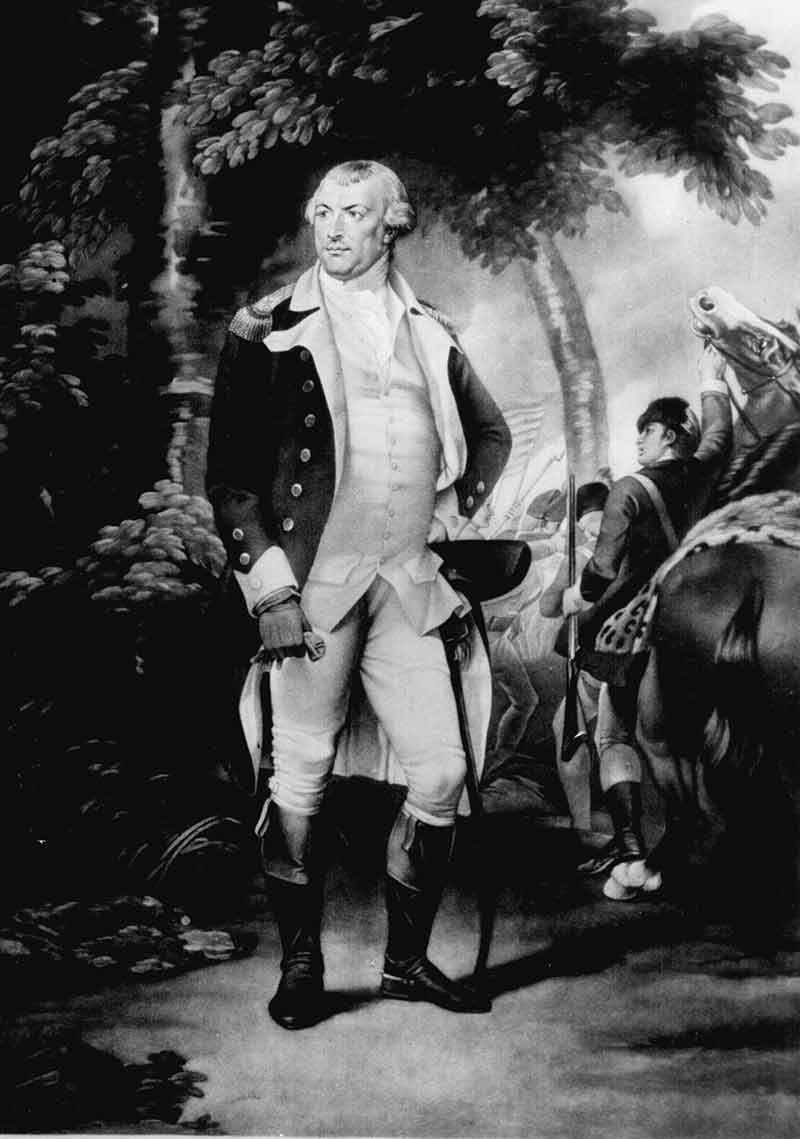
Nathanael Green (1742-1786)
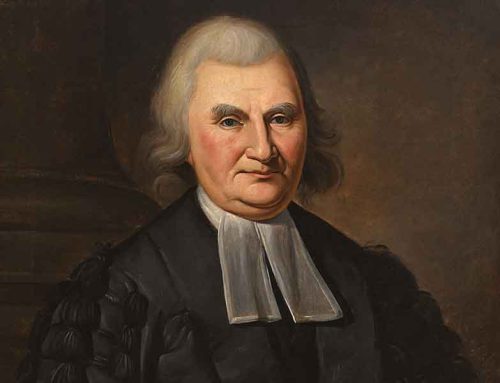
Born in Rhode Island to a family that forged their success in the foundry trade, Greene showed great diligence and promise from an early age. Appreciative of his father’s monumental efforts that ensured a comfortable position among the colony’s elite, Greene yet differed with him in many beliefs and practices. As a youth he sought out the guidance of Congregationalist minister Ezra Stiles—later a president of Yale—to serve as his mentor in that broadened form of classical education he felt his Quaker upbringing had thus deprived him. While yet attending to his duties at his father’s forges, amidst the clamor of fashioning anchors and chains for his predominately naval colony, Greene devoured Caesar, Horace, Swift, Pope and Locke—all staples of the Western Canon that greatly influenced his more traditionally educated contemporaries.

Forge Farm, Warwick, Rhode Island, birthplace of Nathanael Green
In his pursuit of such intellectual betterment he frequented the well-stocked bookshops of Boston, including the specially curated one owned by a certain Mr. Henry Knox. These two became fast friends and in only a few short years, Greene the self-taught foundry man and Knox the jovial bookseller, would become two of General Washington’s most trusted commanders. They would remain so until the end of the eight year War for Independence. To say they never saw such a future coming would do their intellects a disservice, for these two visionary and voracious students of history saw the signs of the times, and thus anticipated and readied themselves for a conflict with the Mother Country long before the first shots were fired. They both devoted themselves to studying the art of war and joined their local militias. In Greene’s case he organized a unit himself, the Kentish Guards, only for his services as an officer to be rejected due to a limp he carried from an injury. For Knox his own service was made awkward by his father-in-law being the king’s Royal Secretary of the Treasury for the province.
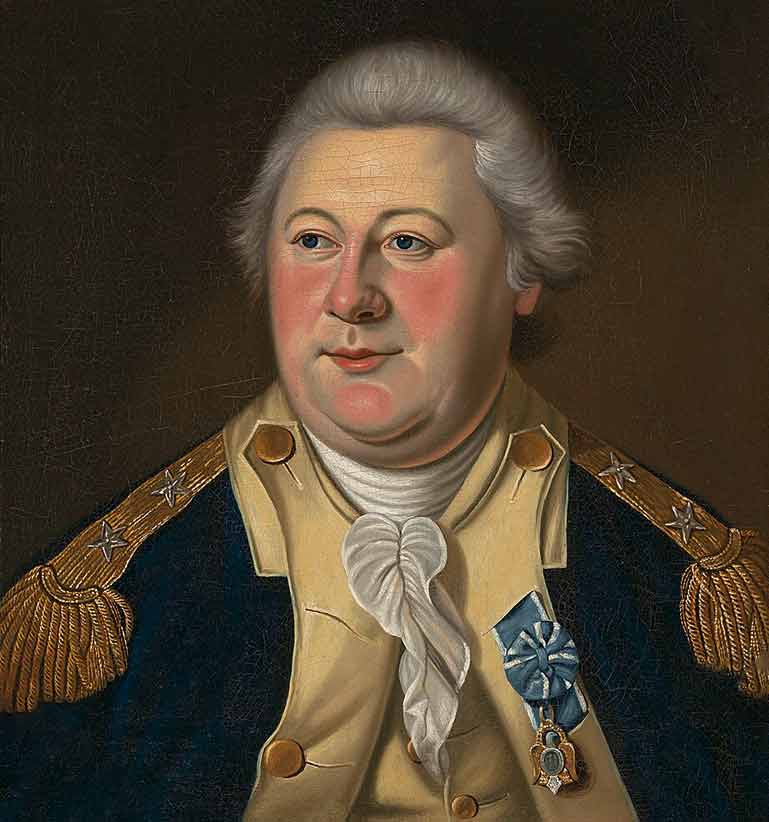
Henry Knox (1750-1806)
Greene found the militia’s objection to his disability a deep “mortification” beyond anything he had known, but being fervently devoted to the Glorious Cause, he served for eight months as a private until the ramshackle and bumbling Continental Army realized his genius was without parallel amongst his peers, and universally agreed to forget about the limp. He was put in charge of almost all the Rhode Island units by the end of the siege of Boston in 1776.
With the same foresight that anticipated a struggle between the two countries, Greene yearned for a formal separation from Great Britain upwards of a year before the Declaration of Independence was signed. Greene and Knox’s letters to each other and between their wives divulge an almost antsy need for the conflict to have a greater purpose than Parliamentary capitulation. While Knox’s letters tended towards the more loquacious on the subject, Greene’s terse concerns about the lassitude of those engaged in the cause were often directed straight to John Adams on the Board of War, articulating clearly the uncertainty of the moment:
“Suppose this army should be defeated, two or three of the leading generals killed, our stores and magazines all lost, I would not be answerable for the consequences that such a stroke might produce in American politics. Permit me then to recommend from the sincerity of my heart, ready at all times to bleed in my country’s cause, a Declaration of Independence, and call upon the world and the Great God who governs it to witness the necessity, propriety and rectitude thereof.”
Keenly conscious of his civilian shortcomings in this epic struggle, Greene set himself to make up for what he might lack in knowledge by, as he put it, “industry and watchfulness”. Indeed, he was a stickler for hygiene and order in his camp, was a strict disciplinarian who would appeal to congress for harsher sentencing against deserters and rapists, and was unparalleled in his study of a battleground’s topography. This latter trait became the key component in most of Washington’s winning strategies and enabled Greene to outmaneuver and crush the British Empire’s vastly superior force in the southern campaigns. In turn Greene admired Washington to an extreme, never wavering in his confidence in him despite many grueling setbacks and failures, and such loyalty became the loadstar of the entire cause, the effect trickling downward even to the men in the ranks.
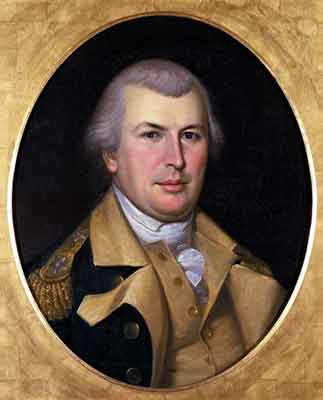
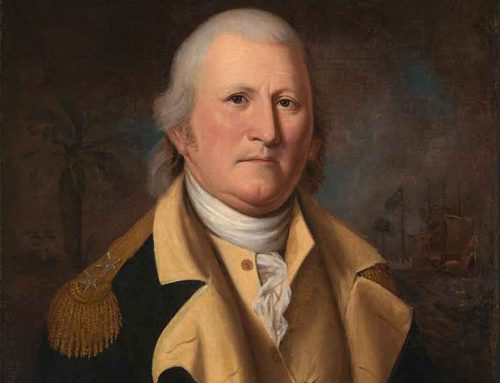
Greene in uniform
When times came that many in congress and in stations below Washington sought to replace him as commander, Greene played his part as both anecdote and informer on any who sought to undermine his chief, even when he himself was put forward for promotion. “His Excellency George Washington” he wrote of his leader, “never appeared to so much advantage as in the hour of distress.” In turn, Washington adamantly retained his faith in Greene during the young general’s early blunders, assuring him constantly of his dependence on him. Both men inspired a great zeal in those who encountered them or served under them, and throughout the war they had an ongoing and entirely cordial fight between them to retain staff officers, and often shared quarters making for an easier and intimate merger of business and friendship.
The uncommon resolve and adaptable intelligence that marked the victories and survival of the American Cause throughout the crucible year of 1776 were in so many ways owed to General Nathanael Greene, who embodied them personally when he famously said, “We fight, get beat, rise, and fight again.”
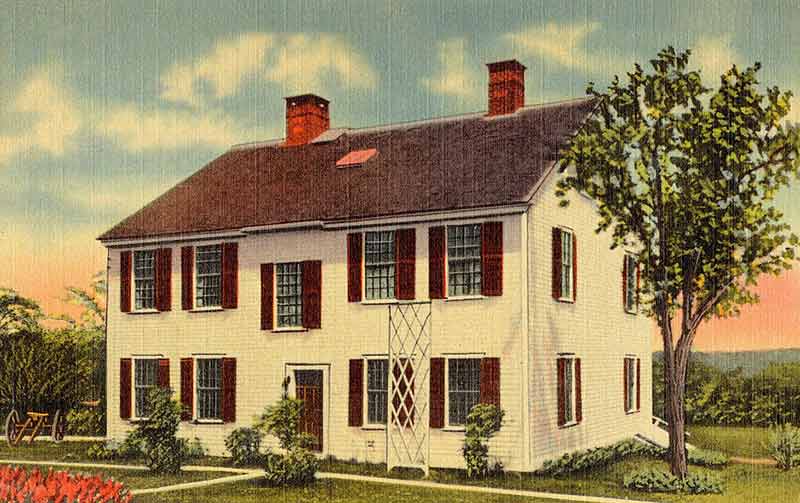
Greene Homestead in Coventry, Rhode Island
This formative year was only the beginning of Greene’s impeccable career that would establish him as second only to Washington in respect and success; he would prove crucial in the northern battles of Trenton, Brandywine, Germantown and Monmouth, he weathered the miseries of Valley Forge with the company of his wife Caty and, when necessity required it, served briefly as Quartermaster General to almost singlehandedly reform the army’s dysfunctional and corrupt supply system. Greene was the one who brought Lord Cornwallis to his knees at Guilford Courthouse in the Southern Campaign of the 1780’s—paving the way for the British Surrender at Yorktown. These are only a smattering of his wartime contributions, and mention nothing of his many personal sacrifices and instances of bravery, his magnanimity in the face of infighting and jealousy, or his bankrupting himself to ensure his soldiers received their pensions, all of which deserve study but must needs be the topic of another day.