
“By this we know love, that He laid down His life for us, and we ought to lay down our lives for the brothers.”
—1 John 3:16
Corporal Thomas William Bennett, Awarded the Medal of Honor, February 11, 1969
 ew conflicts in the course of American history have stirred such profound division and soul-searching as the Vietnam War. This era was marked by new heights of governmental deception, catastrophic irresolution, and social rejection of the American identity. Perhaps most odious of all at the time was the implementation of the draft to fuel this war, pulling young men from farms, factories, and campuses into a conflict that many questioned, protested, or outright fled.
Amid the chaos of war and public dissent, there emerged a different breed of hero. With a response unique to his time, one devout young man decided to serve his country in the medical corp despite his personal convictions regarding war. In the fullness of God’s plan, he would become our nation’s second conscientious objector to earn the Medal of Honor.
Corporal Thomas William Bennett was a young Baptist from Morgantown, West Virginia, whose gentle spirit belied a steel resolve. Born in 1947, Bennett grew up steeped in the teachings of Christ, on the front row of a fundamentalist church which instilled in him a profound aversion to taking life. In college, Bennett taught Sunday School, drafted a students’ code of ethics, and founded the Campus Ecumenical Council. When the draft called in 1967, Bennet volunteered for service as a conscientious objector and pursued the role of a medic—thus reconciling his religious convictions with the spirit of patriotism instilled in him by his stepfather, a veteran of WWII. So it was, that on January 5, 1969, after being trained as a medic throughout the previous summer and fall, Private First Class Thomas Bennett said goodbye to his family for the last time and travelled to Vietnam to join Company B of the 1st Battalion, 4th Infantry Division.
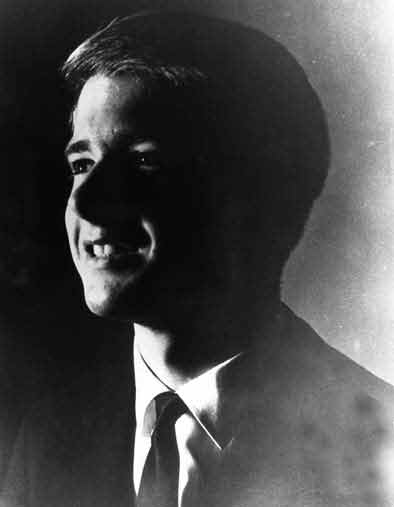
Cpl Thomas William Bennett (1947-1969)
The jungles of Pleiku Province, in the Central Highlands—wherein he soon found himself—were a hellish labyrinth of booby traps, monsoons, and ambushes. Despite such harrowing conditions, Bennett kept up the steady correspondence with his family that he had begun in basic training, sending back to the States both letters and audiotapes, candidly describing his experience and the ethical struggle that remained warring inside him. As he said in one letter home, “Out of obligation to a country I love I will go and possibly die for a cause I vehemently disagree with.”
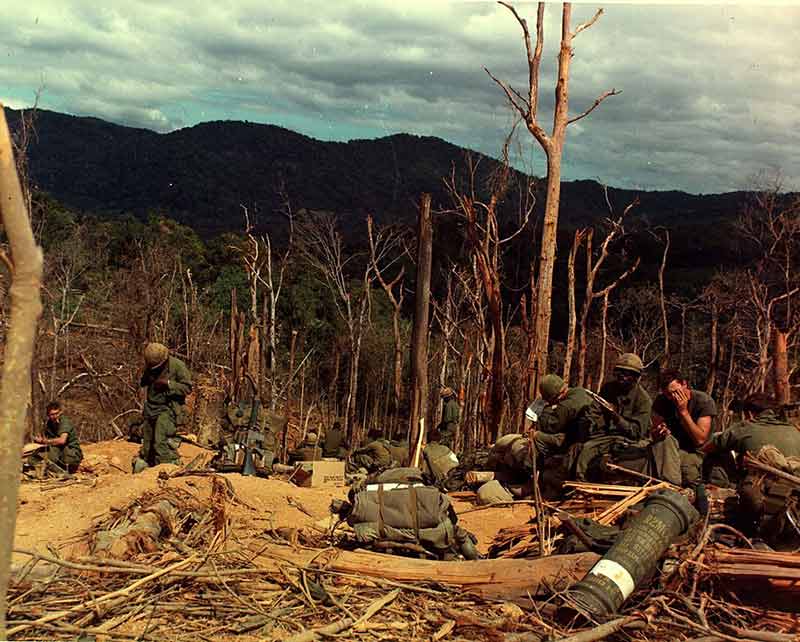
Members of the 3rd Battalion, 12th Infantry, 4th Infantry Division take a break from building a bunker in Vietnam, November 25, 1967
Then on February 9, 1969 as Bennett’s company patrolled the thick jungle around Chu Pat, they were ambushed by Northern Vietnamese troops. Despite the ensuing firefight, Bennet ran forward past his lines to give first aid to three wounded men and carry each casualty back to safety. His sergeant, James McBee, promptly nominated Bennett for the Silver Star in honor of the risks he took that day. When nominating Bennett, Sergeant McBee also marveled to Company Commander Cowsert that “nothing stops him… he said he wasn’t afraid at all, that he was trained to be a medic and that was his job. He said the Lord would protect him and if he dies it’s God’s will.”
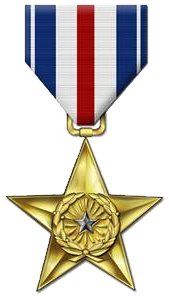
Silver Star
The action, however, was far from being over, and as was common in that brutal guerrilla war, the firefight bled on from February 9th to the 10th, and carried on through the morning of the 11th. Throughout this time Bennet continued caring for the wounded that only multiplied as the hours passed. On the 11th, Bravo company got pinned down by enemy snipers; five American soldiers were wounded in the initial volley alone. Bennett once again risked his life dodging from one place under heavy shelling to another to treat and retrieve these men. When he made it clear to his fellows that he intended to go out from behind their shelter again and help a man some 45 meters away, his friends protested that he’d never make it. Courage prevailed as Bennett yelled back over the gunfire that he had to get to the wounded soldier or the man would die. It was as simple as that in his mind.
And so, Thomas Bennet left his cover and ran towards his stricken comrade. As he did, he was mortally wounded by a burst of AK-47 fire.
Bennett had been in Vietnam for only three weeks. He was several months shy of his 22nd birthday. His Sergeant, McBee, wrote that Bennet not only saved many lives, retrieved the bodies of those who had been killed in action, and gave medical aid to “many others,” but also inspired the company to soundly defeat the numerically superior enemy force. McBee changed his recommendation that Pfc Bennett, (posthumously promoted to Corporal) be awarded the Silver Star to that of being given the Medal of Honor. This was approved and President Richard Nixon presented the medal to Bennet’s parents on April 7, 1970, Bennett’s 23rd birthday.
Bennett is the only conscientious objector to earn the Medal of Honor during the Vietnam War. He is only the second in all of American history.
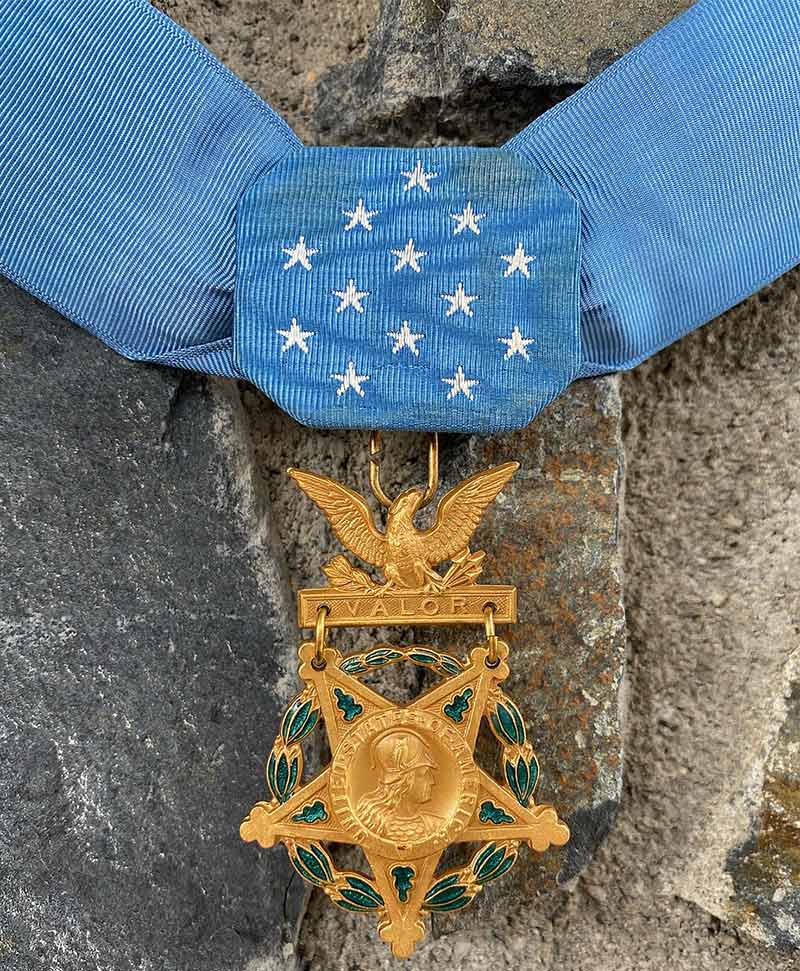
Medal of Honor, Army edition
It is common and entirely right for us as children of God to desire our sacrifices to mean something, whether they be small everyday pains or the finality of laying down one’s life. We may envision such sacrifices as glorious; for some of us that may be the case. Yet for many of us the times may place us where our sacrifices are threatened to be swallowed up by events larger than ourselves, events where the cause looks far different than we expected, where our sacrifices get muddied in the brutal crucible of fallen reality. Here is where Providence has painful lessons—whatever our circumstances, God has promised us a way of escape, a way to glorify Him regardless. He has shown us what He requires of us. Thomas Bennet longed for a war like the one his stepfather served in on the beaches of Iwo Jima; one that was just as brutal but where the principles of good and evil were undeniable. Instead, Bennet found himself in the perpetual nightmare that was Vietnam. Yet he knew what gave actions their meaning. It is God alone who does that, and He does it well.
Thomas Bennet lived his life for others, and willingly gave it up in an errand of mercy. Such bravery is never anything less than the beautiful outworking of God’s love for us, through each other.