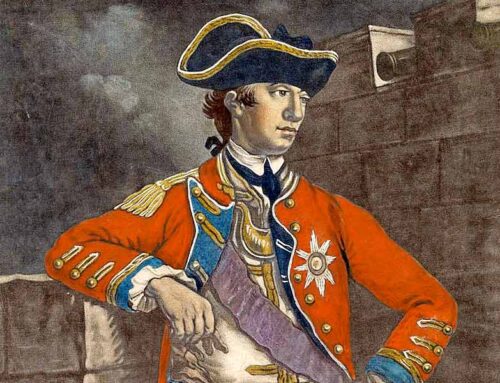


“Her children arise and call her blessed; her husband also, and he praises her: ‘Many women do noble things, but you surpass them all’.”—Proverbs 31:28-29
Death of Britain’s Wartime Queen, Elizabeth Bowes-Lyon, March 30, 2002
 hen young debutante Elizabeth Bowes-Lyon declined Prince Albert’s first proposal to her in 1921, it was not for lack of affection for him or any strong pull elsewhere. Instead, as evidenced by her many letters on the subject, Elizabeth deeply dreaded the prospect of marrying into the British Royal family. Even by marrying a secondary Prince, such as Albert, with no claim to the throne, she would be signing up for a life of scrutiny and endless societal rigor despite all its privileges. Having been raised by a prestigious but modest family of Scottish aristocrats, Elizabeth found these deterrences too strong to be overcome. It was the sensible thing to decline, and she was always sensible.
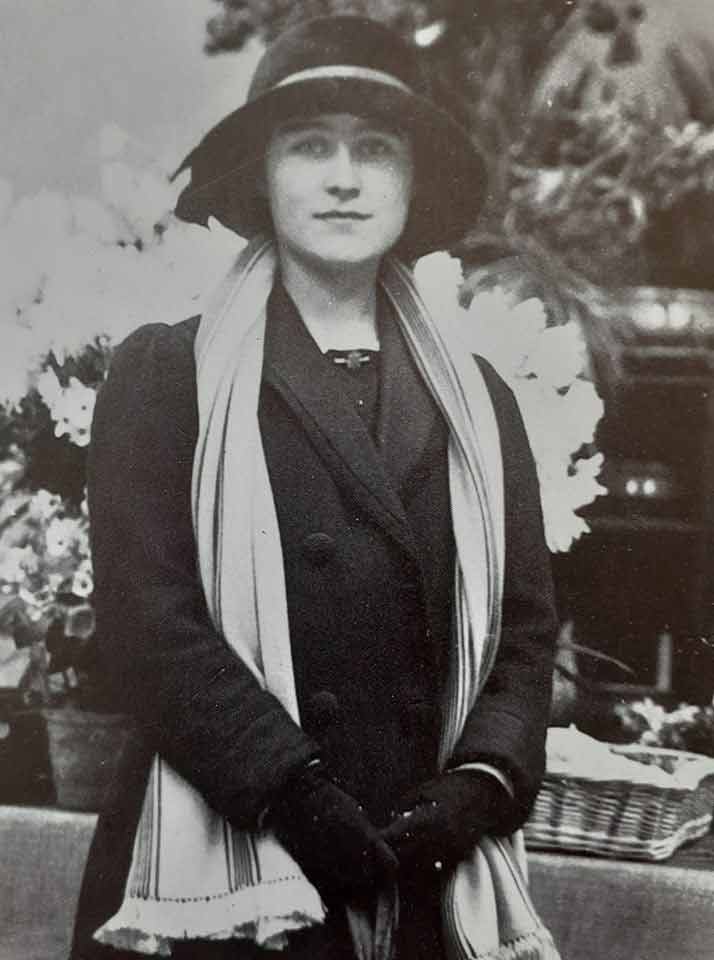
Elizabeth Bowes-Lyon (1900-2002) in 1915
How amusing it is that when humans dispose to keep away from the trouble and inconveniences of life, they often seem to find them again in twofold measure. Elizabeth Bowes-Lyon had misgivings about becoming a Duchess, high-ranking to be sure, but not essential. In the course of Providence, she would end up becoming Queen instead, one called upon to serve in full public view during the first war waged directly on English soil by a foreign enemy in centuries. Perhaps greater still, she would be called upon to mother and raise England’s next monarch, her own little Elizabeth, firstborn of two daughters and the late grand Queen Elizabeth II.
Elizabeth Bowes-Lyon first met her princely husband at a ball held in 1920, after which Prince Albert pursued her, was rejected, and then continued the pursuit until accepted. Prince Albert, second son of King George V and Mary of Teck, (and known to his friends as “Bertie”) suffered from many physical complaints: knocked knees, left handedness, stomach pains and a severe stuttering affliction that did not abate with age. However he was also manifestly courageous, courteous and charmingly unaffected. His incredible persistence in overcoming his disabilities has since been made famous by films such as The King’s Speech.
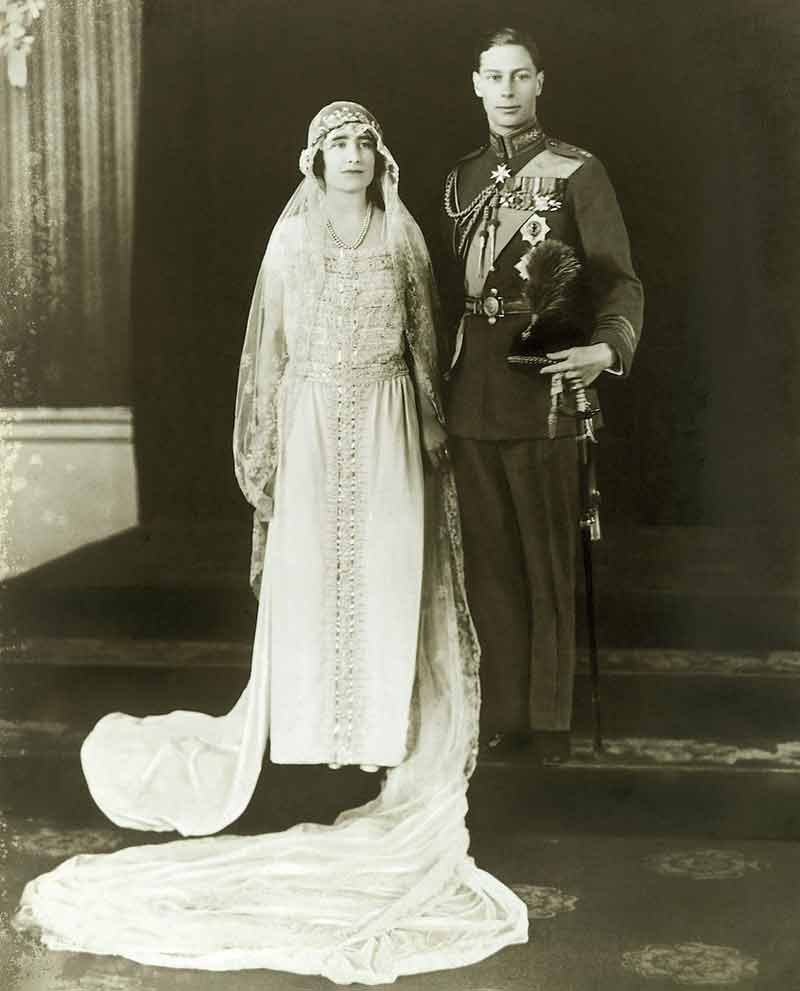
The royal wedding of Prince Albert and Lady Elizabeth, April 26, 1923
The Royal Wedding took place in Westminster Abbey on April 26, 1923, the first to be held there since 1382, and from then on the two were inseparable from each other and singularly faithful. For her part, Elizabeth would, for the rest of their lives, show her husband Bertie a devoted understanding he did not experience from his own family. She would be his champion, in health and public service, knowing him to be vastly capable and extraordinarily charming long before the rest of the world was forced by circumstance to pay him any mind. As was mentioned above, they would go on to have two daughters, Elizabeth and Margaret. When it was practical to escape their public duties, the happy little family was known to gladly hide out in their secluded country estates.
Prince Albert’s father, King George V, had, like Prince Albert himself, been born a second son and an unlikely heir to the throne. By his reprobate brother’s premature death, George V had ascended to the English throne right before the tragedy that became World War One, shouldering with grace responsibilities for which he had not been prepared. Ironically then, King George V himself produced an eldest son, Edward VIII, who would repeat this pattern and saddle his younger brother, Prince Albert, with the duties of King—although Edward ceded them through abdication and not through death, and he did so to marry a twice-divorced American, Wallis Simpson. This renouncement of his royal duties rocked the entire British Empire, but nowhere was the betrayal felt more strongly than at home. Prince Albert is said to have pleaded repeatedly with his older brother Edward to reconsider, if not for his own sake then for the sake of his daughter, the young Elizabeth, who by her uncle’s selfishness now had her entire future rerouted, from the pleasant prospect of being a private noblewoman to the rigors of being a future monarch.
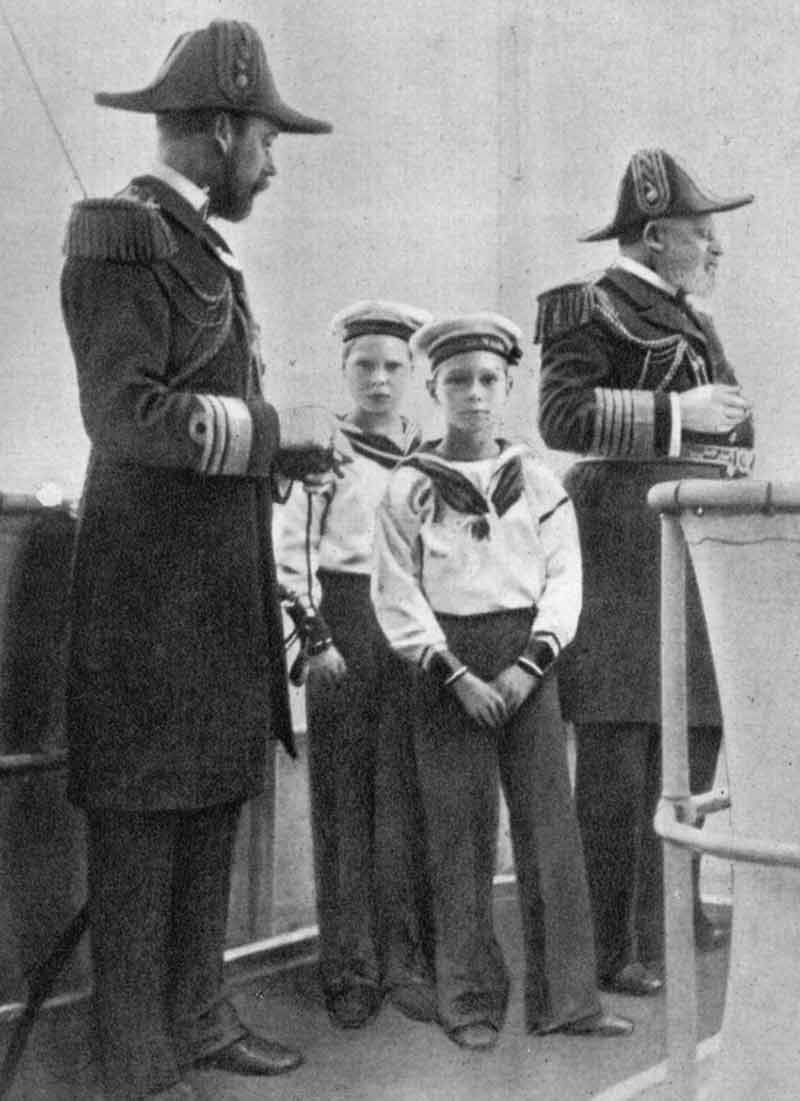
Three generations and four kings: Edward VII (far right); his son George, Prince of Wales, later George V (far left); and grandsons Edward, later Edward VIII (rear); and Albert, later George VI (foreground), c. 1908
Edward VIII, however, would not be moved. The abdication proceeded in 1936 and Elizabeth’s husband Bertie became king, with his royal name being King George VI. The woman who dreaded being a Duchess was now a Queen. And more than that, she became queen in an era prolific with constant exposure to cameras, demanded radio appearances, rising calls for a great leveling of society, and the looming threat of another world war. If her kind-hearted Bertie found it in himself to easily forgive his brother, Elizabeth on the contrary held onto her animosity of him until the last. A strongly dutiful woman herself, Elizabeth had no sympathy for a privileged, capable and physically fit incumbent shirking his role at the expense of her husband. When World War II broke out and it was learned that Edward was allegedly feeding the Nazis confidential information about Buckingham palace and British defenses, Elizabeth was only solidified in her loathing of him. In fact, in a life marked by generosity of spirit and acceptance of the faults of human nature, her strong feelings towards her brother-in-law would be a marked exception to the rule. She would later say that being made king had effectively killed her husband, and laid the blame for that solely on Edward.
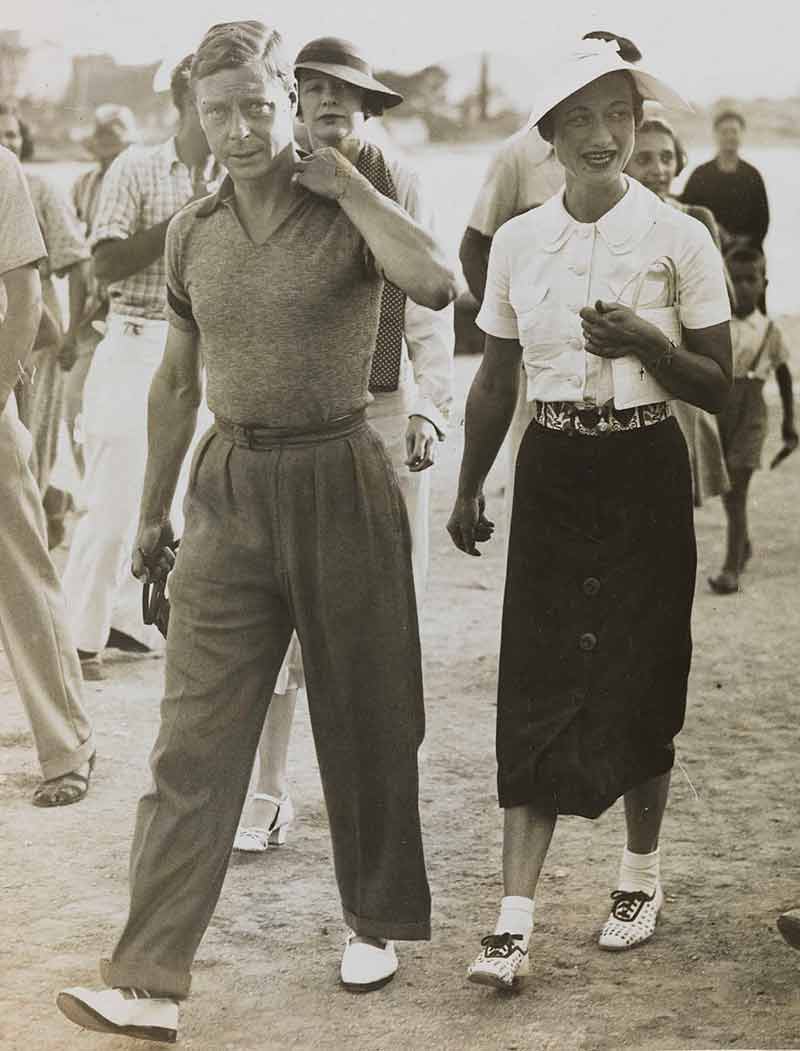
Edward VIII and Wallis Simpson, 1936
All throughout the war years, Elizabeth and her once private little family became almost as iconic as Prime Minister Churchill in the eyes of their British subjects. During the terrifying months of the Blitz, Elizabeth refused to leave London. “The children could not go without me, I could not possibly leave the King, and the King would never go“ she once famously told those advisors who begged the royals to evacuate under threats of invasion. Instead, they remained throughout the heavy bombing of London, where Queen Elizabeth aided her husband in his wartime broadcasts, showed herself frequently at the sites of destruction, and worked tirelessly to help alleviate the suffering of the civilian population most affected. The concept of losing the war was something she refused to entertain, and her very presence seemed to radiate that determination wherever she appeared. Her actions during this time earned her widespread admiration and caused Adolf Hitler to refer to her as “the most dangerous woman in Europe” for her success in rallying public spirit. Prime Minister Churchill, who had initially been wary of the couple’s untried spirit, declared after the war that “we could not have had a better King and Queen in Britain’s most perilous hour.”
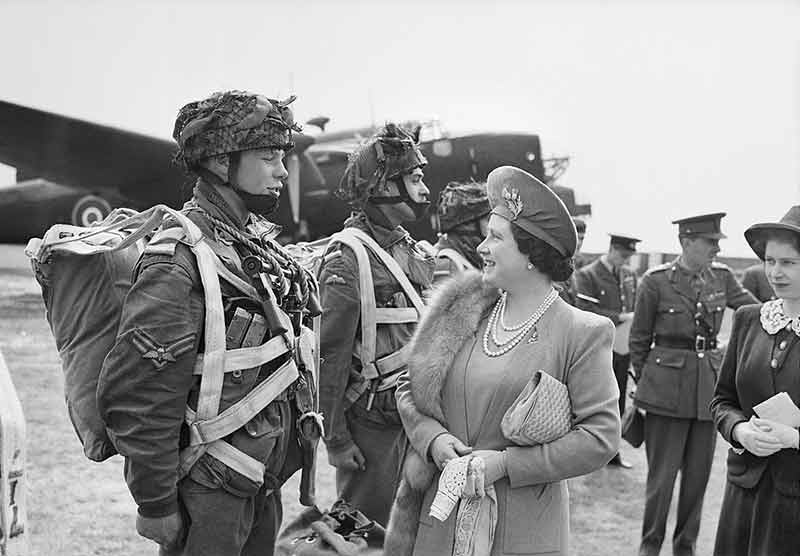
Queen Elizabeth and her daughter Princess Elizabeth (the future Queen Elizabeth II) talk with paratroopers preparing for D-Day, May 19, 1944
In sad fulfillment of her constant worry for her husband’s health, Bertie succumbed to lung cancer in 1952, widowing Elizabeth at age 51. Their daughter—the late long-reigning Queen Elizabeth II—was crowned, and Elizabeth became known as the Queen Mother. Grief did not drown her; instead she carried always “a great zest for life” and continued to perform in her new role many public duties, remaining indispensable to royal life until her passing at 101 years of age. To put her extraordinary length of influence into perspective, she was a support act and constant advisor to her daughter for 50 years of her 70-year reign. Her funeral in 2002 drew over a million people onto the streets of London.
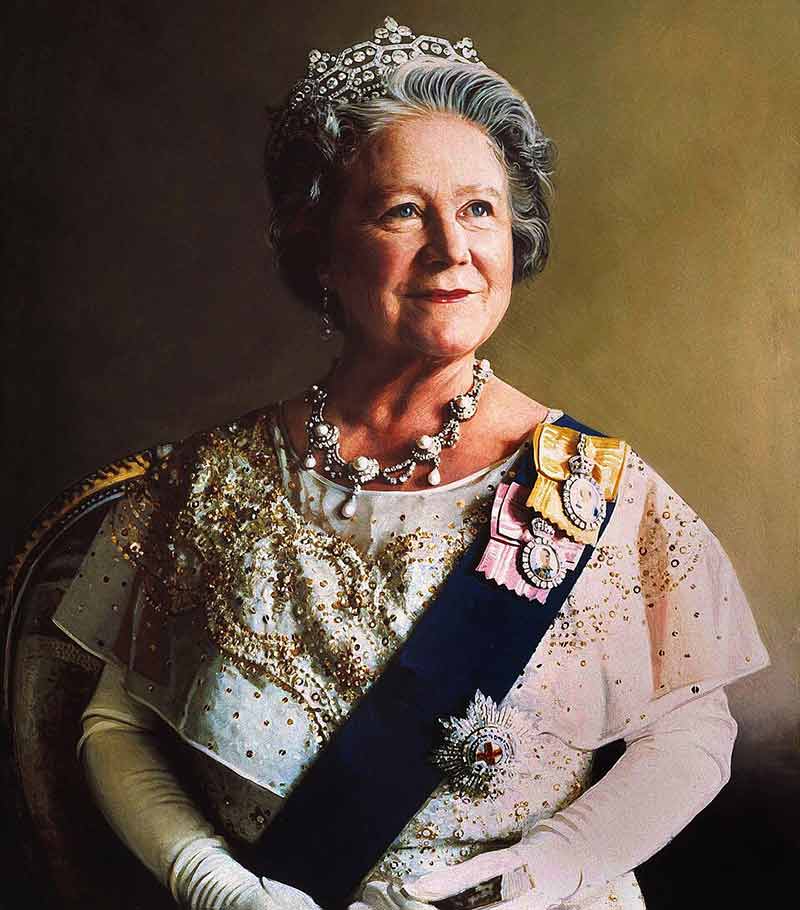
Queen Elizabeth the Queen Mother, 1986
Beloved but stringent, the devout Queen Mother was credited not only in raising her queenly daughter to be a paragon of duty in the ever-devolving 20th century, but was herself responsible for many moral standards of behavior that the Royal Family continued to espouse, publicly at least. For instance, after Princess Diana’s death in 1997, the issue of Prince Charles and his longtime mistress, Camilla Parker Bowles, acquired great emotional and symbolic relevance. By the Queen Mother’s influence, any formal support of the relationship continued to be denied and its potential union considered impossible. She viewed it as destabilizing of the monarchy and antithetical to the moral standards she believed the institution should project, a beloved grandson’s wish aside. It was considered by the public to be no mere happenstance that only after her death in 2002 were Prince Charles and Camilla Parker Bowles married, despite the church and family’s stance against it.
Lives such as that of Elizabeth Bowes-Lyon are the kind that shape a generation—something she herself might have laughed at or shrank from, had she been told at the beginning what lay in store for her. But quietly faithful and placidly trusting, she resigned herself to be used by God in many an extraordinary era. “Work is the rent you pay in life” her mother, Lady Strathmore, had impressed upon Elizabeth and her nine siblings growing up. She abided by this until the end, informed by a conviction that individuals were more important than the state and that the extension of the government’s reach into every area of life did “not absolve us from the practice of charity or from the exercise of vigilance. The English way of progress has always been to preserve good qualities and apply them to new systems.”
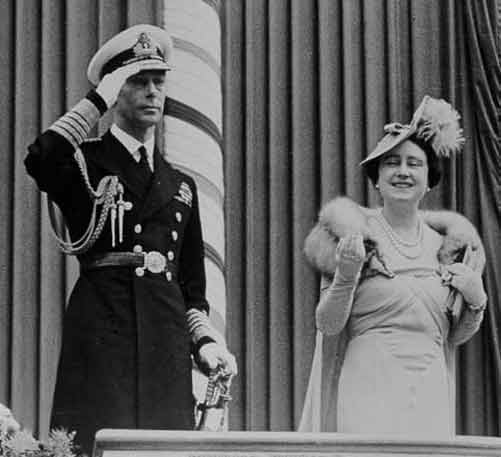
King George VI and Queen Elizabeth, 1939
Image Credits: 1 Elizabeth, 1915 (wikipedia.org) 2 Wedding of Albert & Elizabeth (wikipedia.org) 3 Three generations, four kings (wikipedia.org) 4 Edward VIII and Wallis Simpson (wikipedia.org) 5 Two Elizabeths speak with troops (wikipedia.org) 6 The Queen Mother (wikipedia.org) 7 King George VI & Queen Elizabeth (wikipedia.org)