

Letters of ’76: Mercy Otis Warren to John Adams, March 10, 1776
 ercy Otis Warren came from distinguished Massachusetts stock that could trace their lineage as far back as the Mayflower. While not “formally” educated, Warren’s father ensured she received the same quality tutelage as her brothers, under the guidance of an uncle, the Rev. Jonathan Russel.
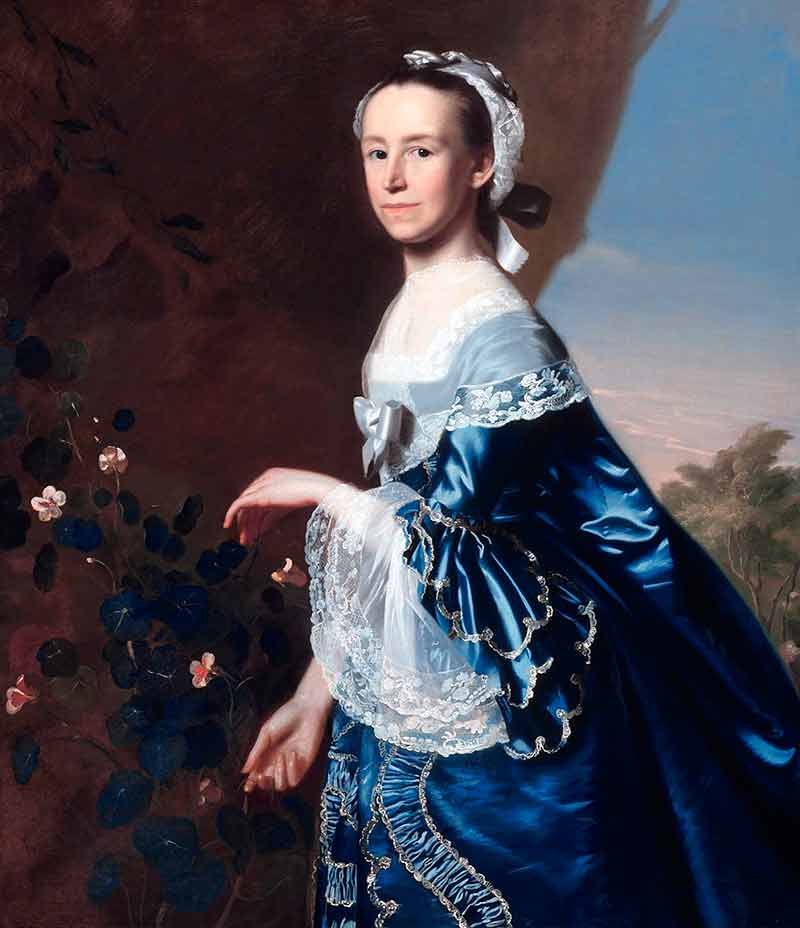
Mercy Otis Warren (1728-1814)
She married her second cousin, James Warren, a merchant farmer, who would eventually replace the martyr of Bunker Hill, Dr. Joseph Warren (no relation), as Speaker of the Provisional Congress. By the year 1776, Mercy Warren had capitalized on this new position—and the public influence she had gained as a playwright in years prior—to devote her public platform fully to the work of steering her colony towards independence.
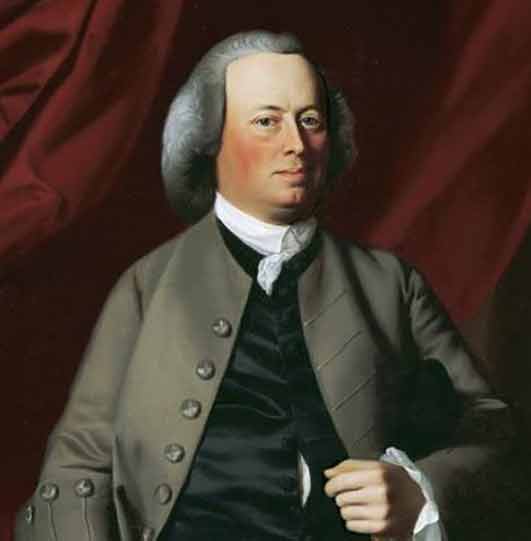
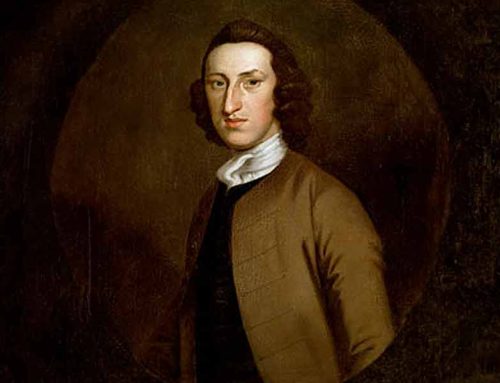
James Warren (1726-1808)
Driven by unshakable faith in the Supreme Governor of the Universe and the doctrine of her forefathers, she considered the American experiment to be a direct outworking of Providence, and considered herself “awed” and “fortunate” to stand witness to its unfolding. Much of her writings stress to a bewildered populace the magnitude of the events engulfing them, and pondered if her generation was strong and virtuous enough for the task at hand. Considered by her contemporaries to be an astoundingly astute woman, she was a most capable wife and irrepressible mother of five boys! A leading female intellectual, Mercy Warren is still revered as a prolific commentator, poet and correspondent. After the war she would turn her pen toward preservation, becoming one of the first to write a history of the United States and its founding. In a show of commendation for her scholarship, President Jefferson purchased all three volumes for himself and each member of his cabinet.
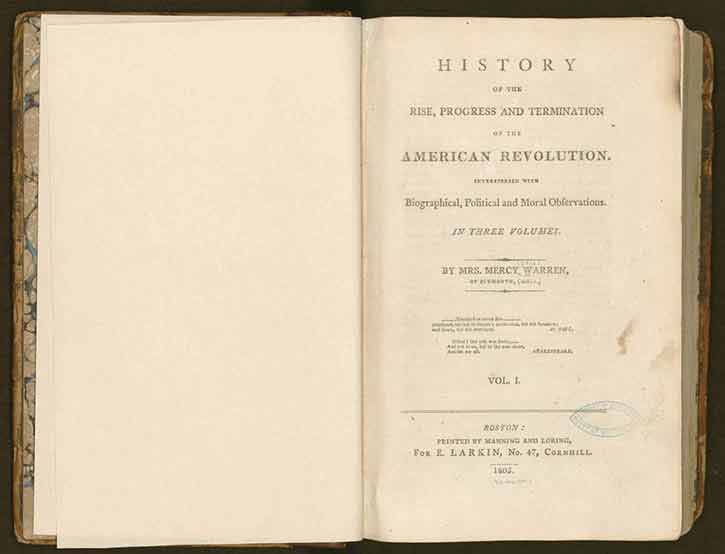
History of the Rise, Progress and Termination of the American Revolution
by Mercy Otis Warren, published in 1805—An 1851 Christmas Eve fire destroyed almost two thirds of the books that Jefferson had sold to the Library of Congress in 1815; the flames almost claimed this book as well, as noted by the singeing of the title page (top right corner).
Dear sir,
As your time is so much devoted to the service of the public that you have little leisure for letters of friendship or amusement, and conscious of incapacity to write anything that would be of the smallest utility to the common weal, I have been for sometime balancing in my mind whether I should again interrupt your important moments, but on re-perusing yours of January 8th, I find a query unanswered. And though the asking my opinion in so momentous a question as the form of government to be preferred by a people who have an opportunity to shake off the fetters both of monarchy and aristocratic tyranny, might be designed to ridicule the sex for paying any attention to political matters, yet I shall venture to give you a serious reply.And notwithstanding the love of dress, dancing, equipage, finery and folly, notwithstanding the fondness for fashion, predominates so strongly in the female mind, I hope never to see an American Monarchy, however fashionable in Europe, or however it might coincide with the taste for elegance and pleasure in the one sex, or cooperate with the interest, or passions of the other.
I have long been an admirer of a Republican form of government, and was convinced even before I saw the advantages delineated in so clear and concise a manner by your masterly pen, that if established upon the genuine principles of equal liberty, it was a form productive of many excellent qualities, and heroic virtues in human nature, which often lie dormant for want of opportunity for exertions, and the Heavenly Spark is smothered in the Corruption of Courts, or its luster obscured in the pompous glare of regal pageantry.
It is an observation of the celebrated bourge*, “that almost all political establishments are the creatures of chance rather than of wisdom, and that there are few instances of a people forming for themselves a constitution from the foundation, that the common course has been to blend with the new system of politics the errors and deficiencies that had crept into the old.”
Therefore there is scarcely any example of such a phenomenon as a perfect Commonwealth. But we will hope the present period will leave one to posterity, and that the American Republic will come as near the standard of perfection as the state of humanity will admit, and that listening to the dictates of common sense the Amphyctionic Body** will not be obliged to yield to the violence of party or to the blindness of private, or provincial prejudices, and leave the work half finished.
Shall the fabric which they now have the power of completing with facility which may never again take place, be left tottering under its own weight, to be showered up and cemented with the blood of succeeding generations? But however we may indulge the pleasing reverie and look forward with delight, on the well compacted government, and happy establishment of the civil police of the united colonies, yet with you sir I have my fears, that American Virtue has not yet reached that sublime pitch which is necessary to baffle the arts of the designing, and to counteract the weakness of the timid, as well as to resist the pecuniary temptations and ambitious wishes which will arise in the breasts of more noble minded and exalted individuals, if not carefully guarded. But we shall soon have a test. And if the union of the colonies, and a steady opposition to the disgraceful idea of foreign shackles still subsists, after negotiating with men picked for the purpose of flattering, terrifying and cajoling the colonists into compliances which their principles, their interest, their honor, and even their strength forbids, I shall have hopes that America has more than one politician who has abilities to make the characters of his people, to extinguish the vices and follies he finds, and to create the virtues he sees wanting.
Many among us are ready to flatter themselves that an accommodation with Britain is easy, and that we shall soon see the return of Halcyon days.
But I believe sir, you have little expectation that the Commissioners from a haughty, venal and luxurious court, acting in the name of a despotic prince, will submit to such humiliating terms as the safety, the happiness, and the justice of American demands.
I agree to the bargain you propose and I think, sir, you cannot retract, when a Lady has accepted your conditions. But I must ingeniously tell you, the pleasure you may expect to reap, will be very inadequate, to the advantage I promise myself by the compliance.***
I expect to be made acquainted with the genius, the taste, and manners, not only of the most distinguished characters in America, but of the Nobility of Britain. And perhaps before the conflict is ended, with some of those dignified personages who have held the regalia of crowns and scepters, and in the zenith of power are the dancing puppets of other European Courts. While the sphere of female life is too narrow to afford any entertainment to the wise and learned, who are called to exhibit some of the most capital scenes in the drama. And who dare to tread the Theatre, when not only [the] World are Spectators, but the Stage is so Conspicuous, and the part so interesting that all posterity will scrutinize their steps, and future ages censure or applaud according to the imbecility, the vigor, or magnanimity that marks the conduct of the Philadelphian actors.
The subject I have touched is so diffusive that I have been imperceptibly lead to detain you longer than I designed, and after uttering every wish for the happiness of you and yours, that friendship can dictate, I will only add I should be gratified with a line if it was only an assurance of pardon for the freedom and length of this.
* bourgeois class
** Ancient Greek reference for a confederation
*** Adams had suggested she become an ambassadorNote: spelling has been corrected or modernized, no other changes have been made to the original text.