
“Whatever you do, do your work heartily, as for the Lord rather than for men, knowing that from the Lord you will receive the reward of the inheritance. It is the Lord Christ whom you serve.”—Colossians 3:23
Joseph Reed | Profiles of 1776
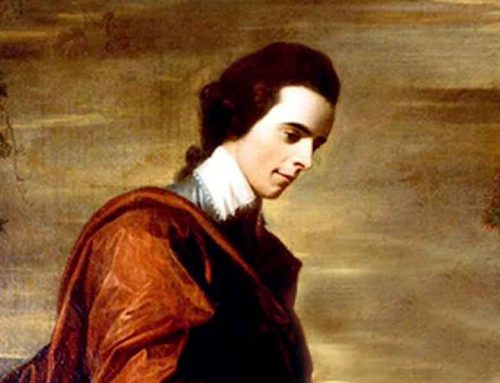
 oseph Reed was a charming and proficient London-trained attorney residing in Philadelphia when George Washington accepted command of the American Army in 1775. With the Continental Congress deliberating in his city of residence, and Reed serving as the president of Pennsylvania’s second Provincial Congress, he followed the progress of the various committees with great interest.
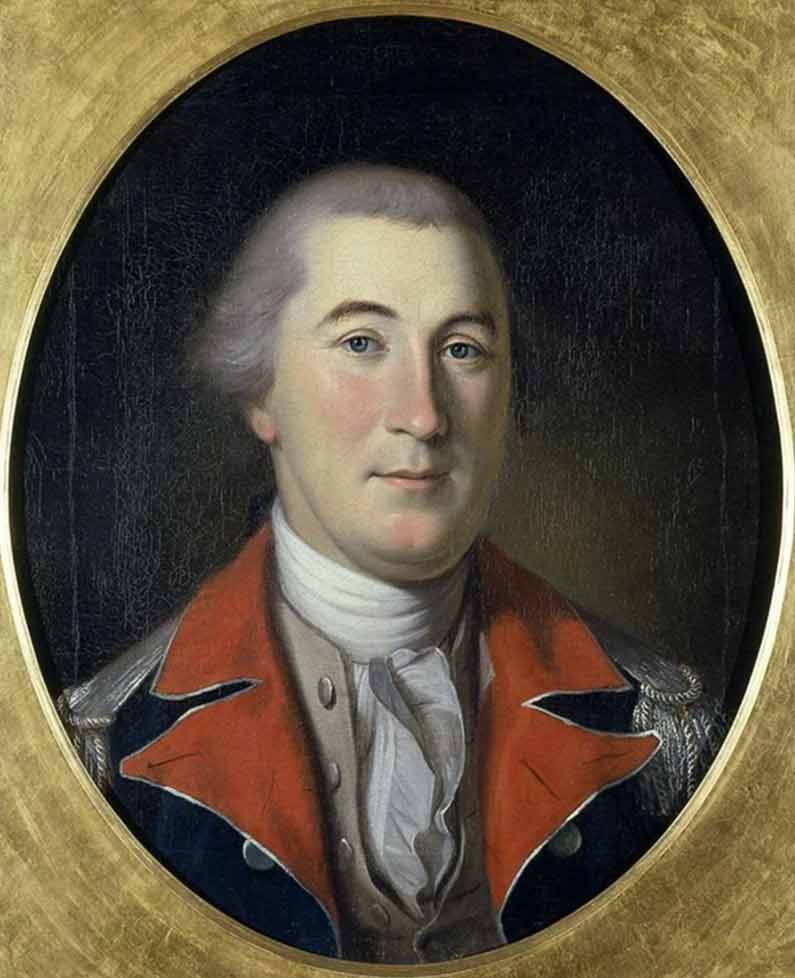
Joseph Reed (1741-1785)
When an honorary escort was organized to accompany General Washington to his new command at Boston, Joseph Reed was one of those chosen to ride with him. Reed intended to go only as far as New York, but a deep attachment sprung up between commander and lawyer, and soon Reed found himself writing a letter to his wife explaining that he had indeed gone on to Boston, had joined the militia, was serving as Washington’s main secretary, and had no imminent plans to return home! As Reed explained it, Washington had “expressed himself to me in such terms that I thought myself bound by every tie of duty and honor to comply with his request to help him through this sea of difficulties.”
To her everlasting credit, Mrs. Esther Reed then managed the welfare of her three young children and her husband’s law practice without him or any provision being made by him. And while doing so, she remained stalwartly supportive of her husband’s spontaneous dedication to the call of duty, evidenced by her answering correspondence.
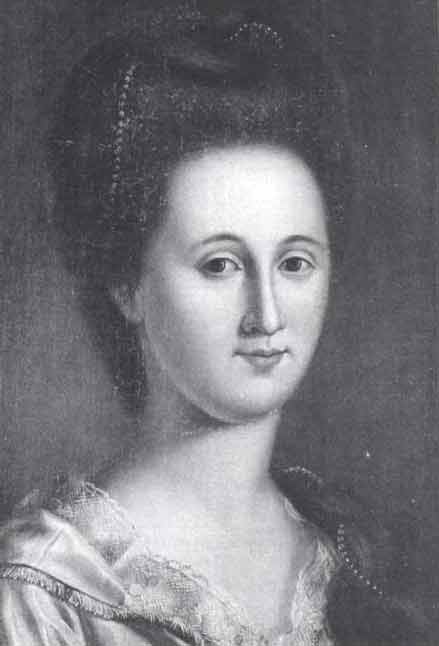
Esther Reed, née de Berdt (1746-1780)
In this particular chain of events, the Reeds were particularly representative of the hundreds—if not thousands—of Americans whose hearts and vision were slow to awaken to the weight of this struggle and their responsibility in it, but once aware they answered it with appropriate ferocity and devout courage to the great expense of their comfort and security. It also exemplified the unparalleled draw that George Washington’s bearing and character had on those men he encountered and thus recruited.
In the scales of history, Joseph Reed’s place among the first of Washington’s Indispensable Men proved incalculable. Beyond becoming a trusted advisor on deeply confidential matters and proving himself an abiding source of encouragement during bleak circumstances—of which the year 1776 was never lacking—, Washington came to rely upon Reed to “think for me, as well as execute orders.”
Much of the ingenuity on display during the siege of Boston, the occupation of Dorchester Heights, and the fortification of New York, can be traced in part to the advice of Joseph Reed who rode everywhere with Washington, jotting down observations and orders from the saddle. But it was in New York, with the full might of the British fleet, the British army and their Hessian mercenaries choking Washington’s entrenchments on Long Island, that Reed’s ebullient spirit at last faced demoralization.
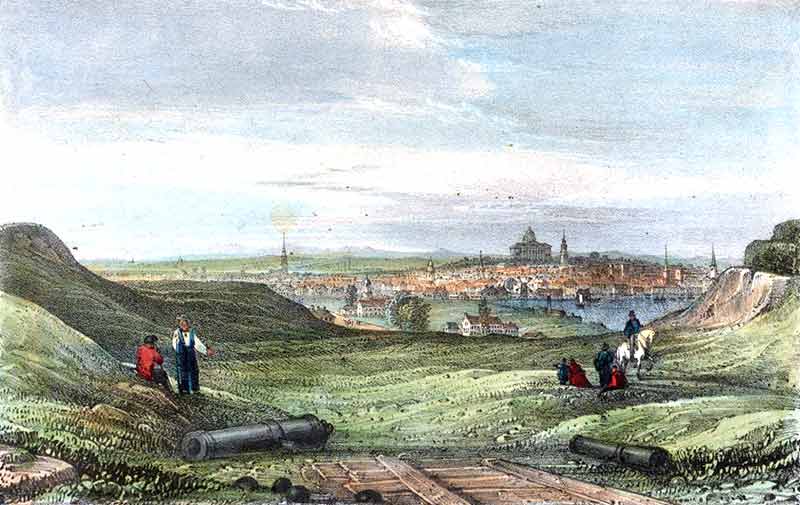
Boston, viewed from Dorchester Heights
To his wife he raged about the Tory population, the feckless militiamen, and the rampant rate of desertion. He wrote:
“When I look round, and see how few of the numbers who talked so largely of death and honor are around me, and that those who are here are those from whom it was least expected… I am lost in wonder and surprise… Your noisy sons of liberty are, I find, the quietest in the field… An engagement, or even the expectation of one, gives a wonderful insight into character.”
For her part, Esther Reed dared only to hope her husband might return home in time for the birth of their fourth child. Instead, throughout the Battle of Brooklyn, Joseph Reed was with Washington and for six days there was no time even for a change of clothes, much less any sleep to be had for several nights.
During this summer of despair, Washington not only talked Reed out of quitting the army multiple times but in turn promoted him to the rank of colonel, while making him adjutant general—administrative head—of the rapidly disintegrating Continental Army. Within days Reed wanted to quit again, but Washington needed him and reports from the countryside of the rapacious attitude of the British toward civilians cemented the terms of the war—there was no going back for anyone, it was do or die.
Then there came a day in mid-September 1776 that required from Reed a display of martial courage and steely nerve hitherto untried in his secretarial role. With reliable officers in shorter supply than healthy soldiers, Washington sent Reed into the heat of battle to lead the men forward personally. In the midst of this mêlée, Reed saw the first of his soldiers to turn and run from the enemy. Ordered to stop and return to the front, the deserter, a Connecticut private named Ebenezer Leffingwell, raised his musket, took aim at Reed from a distance of only a few yards, and pulled the trigger on his own colonel.
By God’s will, the deserter’s gun lock merely snapped, and no bullet was fired. Reed’s own pistol jammed when he drew it to return fire. Then Joseph Reed, this mild mannered Philadelphia lawyer, drew his unblemished sword and, striking twice, wounded Leffingwell on the head, severed a thumb, and forced him to at last surrender.
“I should have shot him, could I have got my gun off,” Reed admitted at Leffingwell’s court-martial held two days later. He would have been perfectly justified in doing so, and the court martial found Leffingwell guilty not only of desertion but of “presenting his firelock at his superior officer.” He was sentenced to be executed before the assembled troops the following day.
“To attempt to introduce discipline and subordination into a new army must always be a work of much difficulty,” Reed mused quite generously to his wife about the incident. This constant balancing act between personal independence and lawful subordination to those in authority was an inner struggle that marked the American experiment from its outset.
Perhaps influenced by such philosophizing, at the very last moment of the execution, indeed at the very moment Private Leffingwell knelt to be shot, Joseph Reed begged General Washington to pardon the man. Washington granted Reed’s request, although he remained doubtful of the merit of this mercy, and hard-line disciplinarians like General Nathanael Greene noted such benevolence was not for one man alone to withhold or dispense.
But as Providence would ordain it, by late fall Joseph Reed himself became the needful recipient of such mercy. After the disastrous fall of New York to the British, yet more calamities befell the Continental Army in devastating succession, many of them brought upon themselves by poor planning and indecision.
Reed was in a most intimate position to observe all deficiencies and blundering in his commander up close, and being terrified of the outcome of this collapsing cause, Reed took it upon himself to write to Washington’s second-in-command, General Charles Lee, and divulge to him how spent his erstwhile faith was in Washington’s abilities. He even hinted in plaintive language that Lee should perhaps take charge of the army instead. “As soon as the season will permit, I think yourself and some others should go to Congress and form the plan of a new army” he wrote.
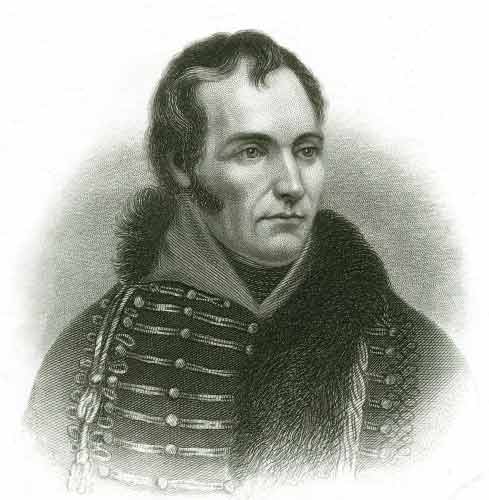
Charles Lee (1732-1782)
Charles Lee, an easily flattered man who proved traitor and informant for the British later in the war, wrote Reed a lengthy letter in response. This letter arrived at Washington’s headquarters while Reed was absent. With all communications being shared between the men, and indeed many missives being addressed to both, Washington thought nothing of tearing open a letter from one of his trusted generals addressed to his secretary. It surely held news of a relief party or else scouting reports.
Instead, it revealed a most crushing betrayal of trust, compounded by an indictment of his capabilities by his closest advisor and friend. What Washington thought upon discovering this letter is unknown; in the typical fashion of his ever restrained and composed character, we only know that he forwarded the letter to Reed with a scribbled note: “The enclosed was put into my hands by an express [rider]… Having no idea of its being a private letter.. I opened it…. This, as it is the truth, must be my excuse for seeing the contents of a letter which neither inclination or intention would have prompted me to.”
Strikingly we also have little record of a resolution between the two men, although one was seemingly achieved. We do have an account from Reed relaying how Washington took almost uncharacteristic pains to divulge his feelings on the subject once reunited: “I was hurt not because I thought my judgment wronged by the expressions contained in it [the letter], but because the same sentiments were not communicated immediately to myself.”
In short order, we see a resumption of the old trust and reliance that Washington placed in Reed. By the close of 1776 the Commander in Chief once again depended upon his secretary to arrange what became the famous Crossing of the Delaware on Christmas night. Those who are merciful will be shown mercy, perhaps, but it didn’t spare Reed from one last amusing hint at his old indelicacy when Washington wrote him the night of December 25, “For Heaven’s sake keep this to yourself, as discovery of it may prove fatal to us… but necessity, dire necessity, will, nay must, justify this attempt.“
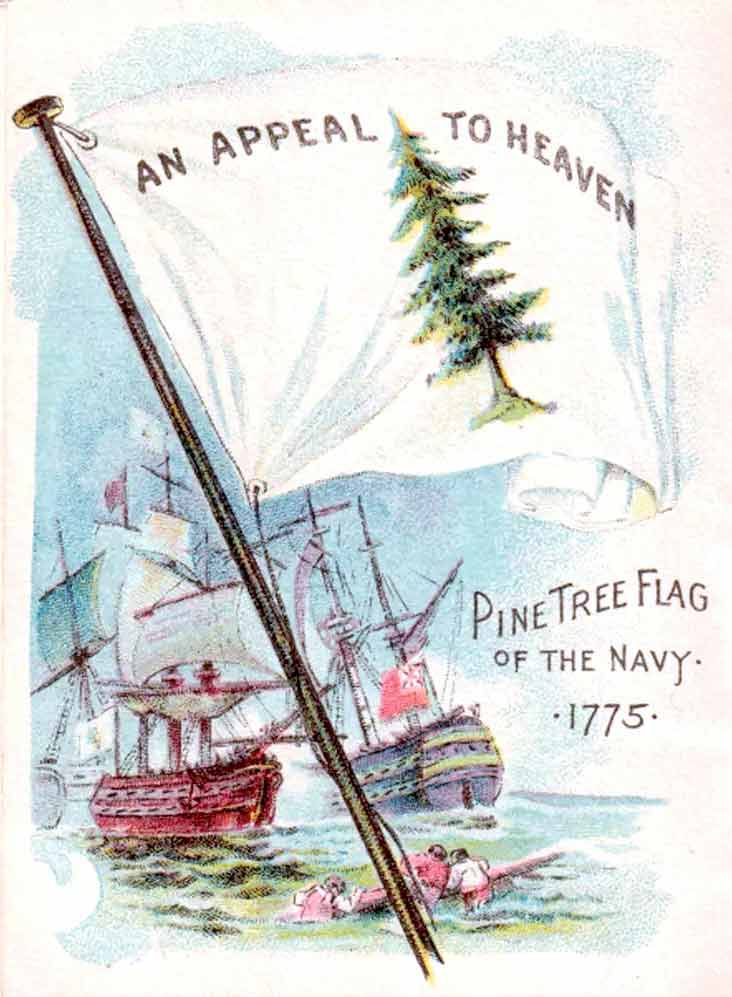
Pine Tree Flag
Joseph Reed served loyally in a variety of roles both in the army and congress for the remainder of the war. He is credited with designing the Pine Tree flag which bears the motto “An Appeal to Heaven”, and touchingly named his third son George Washington Reed in 1780. In the same year his wife Esther Reed co-founded the Ladies Association of Philadelphia with Sarah Franklin Bache, Benjamin Franklin’s daughter, to provide monetary support for Washington’s troops; Esther died later that year. Joseph followed her in 1786 at age forty-three, having enjoyed only two years of the Independent country he had given so much to see preserved.
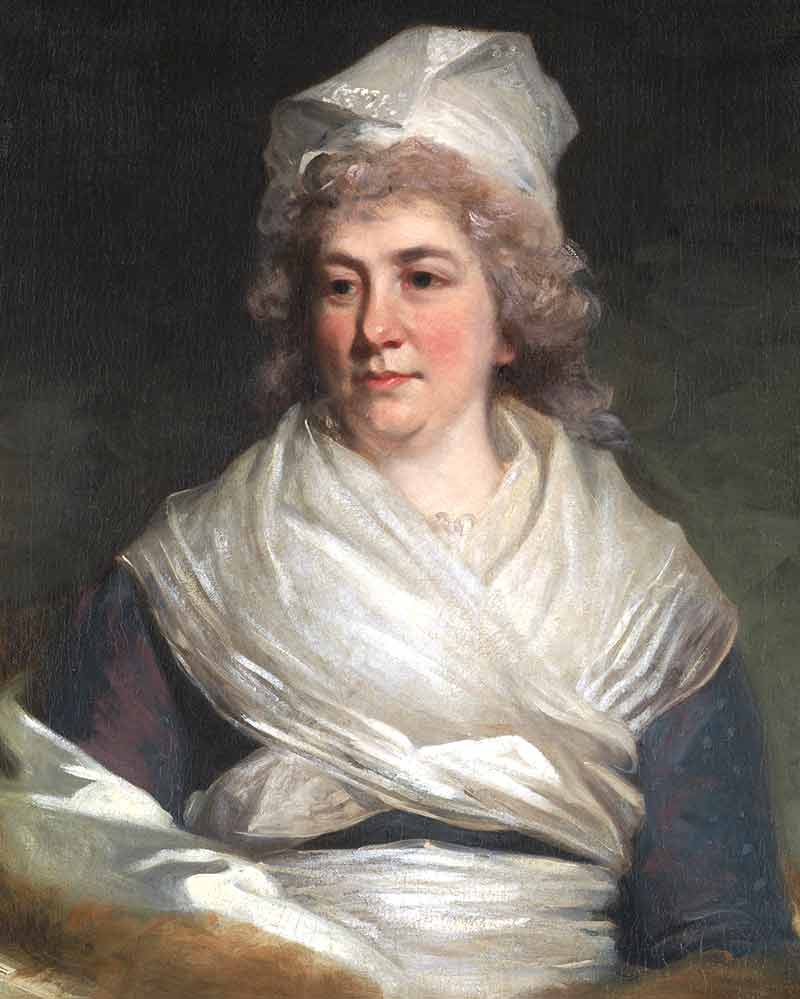
Sarah Bache, née Franklin (1743-1808)