Huguenot Fort Caroline Constructed in Florida, 1565
2024-02-15T12:49:48-06:00September 25, 2017|HH 2017|

“Woe to you, O destroyer. While you were not destroyed . . . as soon as you finish destroying, you will be destroyed.” —Isaiah 33:1

Huguenot Fort Caroline Constructed in Florida, September 29, 1565

The turbulent 16th century brought together opposing currents of ideas and beliefs as well as competing national aspirations and dynastic expansion. The Protestant Reformation was sweeping across Europe, and the Roman Catholic Church sought to stem those advances by marshaling the faithful princes and their troops, to stem the flow away from the control of Mother Church. In the midst of the religious ferment, traditional animosities between Spain — the only national super-power — and their chief rival, France, caused further fragmentation and conflict. In the latter nation, the Reformation was taking hold, especially along the coastal provinces and mountain areas bordering the Iberian Peninsula.
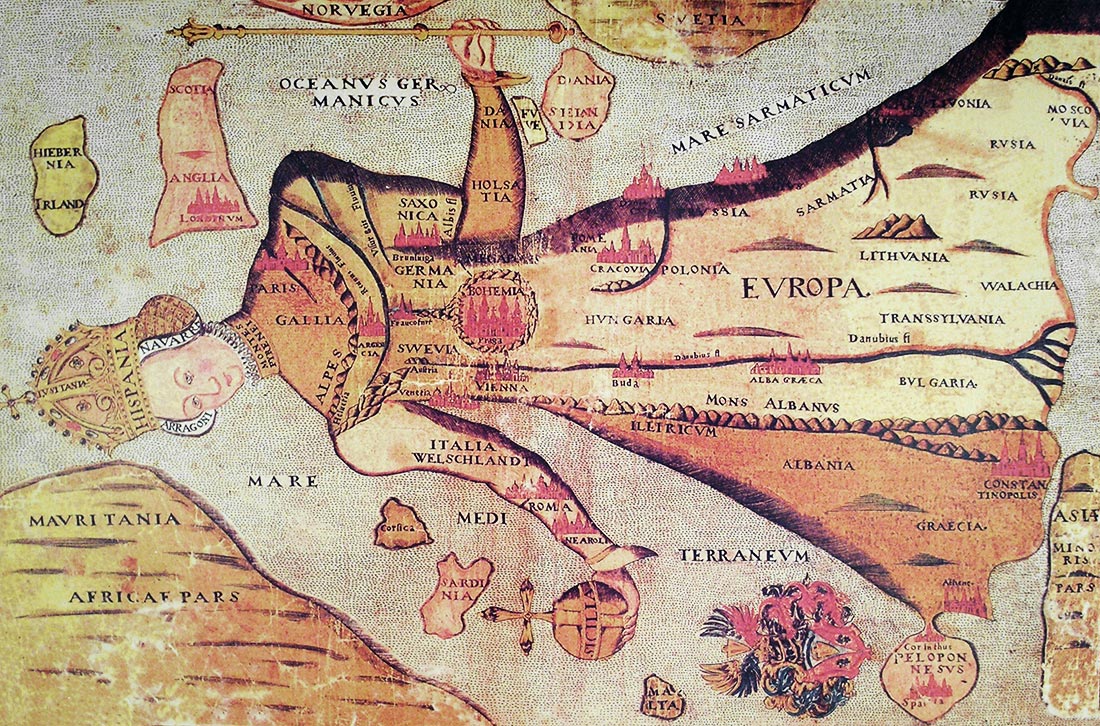

Introduced in 1537, Europa Regina (Queen Europe) depicts the continent of Europe as a queen, with the Iberian Peninsula (mainly Spain and Portugal) as her crowned head

France eyed the Spanish conquests in the New World with growing jealousy and desire to compete with them in both North and South America. Furthermore, the success of the Gospel in France increased the power of Protestant nobility to establish exploratory plantations for potential investment and missionary activity among the natives of those regions. A small expedition succeeded for a short while on the coast of Brazil, but was wiped out by jealous and angry Roman Catholic reactionaries. The French tried again on the coast of Florida, uninhabited by any Spanish settlers.
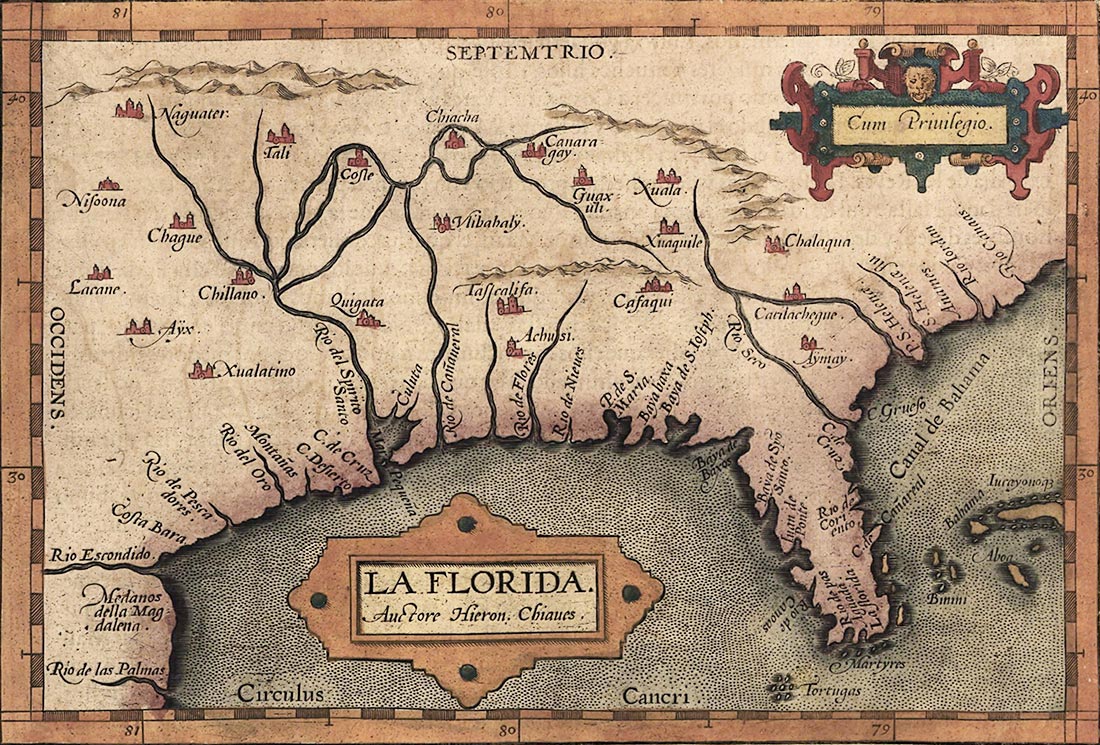

Royal cartographer Geronimo Chiaves’s 1584 map of the Spanish province of La Florida which included much of what is now the southeastern Unites States

French Admiral Gaspard de Coligny, leader of the French Protestants, the Huguenots, organized a small expedition led by explorer Jean Ribault that built a post on the coast of what would centuries later become South Carolina. That mission aborted and another one, better funded, larger and more diversified, was planted in 1564 on the northeast coast of La Florida and named Fort Caroline, after King Charles IX of France. The leader, René Goulaine de Laudonnière, had his little Protestant band build a sturdy wooden fort and establish friendly relations with the native tribes.
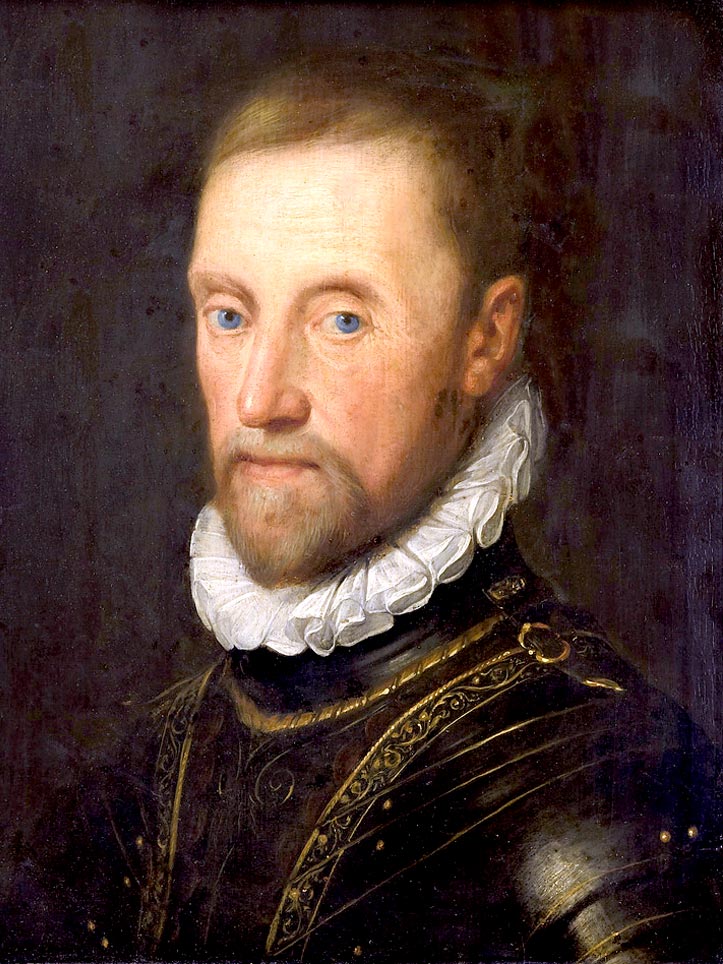

Admiral Gaspard de Coligny (1517-1572)
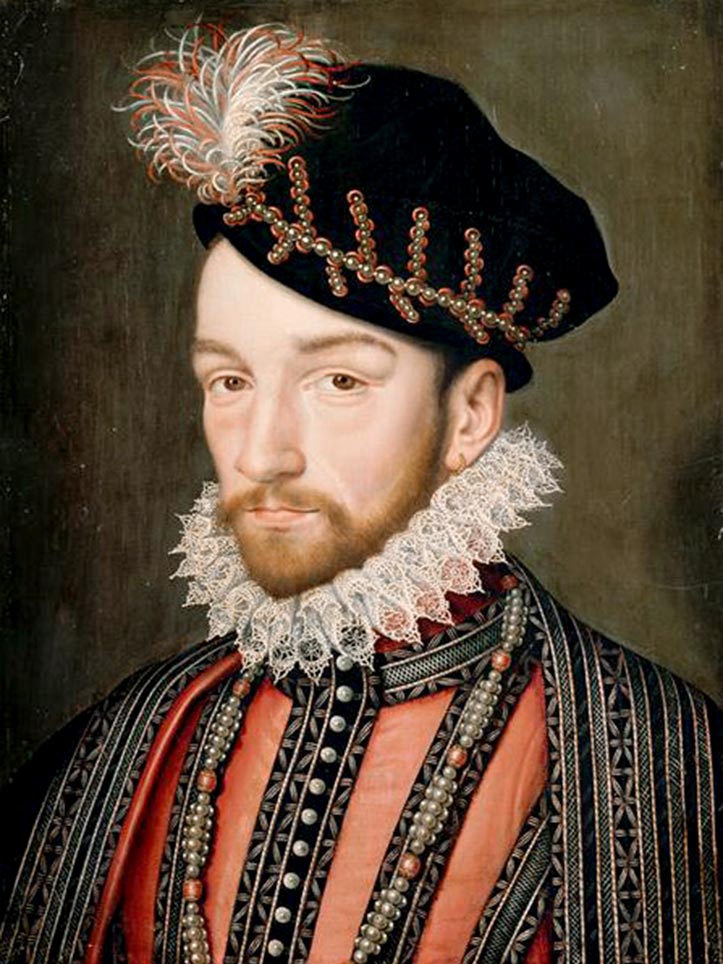

King Charles IX of France (1550-1574)

Inexperienced and tentative leadership, among other problems, plagued the little colony and they experienced hunger and conflict with some of the natives. The great English sea raider John Hawkins stopped by and traded food for cannon and shot, enabling the colony to last a little longer. A relief expedition arrived under the irrepressible Ribault who took charge and brought to shore hundreds more settlers and soldiers.
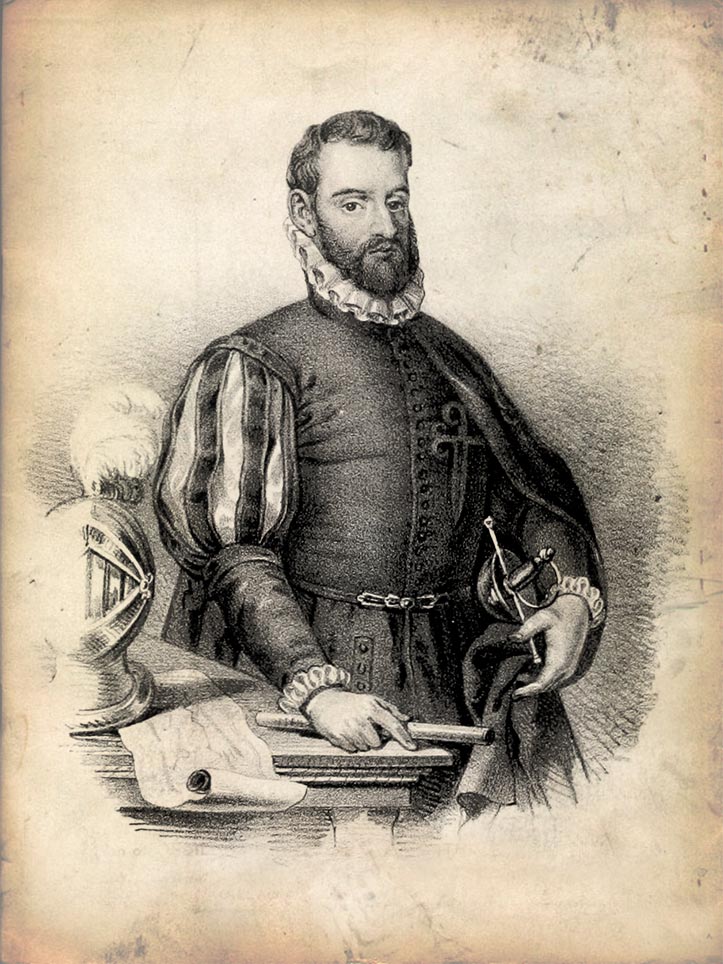

Pedro Menéndez de Avilés (1519-1574)
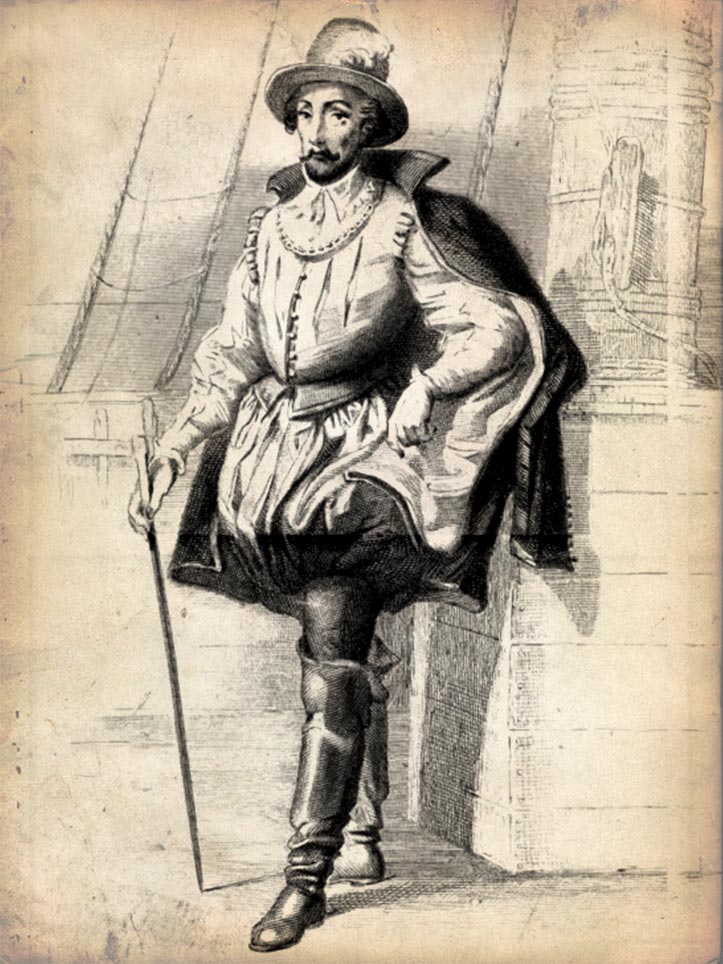

René Goulaine de Laudonnière (c. 1529–1574)

While the colony had been struggling, the Spanish had not been idle. One of the most ferocious Spanish soldiers of fortune, Don Pedro Menéndez de Avilés landed south of Fort Caroline with a few hundred soldiers at the spot that would become the city of St. Augustine. While Ribault took his fleet to attack St. Augustine, Don Pedro marched his men overland and surprised Fort Caroline and the two hundred fifty or so people still there. About fifty women and children were captured and the rest of the garrison minus a handful who escaped, were promptly massacred. Ribault’s ships foundered south of the Spanish outpost and most surrendered to Don Pedro under a flag of truce. He hanged them all. Almost five hundred Huguenots died at Fort Caroline; the French survivors escaped back to France, the colony lost entirely to the Spanish.
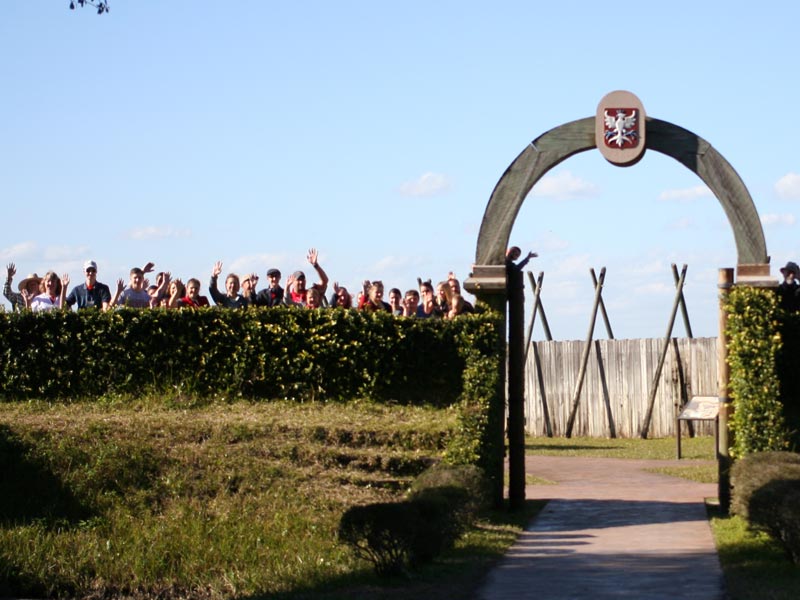

Greetings from Fort Caroline!


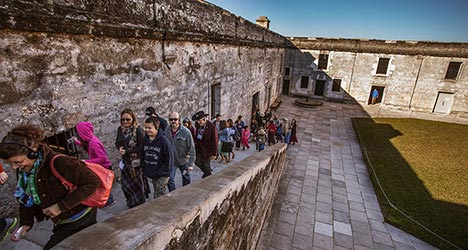
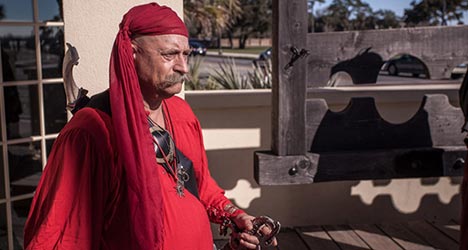
Historian Bill Potter talks to tour guests inside the fort
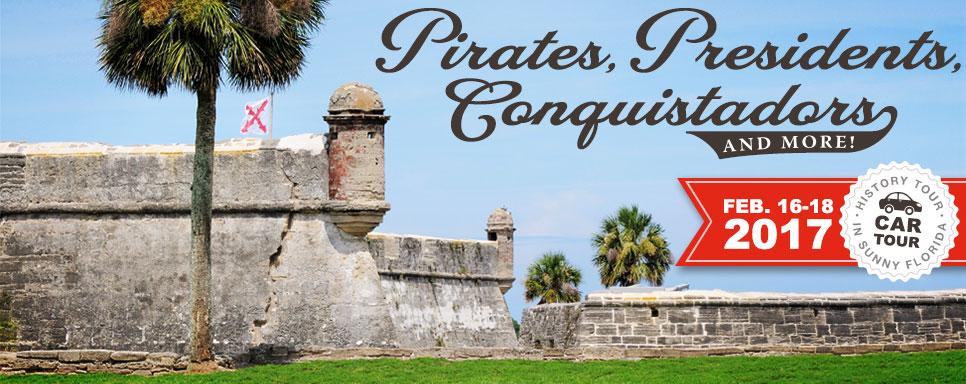
Join Us in Sunny Florida!
February 15-17

Explore the ancient sites of northeastern Florida, redolent with the sea breezes of the Atlantic and steeped in a providential history that helped create the English civilization that became embedded north of Florida and brought about the abandonment of the outposts of Spain’s Empire in North America.
The Salem Witch Trial Executions, 1692

2017-09-18T17:19:07-05:00September 18, 2017|HH 2017|

“On the evidence of two witnesses or three witnesses, he who is to die shall be put to death, he shall not be put to death on the evidence of one witness.” —Deuteronomy 17:6

The Salem Witch Trial Executions, September 22, 1692

The word “Puritans” often triggers the instant response of “witch burners“ among both casual and professional historians of American history. Who the Puritans actually were, and the details of the civilization they established in New England, seems to be a blank slate, but for one incident which occurred in the third generation of the English settlers. On September 22, 1692 nine men and women were executed by local government authorities in Salem, Massachusetts for practicing “witchcraft.” Before the accusations and trials came to an end, a hundred people had been accused, twenty were executed and five died in jail. What is the truth behind the “Salem Witch Trials?”
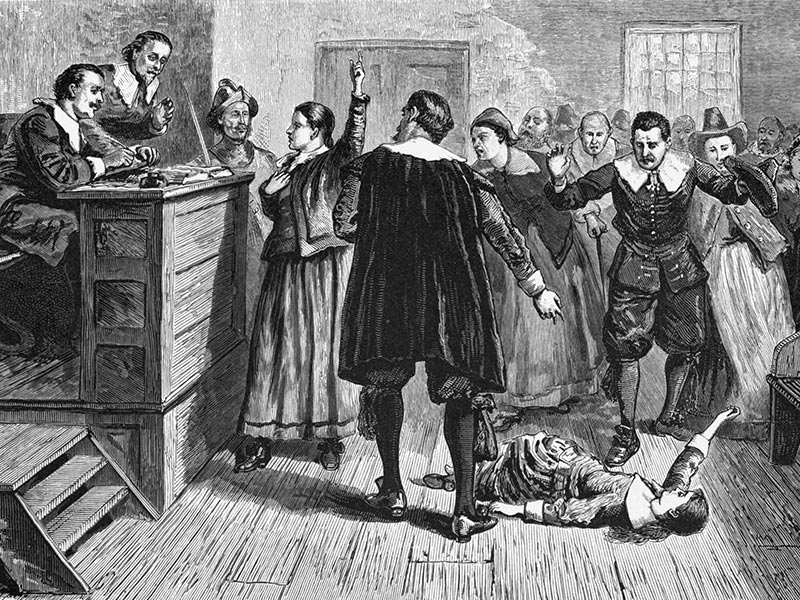
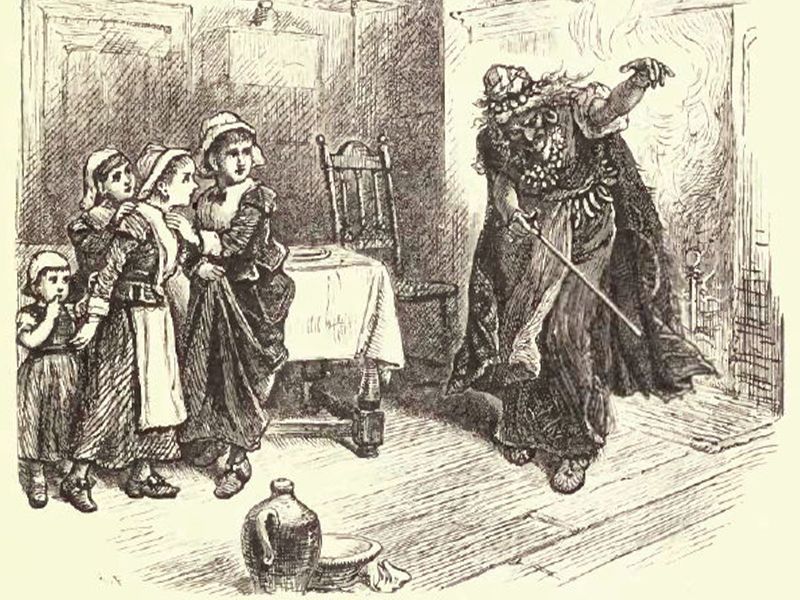
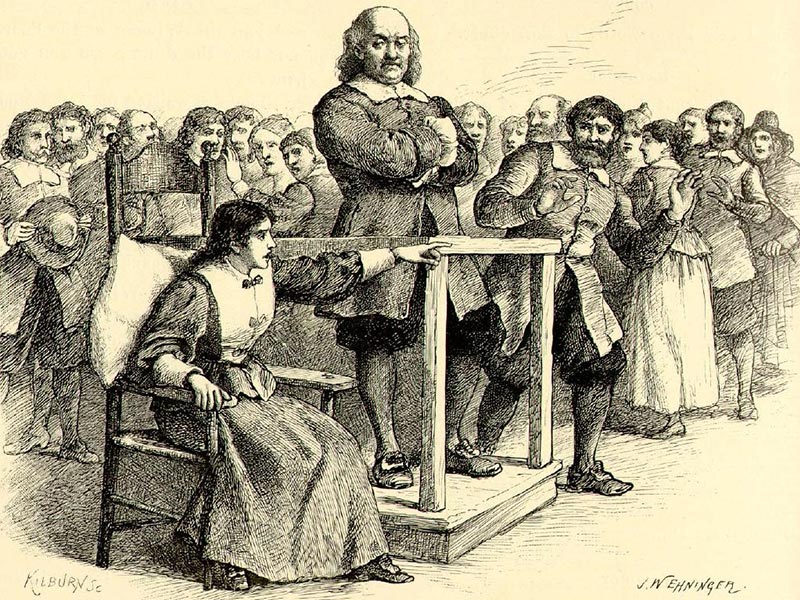
An accused woman defends herself before the judge while a girl — presumed to be Mary Walcott (1675-c.1752), one of the “afflicted” witnesses — falls to the floor in a fit

The tragedy of 1692 did not happen overnight or in isolation to the situation in Europe. Salem had been founded early in the New England Puritan hegira and had become the most important port in Massachusetts. The town people and the church established there exhibited signs of spiritual decline and contention for decades, although the town prospered economically. Factions developed over land-use and politics, creating bitterness and family feuds, which festered. The church could hardly keep a pastor in place and the current one was the worst of the lot. The Rev. Samuel Parris had failed in business and then pursued the Gospel ministry. He rarely seemed happy and complained from the pulpit about the inadequacy and slowness of his pay. Church discipline was all but non-existent.


Examination of a Witch,
by Thompkins H. Matteson (1813-1884)


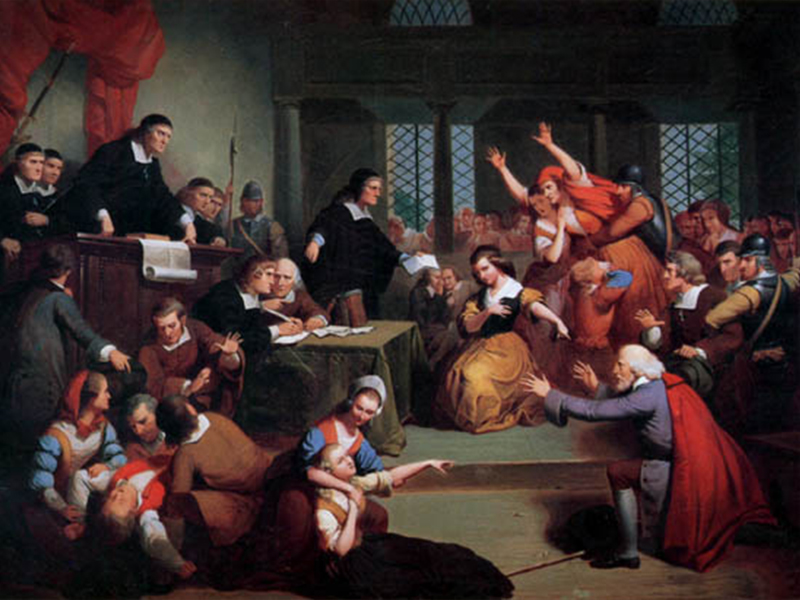
Trial of George Jacobs, August 5, 1692,
by Thompkins H. Matteson

The slave of the Parris family, a Caribbean women named Tituba, met with a group of adolescent girls from the Parris family and neighboring households, in the pastor’s cellar, teaching them secrets of occultic practices. The girls had visions, saw apparitions and fell down in fits, sometimes in church. They began accusing certain women and men of Salem of bizarre activities and of appearing in weird forms in the girls’ bedrooms, flying around the room, causing them to have fits, etc. Because the Puritans believed that real spiritual warfare could be manifested in the world, the accusations were taken seriously and the accused were arrested and put on trial.


Tituba was said to have been “learned in the practices of sorcery”


Mary Walcott, called to the witness stand, was among the principal accusers

The court cases did not follow the precedents of English common law nor biblical law principles. Because witchcraft and consorting with the devil or demonic forces was a capital crime, two witnesses should have been required for the accused to go to trial. One hysterical twelve-year-old or eighteen-year-old for that matter, regaling the court with outrageous stories resulted in arrests. The judges allowed for “spectral evidence” for which there was no legal precedent, thus elevating subjective experience over objective evidence and reason. A number of the accused were from families in the town who contended with the families of the girls in legal cases of the past or were friendless or isolated elderly single people.


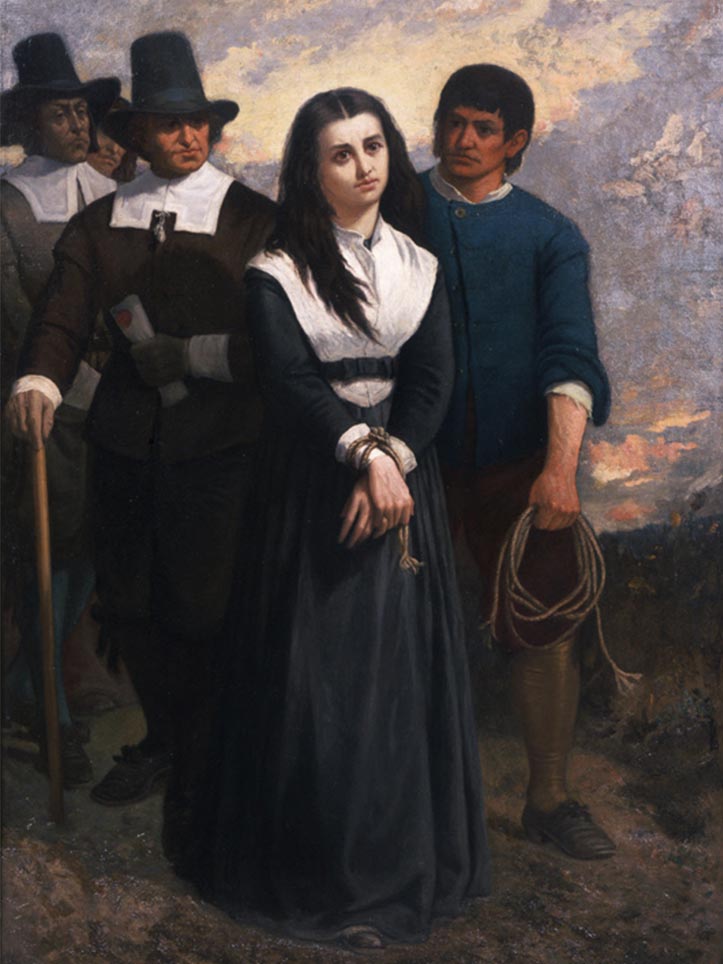
Witch Hill or The Salem Martyr,
by Thomas Satterwhite Noble (1835–1907)


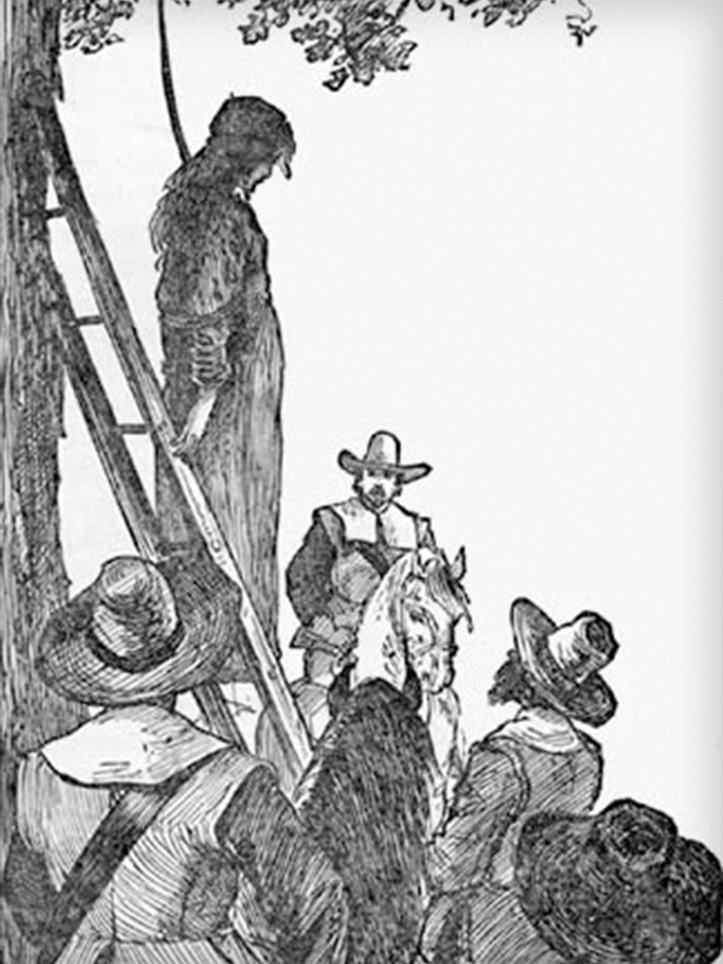
The execution in Boston in 1656 of accused witch Ann Hibbins predated the Salem trials

Eventually the governor of the colony put an end to the trials after prominent men were accused and after protests by respected pastors and colonial leaders. In subsequent years, some of the girls and even Judge Sewell publicly repented of their role in the events of those months. Most of the accused were innocent of practicing the “dark arts.” The number of executions at one small town in New England were dwarfed by the hundreds and thousands who died for “witchcraft” in Germany, France and England in that same era, but the events of Salem have been grasped by the enemies of godly government and Puritan culture to condemn all Christian rule in America as nothing but witch burning and hypocrisy.

Salem, Ipswich, Boston & Plymouth!
November 12-17

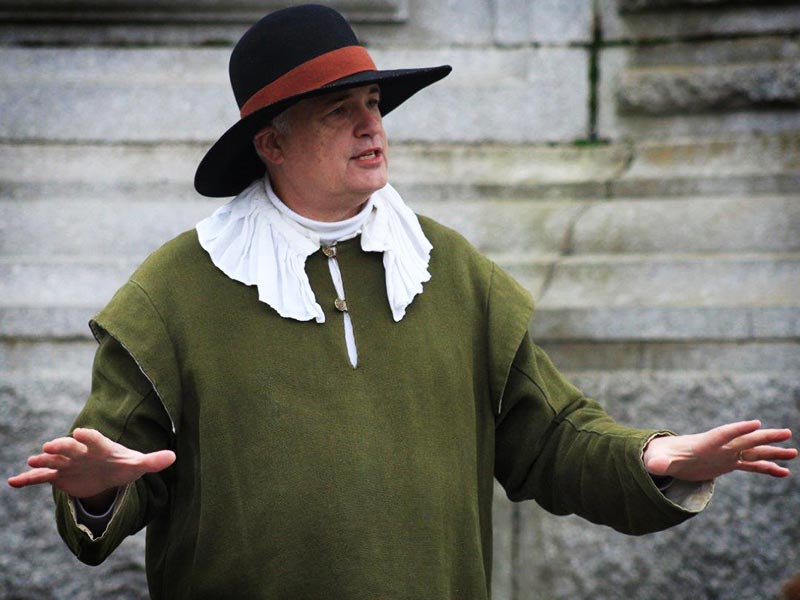
As part of this year’s Pilgrims & Patriots Tour, we have arranged a special treat for our guests: a bonus day in Salem and Ipswich with local expert Dr. Paul Jehle, pastor and Executive Director of the Plymouth Rock Foundation. Space is limited to register to attend today!

The American Flag at Brandywine, 1777

2017-09-18T17:14:18-05:00September 11, 2017|HH 2017|

“We will rejoice in thy salvation, and in the name of our God we will set up our banners.” —Psalm 20:5

The American Flag at Brandywine, September 11, 1777

We tend to take for granted the power of national symbols. They do not have the same grip on us that they used to, in part because they are down-played in our new multi-cultural ethos that hates our past, and partly due to the opposite — its commonplace use. The Stars and Stripes flag is likely the most common national symbol, flying from every ballpark, post office and car dealership, seen on hats and t-shirts, in front of churches and on car bumpers. On September 11, 1777 it was seen for the first time on a battlefield, the fresh symbol of a new nation.
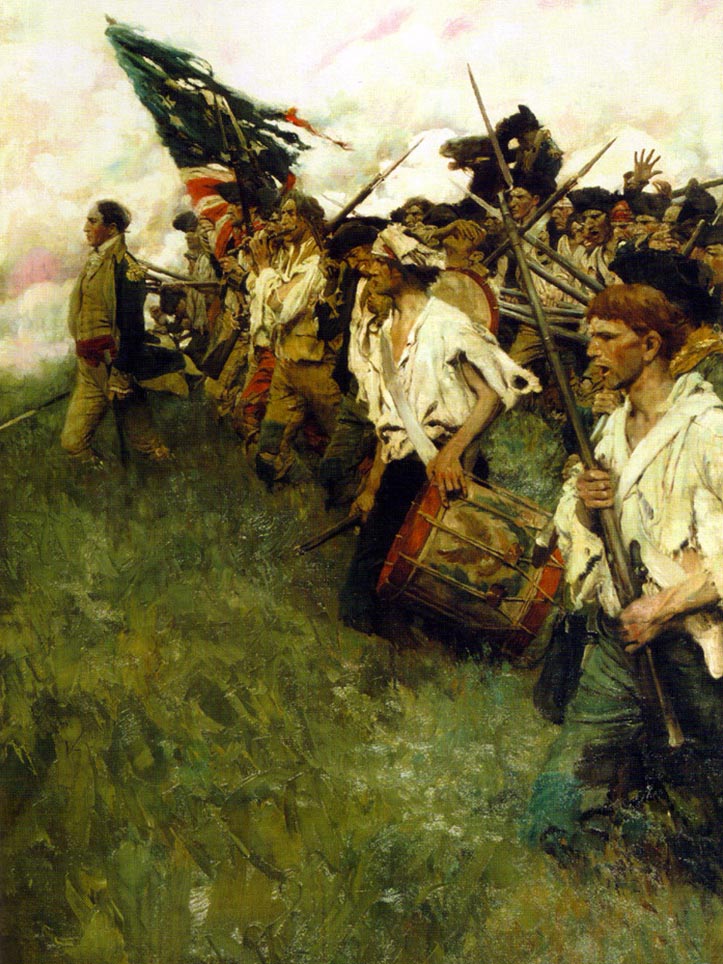
A scene from the battle of Brandywine as depicted in Nation Makers, by Howard Pyle


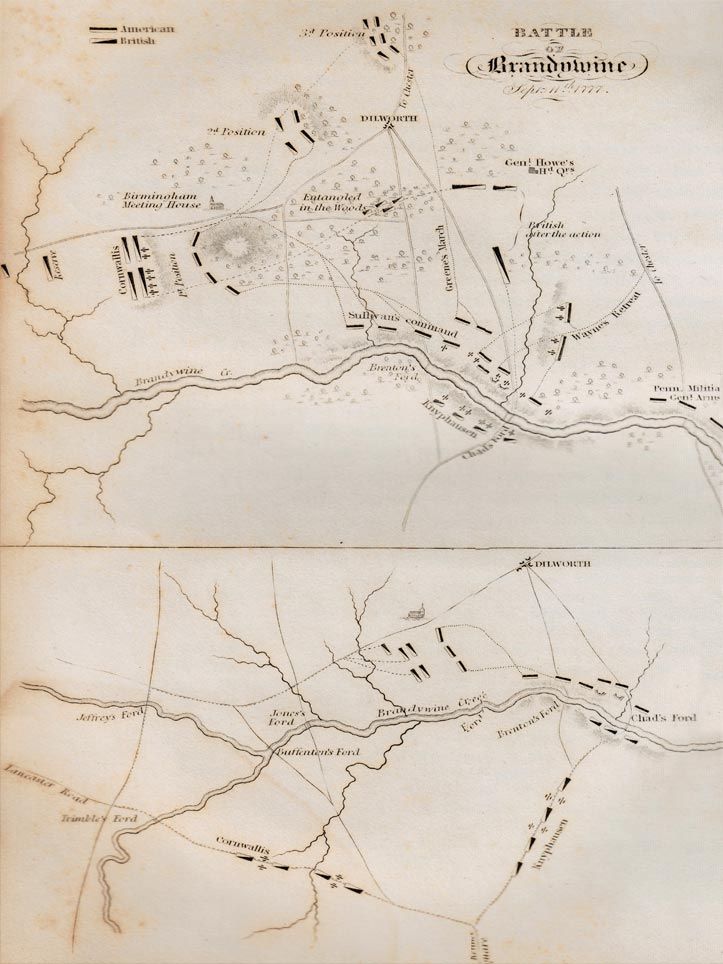
Map of the Brandywine battlefield (1830 engraving)

In June of 1777, the “marine committee” in Congress passed a flag resolution authorizing the creation of an American flag. They even specified that it contain thirteen stripes, red and white and thirteen stars on a blue field. They did not specify how those stars and stripes ought to be arranged, or how many points the stars should have, etc. Francis Hopkinson, Congressman from New Jersey and a signer of the Declaration of Independence, was also a flag designer. He claimed to have produced the first flag in compliance with Congressional order, although his original drawings have been lost. He designed a stars and stripes to be used as a naval banner, since he was on the committee that oversaw naval affairs. He billed Congress for the design. Vexilology experts (those who study the science of flags) claim that the idea of a national flag was relatively new, although a number of banners had already been sported on battlefields and camps.

Whatever banner George Washington accepted prior to the Battle of Brandywine, it did not prove to be standard issue yet, since he complained to Congress in 1779 that no standard flag had yet been adopted for the armies to use in battle. Nonetheless, it seems that individual state units carried Stars and Stripes by the time of the battle. A Captain of the British 33rd Foot captured the home of a militia colonel a few days before the Battle of Brandywine and seized a stand of colors, one of which was “of dark blue fringed silk with a canton of thirteen red and white stripes.”


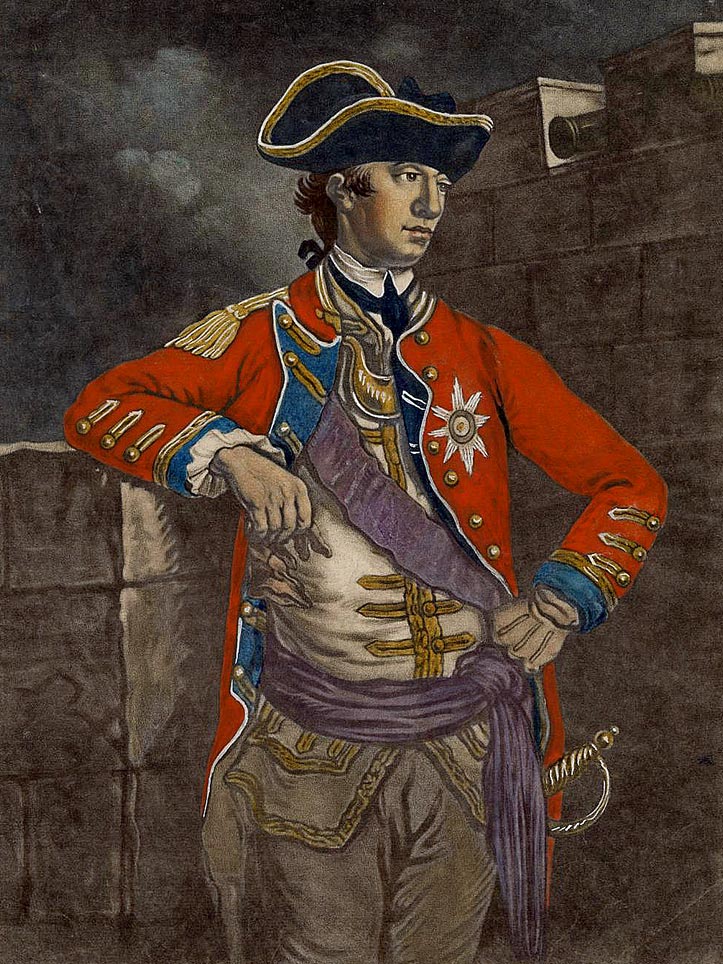
General Sir William Howe (1729-1814), Commander-in-Chief of British forces


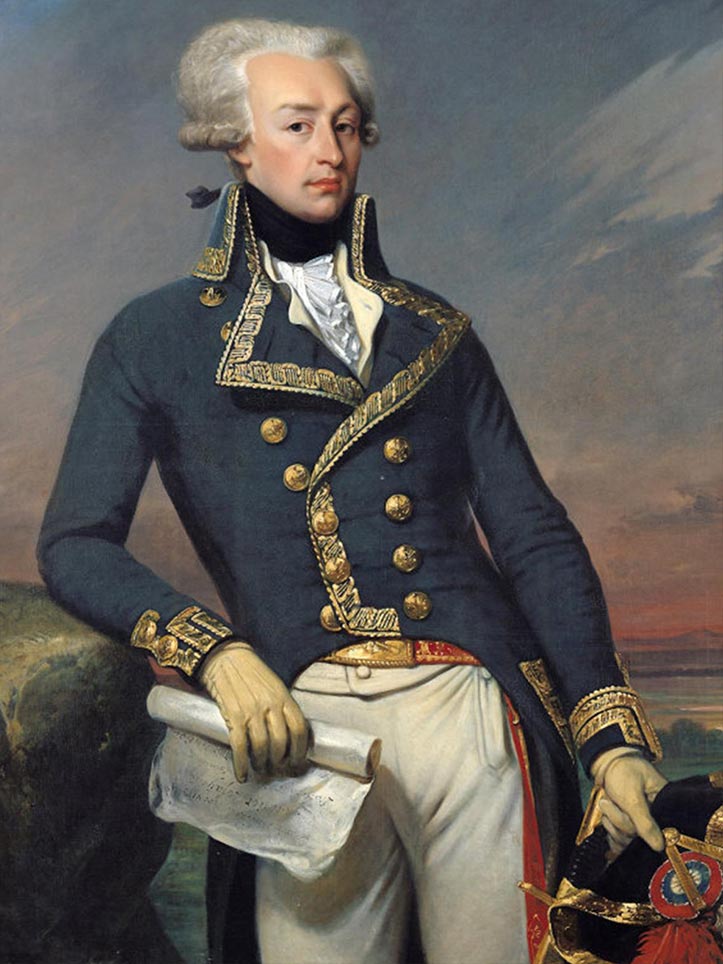
Gilbert du Motier the Marquis de La Fayette (1757-1834) as a Lieutenant General, 1791

Sir William Howe carried the British Army from New York to the environs of Philadelphia in September of 1777 with the intention of capturing the rebel capitol. George Washington with the American Continental Army met the redcoats along the Brandywine River near Chadds Ford, Pennsylvania and fought the largest and longest (eleven hours) battle of the Revolutionary War. With unprecedented battlefield heroics by Washington himself, in which he providentially survived un-hit, debuted the Stars and Stripes in combat, along with the conspicuously heroic Marquis de Lafayette, who was wounded, but would live to play a significant role in American independence.

Somewhat ironically, the American flag did not capture the emotions and meaning that we would expect today. That occurred when Major Robert Anderson lowered the garrison flag at Fort Sumter at the beginning of the Civil War in 1861. The people of the Union states were suddenly seized with a love and attachment to the Stars and Stripes that had not been there before. It became the symbol of all that had gone before in the sacrifices, creation and maintenance of the Republic and would be embraced to the death by more than 300,000 men over the following four years.

Peyton Randolph Elected First President of Congress, 1774

2017-09-06T22:47:54-05:00September 4, 2017|HH 2017|

Peyton Randolph Elected First
President of Congress, September 5, 1774

George Washington was the 15th President of the United States — everyone knows that… right? The Constitution of the United States — ratified in 1789 — authorized a separate office of President to head the Executive branch of the central government, but before that, American presidents presided over the Congress, beginning with the Continental Congress in 1774.
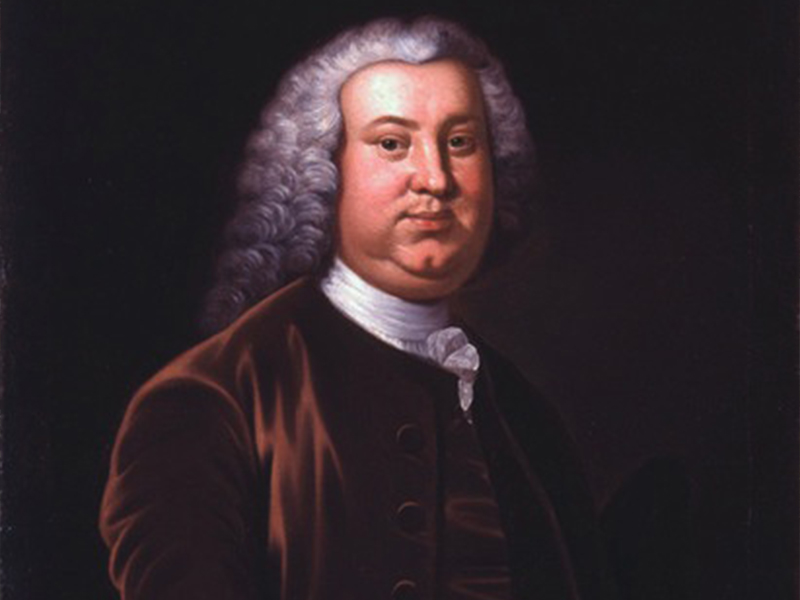
Peyton Randolph (1721-1775) First and third President of the Continental Congress


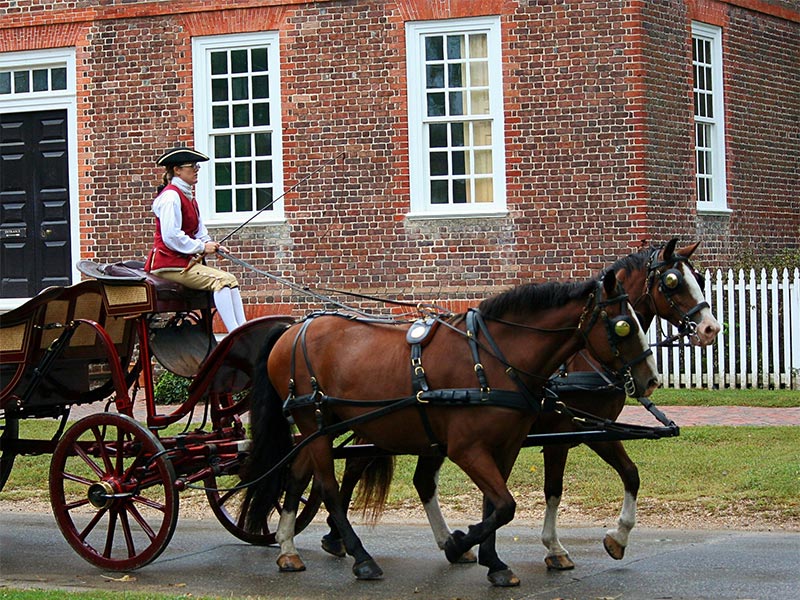
Williamsburg served as the capital of the Virginia colony from 1699 to 1780

Historians have called Peyton’s parents the Adam and Eve of Virginia. Nine of their children lived to adulthood and all contracted excellent marriages. Sir John himself eventually acquired about 20,000 acres of land, many slaves, and wealth enough to insure his children’s legacies. Among his descendants and kinship network were John Randolph of Roanoke, Robert E. Lee, Thomas Jefferson and John Marshall. Peyton was born in Williamsburg, graduated from William and Mary, studied law at the Inns of Court in London, and took his place as the Attorney General of Virginia. Considered a prodigy, Randolph mastered Latin, Greek, Hebrew, and French before the age of twenty and taught Oratory and Rhetoric at the College. He also served in the House of Delegates, which led to several conflict-of-interest charges against him since he also represented the Crown in the Governor’s administration.


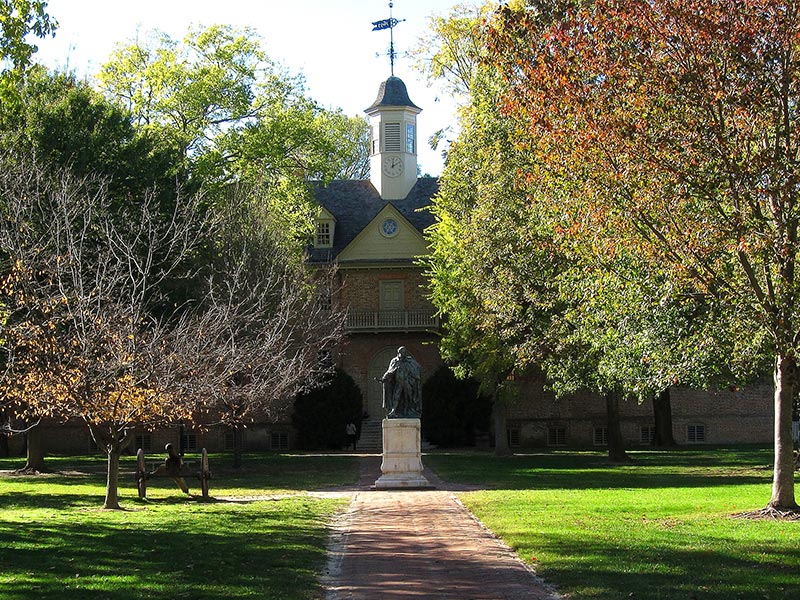
The College of William and Mary in Williamsburg was founded in 1693 by a royal charter issued by King William III and Queen Mary II

Randolph crossed swords with Patrick Henry over the proper response to the Stamp Act, hoping for a more conservative resolution to the high-handedness of Parliament. Peyton became the Speaker of the House in Virginia and tried to conciliate the disparate parties contending for and against the Crown. He served as mediator between Henry and the colonial militia storming to Williamsburg in response to the Governor stealing the gunpowder from the Magazine. Randolph joined the committee of correspondence and was the sitting speaker when the Governor dissolved the House. He was the convener, as well, of the Second Virginia Convention where Patrick Henry delivered his famous “give me liberty or give me death” speech.


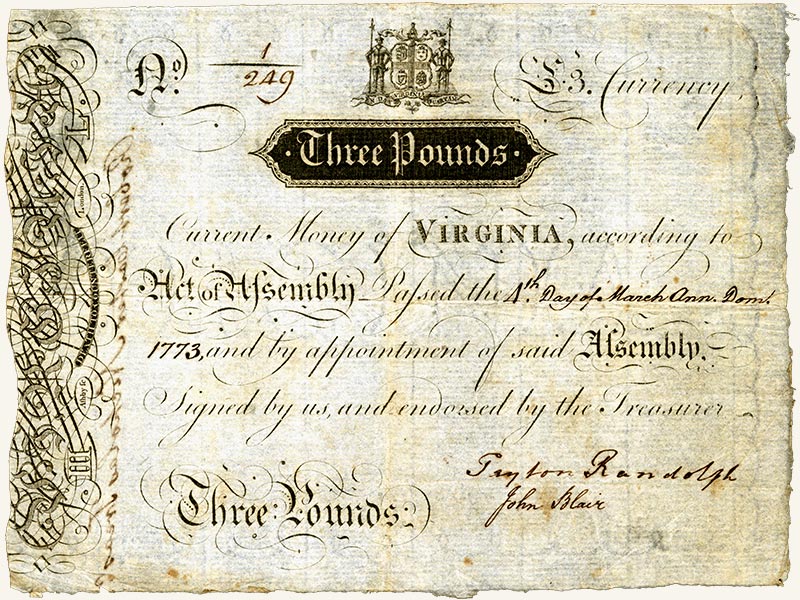
Virginia colonial currency (1773) signed by Randolph and John Blair, Jr.

Upon his arrival at the First Continental Congress, on September 5, 1774, Peyton Randolph’s experience, maturity and caution resulted in his being elected President of that very first Congress and thus became the first President. The same thing happened at the Second Congress, so he became the third President also. Randolph became ill in Philadelphia and died before the Declaration of Independence, but he would likely have signed it, having come round to the cause after hearing all the debates and discussions with the other founders in Philadelphia. He is buried in the chapel at the College of William and Mary.

Peyton Randolph played the role that Providence had assigned him in his day and, like James Otis of Massachusetts, his leadership was crucial in the initial stages of the move to independence, a role that many thought ended prematurely. A family with more connections than any other in the Old Dominion, the Randolphs were well represented among the creators of the Republic. Peyton’s wife was the sister of Declaration signer Benjamin Harrison, and his nephew was on the staff of General Lafayette. John Hancock called Peyton Randolph “the father of his country”.

Save the Date!

Stay tuned for more information about our spring tour of Jamestown, Yorktown and Williamsburg!


Go to Top