The Birth of Caesar Augustus, 63 BC

2018-09-17T20:33:57-05:00September 24, 2018|HH 2018|

“Tremble before the God of Daniel, for he is the living God and enduring forever, and His kingdom is one which will not be destroyed, and His dominion will be forever.” —Daniel 6:26

The Birth of Caesar Augustus, 63 BC

“Now in those days a decree went out from Caesar Augustus, that census be taken of all the inhabited earth.” (Luke 2:1) With these words many Christmas pageants and plays begin, but Augustus is just a bit player off stage to the moment around which all of history revolves — the Incarnation of the Lord Jesus Christ, the King of all mankind and the Creator of all that is. Ironically, Caesar Augustus thought of himself in similar terms, and historians of ancient Rome grant him first place among all the Caesars of Rome. God used this Roman “Pontifex Maximus” to establish the imperial environment for the coming of the Messiah, unwittingly fulfilling a number of wonderful prophecies from the Old Testament.
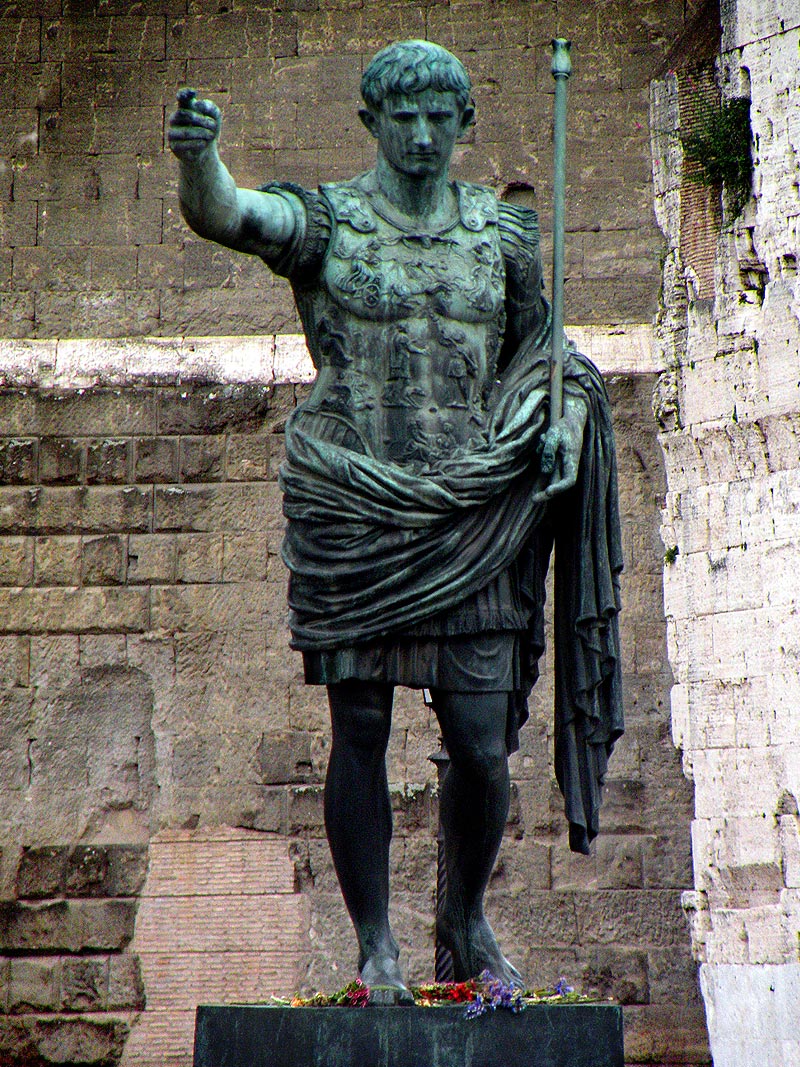

Caesar Augustus,
born Gaius Octavius Thurinus (63 BC – AD 14)

Gaius Octavius Thurinus was born into an “equestrian” family in Rome on September 23, 63 BC. His mother was the niece of the famous General Julius Caesar. When Octavius was thirteen, his great-uncle crossed the Rubicon River with the famous 13th Legion and deposed Pompey the Great, chasing his army down and defeating them. Upon the destruction of all his rivals, Julius Caesar became dictator of Rome, thus bringing about the demise of the Republic. Caesar adopted Octavius (whose name then changed to Octavius Julius Caesar) and in his will named Octavius as his successor. As heir, Octavius continued his military training and courted the favor and loyalty of the legions associated with his great-uncle’s army.
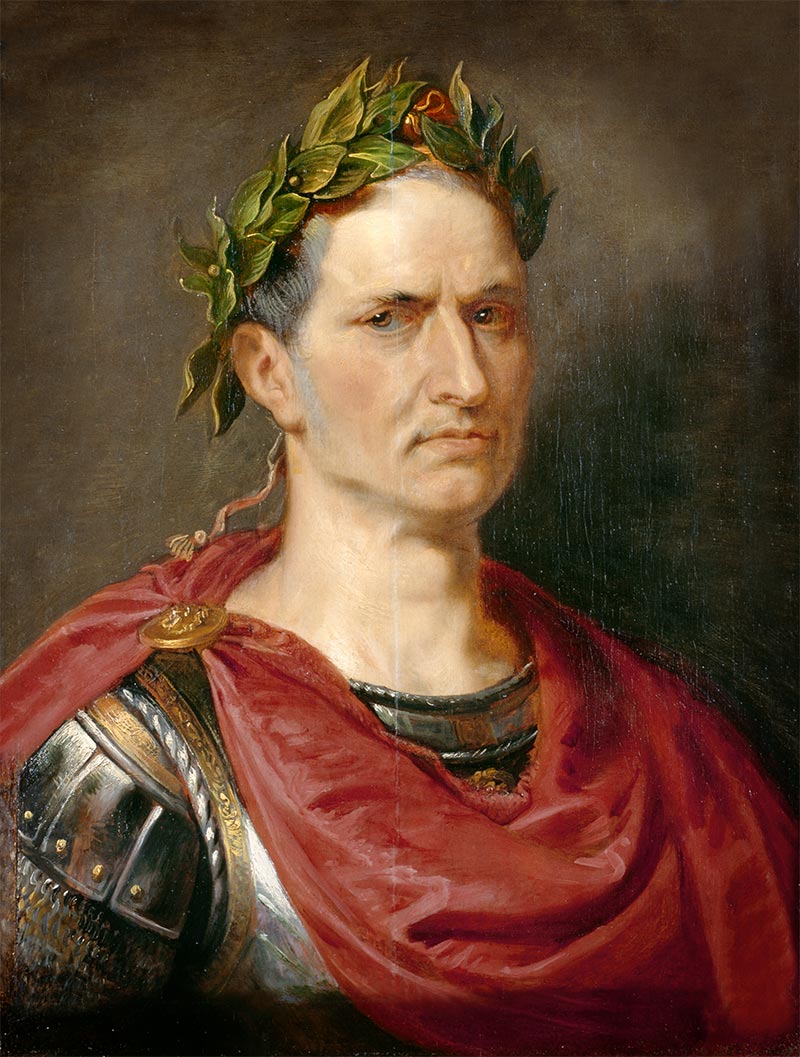

Julius Caesar (100-44 BC)
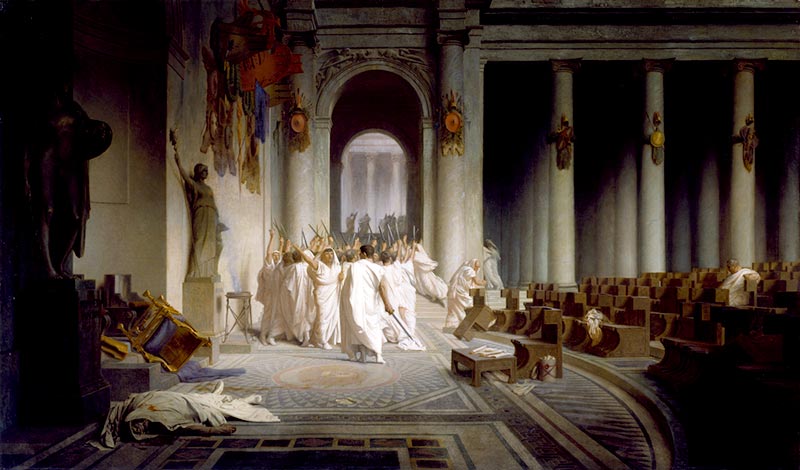

The Assassination of Julius Caesar in 44 BC
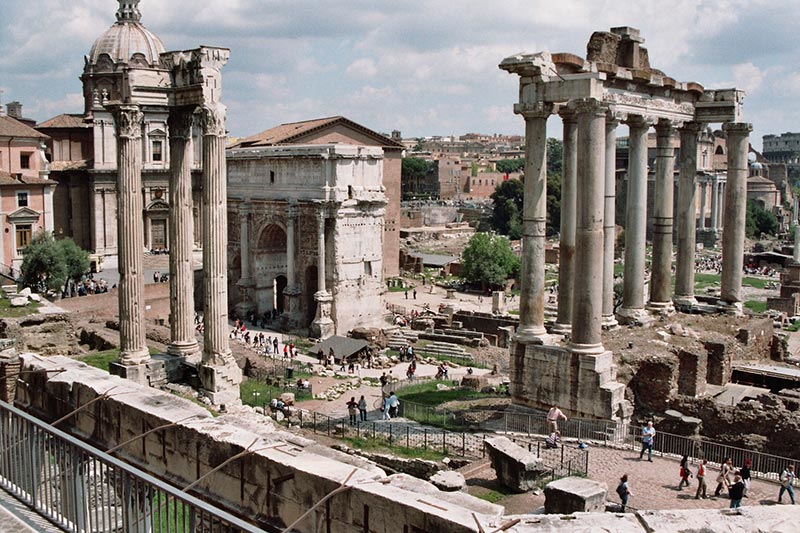

Ruins of the Roman Forum

Julius Caesar was assassinated in the Roman Forum in 44 BC by a conspiracy of former friends and colleagues. Octavian and Marc Antony’s forces destroyed the legions of Brutus and Cassius at the Battle of Phillipi. The Senate deified Julius Caesar, and in response Octavius began calling himself divi filius, the “son of god”. He turned on Antony and chased him till he defeated the coalition of Antony and his ally, Cleopatra of Egypt. Octavius had three hundred senators and equestrians put to death for opposing his rule. After the elimination of all his enemies, internal and external, Octavius took the title Augustus Caesar, a religious title implying total authority, and settled into what became the Pax Romana, the Peace of Rome, which lasted through his reign and beyond.
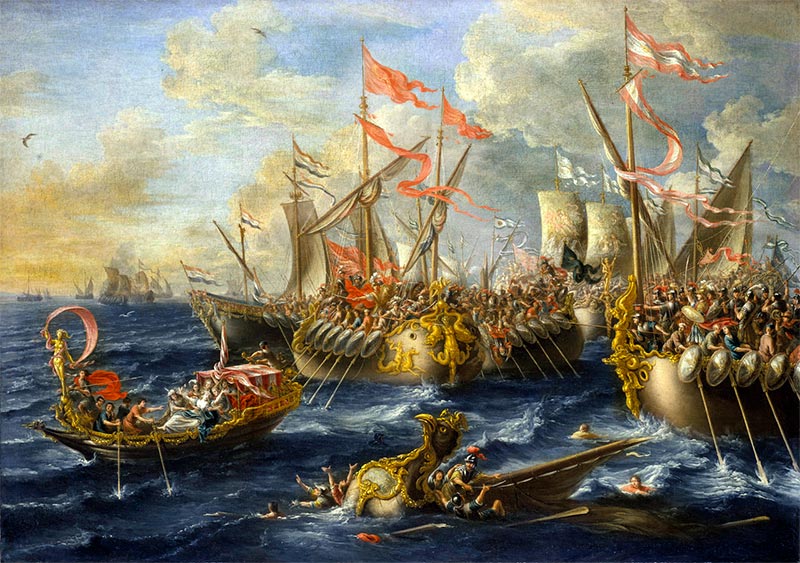

The Battle of Actium — a naval confrontation against the combined forces of
Marc Antony and Cleopatra in 31 BC — was a decisive victory for Augustus

While still assuring the Senate of his Republican convictions, Augustus Caesar consolidated his control of the Empire:

“…first of all from various powers of office delegated to him by the Senate and people, secondly from his immense private fortune, and thirdly from numerous patron-client relationships he established with individuals and groups throughout the Empire. All of them taken together formed the basis of his auctoritas, which he himself emphasized as the foundation of his political actions.”1

With the successes of his battle and wars, Octavius chose for himself the name Imperator (victorious commander) Caesar (his adopted family name) Divi Filius (son of god) Augustus. (No one asked “what’s in a name?” anymore).
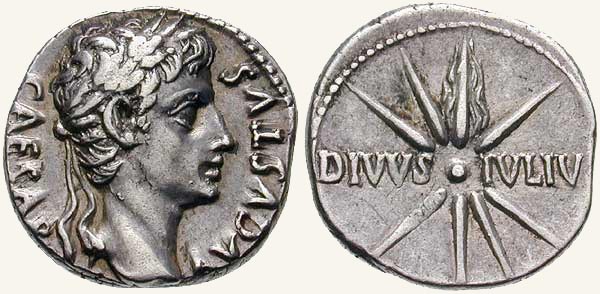

A denarius minted c. 18 BC with the following inscriptions —
Front: CAESAR AUGUSTUS. | Back: DIVUS IULIU(S) (Divine Julius)

Caesar Augustus’s reign brought expansion and pacification of the Empire, legal and economic reforms, general prosperity and prosperity to the Generals. His reign established in one form or another an empire that would last fifteen hundred years. His very name — Caesar — became the word for Emperor: Kaiser in Germany, Tsar in Russia, etc. He built roads across the empire, some still in use today. They enabled Christian missions to spread throughout the empire as the centuries passed. He established the gladiatorial and other games for the masses. Many of his building projects still stand. The month of August is named after him.
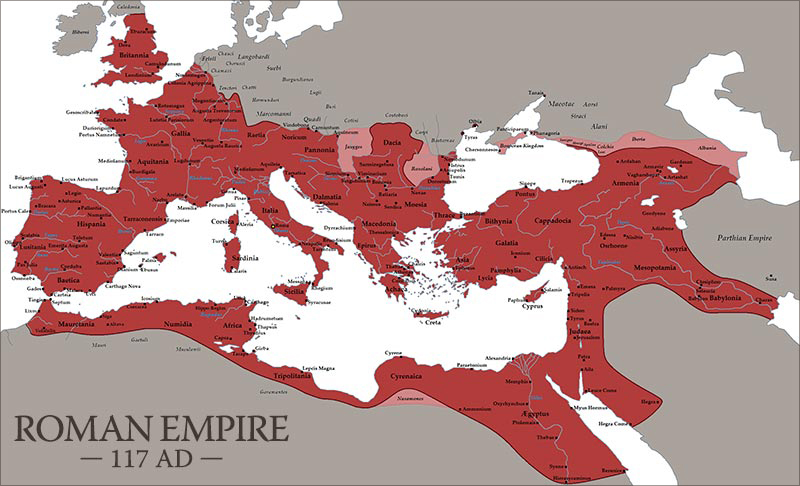

The extent of the Roman Empire at its zenith in AD 117

All that being said, the legacy of Augustus is a drop in the bucket of royal achievement compared to the coming of the real King at Bethlehem in about the 38th year of Caesar’s reign. After all, Augustus was but a man, and the marble busts of his head in the museums of the world but match his feet of clay. His empire went to dust, and weeds choke his flagstones. Another great king, who was brought to his senses after an unwilling diet of grass stated:

“…I blessed the Most High and praised and honored Him who lives forever; For His dominion is an everlasting dominion, and His kingdom endures from generation to generation.” —From Daniel 4:34

Emancipation Proclamation Announced, 1862

2024-02-15T11:58:29-06:00September 17, 2018|HH 2018|

“Since the word of the king is authoritative, who will say to him, ‘what are you doing?’” —Ecclesiastes 8:4

Emancipation Proclamation Announced,
September 22, 1862

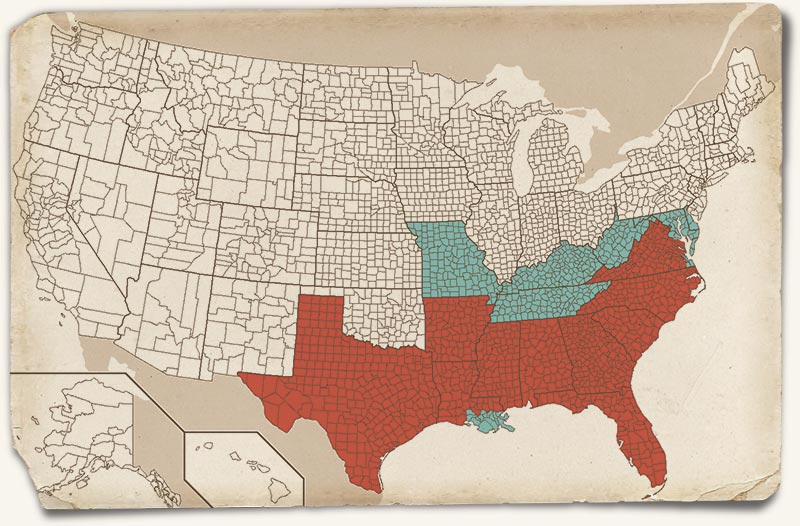
In his First Inaugural Address, President Abraham Lincoln stated that “I have no purpose, directly or indirectly, to interfere with the institution of slavery in the States where it exists. I have no lawful right to do so, and I have no inclination to do so.” Eighteen months later, September 22, 1862, he issued a preliminary Emancipation Proclamation that if the “states in rebellion” do not stop fighting and return to the Union, he would declare all the slaves in the Confederacy to be free. The lack of a “lawful right” had not changed, but his inclination obviously had. Why? The slaves behind Union lines in Kentucky, Maryland, many counties in Virginia and parishes in Louisiana would remain enslaved in either case. Again, why? The answers to that complicated situation are interesting and controversial.
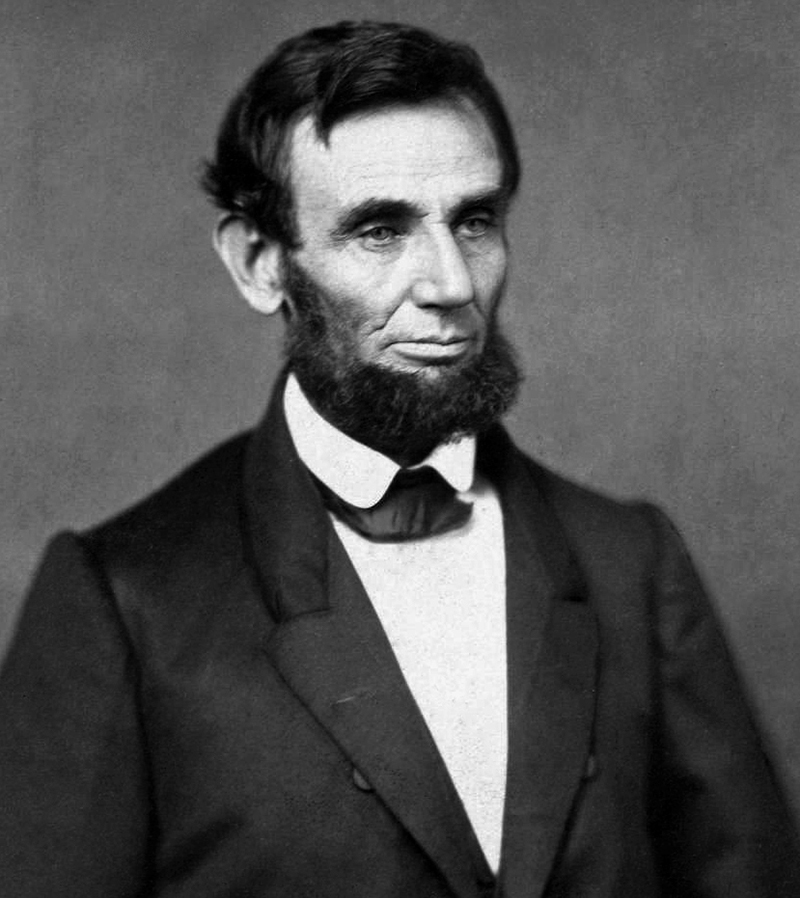
Abraham Lincoln (1809-1865)
His first photographic presidential portrait


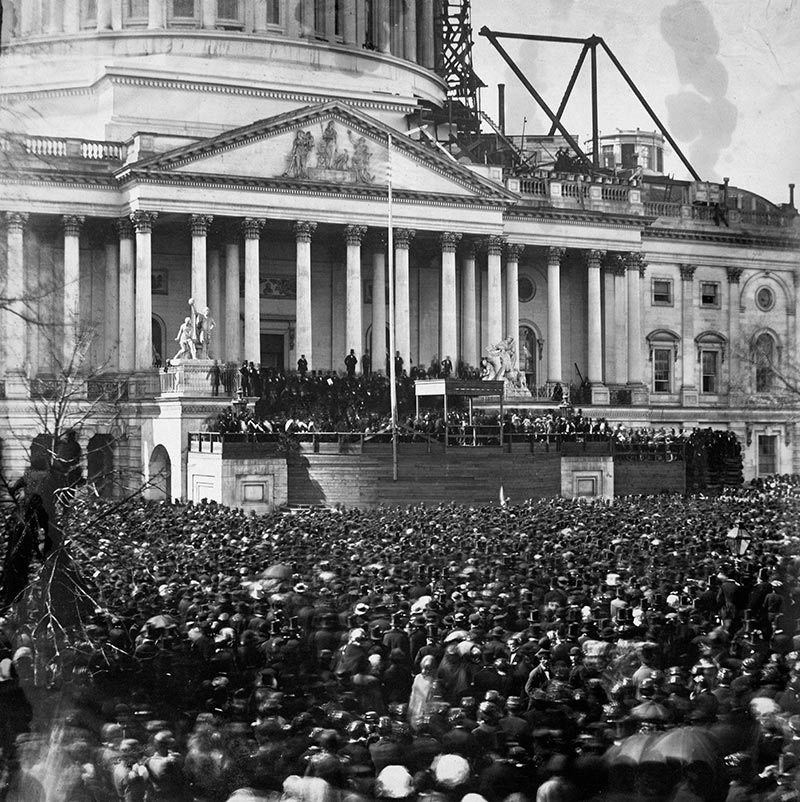
Crowds gather as Lincoln is sworn in as President at the yet unfinished US Capitol building, March 4, 1861. His First Inaugural Address followed this ceremony.


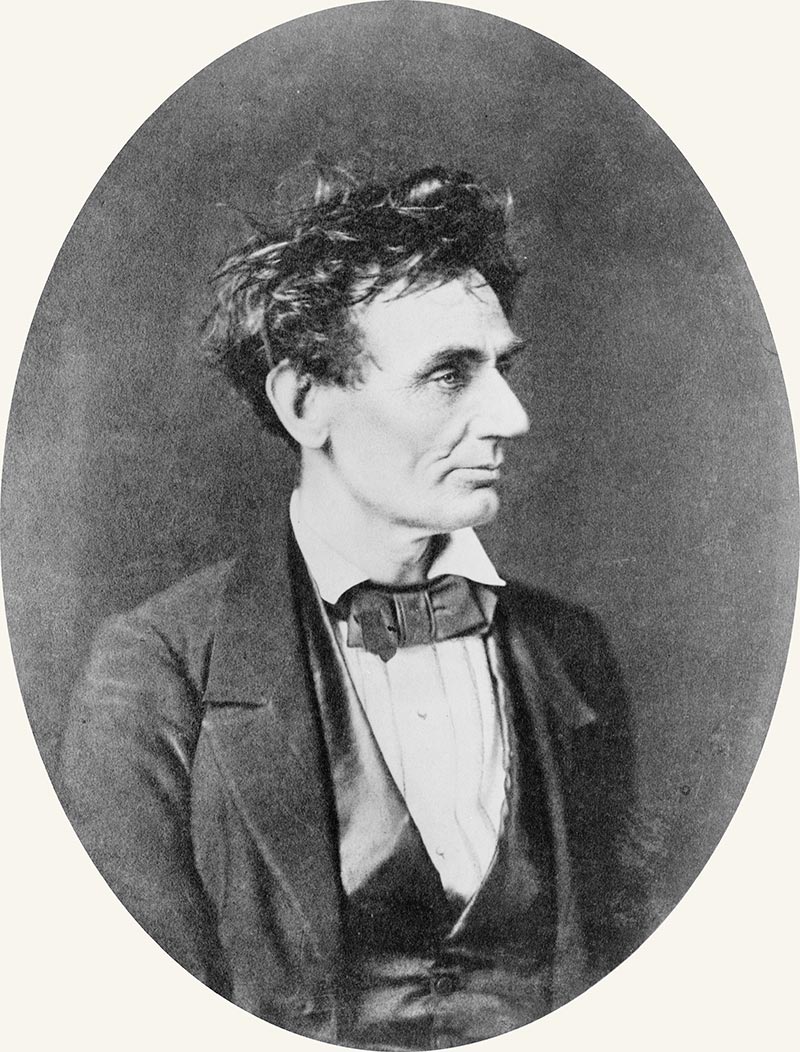
Lincoln in 1857 immediately prior to Senate nomination, Chicago, Illinois

Presumably, had the Confederates stopped fighting and rejoined the Union, there would have been no emancipation. Such an outcome would have been consistent with President Lincoln’s stated purpose for the war — to restore the Union only — and also in line with Republican policy since the Party’s creation in 1854. The issue of slavery for most Republicans focused on keeping slavery in the South and preventing its spreading to the territories. As Abraham Lincoln stated in one of the first addresses for the Party in Peoria, Illinois in 1854, “the whole nation is interested [in whether slavery goes into the new territories]. We want them [the territories] for the homes of free white people. This they cannot be to any considerable extent, if slavery shall be planted with them.” The Party platform of 1860 stated explicitly that they would not interfere with slavery in the southern states. The abolitionists did not like the moderate Lincoln. As a tiny but vocal minority, the abolitionists themselves were execrated by a large portion of the northern people. So what had changed since the election of 1860?


A US map depicting areas covered by the Emancipation Proclamation in red and slave-holding areas not covered in blue


The Union armies in the Eastern Theatre of the war had suffered a string of notable defeats — twice at Manassas, around Richmond in the failed Peninsula Campaign, and elsewhere. Finding a general whose strategic vision matched his own had proven elusive. Both Northern and Southern politicians believed that European powers were considering recognizing the Confederacy as a new nation. Mr. Lincoln — well known as a political pragmatist and under fire from a spectrum of Northern newspapers and politicians — found a way through a declaration of emancipation to theoretically damage the Confederate war effort, leave slaveholders outside Confederate-held territory in possession of their slave property, create a new motivation for fighting the war that might mollify both abolitionists and Britain, yet continue to move his plan ahead to restore the Union. When he floated the idea of the Emancipation Proclamation to his cabinet in July, some were strongly opposed; Secretary of State Seward suggested he wait till a significant Northern military victory could give credence to the idea that the North could still win the war.


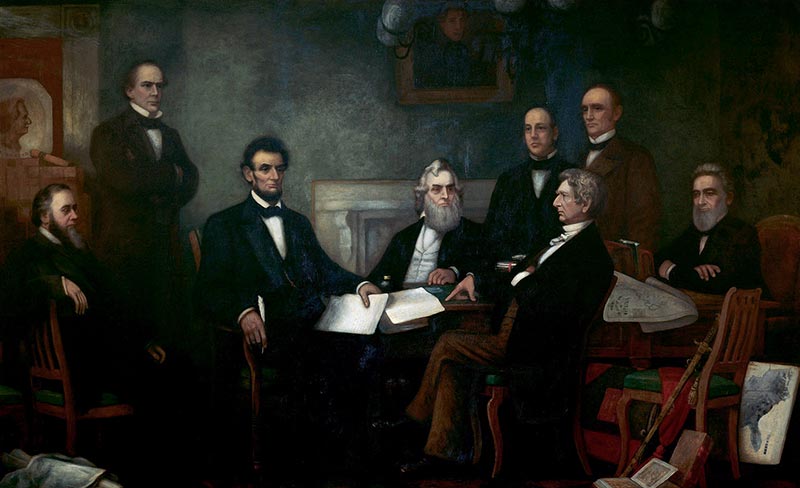
First reading of the Emancipation Proclamation by President Lincoln to his cabinet.
Secretary of State William H. Seward is seated in the foreground, facing Lincoln.

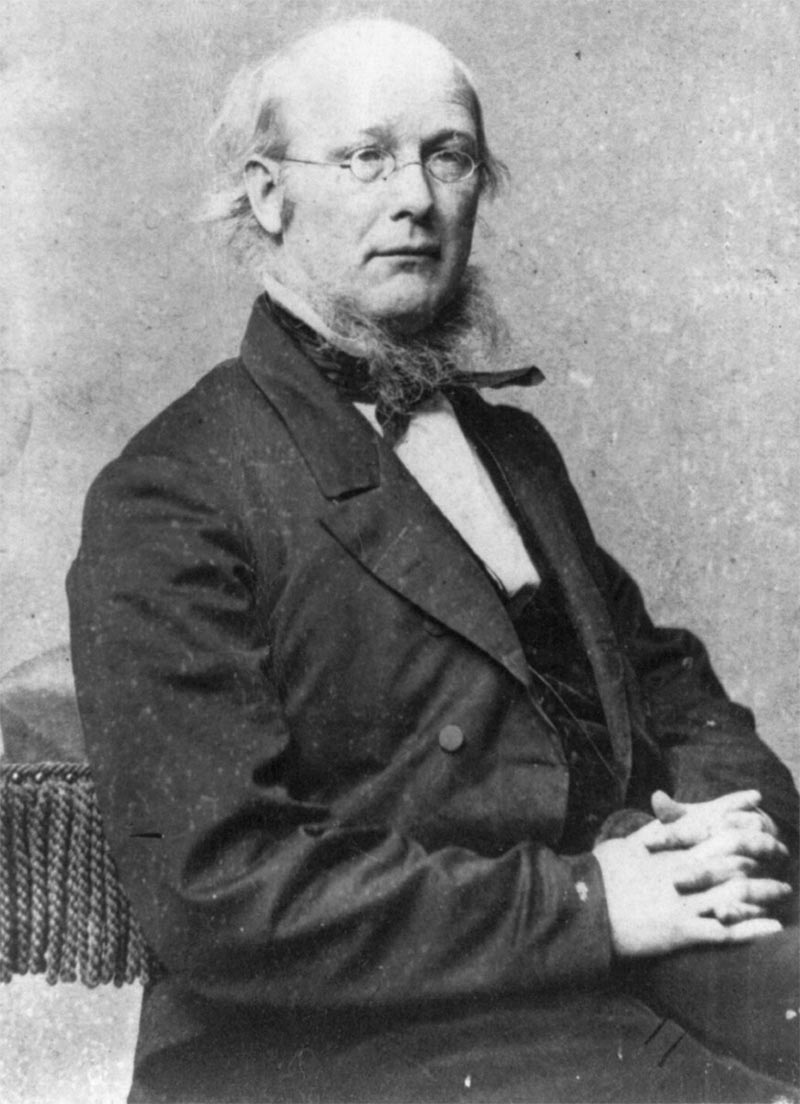
In the famous open letter to newspaper editor Horace Greely of the New York Tribune in August, 1862, Lincoln reiterated his object of fighting the war:

“I would save the Union… the shortest way under the Constitution…. My paramount object in this struggle is to save the Union and is not either to save or destroy slavery. If I could save the Union without freeing any slave I would do it; if I could do it by freeing all the slaves, I would do it; and if I could save it by freeing some and leaving others alone I would also do that. What I do about slavery and the colored race, I do because I believe it helps save the Union.”


Horace Greeley (1811-1872), founder and editor of the New York Tribune

Upon issuing the preliminary Emancipation Proclamation, a firestorm of protest descended on him from constitutionalists, the Northern press and politicians across the Union. Several Northern state legislatures passed laws prohibiting black people from crossing their borders. He responded that the “national emergency” required extraordinary measures and that the natural hostility of the North to slavery could be assuaged with a more activist policy. Indeed, as Lincoln biographer Lord Charnwood pointed out, “The Proclamation had indeed an indirect effect more far-reaching… it committed the North to a course from which there could be no turning back, except by surrender; it made it a political certainty that by one means or another slavery would be ended if the North won.”


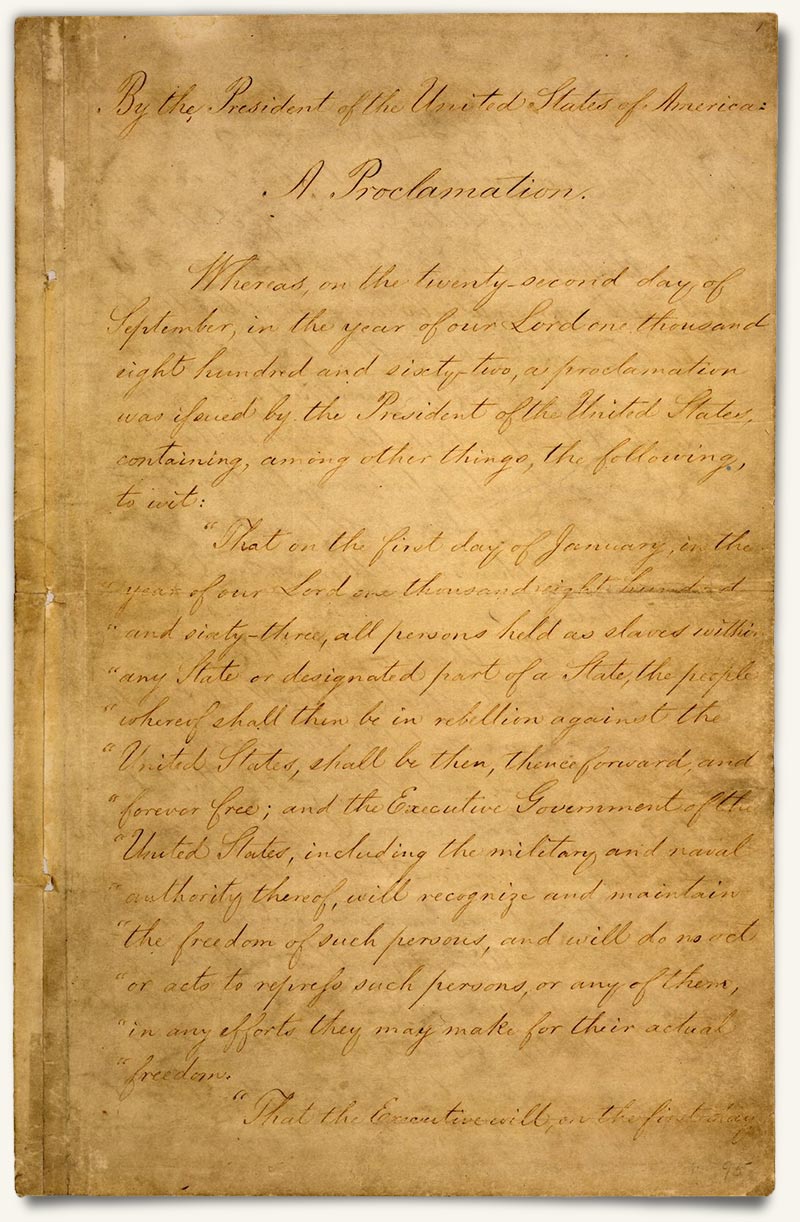
The five-page original document, held in the National Archives Building,
signed September 22, 1862 by Abraham Lincoln


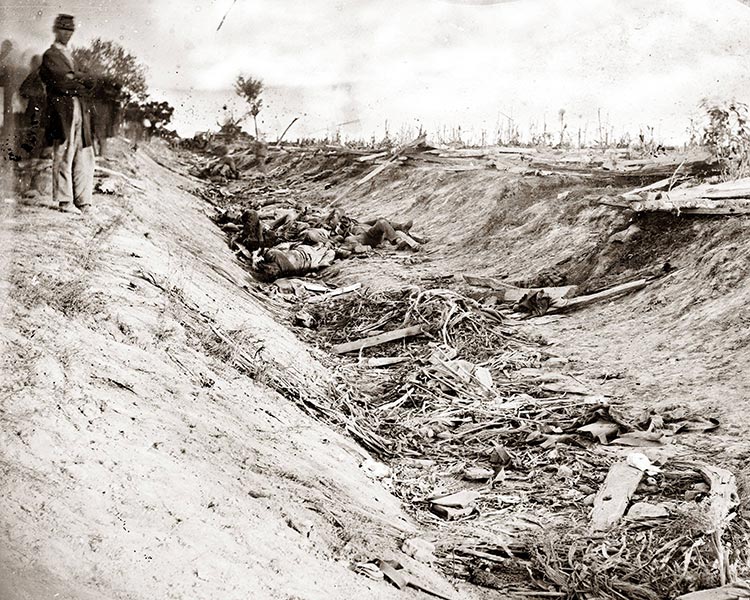
The Battle of Antietam on September 17, 1862, the bloodiest single day in American military history, gave the President exactly what he was looking for — a Northern victory over Robert E. Lee’s Army of Northern Virginia. The fact that the battle was fought on Union soil was icing on the cake, no matter that the battle was a tactical draw; Lee’s retreat to Virginia sealed the announcement of the Proclamation. The announcement did not cripple the South to the extent intended, although almost 200,000 black troops — most of them ex-slaves — enlisted in the Union Army before the war ended. However, it did set the course of the war in a new direction and ended any hopes the Confederacy may have had for British


Confederate dead at Bloody Lane after the Battle of Antietam


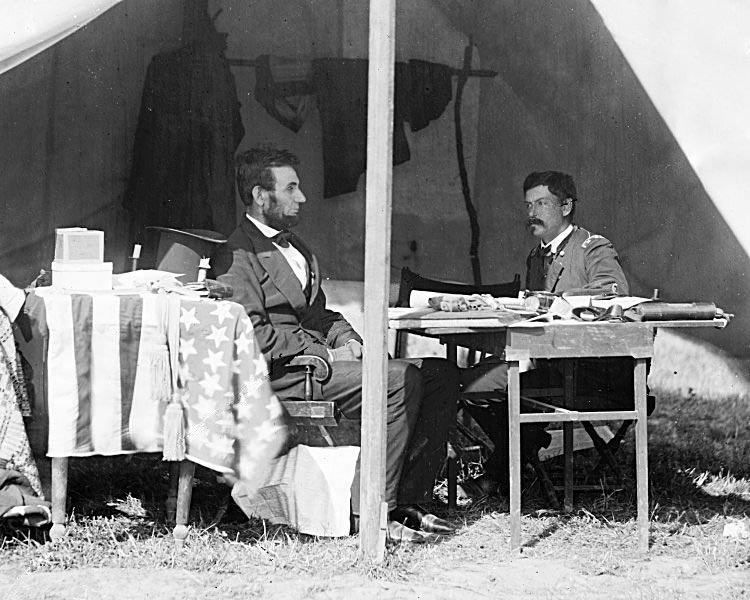
President Lincoln and General George McClellan meet near Antietam Battlefield

Death of William the Conqueror, 1087

2018-09-07T21:27:19-05:00September 10, 2018|HH 2018|

“It is He who changes the times and the epochs; He removes kings and establishes kings. . .” —Daniel 2:21

Death of William the Conqueror,
September 9, 1087

Scottish writer and historian Thomas Carlyle during the 1840s, and especially in his book Heroes and Hero Worship, argued that history can largely be explained by the actions and leadership of great men of the past. He lauds but a few in his book — Napoleon, Cromwell, Knox, Luther, Rousseau, Shakespeare, etc. but the principle took hold among prominent historians and philosophers. The theory is largely debunked today in favor of economic forces, social factors, or just randomness and chaos. For the Christian, God controls history, and the past should be examined and explained through all the means He uses to further His purposes. I would suggest that that especially includes men of extraordinary ability and leadership. Duke William of Normandy, “The Conqueror”, was one of those men.
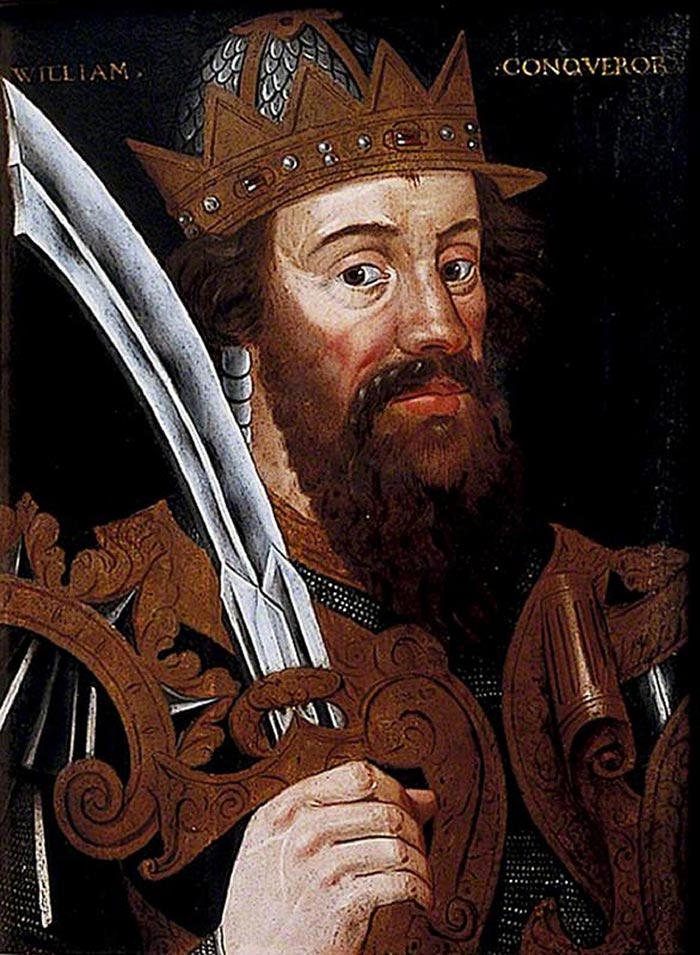
William “The Conqueror”, c. 1028 – September 9, 1087

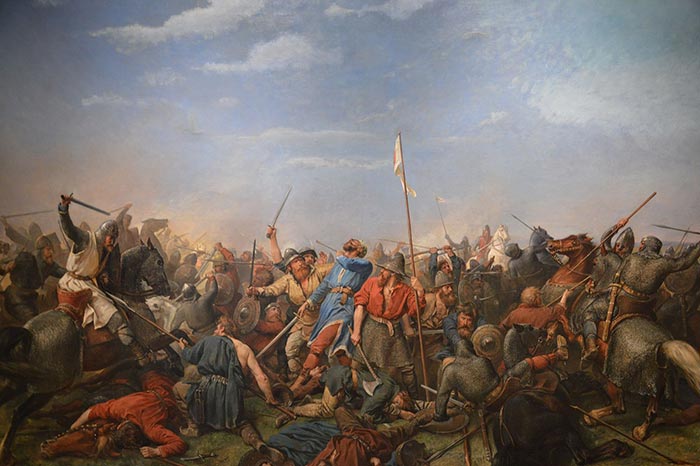
In his time, the 11th century, William’s invasion of England seemed like just another dynastic struggle over who should rule England. With the death in 1066 of the last of the West Saxon kings, Edward the Confessor, three rival claimants to the throne fought to the death for the crown. Harold, the son of the Wessex Earl, Godwin, who had ruled de facto during Edward’s weak reign, was crowned King in Westminster Abbey. Tostig, Harold’s exiled and revengeful half-brother, joined forces with the Norwegian King Harold Hadraga and together they landed a large army in the late summer of 1066 at Stamford Bridge near York. King Harold of England and his own house-carls, of Viking blood themselves, defeated the Norwegians, killing both Hadraga and Tostig.


Battle of Stamford Bridge

In the meantime, William the Conqueror assembled his army and invaded England from Normandy. William’s reputation as a ferocious fighter developed early, since he was the illegitimate son of the Duke of Normandy. The Normans (Norsemen) were Vikings who settled on the coast of France a century earlier and eventually adopted the language and some of the cultural norms of the French, although they carried on constant warfare with them.

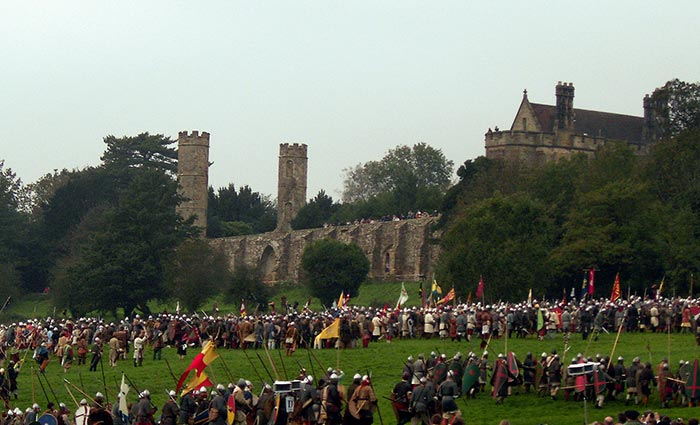
Harold raced south two hundred fifty miles to fight William, and they met at Hastings. Toward the end of the battle Harold was shot through the eye with an arrow, and the English were defeated and slaughtered; Duke William of Normandy became King William I of England. The Conqueror marched across England devastating every place that resisted, and building castles to secure his reign, including the Tower of London.


Reenactment of the Battle of Hastings

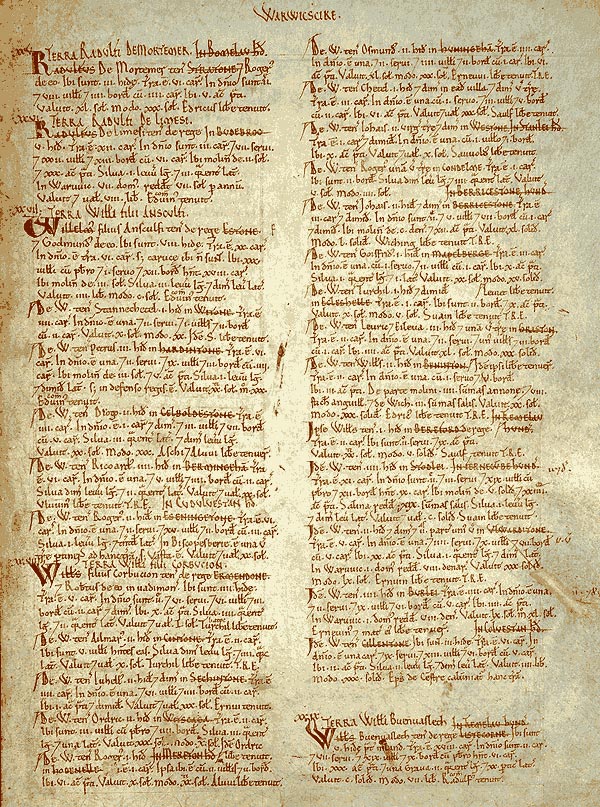
Internal opposition and revolts occurred throughout his kingdom but his knights and their castles kept the island under Norman control. Norman families came with the knights and soldiers to England and thus added another layer of culture to the Danish, Anglo-Saxon, Roman, and Briton heritages already in place. His rule extended into Scotland and Wales through the knightly Norman families. By all accounts William was also a pious churchman, endowing many abbeys and constructing churches. His marriage seems to have been loving and there is no account of unfaithfulness, unusual for men of his stature; his wife bore him ten children. The Domesday Book — his recording of all the land owned in England and by whom — is one of the most important and remarkable documents in English history.

William had to return to France constantly, to put down revolts and invasions of Norman territory, sometimes to fight his own sons. In a battle against the French at Mantes, William’s horse stumbled amidst the burning ashes of the town and somehow the King was desperately wounded by the pommel of his saddle, and perhaps thrown to the ground. He survived in agony at the priory of St. Gervase, at Rouen, for several months, but died from his wound on September 9, 1087, about the age of fifty-nine.


A page from the Domesday Book


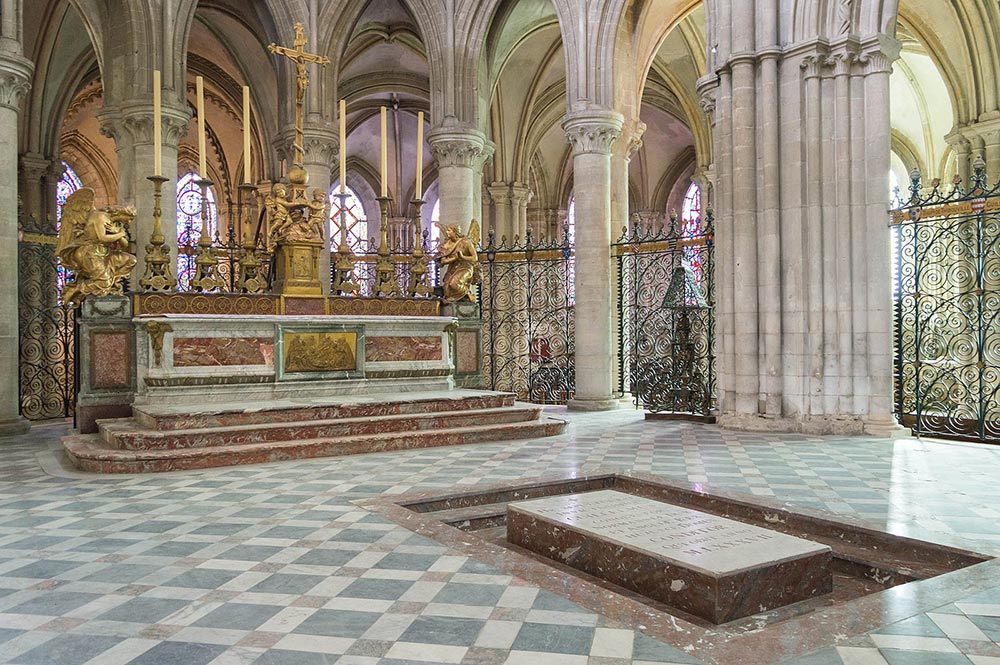
Tomb of William “The Conqueror”, Abbaye-aux-Hommes, Caen

God raises up kings and puts them down. His choice of monarchs and the twists and turns they give to history can become the stuff of legends. The more we study them and the more we can understand of their times, may help us better see the effects of sin, redemption, accountability, justice, mercy, and other important matters in our own day. We also can see what God was doing among those of His church in the past. In Normandy, five hundred years later, many thousands embraced the Gospel and the old lands of William the Conqueror became some of the strongest area of the French Protestant Reformation.

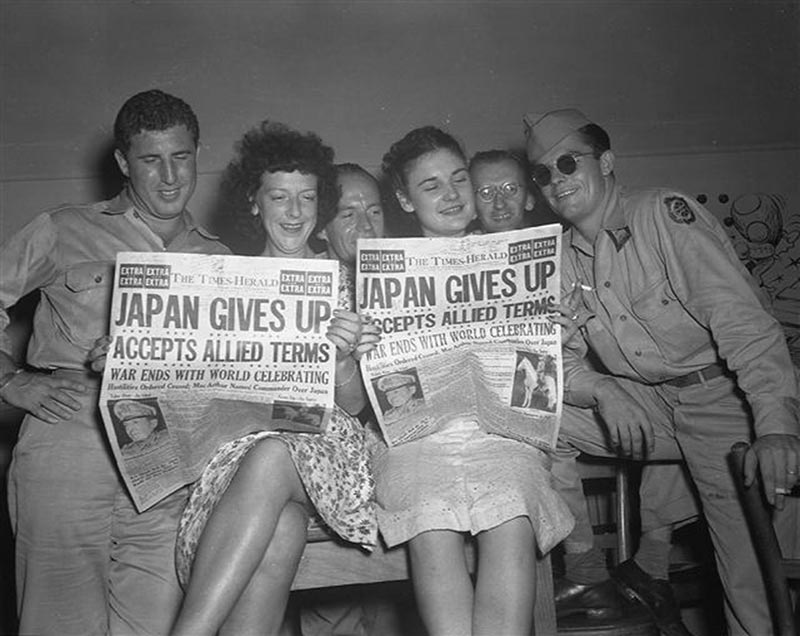
Japan Surrenders, 1945

2018-09-07T21:12:18-05:00September 3, 2018|HH 2018|

“And for your lifeblood I will surely demand an accounting. I will demand an accounting from every animal. And from each human being, too, I will demand an accounting for the life of another human being. Whoever sheds human blood, by humans shall their blood be shed; for in the image of God has God made mankind.” —Genesis 9:5-6

Japan Surrenders, September 2, 1945

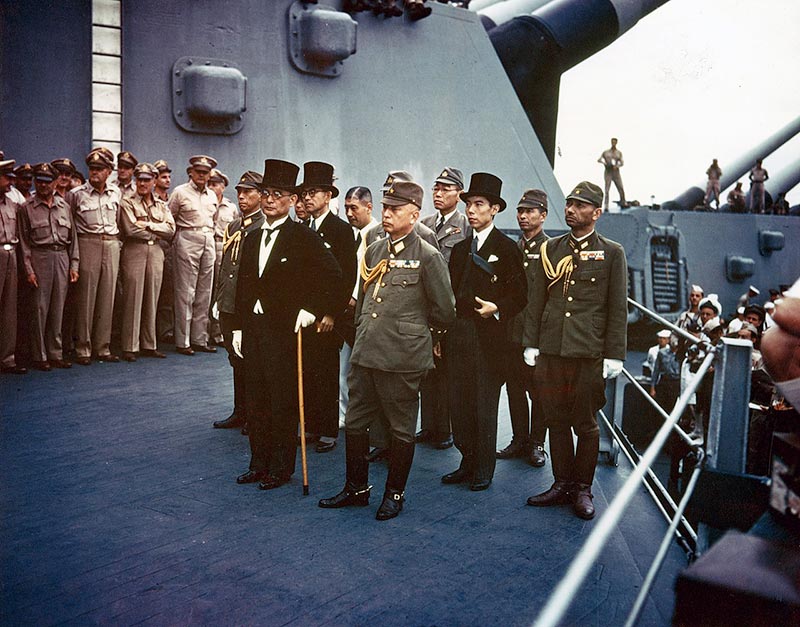
the iconic photograph shows the American commander in the Pacific Theatre of World War II, General Douglas MacArthur, standing behind the table that supports the surrender document. It will soon be signed by the representatives of the Empire of Japan as well as by himself, Fleet Admiral Chester Nimitz and representatives of the Allied Powers. The Japanese officials stand facing the table. They are aboard the Battleship USS Missouri, selected by President Truman in honor of his home state; the Japanese have been compelled to surrender, ending the Second World War.
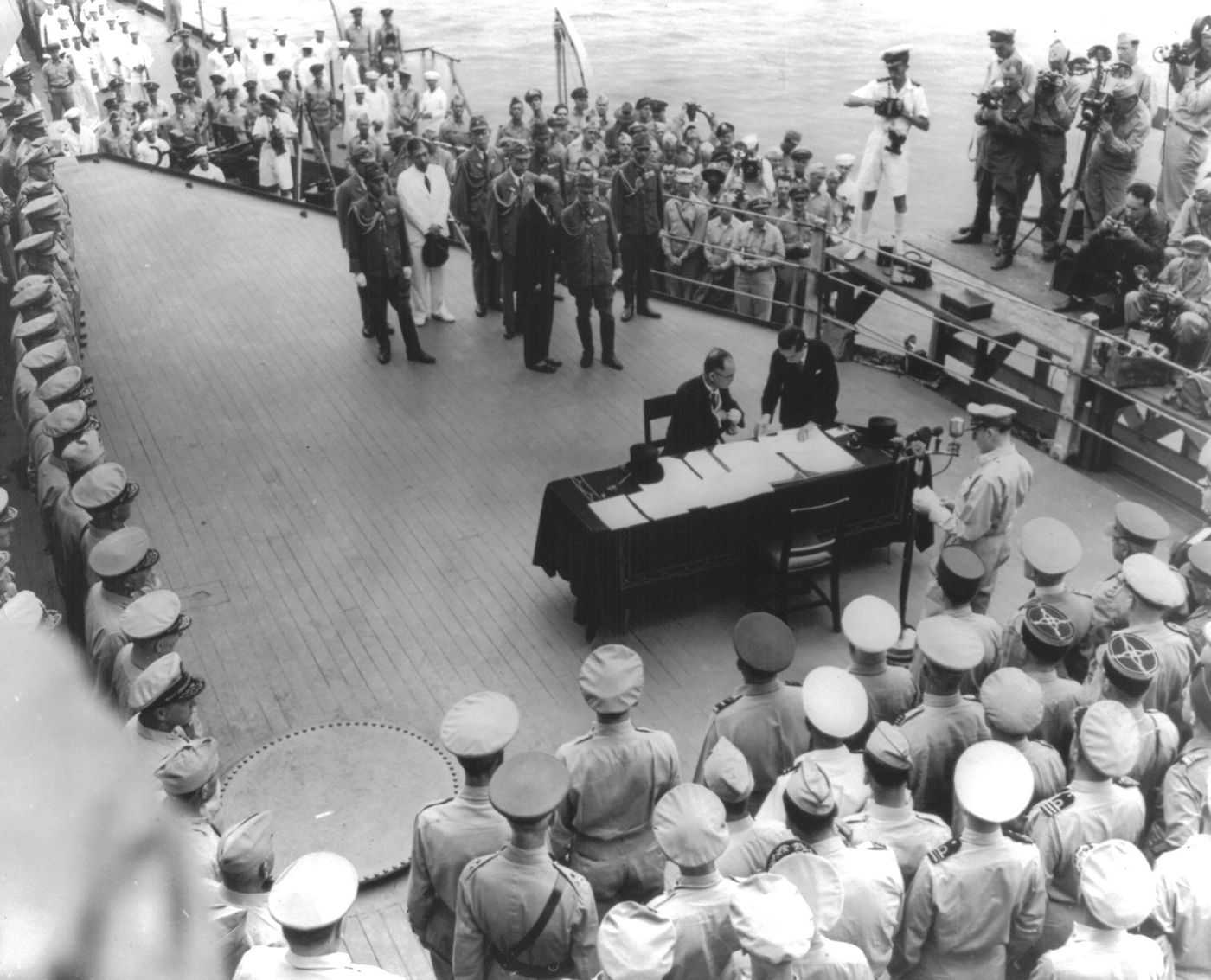
Japanese Foreign Minister Mamoru Shigemitsu, seated, signs the Japanese surrender document on the USS Missouri in Tokyo Bay on Sept. 2, 1945

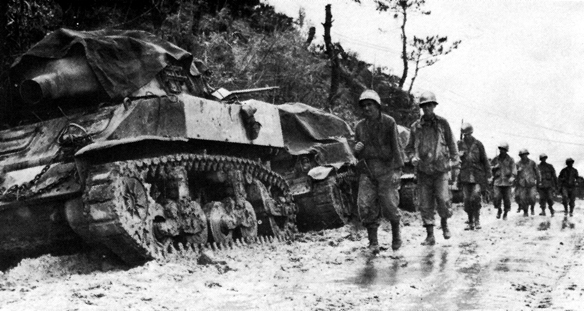
The bloody eighty-two day battle of Okinawa, which ended in June, had resulted in about 75,000 Allied casualties, mostly American, and somewhere between 80-120,000 Japanese, mostly killed. About half of the 300,000 civilian native population of the island died as well. The Japanese hard-line militarists remained unconvinced about surrendering and it looked as if only a major invasion of the Japanese mainland could secure ultimate victory, but at an enormous cost. Massive incendiary air raids on the major Japanese cities in June and July had incinerated more than two million buildings leaving thirteen million people homeless and killing hundreds of thousands of civilians, mostly women and children. In late June, Japanese diplomats and the emperor himself began seeking ways to negotiate a peace that would leave the emperor in place, approaching the Soviet Union to serve as mediator in one instance, and Sweden in another.


77th Division Infantry on Okinawa


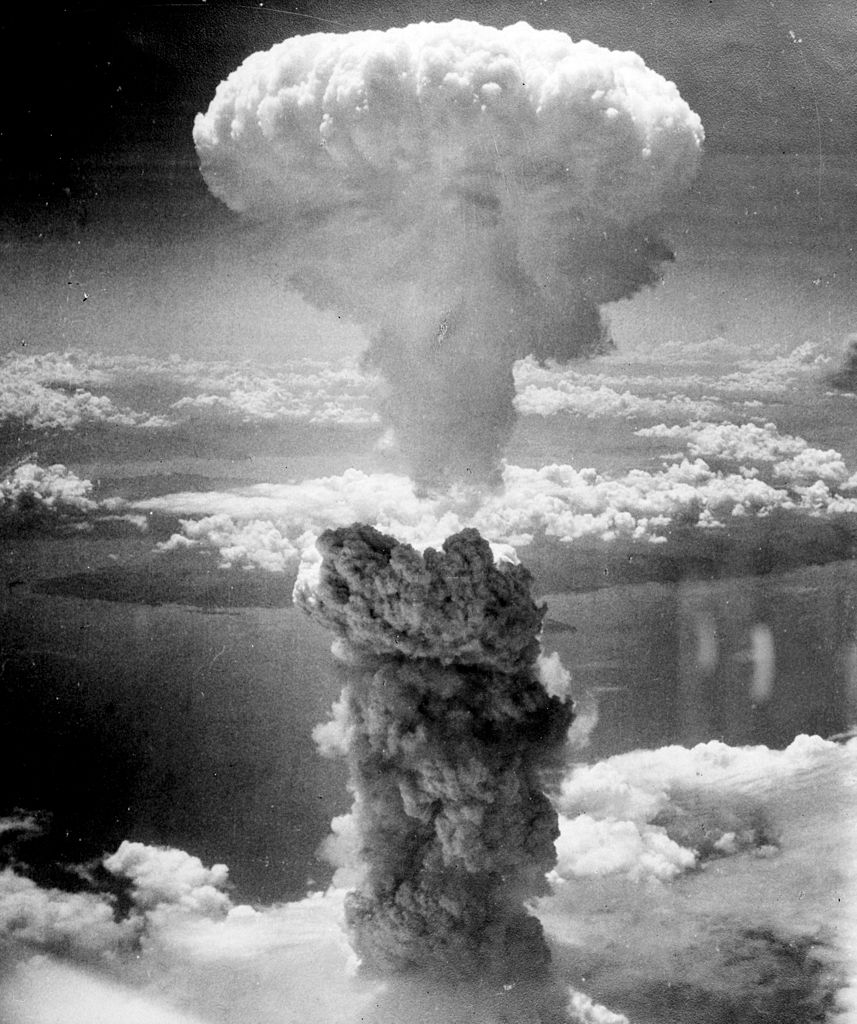
Atomic Bombing of Nagasaki on August 9, 1945

Russia diplomatically rebuffed Japanese overtures, planning to join the war against Japan for, no doubt, the acquisition of Japanese islands and demands of reparations. As plans went forward for the invasion, President Harry Truman made the decision to deploy the super top-secret atomic bomb. The United States sent a formal warning to Japan that a new devastating weapon would be used on them if they did not surrender unconditionally. The militarists ignored talk of giving up, even as the emperor and the peace elements of the government continued seeking negotiations through back channels. As providence would have it, two bombs were dropped on Japan, on the cities of Hiroshima and Nagasaki, killing about 200,000 people, mostly civilians. Although more people had been killed in the fire-bombings, the nature of the explosions and the fallout, in the days and weeks after, caused more agonizing deaths. The bombs brought the downfall of the militarists and an agreement to surrender to the Americans.


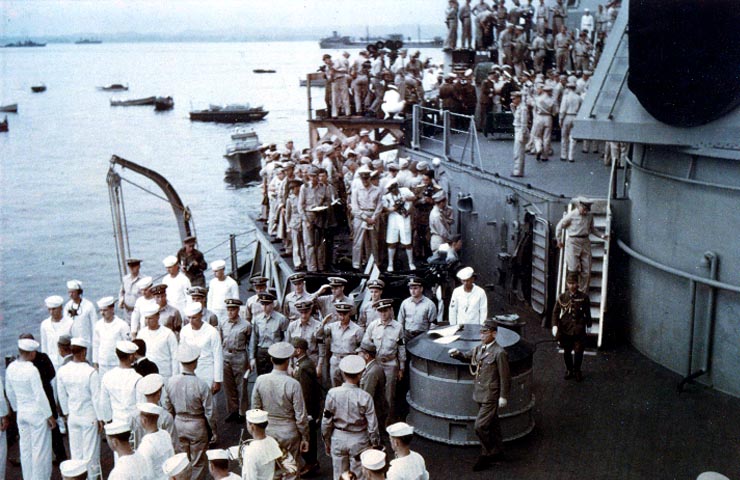
Representatives of the Empire of Japan on board USS Missouri, Tokyo Bay, September 2, 1945

The navigator on the USS Missouri, 24-year-old Lt. Cmdr. James Starnes, through a number of interesting providential circumstances, became the youngest man in that position on any battleship in the U.S. fleet. It fell to him to serve as officer of the deck for the surrender ceremonies. A kindly and gracious man in his later years, he never forgot that moment he had to step up and fulfill a role that history would remember as long as the war is remembered. He died in 2016 at the age of 95.


Japanese delegation leaving the USS Missouri, September 2, 1945

Russia did enter the war against Japan mere days before the bombs were dropped and captured Japanese land. But instead of reparations, the United States allowed Japan to retain their emperor, though not as a god. Douglas MacArthur served as the Supreme Commander of Japan for the next six years, promoting the rebuilding of the devastated nation and inviting the churches of America to send missionaries with the Gospel to a people whose emperor-god proved mortal after all. It was the first time in history that Christians would have unfettered opportunity to preach in Japan without sanction or government restriction. Some Christians believe the tepid response to that call was due to the hatred of the Japanese that had been promulgated throughout the war by government propaganda as well as by the brutal way American POWs were treated. Whatever the reasons for neglect, most Japanese today worship money and entertainment, the same gods of many Americans.


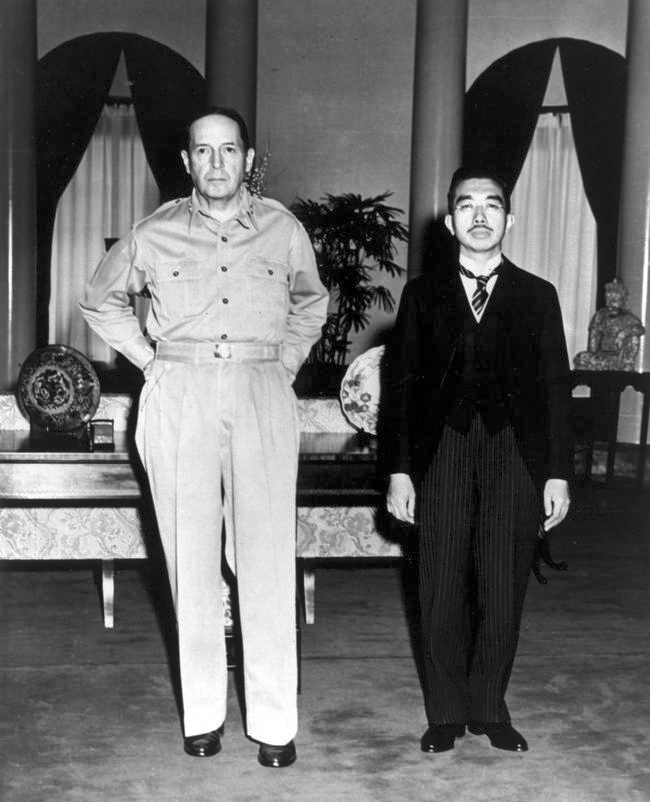
General MacArthur and Emperor Hirohito at the U.S. Embassy in Tokyo, September 27, 1945


VJ-Day group with newspapers

Go to Top