
Warren Commission Established, 1963
“When the righteous triumph, there is great glory; but when the wicked rise, men conceal themselves.” —Proverbs 28:12
Warren Commission Established,
November 29, 1963
 n November 22, 1963, someone assassinated President John F. Kennedy at Dealey Plaza in Dallas, Texas. Those are the only facts that have not been contended since that day. The President was already thinking about the upcoming election in 1964 and planned several trips to lay the groundwork for campaigning and shoring up political support, especially in Texas, where intra-party feuding needed smoothing over. He plotted out a two-day, five-city tour of the Lone Star State, accompanied by his wife—her first public foray since the loss of their baby Patrick in August. He would be welcomed to San Antonio by his Texan Vice President Lyndon Johnson and joined by the conservative Democratic Governor, John Connolly.
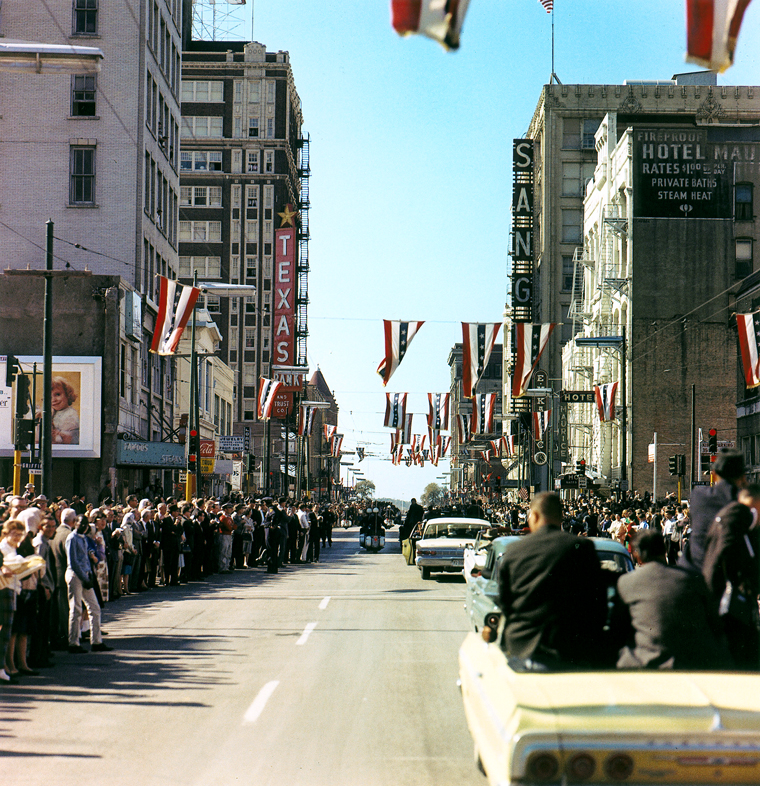
View of the Presidential motorcade as it approaches Dealey Plaza in Dallas, Texas
On the second day of his tour, President Kennedy was warmly greeted in Fort Worth on the morning of the 22nd. He then took a thirteen-minute flight to Love Field in Dallas, where he embarked in a motorcade, with Governor and Mrs. Connolly joining him and his wife Jackie in a convertible, with the Vice President following in the motorcade. Large crowds lined the streets along the ten-mile route that wound its way through downtown Dallas, on its way to the Trade Mart, where the President was due for lunch and another speech to business and civic leaders. Their route took them at a slow roll, about eleven miles per hour, through Dealey Plaza and past the six-story Book Depository, where a sniper lay in wait.
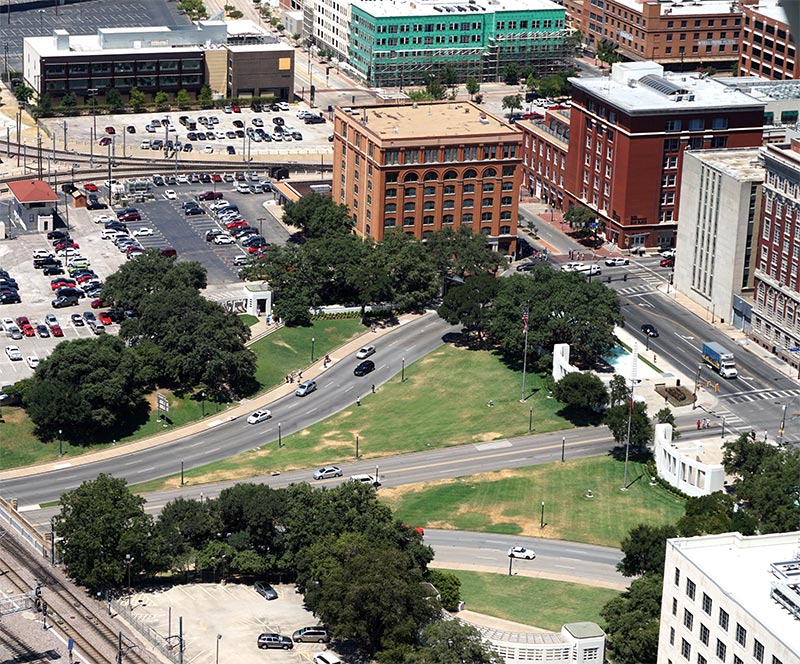
Dealey Plaza with the Texas School Book Depository visible (top center)
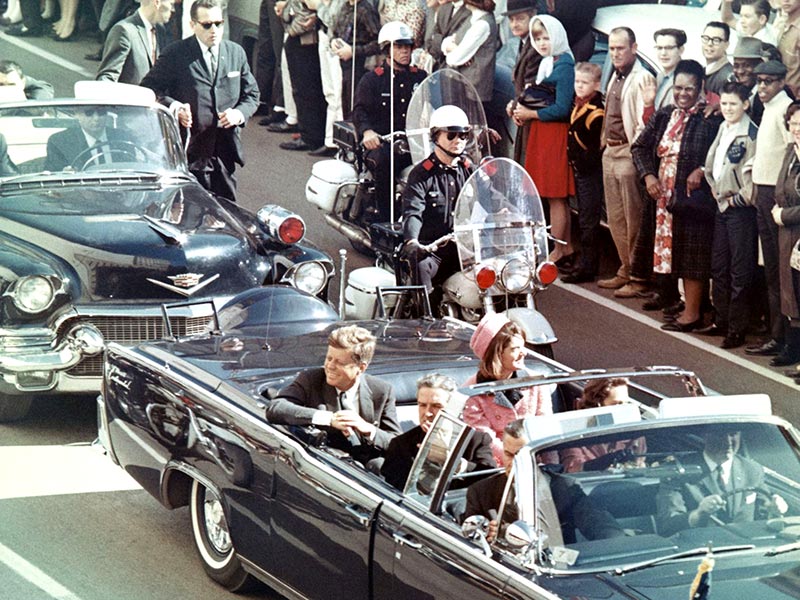
Moments before the assassination, the presidential motorcade makes its way down Main Street in Dallas, with President Kennedy and the First Lady visible in the back seat. Texas Governor John Connally and his wife Nellie are seated in the row in front of the Kennedys.
At about 12:30pm, shots were fired into the open top car, and both President Kennedy and Governor Connolly were struck. The Secret Service driver rushed to Parkland Hospital, where the forty-six-year-old President was declared dead about 1:00pm. Governor Connolly survived. About a half hour later, a Dallas police officer, J.D. Tippett, accosted a suspicious pedestrian three miles from the shooting and was himself shot to death by the suspect.
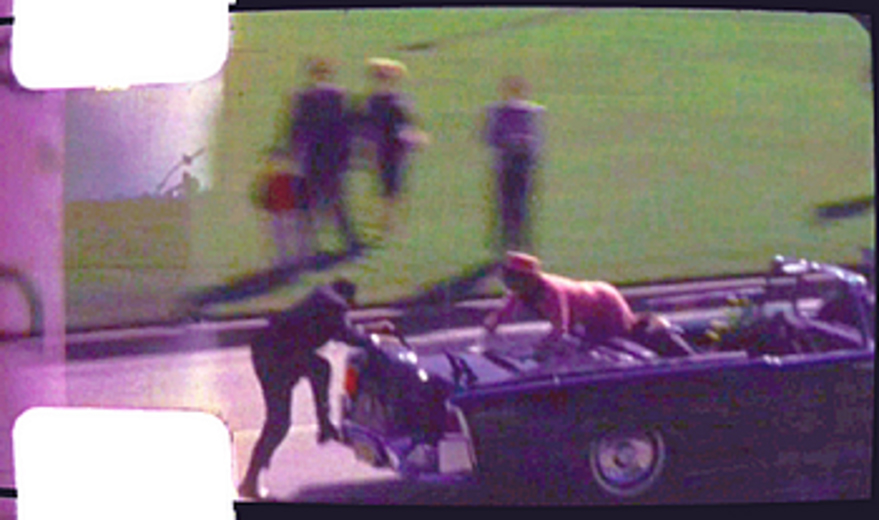
After shots are fired, Jackie Kennedy is seen crawling over the trunk of the limousine, while Secret Service agent Clint Hill climbs aboard
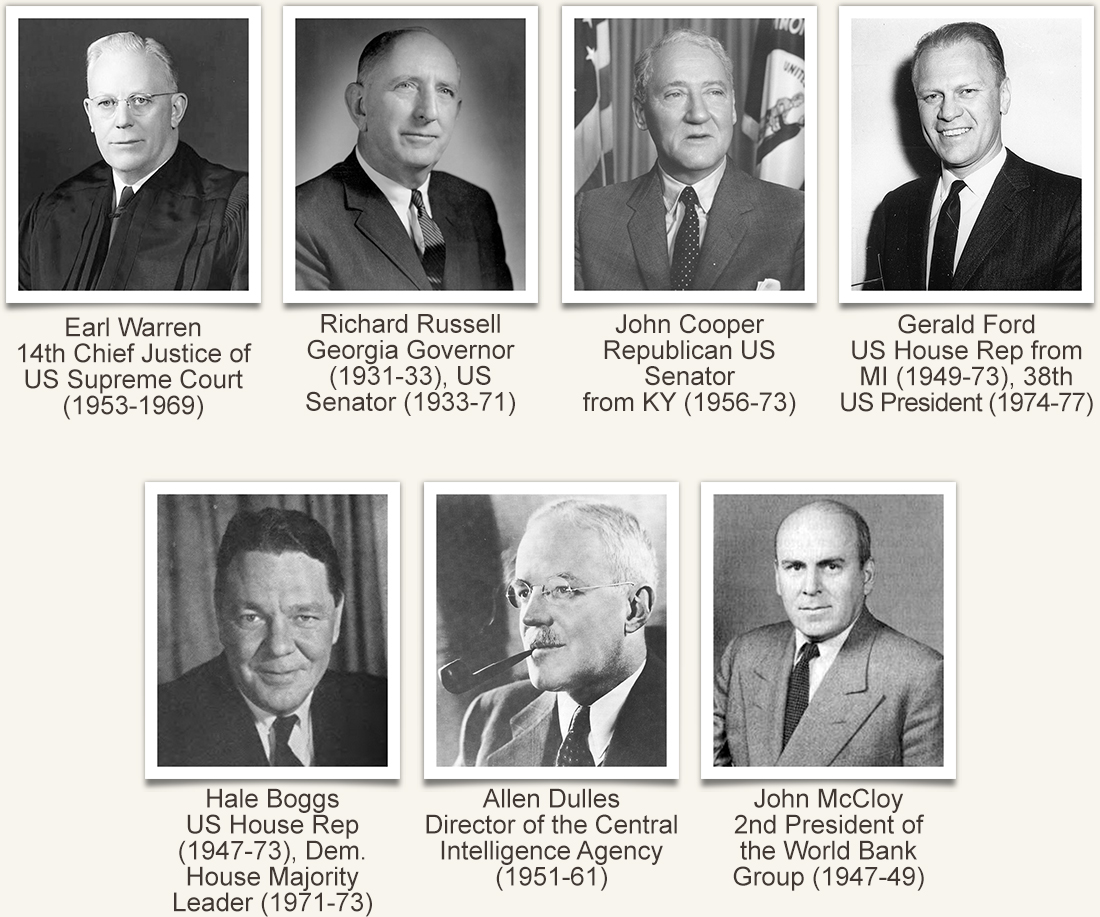
Arrested in a movie theatre, Lee Harvey Oswald was booked on suspicion of the murder of both the President and the police officer. Two days later, Jack Ruby (born Jacob Rubenstein), a nightclub owner with a sordid past and underworld connections, murdered Oswald while under police custody. Convicted of Oswald’s murder, Ruby died in prison two years later, while awaiting a new trial. One week after the assassination, the new President of the United States, Lyndon Johnson, appointed a commission to investigate the assassination of President Kennedy, led by the Chief Justice of the Supreme Court, Earl Warren. The Commission also included the most powerful Democratic Senator, Richard Russell of Georgia, a Republican Senator, John Cooper, House minority leader, Gerald Ford, Democratic heavyweight Congressman Hale Boggs, the Director of the CIA Allen Dulles, and the former President of the World Bank, John McCloy.
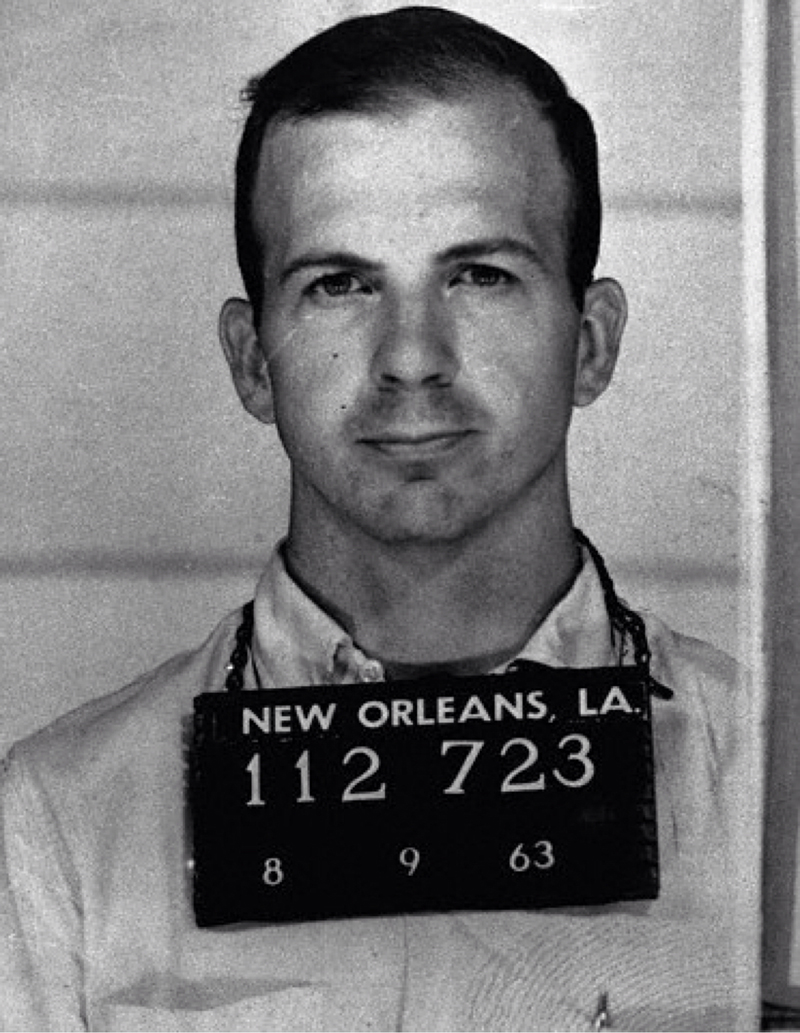
Mugshot of Lee Harvey Oswald (1939-1963) during a previous arrest in New Orleans in August of 1963
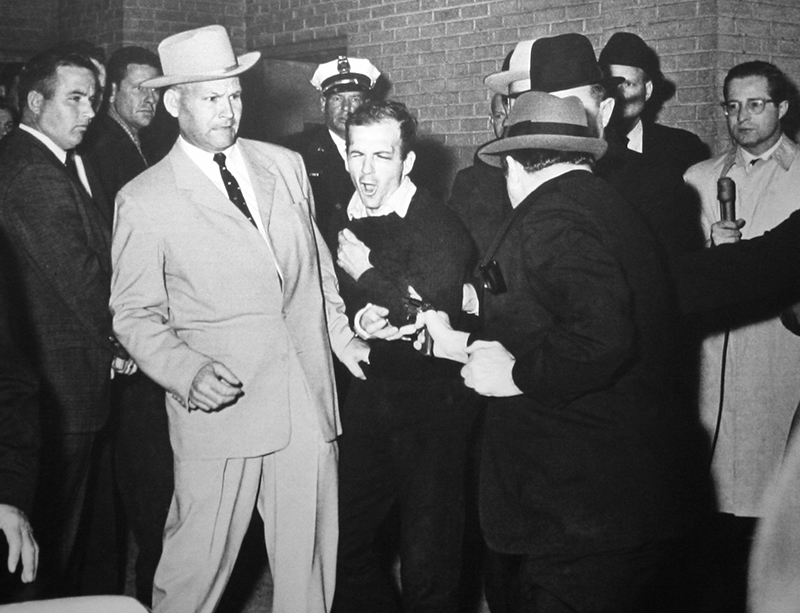
Jack Ruby shoots Lee Harvey Oswald while Oswald is in police custody
The Warren Commission met in the National Archives Building. Their final report of 888 pages and 26 volumes of supporting documents, included depositions of 522 witnesses and 3,100 exhibits. The sealed records—of indeterminate length and with redactions—have been parceled out over the past fifty-four years in response to new rules regarding transparency in the investigation, until only two percent of the Commission Archives are still not available for examination.
The Commission concluded that Oswald acted alone and was the sole shooter, firing three shots from the book depository window. They found no evidence that the Dallas Police were in collusion with Jack Ruby. They found no evidence that Oswald and Ruby were connected to any conspiracies, foreign or domestic, in the assassination of President Kennedy. The Commission could find no definitive motive for Oswald’s actions. Criticism, skepticism, alternative explanations, and conspiracy theories immediately abounded upon release of the Commission report. Books, movies, lectures and investigations have proliferated since that day in 1963, to the point that few people accept the conclusions of the Warren Report. Even members of the Commission and President Johnson himself, now all dead, expressed doubts about some of their conclusions. The main conspiracy theories suggest, or in some cases, absolutely assert, that one or a combination of the following characters were behind the assassination: Vice-President Johnson himself, Fidel Castro, the Russians, the Italian Mafia, the CIA, FBI, Secret Service, or other government agency.
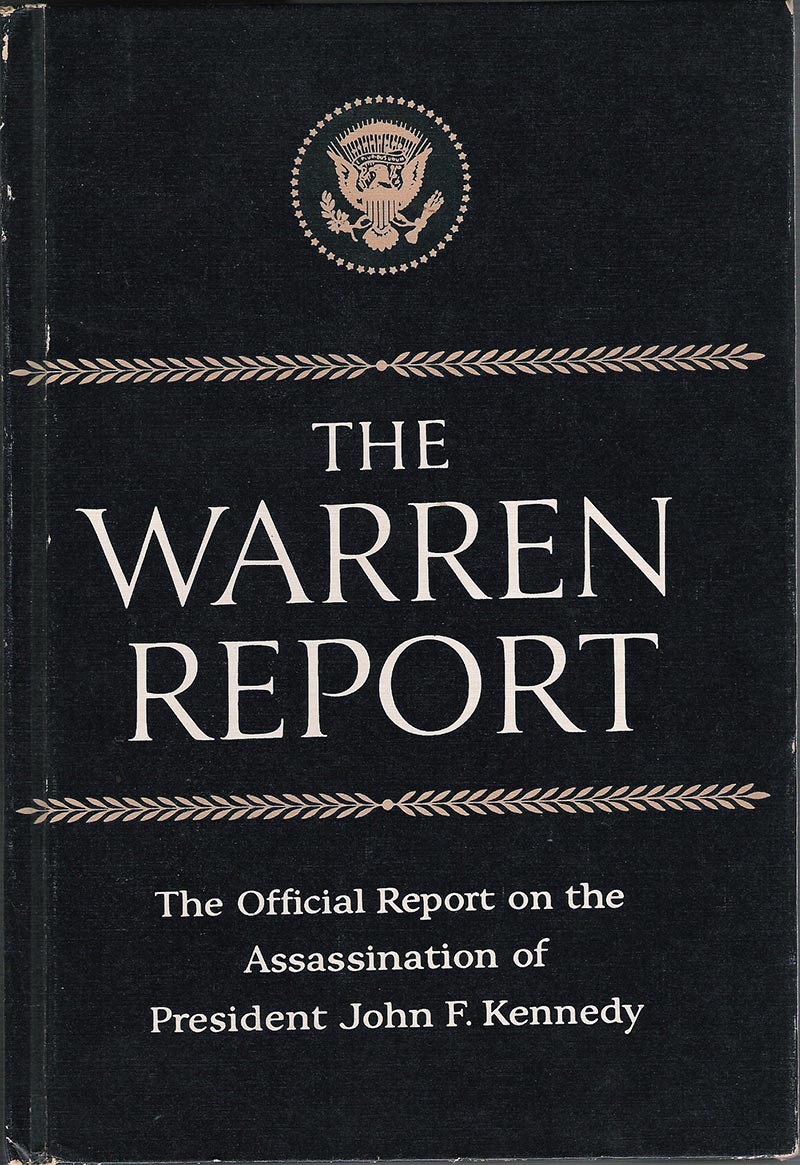
The Warren Report, as compiled in book format by the Associated Press
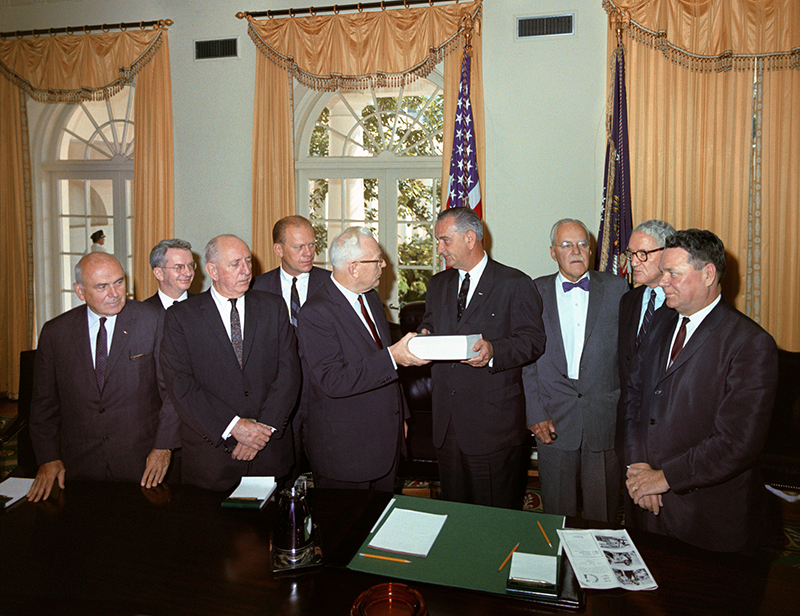
Members of the Warren Commission present their report on the assassination of John F. Kennedy to President Lyndon Johnson
Probably no event in American history has received more attention, nor a government report been more often accused of cover-ups, corruption, and conspiracy than the assassination of President John F. Kennedy and the Warren Report that followed.
Image Credits: 1 Motorcade approaching Dealey Plaza (Wikipedia.org) 2 Limousine (Wikipedia.org) 3 Dealey Plaza (Wikipedia.org) 4 Zapruder film (Wikipedia.org) 5 Lee Harvey Oswald (Wikipedia.org) 6 Ruby killing Oswald (Wikipedia.org) 7 Warren Report book cover (Wikipedia.org) 8 Warren Commission Members (Wikipedia.org) 9 Earl Warren (Wikipedia.org) 10 Richard Russell (Wikipedia.org) 11 John Cooper (Wikipedia.org) 12 Hale Boggs (Wikipedia.org) 13 Gerald Ford (Wikipedia.org) 14 Allen Dulles (Wikipedia.org) 15 John McCloy (Wikipedia.org)
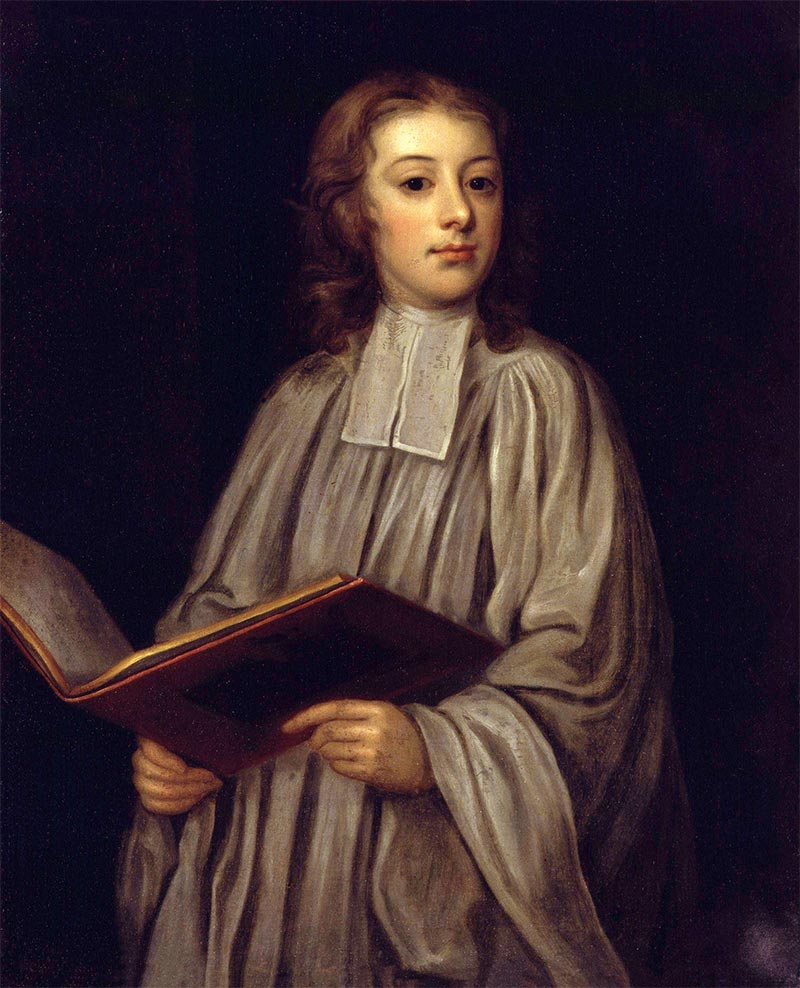
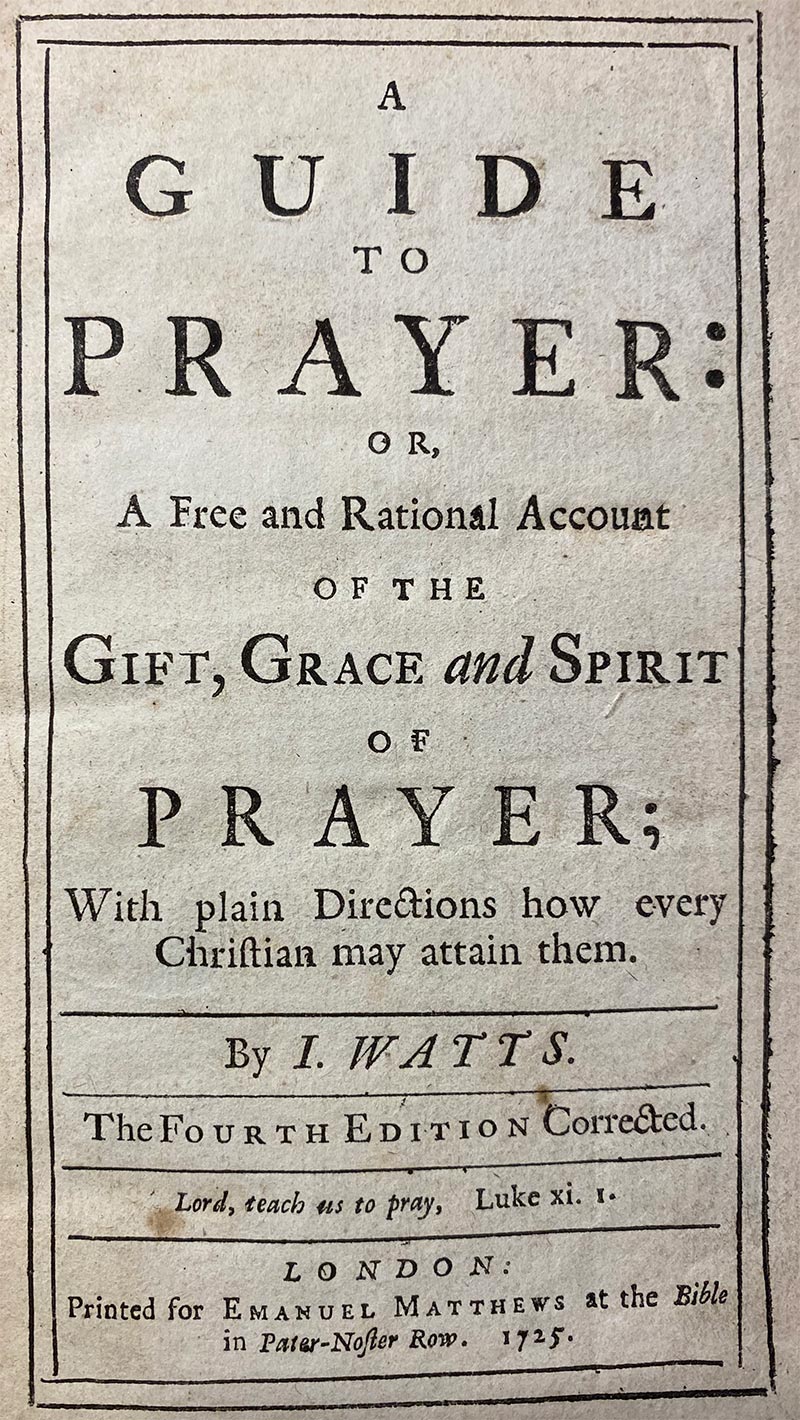
 he Protestant Reformation in the 16th Century changed the music used in the worship of God. No longer the sole provenance of choirs or professional singers, the congregation began singing in worship also, especially the Psalms. Martin Luther wrote thirty-six hymns and encouraged others to do so as well. In Calvin’s Geneva, Psalters were produced and in the next century, Protestant composers like Johann Sebastian Bach and Georg Friederich Handel produced some of the greatest hymnody in history. Among many of the Puritans in England and America, and the Presbyterians of Scotland, however, only the Psalms were considered the appropriate music for the worship of God. Most of the Protestant hymns before the late 18th Century came from German composers or were taken from older Latin hymns—until Isaac Watts.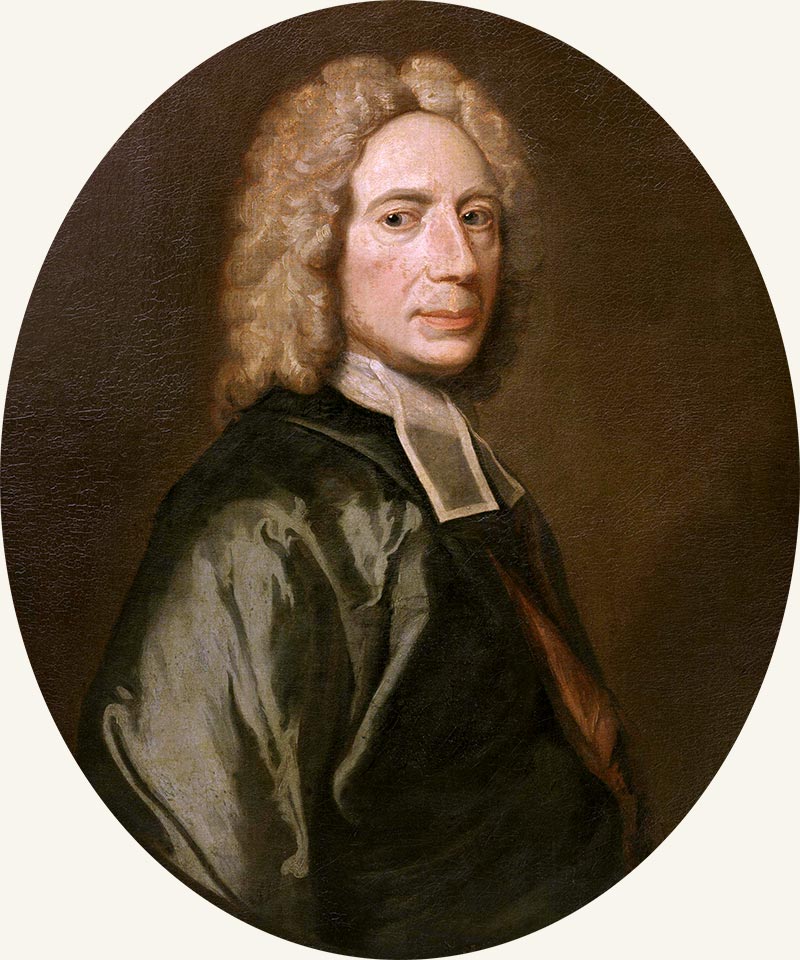

 ussia was rocked by revolution several times during the First World War. Multiple parties vied for power, but agreed on only one policy decision—that the Tsar had to be toppled. Revolution since 1789, by definition, seeks to destroy the old order (what Chairman Mao called “the four olds” in China), which typically includes the religion, political structure, social conventions and mores, and always at the cost of many lives, millions in the case of Marxist revolutions in Russia, China, and Cambodia. As in the case of France, who provided the template, and Russia, who applied Marxian socialism, democratic dreamers were the first to attempt a new order. They lost out quickly to those more radical and willing to kill off the opposition.