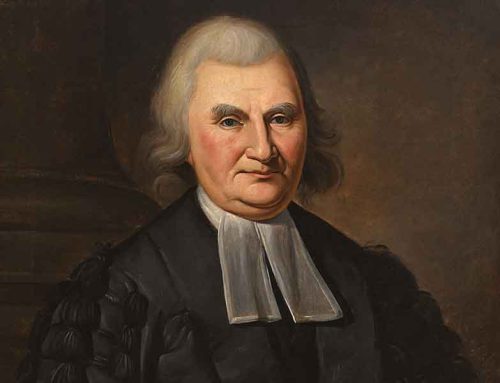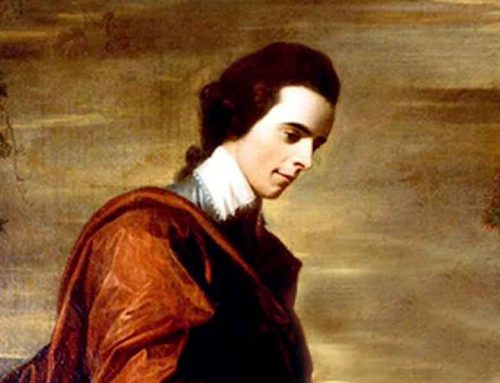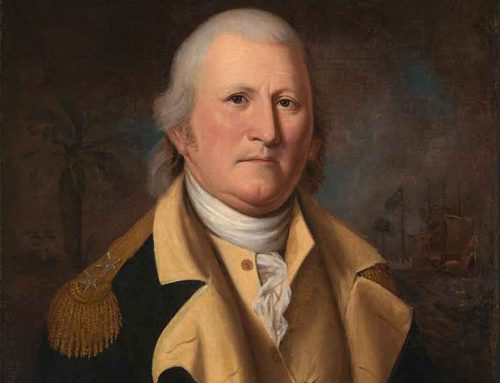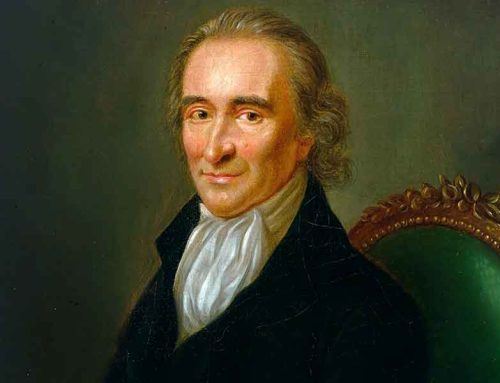

“The quiet words of the wise are more to be heeded than the shouts of a ruler of fools; wisdom is better than weapons of war…”—Ecclesiastes 9:17-18
Profiles of 1776 | Richard Henry Lee
 n an era that expected its statesmen not only to hold defensible positions but to articulate them with eloquence worthy of the stage, Richard Henry Lee earned the moniker “The Cicero of Virginia.” For those rusty on their ancient Roman history, Marcus Tullius Cicero was the golden-tongued champion of the Roman Republic in its final decades before it slid into Caesarism. Coming from Virginia—a state that boasted many acclaimed orators, including the unforgettable Patrick Henry—Lee’s influence and fame faced stiff competition, yet such friendly rivalries only made his reputation all the more illustrious.
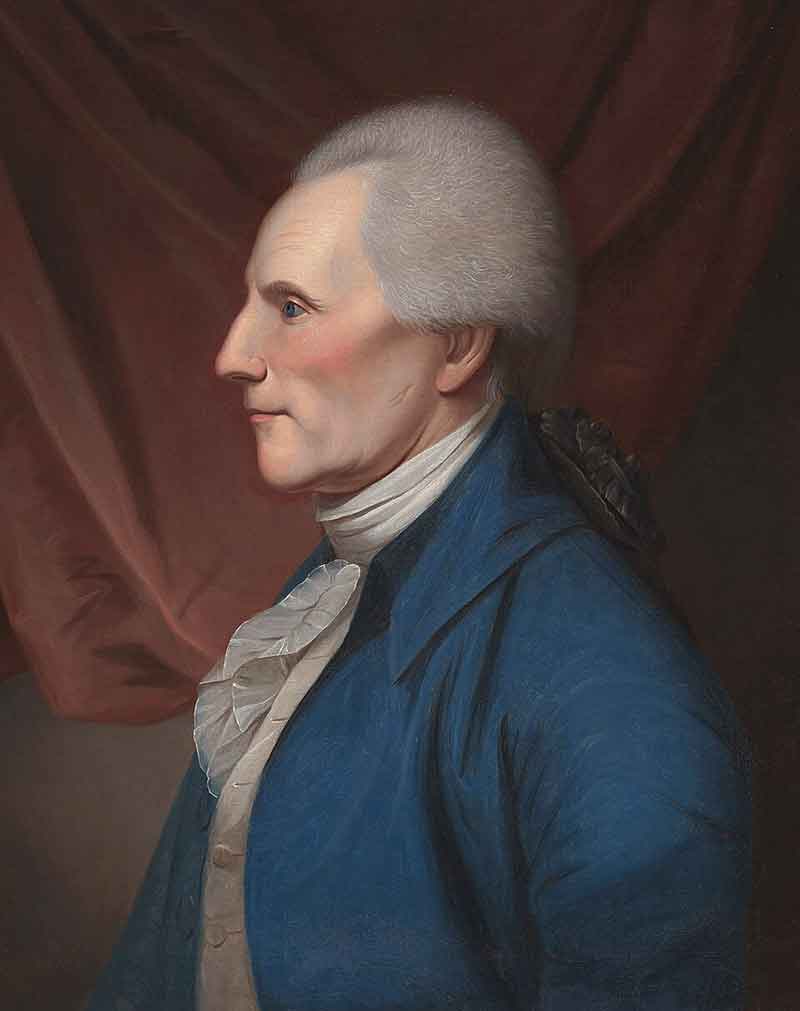
Richard Henry Lee (1732-1794)
Unlike the self-made Patrick Henry, Lee’s family boasted of vast lands and influence by the time of the American Revolution, being one of Virginia’s original great families. His brother Francis “Lightfoot” Lee would end up signing the Declaration of Independence alongside him, the only siblings to do so. It was no wonder then that we owe many of the initiatives of independence to Richard Henry Lee’s leadership and facilitation, as he commanded great respect from his peers and his prosperous colony was a crucial linchpin for the entire movement.
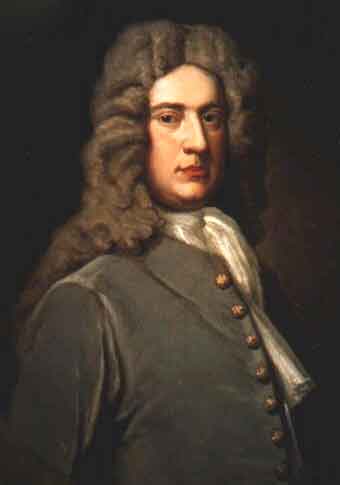
Richard Lee I (c. 1618-1664), was the English-born father of the Lees of America, settling in Virginia in 1639
Educated in England like many of his peers, Lee had spent his life in a variety of roles up until 1776. At age twenty-three he had participated in the French and Indian War, with his contemporary George Washington serving in the Virginia militia around the same time. He was soon after elected Justice of the Peace and gained a long-term position in Virginia’s House of Burgesses, where he advocated for the abolition of chattel slavery in his colony. During the heated years leading up to war with Great Britain, Lee became known for his impassioned addresses and writings to the king and the British Parliament on the injustices of the Stamp Act and Townshend Acts.
Influenced by the almost prophetic advice of his mentor and close friend Peyton Randolph, who had long served as the King’s Attorney for Virginia, Lee’s addresses evolved from appeals to outright condemnation:
“Once more let me remind you that no confidence is to be reposed in the justice or mercy of Britain, and that American liberty must be entirely of American fabric.”

Raleigh Tavern in Colonial Williamsburg, Virginia
Such verbiage got the House of Burgesses dissolved by the Royal Governor of Virginia, but it was no matter. The colony’s duly elected representatives met at Raleigh Tavern in Williamsburg and in St. John’s Church in Richmond instead. It was at St. John’s that Patrick Henry gave his electrifying “give me liberty or give me death!” speech, which Richard Henry Lee supported with an appeal to arms of his own.
After the applause for Henry’s speech had died out, Lee proclaimed:
“Admitting the probable calculations to be against us, we are assured in holy writ, that the race is not to the swift, nor the battle to the strong; and if the language of genius may be added to that of inspiration, I will say with our immortal bard: ‘Thrice is he armed, who hath his quarrel just, And he but naked, tho’ locked up in steel, Whose conscience with injustice is oppressed.’”
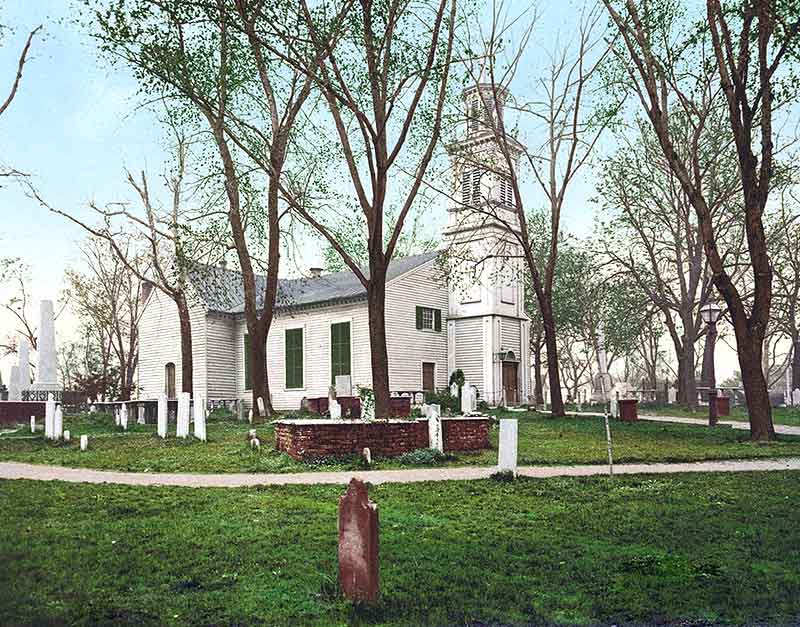
St. John’s Church, Richmond, Virginia
It was Lee who sent an address to the other colonies summoning them to a general Congress to redress their many grievances. It was Lee and Henry who dominated the rhetoric of the first Congress held in 1774, shifting at that early date the vocabulary of resistance to one which espoused an American identity separate from Great Britain. Lee’s resolve that every colony organize and supply their state militias with arms and training, however, was rejected as savoring too strongly of revolt in a time when placating measures were being prioritized.
Lee was elected again as delegate to the Second Continental Congress in 1775 and was said to have liked its spirit of determination. When Washington was unanimously elected commander-in-chief, Lee was appointed chairman of the committee responsible for giving Washington instructions.
About this time, Lee wrote a second address to the people of Great Britain:
“Yet we conclude not that we propose to surrender our property into the hands of your ministry, or vest your Parliament with a power which may terminate in our destruction. The great bulwarks of our Constitution we have desired to maintain by every temperate, by every peaceable means; but your ministers, equal foes to British and American freedom, have added to their former oppressions an attempt to reduce us by the sword to a base and abject submission. On the sword, therefore, we are compelled to rely for protection. Should victory declare in your favor, yet men trained to arms from their infancy and animated by the love of liberty, will afford neither a cheap nor easy conquest. Of this at least we are assured, that our struggle will be glorious, our success certain; since even in death we shall find that freedom which in life you forbid us to enjoy.”
And then, on June 7, 1776, he was the one chosen by the patriot faction of the Congress to put forward the motion for irrevocable independence:
“Resolved: that these United Colonies are, and of right ought to be, free and independent States, that they are absolved from all allegiance to the British Crown, and that all political connection between them and the State of Great Britain is, and ought to be, totally dissolved.”
The Congress erupted at this. John Adams leapt to his feet and seconded the bold motion but was heatedly opposed by John Dickinson of Pennsylvania and Robert Livingston of New York, who were still holding out hope for reconciliation. The next day, Congress voted to postpone the vote until July 1, so that the delegates could obtain instructions from their local legislatures; but in the meantime, a committee was formed to begin writing a document. If Independence was agreed upon, they’d need something articulating their reasoning, and something for the delegates to sign to show unanimity.

Signature of Richard Henry Lee
Five men were chosen for the task: Thomas Jefferson, John Adams, Benjamin Franklin, Roger Sherman, and Robert R. Livingston. Richard Henry Lee was to chair the little committee, as it was parliamentary tradition for the man who proposed the motion to supervise its final drafting. It is notable how even in these small details the patriots tried to follow English common law, not acting as rash agitators without care for correct procedure but instead as elected officials citing a case against king and Parliament.
Which leads us to Lee’s last great contribution to the year 1776: his guidance in the matter of our great Declaration’s source material. It was an odd stroke of Providence that ensured Lee would not be present for any of the drafting he was supposed to oversee; his beloved wife had fallen gravely ill and he left Philadelphia in a rush to attend her.
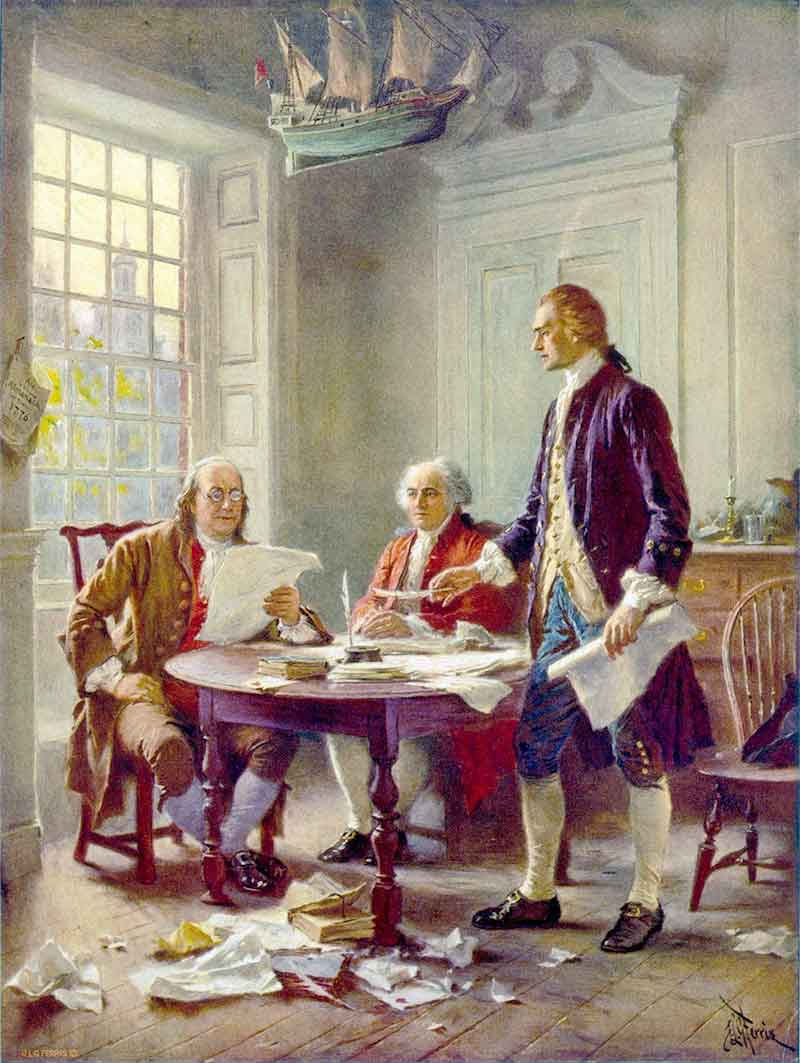
Franklin, Adams and Jefferson hard at work compiling, writing and editing the Declaration of Independence
But before he left, Lee visited the mildly overwhelmed Thomas Jefferson’s lodgings late at night, offering the young man three books to build their great lawsuit upon. For that is what it must be, Lee insisted—this document had to be a lawsuit against Great Britain for their breaking of their covenant with the colonies.
The books Lee left Jefferson with were John Locke’s Disquisition on Government, which proposed that legitimate political authority is derived solely from the consent of the governed; Richard Hooker’s extensive commentary on the book of Judges titled Of the Laws of Ecclesiastical Polity, which expounded upon the benefits of a people united by moral agreement rather than physical force; and Samuel Rutherford’s masterpiece, Lex Rex, which a century before had made the biblical argument that God’s universal law was king, not the other way around.
From these books, Lee charged Jefferson that he had all the material he needed to articulate their lawful reasons for breaking away from their tyrannical mother country, and for choosing to set up for themselves a government which would ensure their safety and prosperity. Next time you read the most exhaustive lists of charges leveled against the British government in the often-forgotten section of the Declaration, remember Richard Henry Lee in your gratitude for so well-bolstered a case against tyrants.
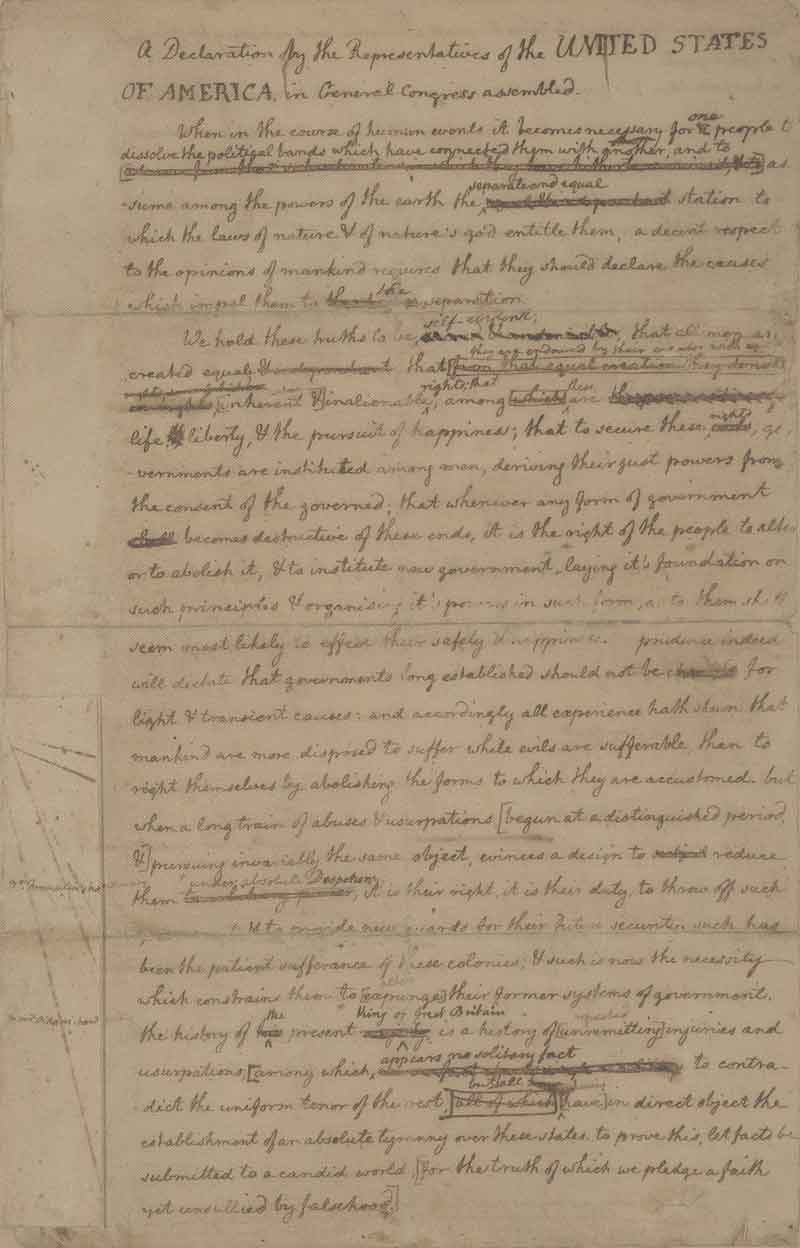
Page 1 of an early draft of the Declaration of Independence
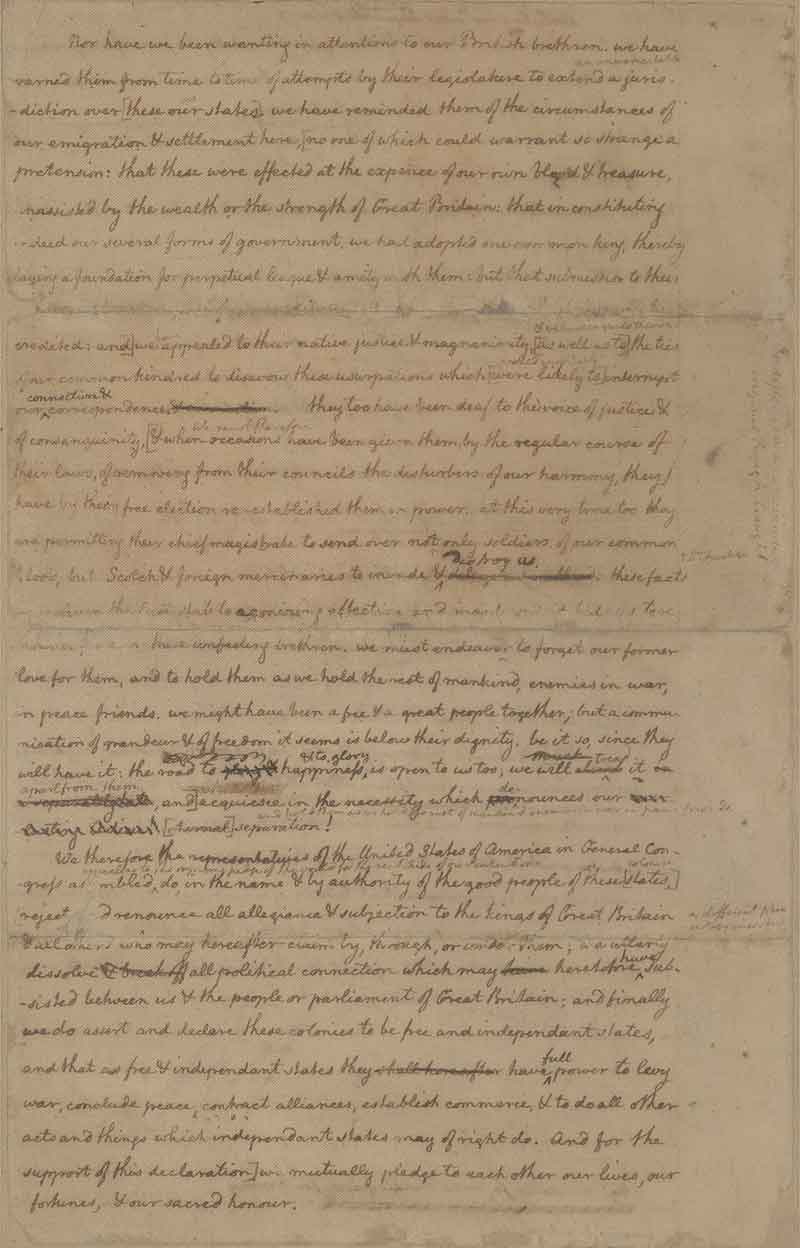
Page 2 of an early draft of the Declaration of Independence
In his Biography of the Signers to the Declaration of Independence John Sanderson notes of Lee’s impact:
“In consequence of his great exertions to procure a declaration of Independence, and his able support of the freedom of his country, Mr. Lee was exposed to the more immediate and implacable hatred of the king of England and his ministers. It is asserted that, had the arms of England prevailed, the surrender of Washington and Lee would have been demanded as a preliminary to any treaty. The rudeness of individuals cannot be charged upon their nation, yet, that many Englishmen, in the garb and rank of gentlemen, could not refrain from expressing, to the sons of Mr. Lee, then at school in England, ‘the hope that their father’s head might soon be seen on Tower hill,’ may serve to show the light in which he was viewed by the royalists of that day. The desire of the enemy to cut off by any means so able a supporter of the rights of America, was only equaled by the solicitude of his fellow citizens to secure his safety and happiness.”
Image Credits: 1 Richard Henry Lee (wikipedia.org) 2 Richard Lee I (wikipedia.org) 3 Raleigh Tavern (wikipedia.org) 4 St. John’s Church (wikipedia.org) 5 Signature of Richard Henry Lee (wikipedia.org) 6 Writing the Declaration of Independence (wikipedia.org) 7 Early draft of the Declaration of Independence, page 1 (wikipedia.org) 8 Early draft of the Declaration of Independence, page 2 (wikipedia.org)