
Profiles of 1776 | William Moultrie
 outh Carolina—that most glamorous, contradictory, diverse of American colonies—was considered to be the emotional leader of the southern colonies during the founding years. Not even grand old Virginia could fully persuade the southern bloc to break away from England without South Carolina’s influence, and for years she remained the most fickle of compatriots.
“All our misfortunes arise from a single source, the reluctance of the Southern Colonies to republican government,” John Adams bemoaned in the spring of 1776, as he strove in vain to get a confirmation from their delegates of their commitment to independence. South Carolina was not afraid of a fight—she’d been having heated altercations of her own with the British for the past decade—but her own interests remained paramount and aloof from all the others.
And then, in June of 1776, Providence intervened, sending a much-needed initiative under the cloak of calamity. Less than a whole month before the Declaration of Independence needed a unanimous vote of ratification, British warships sailed into Charleston harbor, bringing the conflict home. Suddenly the war, the military occupation, the brutalities they had been hearing about from afar and protesting valiantly with remonstrances and resolves, were at their front door. The effect on the legislature and delegates to Congress was irreversible and all to the benefit of total separation. This was all very well and good, yet the matter of defending Charleston from the British remained.
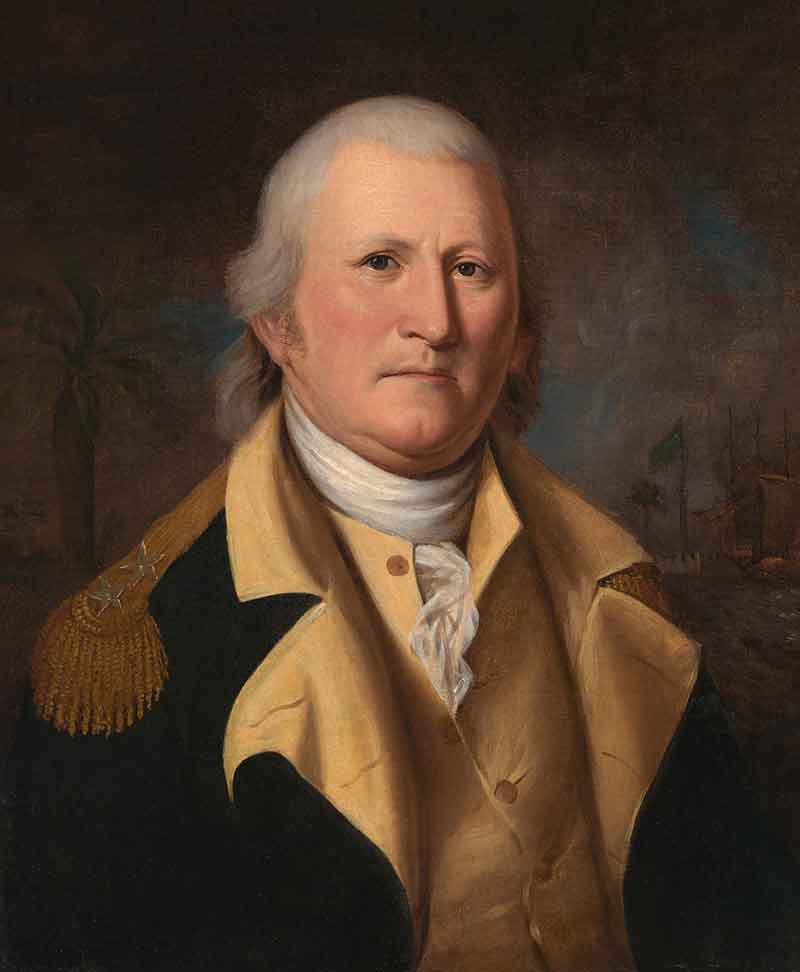
William Moultrie (1730-1805)
One South Carolinian came to the forefront then, Colonel William Moultrie. A veteran of the Cherokee Wars, owner of a rice plantation, deputy to both the First and Second South Carolina Provincial Congresses, he was also a member of the First South Carolina General Assembly after the adoption of the state constitution. In each capacity he proved himself an early and ardent supporter of the cause of independence.
Knowing that the British would try to send their fleet to seize Charleston, the largest and most important port in the South, and aware that upon their arrival they would incite the local loyalists and slaves to rise up against the patriots, William Moultrie took it upon himself to oversee the building of a fortification. He chose to build it on Sullivan’s Island, which guarded the main ship channel into Charleston Harbor and afforded an excellent strategic advantage.
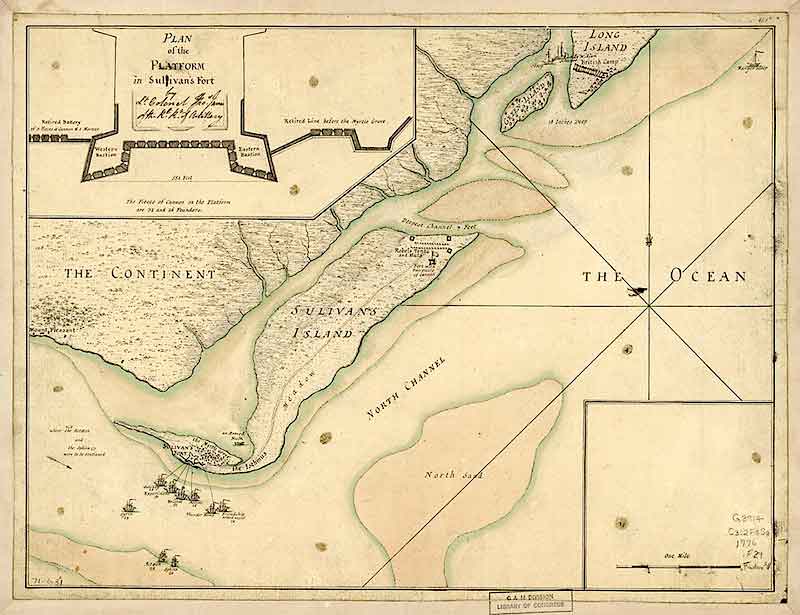
A British engineer’s map showing the location of Sullivan’s Island in relationship to the mainland, with a closeup of the fort design, circa 1776
At the same time, the loyalist population of the Carolinas rose up against their patriot neighbors without British backup, but were summarily defeated, the news of which gave great pause to the incoming British fleet. Commodore Peter Parker and General Henry Clinton debated whether they should continue their attempt at all, but having heard reports that the fort on Sullivan’s Island was incomplete, they dared an attack.
General Charles Lee, second-in-command of the Continental Army after Washington, arrived in Charleston to take command of the defense around the same time as the British. After observing the incomplete defenses made on Sullivan’s Island by the local militia, General Lee pronounced it no better than a “slaughter pen,” and ordered it abandoned. This would leave Charleston’s harbor largely defenseless, a choice that Governor Rutledge and Colonel Moultrie profoundly objected to.
Rutledge privately wrote to Moultrie: “General Lee wishes you to evacuate the fort. You will not without an order from me. And I will sooner cut off my hand than write one.” And so, Colonel Moultrie went against his superior officer’s wishes and with his 2nd South Carolina regiment took up position at the mouth of Charleston harbor, in the ramshackle fort that they had built.
The fort was a square structure capable of accommodating about a thousand men. It was made of local palmetto logs, two rows joined sixteen feet apart, with the space between them filled with sand, and it rose ten feet in height. Large bastions protruded from each corner and the walls bristled with thirty-one cannon, ranging from nine to twenty-six pounders.
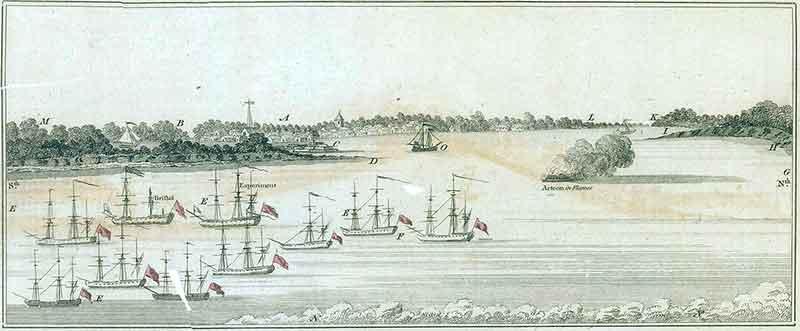
Charleston and Sullivan’s Island from the perspective of the British flotilla
When Lee suggested to Moultrie that the British fleet would “knock the fort about your ears in half an hour,” Moultrie replied with great coolness, “Then we will fight them behind the ruins, and still prevent their landing.” Moultrie’s men were, of course, not the only defenders. Defending the northern end of Sullivan’s Island against possible British attack were another eight hundred men, including thirty allied Catawba men, dug in with two cannons under Colonel William “Old Danger” Thomson.
On June 8, 1776, the British regulars landed on nearby Long Island (today’s Isle of Palms) with a plan to wade across Breach Inlet at low tide and attack the fort from the rear, while the warships bombarded it from the harbor side. Delays caused by weather, the difficulty of getting heavy ships over the Charleston Bar, and faulty intelligence about the depths of the channels postponed the attack.
It was on the morning of June 28, a day that would become famous in Carolina history, that the British finally launched the combined assault of naval forces under Parker and land forces under Clinton that would become the Battle of Fort Sullivan. The massive British fleet, consisting of nine heavily armed ships, bombarded Fort Sullivan for a total of ten hours, disproving General Lee’s contemptuous prediction that the British would pay the defenders no mind and go straight for the city. General Lee had deprived the little fort of much-needed supplies, including ammunition, but this only made Moultrie’s artillery aim more carefully and deliberately. Moultrie cautioned them: “Do not make too free with your cannon. Stay cool and do mischief.”
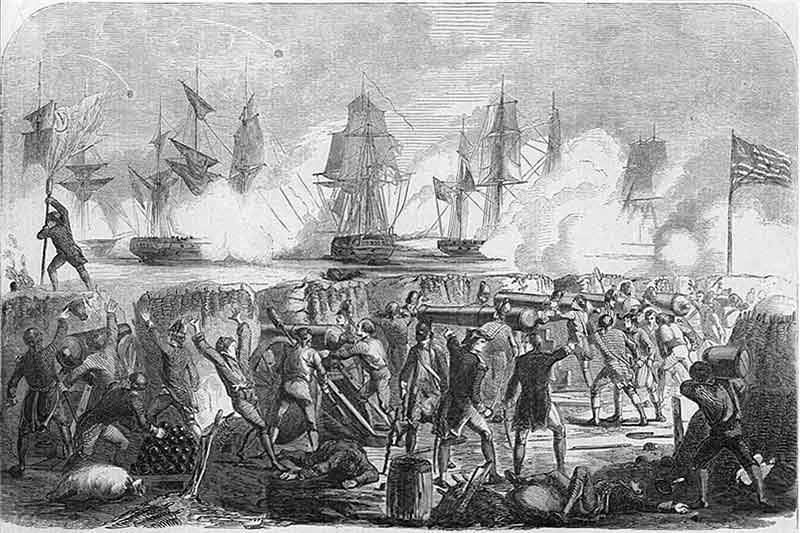
The attack of June 28, 1776, as seen from inside the fort
The patriots had one great advantage: the palmetto logs with which they had constructed the fort were naturally pliable, and along with their sandy filling, they absorbed the cannon balls like sponges, thwarting much of the intended effects of the bombardment.
As a result, the British fleet endured tremendous losses while the patriots’ greatest liability was their depleted ammunition stores. It was Francis Marion—later known as the famed “Swamp Fox”—who fixed this, managing to slip in with additional supplies borrowed from the city’s defenses. With this the defenders were able to renew their attack on the fleet and the new ground invasion coming their way.
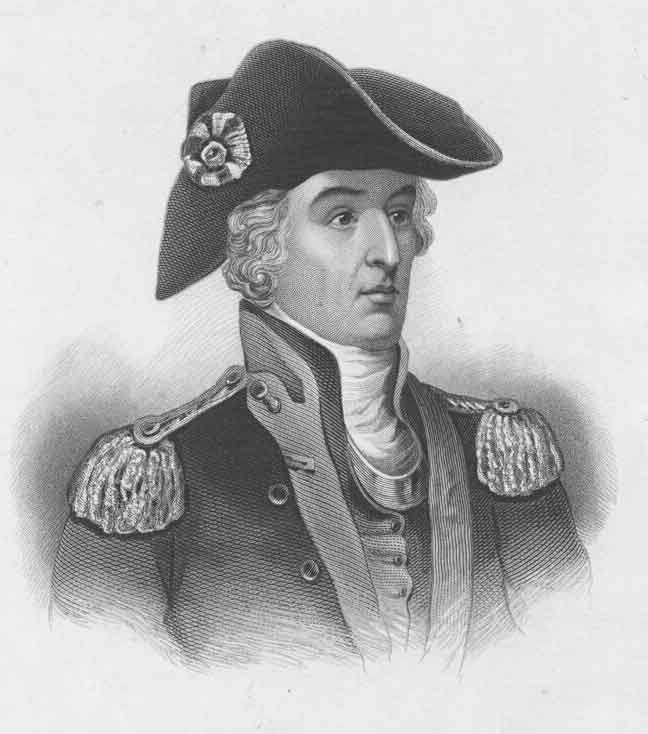
Francis Marion (c. 1732-1795)
The ferocious battle would last until nine o’clock in the evening, and the new supplies of ammunition only added greater fervor to the engagement. A Charleston loyalist who had joined the British and served in the flotilla said that “it was impossible for any set of men to sustain so destructive a fire as the Americans poured in.”
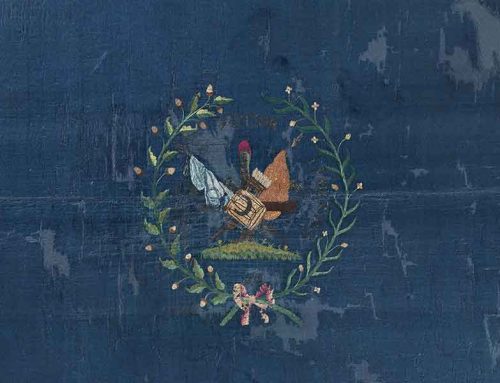
It is recorded that during this battle the blue and silver crescent flag of Carolina—originally designed and flown by Moultrie himself ten years prior during an altercation with the crown—was shot down, and a Sergeant William Jasper immediately leapt upon the beach, and during the hottest fire from the fight, recovered it. He reascended the bulwark and deliberately restored it to its place. Even the British foe let loose an eruption of applause for this display of astounding bravery.
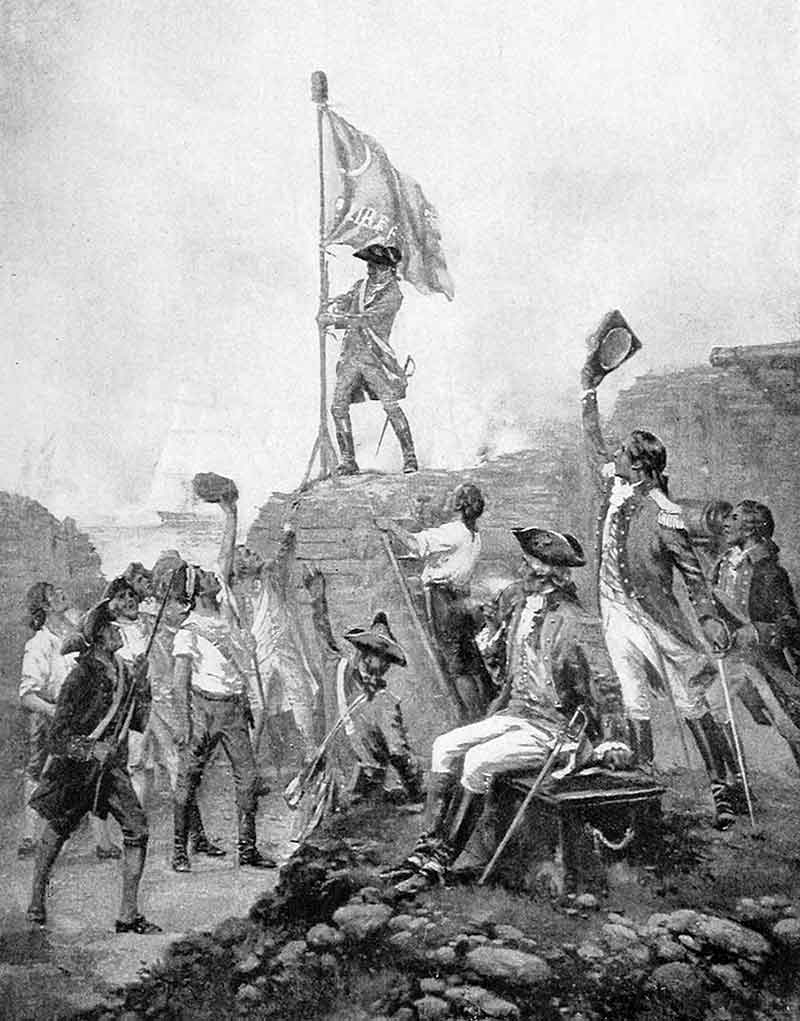
Sergeant William Jasper retrieving the standard, to the applause of all on-lookers
After ten hours of this vicious firefight, the Carolinians defending Fort Sullivan succeeded in thwarting Clinton’s land attack and repelling Parker’s flotilla, causing them to retreat and cut their anchor lines to get away. The British suffered over 200 casualties (killed and wounded) and multiple damaged ships, while American losses were very light at 12 killed and 25 wounded.
This battle was the first outright victory of the war, not the running skirmish as at Concord nor bloodbath of Bunker Hill. Instead, the defense of Fort Sullivan was exactly the sort of unequivocal triumph the hesitant Continental Congress had been yearning for. Six days after this battle the Congress declared the United Colonies to be free and independent states. The signers for South Carolina were Edward Rutledge, Thomas Heyward, Thomas Lynch, and Arthur Middleton.
Moultrie’s brave stand kept Charleston out of British hands until it finally fell in late 1780, which would result in the capture and cruel imprisonment of three of the Carolina signers and Colonel Moultrie himself. From the prison ship which held him he would write with typical fortitude, “The hardships I have gone through, I look back upon with the greatest pleasure and honor to myself. I shall continue to go on as I have begun, that my example may encourage the youths of America to stand forth in the defense of their rights and liberties.”
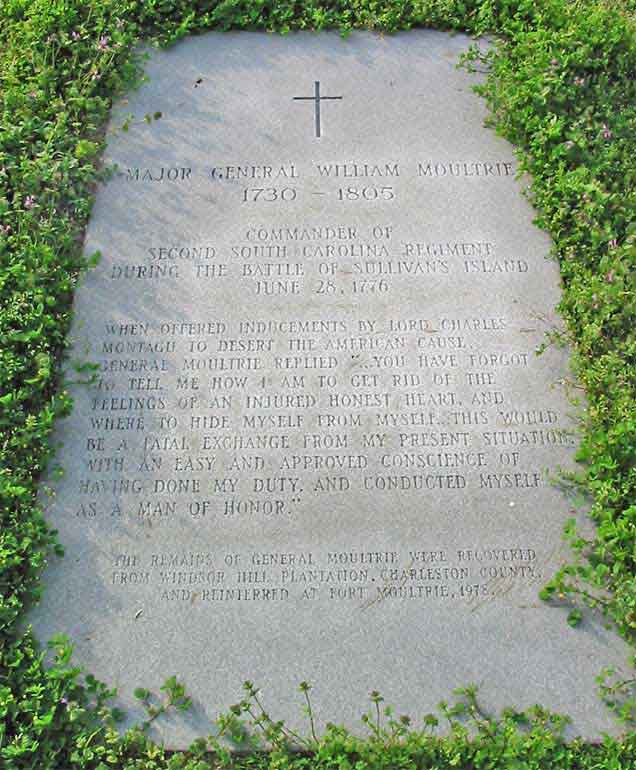
Grave of Moultrie, at the fort on Sullivan’s Island that now bears his name
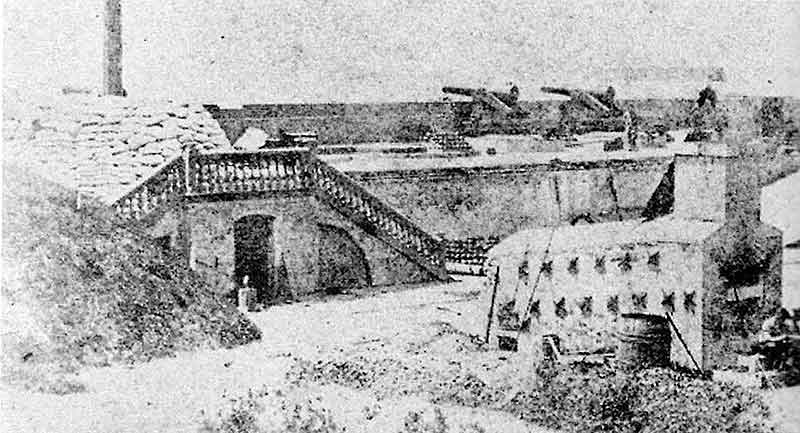
Fort Moultrie in 1861