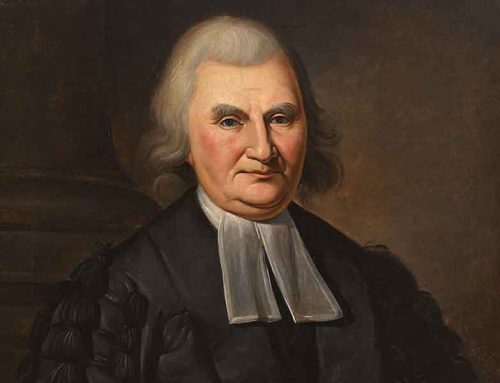
Profiles of 1776 | Silas Deane
 f you ask most people who America’s first diplomatic representative to France was, they’ll answer quite confidently it was Benjamin Franklin. They wouldn’t be wrong to associate him with that role but before Franklin’s renowned tour-de-force of carefully crafted backwoods idiosyncrasies and homespun charm, the essential but thankless role of securing aid from Versailles was entrusted to another, Mr. Silas Deane.
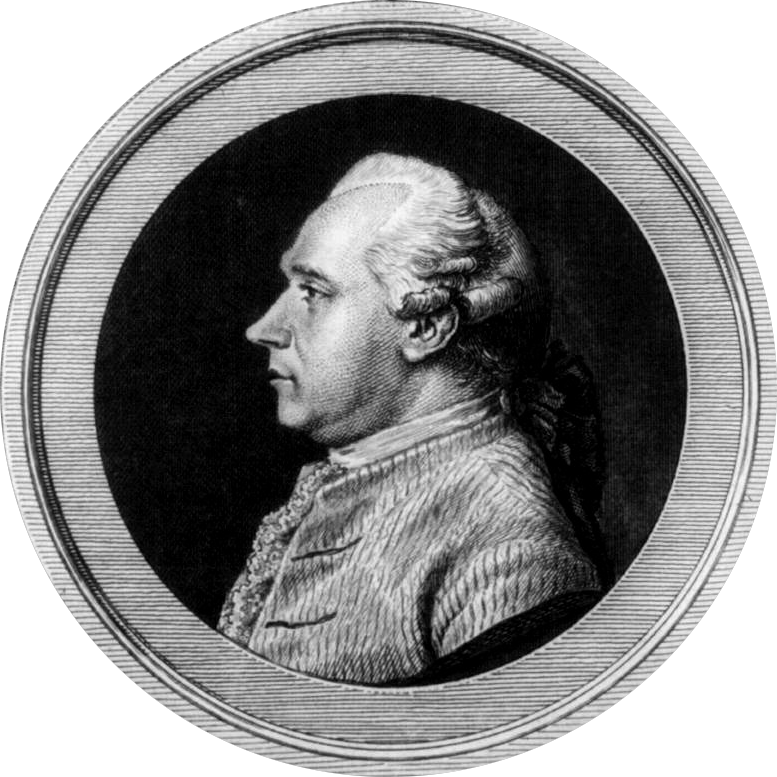
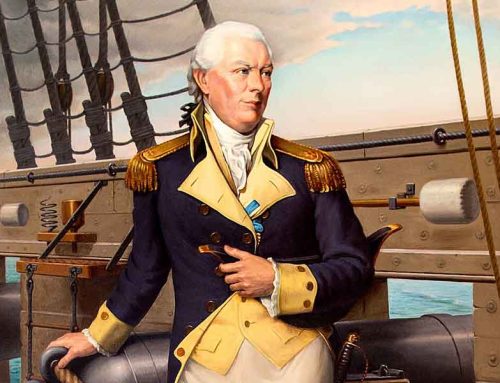
Silas Deane (1738-1789)
A Connecticut merchant, Yale graduate, lawyer, and Continental Congress delegate, Mr. Deane had proven himself an ardent patriot of the most practical kind, aiding in many essential endeavors of the early war: such as funding Colonel Henry Knox’s expedition to procure the guns from Fort Ticonderoga and helping John Adams and Commodore Barry establish the United States Navy from scratch.
In March 1776—before the colonies had formally declared independence or could send fully accredited ambassadors—a secret committee of Congress appointed Deane as a secret agent to France in hopes of obtaining financial and military assistance and to investigate the possibility of an alliance. His cover was that of a private merchant seeking goods for trade. He arrived in France in the summer of 1776 and quickly established contact with Foreign Minister Charles Gravier, Comte de Vergennes, and the subversive playwright and serial entrepreneur, Pierre-Augustin Caron de Beaumarchais.
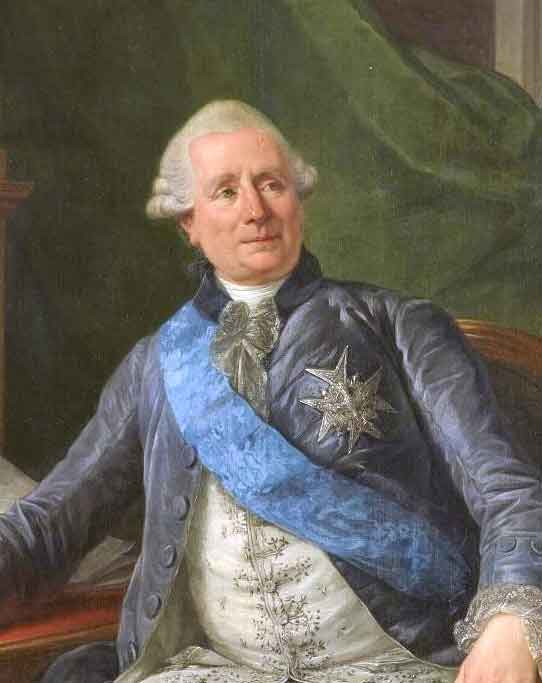
Charles Gravier, comte de Vergennes (1719-1787)
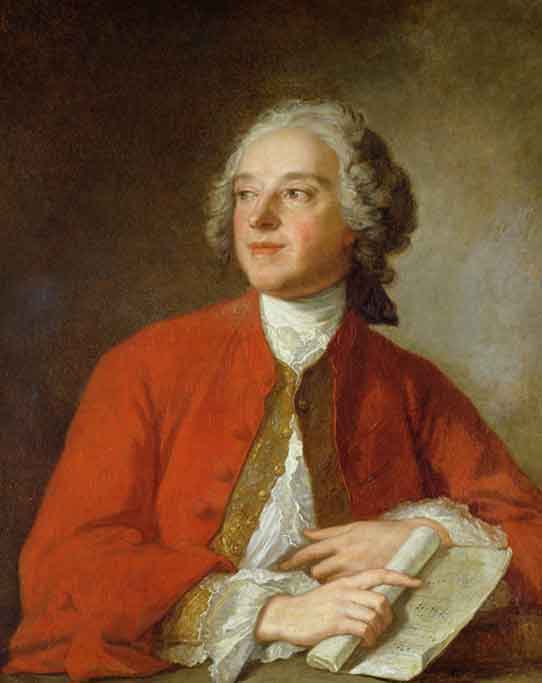
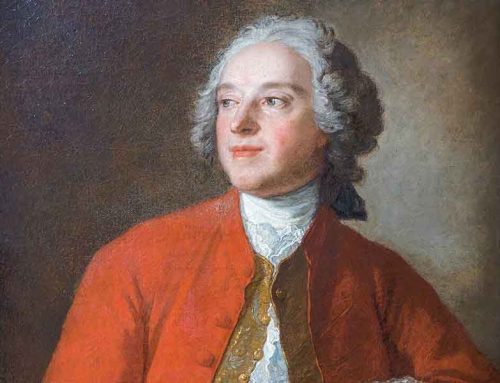
Pierre-Augustin Caron de Beaumarchais (1732-1799)
Deane found the French to be their typical eager selves when it came to helping undermine the British in any way, however, they were explicit about their neutrality and not over enthused at America’s potential sovereignty. This required any aid their Foreign Minister, Vergennes, might give the Americans to be kept secret from most of his own government, which in turn required a less-than-ideal intermediary—Beaumarchais—to facilitate the practicalities of this aid. And so began an odd trio, Vergennes, Beaumarchais, and Deane, all endeavoring to accomplish this bit of treason with as little trouble—and as little personal contact with each other—as possible.
Despite repeated ship searches, harrowing transatlantic crossings, and the censure of both French and English governments, Silas Deane managed to obtain and send back to America a series of weapon shipments valued at more than 6,000,000 livres.
In addition to those weapons, (and by the help of the aforementioned liberty-loving Beaumarchais’ brazenly fake Merchant company, the Roderigue Hortalez et Cie), Deane arranged the covert shipment of large quantities of ammunition, cannon, gun powder, clothing, and varied equipment—these supplies valued at an additional many millions of livres. These shipments proved critical to the Continental Army’s astounding victory the next year at Saratoga, in October 1777, which in turn convinced France to enter the war openly.
After independence was declared, in late 1776, Congress formalized Deane’s longstanding mission by publicly appointing Silas Deane, Benjamin Franklin, and Arthur Lee as joint commissioners. It would take the others months to arrive and join him, but together, on February 6, 1778, they signed the Treaties of Alliance and Amity with France.
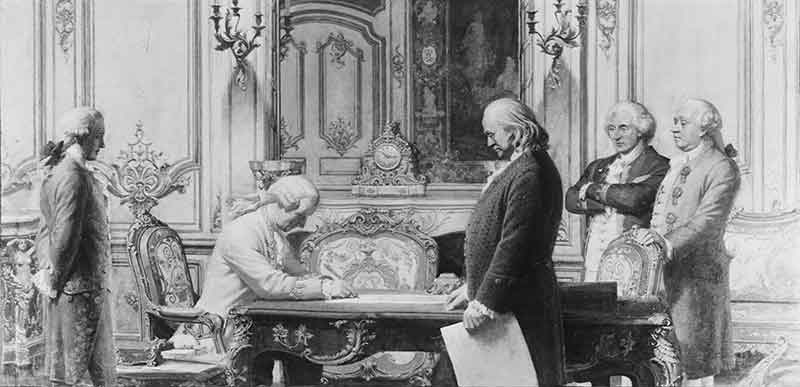
An artist’s depiction of the signing of the Treaty of Amity and Commerce between France and the United States, February 6, 1778, Paris, France—left to right: Benjamin Franklin’s grandson, William Temple Franklin, Mons. Conrad Alexander Gerard de Royneval, Benjamin Franklin, Arthur Lee, Silas Deane.
As essential as all this early monetary procurement was, Deane contributed another inestimable boost to the cause of liberty when he gave commissions to many European officers in the name of the Continental Congress, bringing their expertise to serve in the American army. Not that Congress saw it that way. Because, in the early days of independence, Congress would become inundated by a seeming swarm of idle, cocky, unintelligible foreign officers demanding payment and high ranks in Washington’s army. Each would predictably brandish a commission signed by Mr. Silas Deane in Paris, and look forward to doing as little work for as much money as possible in this rustic new country.
Deane’s logic was sound but he had acted with zero authorization to make such promises. European counties maintained standing armies, and we did not, which meant that Europe’s soldiers were well equipped, meticulously trained, and accustomed to maintaining a desperately needed chain of command. These Europeans sought advancement and combat money, and were easily enticed to fight in the colonies. However, American officers understandably resented these foreign aristocrats receiving high ranks, sometimes displacing or outranking veterans, and eventually these commissions became so disruptive that Washington was forced to complain to Congress, and that body recalled Deane in December 1777.
Deane’s poor reception home was compounded by a series of scathing letters received by Congress from Arthur Lee, Deane’s fellow commissioner to France with whom he had an unfortunately inimical relationship. These communications accused Deane of financial misconduct—claiming Deane was pocketing commissions on supplies that France had intended as gifts, or otherwise profiting from them. Because Deane had left his detailed account books in Paris as France wanted to keep its pre-alliance aid secret, he could not fully clear himself.
For many years Deane faced a protracted and bitter inquiry by Congress. His character was adamantly defended by estimable figures such as John Jay but Deane fumbled his case when publishing a public defense that personally attacked the Lee family as a whole, further inflaming the controversy. Congress never formally convicted him, but the charges ruined his reputation and left him without reimbursement for enormous personal expenditures.
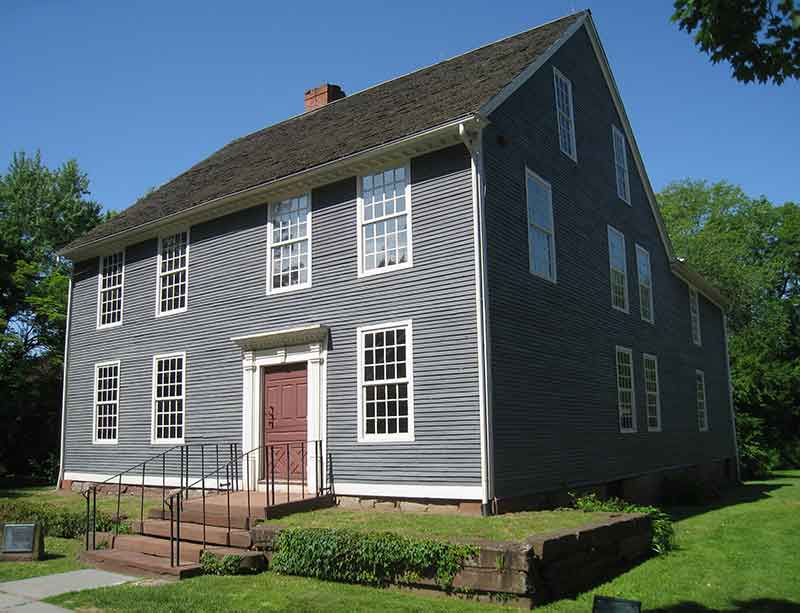
The Silas Deane House, 203 Main Street, Wethersfield, Connecticut
Miserably disillusioned and growing increasingly bitter, Deane would go on to criticize Congress and the war effort, in private correspondence he even suggested reconciliation with Britain. Unfortunately for Deane, this correspondence was intercepted and gleefully published by Loyalists in 1781, leading to accusations of treason. Heartbroken at the progression of his friend’s unraveling public image and personal conduct, John Jay movingly wrote to Deane:
“I write thus plainly and fully, because I still indulge an idea, that your head may have been more to blame than your heart; and that in some melancholy desponding hour, the disorder of your nerves infected your opinions and your pen. God grant that this may prove to have been the case, and that I may yet have reason to resume my former opinion, that you were a valuable, a virtuous, and a patriotic man.”
Deane would be driven to exile by the end of the Revolution, residing in Europe and enduring terrible health and severe poverty. During this time, in the summer of 1788, a Frenchman showed up to the American embassy in Paris, demanding a “pledge” of our ambassador, Thomas Jefferson. He was named Foulloy and he had dubiously obtained two of Deane’s critical missing volumes: his letter book of 1777 and his daybook of accounts covering 1776–1780. Foulloy asked a large sum from Jefferson and threatened to sell the books to the British government if Jefferson did not buy them. Jefferson negotiated a much lower price and purchased them for the United States. Any remaining documents were likely destroyed in the wreckage of the following French Revolution, however these two critical books, together with other surviving papers, correspondence, and the accounts Deane himself had compiled, supported Deane’s claims of upright conduct.
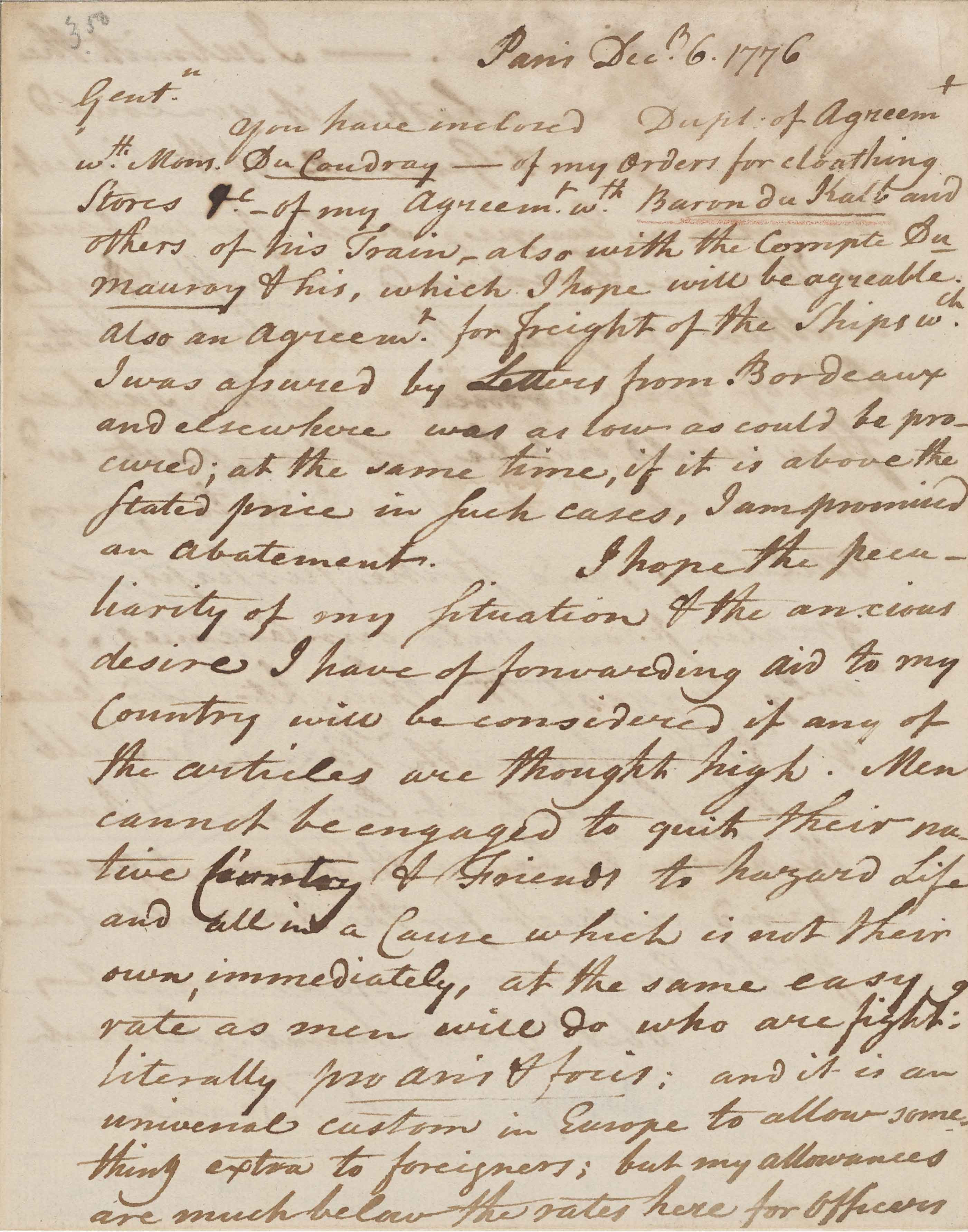
Page 1 of a letter from Silas Deane, Paris, December 6, 1776
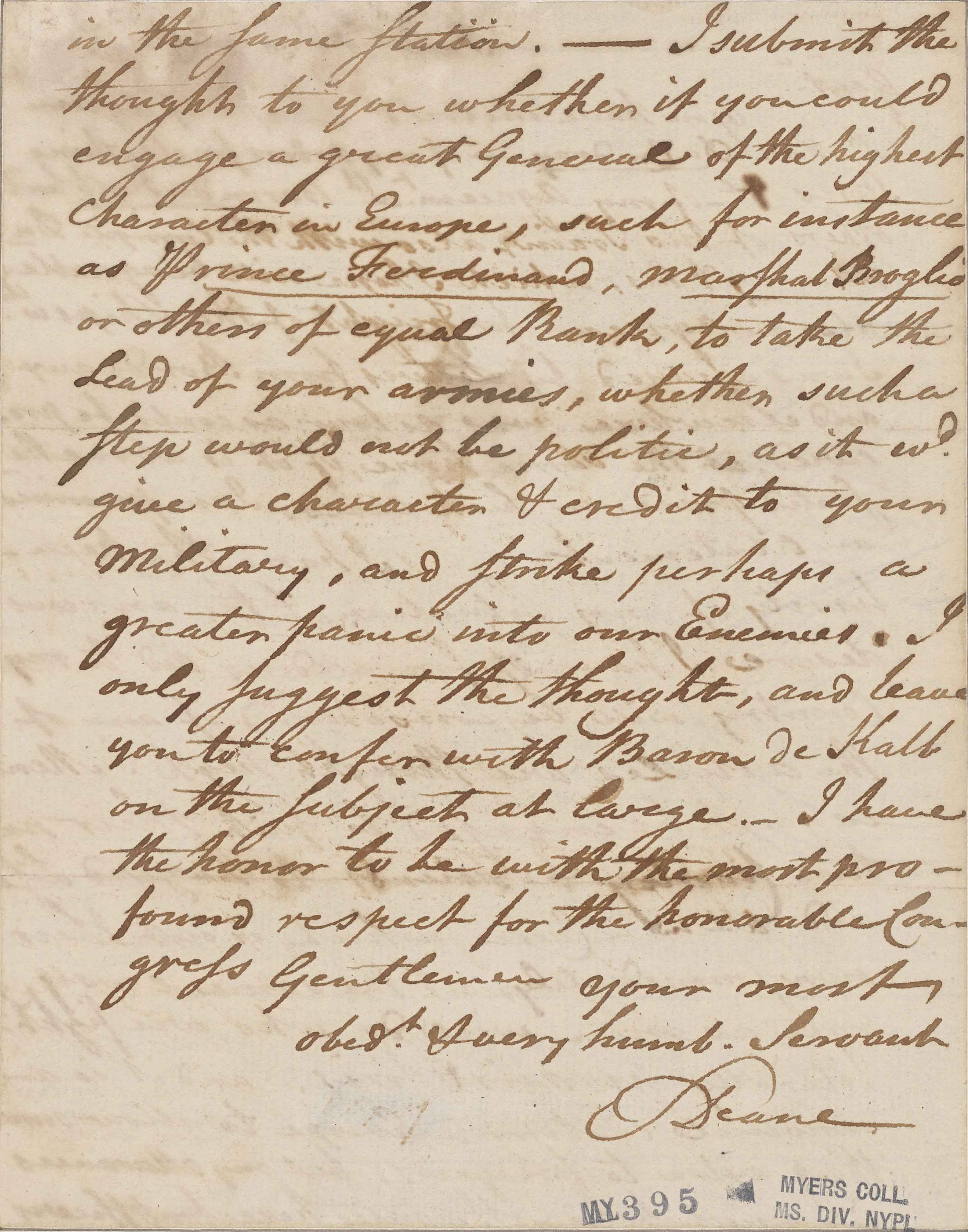
Page 2 of a letter from Silas Deane, Paris, December 6, 1776
It came too late for Deane himself; he did not benefit from the pronouncement by Congress that the smearing of his name in regard to his time as our agent in France was “ex parte, erroneous, and a gross injustice.” Twice widowed, with only one child as his heir, Deane died—some assert under mysterious circumstances—at sea in 1789 while attempting to return to America.
Rather tragically, Deane was then buried in England. His is an achingly human story, full of critical achievement, painful injustice, and a less than ideal end. Next to no one remembers his name, neither in the context of villainy or heroics, but they do remember the men he dared to commission as officers and send to our shores during the bleakest year of our country’s struggle. Their names appear upon maps and municipalities and schools, honored and appreciated. Sometimes Providence dictates that one’s calling in life is to facilitate the grand actions of others who will get the credit for great achievements.
Of the foreign officers who walked through Silas Deane’s door and received an unauthorized commission, many overcame the poor prejudice that their fellows established and proved themselves among the most crucial officers in Washington’s entire command. Among them were:
• Marquis de Lafayette:
A nineteen-year-old French nobleman of immense wealth and court connections, he bought his own ship, sailed against the wishes of his king, his family and the entire French government, and arrived in America determined to fight for the cause without pay. He quickly proved his courage at Brandywine (where he was wounded), distinguished himself in a series of independent commands, and became Washington’s most trusted foreign lieutenant (as well as his adopted son). After helping force the decisive victory at Yorktown he returned to France a celebrated hero, later playing a leading (and ultimately tragic) role in the French Revolution, and died in 1834 still revered and considered an embodiment of Liberty on both sides of the Atlantic.
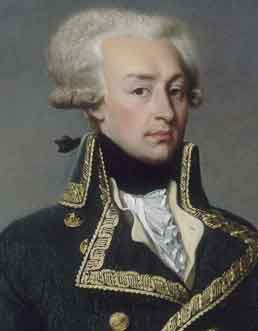
Marie-Joseph Paul Yves Roch Gilbert du Motier, Marquis de La Fayette (1757-1834)
• Baron Johann de Kalb
A Bavarian peasant’s son who had risen to prominence in the French army by meritorious conduct, De Kalb was a veteran professional soldier in his 50s when he joined the fight. He too covered much of his own expense and served loyally and effectively for years. He was mortally wounded—eleven times by bayonet—at the Battle of Camden (1780) while valiantly trying to rally American troops as his superior commander fled the field; “The Lion of Camden” is remembered as one of the most competent of the foreign officers Deane sent.
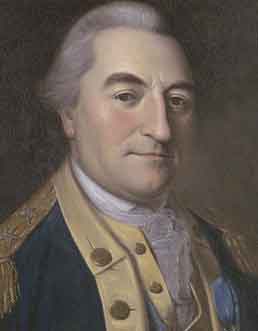
Johann von Robais, Baron de Kalb (1721-1780)
• Baron Friedrich Wilhelm von Steuben
A Prussian staff officer who had served under Frederick the Great, he arrived at Valley Forge in 1778 with inflated credentials but genuine skill and immediately imposed European discipline and drill on the ragged, starved and belligerent Continental Army. His training transformed the army’s effectiveness, his “Blue Book” became its standard manual for decades, and he served faithfully through the rest of the war before retiring to a New York estate granted by Congress, dying there in 1794 as a respected American citizen.
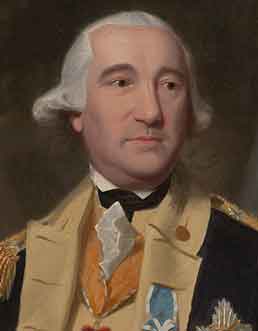
Friedrich Wilhelm August Heinrich Ferdinand Freiherr von Steuben (1730-1794)
• Casimir Pulaski
A Polish cavalry officer already famous for his role in the fight against the Russian partition of his homeland, he reached America in 1777 and was officially commissioned a second time by Congress. A true-blue Polish Hussar, Pulaski organized the first true American cavalry units and led them personally with dash and effectiveness until he was mortally wounded leading a cavalry charge during the failed assault on Savannah in 1779; he is remembered as the father of the American cavalry.
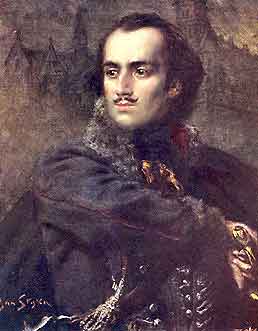
Kazimierz Michał Władysław Wiktor Pułaski (1745-1779)
• Thomas Conway
An Irish-born officer in the French army, he was promised a major-general’s commission by Deane and arrived full of ambition. He initially served quite competently in the field, however, he soon entangled himself in the political intrigue known as the Conway Cabal, in which he sought to replace Washington with himself as commander in chief. Once the scheme collapsed, in part due to Lafayette’s interference, he resigned in disgrace, returned to Europe, and is remembered less for any battlefield achievement than for the brief but damaging challenge he posed to Washington’s authority.
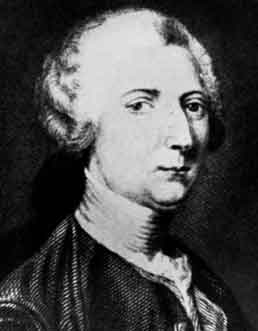
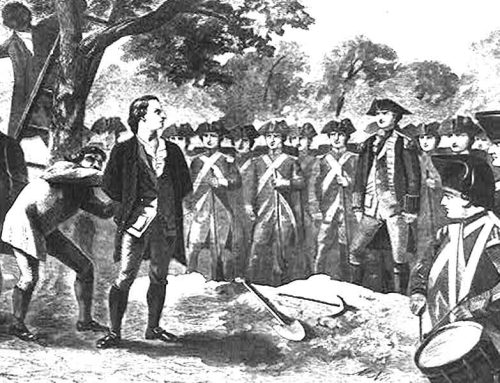
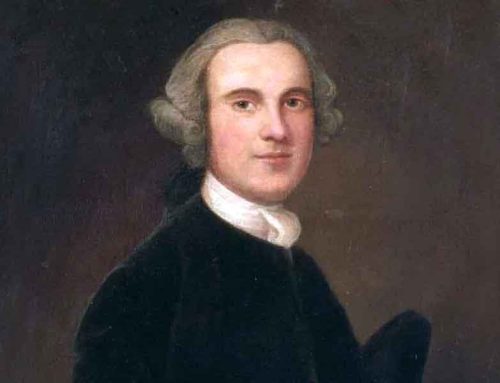
Thomas Conway (1735-1795)
Image Credits: 1 Silas Deane (wikipedia.org) 2 Count of Vergennes (wikipedia.org) 3 Pierre de Beaumarchais (wikipedia.org) 4 Treaty of Amity and Commerce and of Alliance (wikipedia.org) 5 Letter, Page 1 (wikipedia.org) 6 Letter, Page 2 (wikipedia.org) 7 Silas Deane House (wikipedia.org) 8 Lafayette (wikipedia.org) 9 de Kalb (wikipedia.org) 10 von Steuben (wikipedia.org) 11 Pulaski (wikipedia.org) 12 Conway (wikipedia.org)