Profiles of 1776 | John Witherspoon
 t was a distinguished feature of the American Revolution that religious feeling was closely connected with political action. This manifested in the galvanizing effects of the Great Awakening and the marshaling of entire congregations as in the famed “black-robed regiment.” So crucial was the role of the clergy in the colonies that King George III dubbed the American Revolution “a Presbyterian Parson’s Revolt.”
In the case of John Witherspoon, the only minister to put his name to the Declaration of Independence, his influence in the cause of establishing the American Republic under God was second to none. In his singular position as President of the College of New Jersey (Princeton) in the decade prior to the war, Witherspoon turned the erstwhile seminary for prospective clergymen into “a seedbed of the Revolution.”
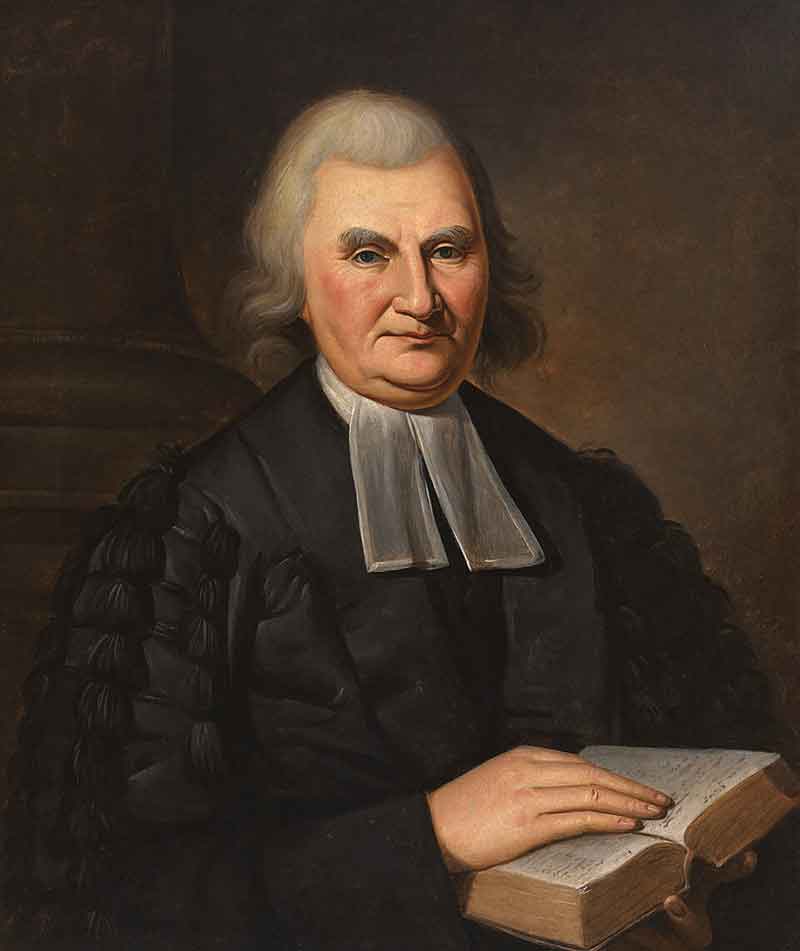
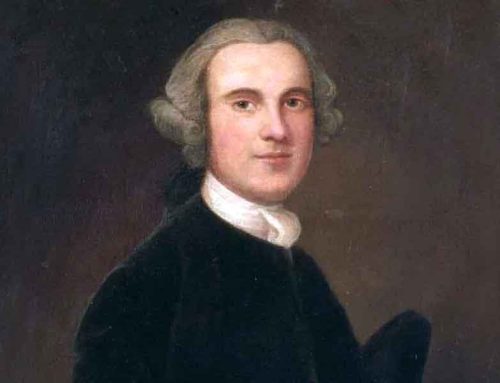
John Witherspoon (1723-1794)
It was in his practical application of Biblical ethics into tangible action, and his “belief that the function of such a college was not merely to educate candidates for the ministry, but also to send out into the widening spheres of colonial life Christian gentlemen and scholarly men of affairs,” that Witherspoon produced a generation of men whose scope and influence was unparalleled among their peers.
The fruit of his rich tutelage produced one President of the United States, one vice president, three Supreme Court justices, ten cabinet officers, twenty-eight U.S. Senators, forty congressmen, thirty-seven State Judges, twelve State Governors, thirteen College presidents and five delegates to the Constitutional Convention.
When Witherspoon took his seat as a delegate for New Jersey at the Continental Congress in 1776, twelve of his fellow members had previously been his pupils.
He owed his presence in America to another delegate and fellow signer, Benjamin Rush, who had recruited Witherspoon from his native Scotland to come to America and lend his hand to the efforts of shaping American minds. Of Witherspoon, Rush wrote:
“It reflects no small honour upon Dr. Witherspoon, that he should consent to cross the ocean, and take charge of a college in a new country, leaving behind him a sphere of great respectability, comfort, and use-fulness. . . . It deserves also to be mentioned, that a little previous to his embarking for America, and while still in a state of suspense, respecting his duty, a gentleman of considerable fortune, and a relation of the family, offered to make him his heir, provided he would remain in Scotland.”
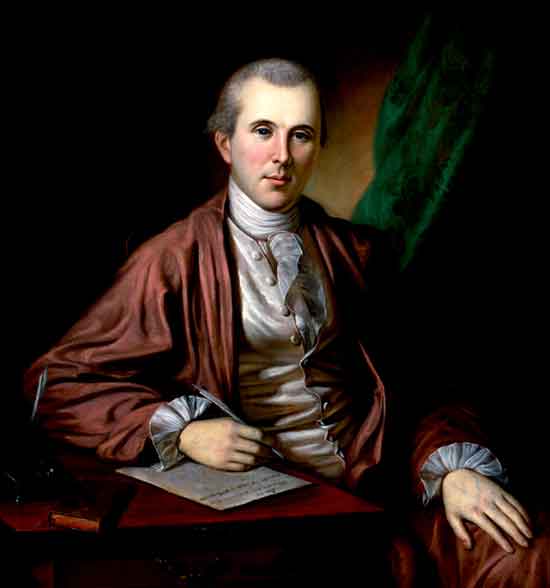
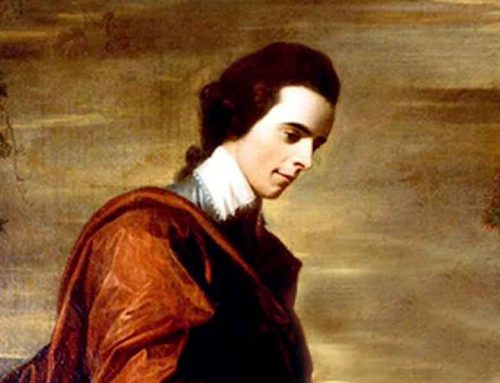
Benjamin Rush (1746-1813)
Witherspoon’s contemporary in Scotland had been the Enlightenment’s darling, David Hume, and there had been none who stood up against Hume’s godless rationale with greater scholarship and ruthless precision than John Witherspoon. His great grasp on the tenets of doctrinal orthodoxy in law and application became the keystones of the American vision, one that coalesced in a cause that, in the words of Paul Johnson, utilized “Enlightenment ideals filtered through a Protestant, covenantal, English-speaking culture that already had a century and a half of self-government, written compacts, and revivalist religion to restrain it.”
It was said that Witherspoon “became an American from the moment he landed on the shores of America” in 1768, and he bore great criticism from the broader intelligentsia for his association with and mentorship of patriot leaders. Undeterred by their censure, at the College of New Jersey’s 1769 commencement—Witherspoon’s first full year as president—he awarded honorary degrees to two prominent critics of British policy: John Dickinson and John Hancock. Hancock’s honor came shortly after British customs officials seized his sloop Liberty.
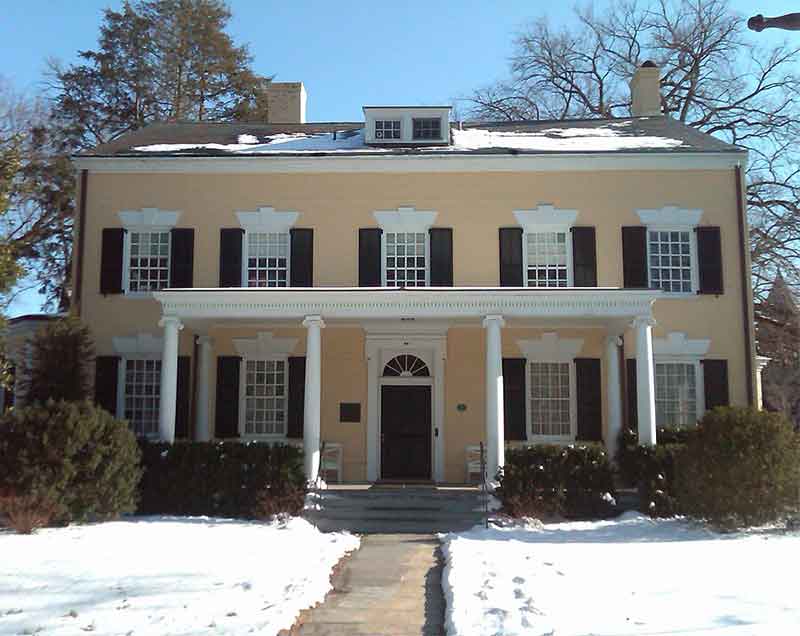
Maclean House—known as The President’s House—at Princeton University, built in 1756
Having already become a noted voice amongst the patriot cause, and having served upon the Committee of Correspondence and in the Provincial Congress, John Witherspoon was elected by the provincial authorities of New Jersey to serve in the Second Continental Congress. His written instructions explicitly authorized him and his fellow delegates to join the other colonies “in declaring the United Colonies independent of Great Britain” if they judged it necessary.
Less than a month after taking his seat, Witherspoon would cast his vote to adopt the Declaration. Before he left Princeton for this great task, he delivered a stirring sermon, titled “The Dominion of Providence over the Passions of Men.” In it he exhorted his students, many of whom would serve or die in the upcoming conflict:
“Upon the whole, I beseech you to make a wise improvement of the present threatening aspect of public affairs, and to remember that your duty to God, to your country, to your families, and to yourselves, is the same. True religion is nothing else but an inward temper and outward conduct suited to your state and circumstances in providence at any time. Exert yourselves, every one in his proper sphere, be of good courage, and let us behave ourselves valiantly for our people and for the cities of our God, and let the Lord do that which is good in his sight.”
In the aftermath of the Declaration, Witherspoon remained in Congress and had already taken part, through New Jersey’s provincial congress, in framing his state’s constitution. The latter half of 1776 would see repeated patriot defeats, with the loss of New York and New Jersey to the British.
In light of this, Witherspoon closed the college on November 29 and sent the students home or to enlist. When the British arrived on December 7 they spent about three weeks in what locals called the “twenty days’ rage.” They stabled horses in the basement of Nassau Hall, used rooms as prison cells, wrecked much of Witherspoon’s library, and plundered the town. Washington then made the last great attempt of the year: crossing the frozen Delaware from the Pennsylvania shore to the New Jersey side, taking Trenton from the Hessian garrison on December 26. He lost it again to Cornwallis on January 2. The fighting was brief both times, but the devastation of repeated occupations was lasting, particularly for the college.
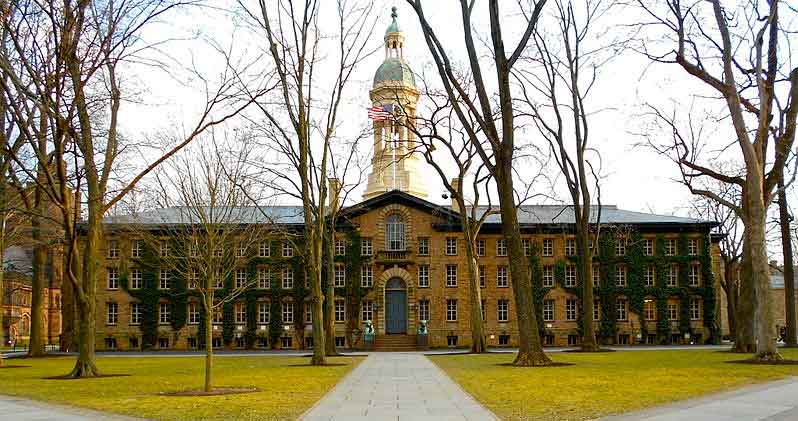
Nassau Hall at Princeton University—built in 1756, it is the oldest building on campus
One witness, Thomas Nelson, Jr., wrote to Thomas Jefferson about the damage wrought by the enemy: “Old Witherspoon has not escap’t their fury. They have burnt his Library. It grieves him much that he has lost his controversial Tracts.” Also bringing grief was the damage done to the college he had worked so hard to build up. His library of two thousand books was scattered and the Rittenhouse planetarium broken.
Witherspoon, the ultimate Scottish Presbyterian, was saddened but unsurprised by these displays of depravity, and was more greatly moved by the atrocities inflicted on the people of his colony, denouncing them thus in his official capacity:
“While the shadow of hope remained that our enemies could be taught by our example, to respect those laws which are held sacred among civilized nations, and to comply with the dictates of a religion which they pre-tend, in common with us, to believe and revere, they have been left to the influence of that religion and that example. But since their incorrigible dispositions cannot be touched by kindness and compassion, it becomes our duty, by other means, to vindicate the rights of humanity—We, therefore, the congress of the United States of America, do solemnly declare and proclaim, that if our enemies presume to execute their threats, or persist in their present career of barbarity, we will take such exemplary vengeance as shall deter others from a like conduct.”
The conduct of the British in the years following 1776 would continue to merit much holy outrage, and the men in Washington’s army, borne up by their minister’s insistence in the rightness of their cause, would stop at nothing to drive out the foe. In these years, and beyond them, Dr. Witherspoon would contribute an unfathomable amount of wisdom and sacrifice to the cause and the formation of our nation, urging always for the pursuit of Christian virtue and vigilance against apathy and corruption. To detail them would (and has) taken volumes.
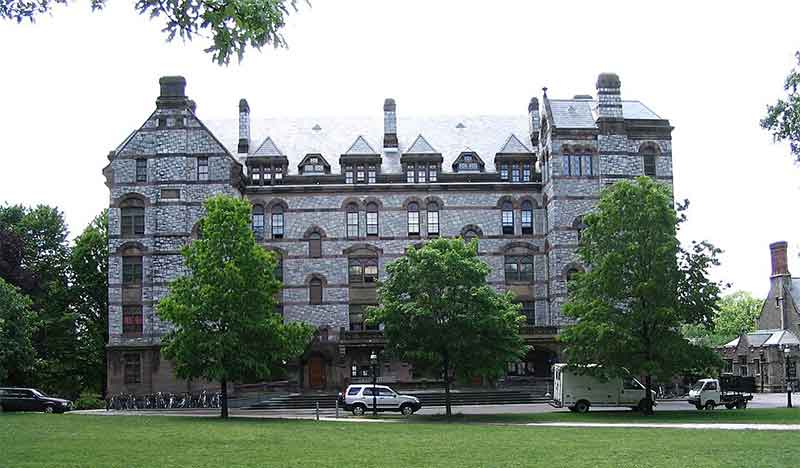
Witherspoon Hall at Princeton, named for John Witherspoon
Suffice it to say, Witherspoon taught and preached until the end of his life, while playing a major role in two editions of the Bible, including one from 1791, considered to be America’s first family Bible. He died on November 15, 1794, at 73 years of age at his home and was buried in the president’s lot at Princeton. Thus ended his long and useful life, spent teaching what he called “the permanent things,” and which had influenced so greatly the establishment of this new country.
He left the same charge he had lived. In the matter of making one’s life useful, John Witherspoon asked of us:
“How, can any person bend his knees in prayer every day with his family, without its being a powerful restraint upon him from the indulgence of any sin which is visible to them? Will such a one, think you, dare to indulge himself in anger, or choose to be seen by them, when he comes home staggering with drunkenness, unfit to perform any duty, or ready to sin still more by the manner of performance? But besides being a restraint from gross crimes, I cannot help saying, that speaking of the things of God with the concern of a parent, or the humanity of a master, must give a solemnity of spirit, and a sense of their moment, even greater than before. Let me, therefore, earnestly recommend the faithful discharge and careful management of family duties, as you regard the glory of God, the interest of His church, the advantage of your posterity, and your own final acceptance in the day of judgment.”
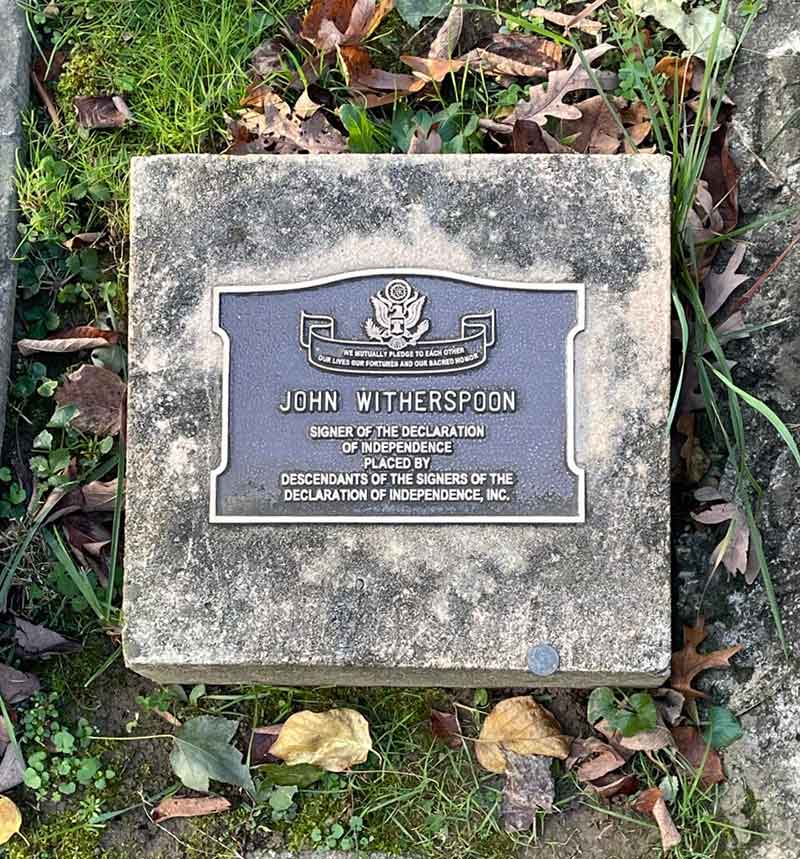
Witherspoon’s grave in Presidents Row at Princeton Cemetery