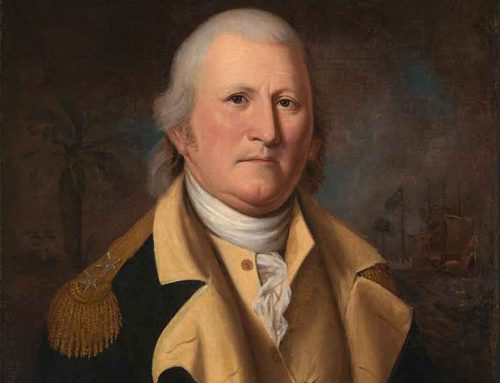

“Behold, we consider those blessed who remained steadfast. You have heard of the steadfastness of Job, and you have seen the purpose of the Lord, how the Lord is compassionate and merciful.”—Hebrews 3:6
Profiles of 1776 | Arthur Middleton
 outh Carolina produced many glittering names in the founding generation, but few embodied the colony’s contradictions as completely as Arthur Middleton. Heir to one of the richest rice plantations on the Ashley River, educated in the finest English schools, and the son of Henry Middleton—who had served as president of the First Continental Congress—Arthur might have been expected to follow his father’s more cautious path. Instead, he became one of the most ardent, even ruthless, of the Carolina patriots.
Born in 1742 at Middleton Place, Arthur was sent to England at the age of twelve, where he excelled in his studies at Westminster and Cambridge. Not relying upon his wealth for occupation, he was called to the bar and practiced law at the Middle Temple in London. He then married Miss Mary Izard in a love match, one that produced eight children.
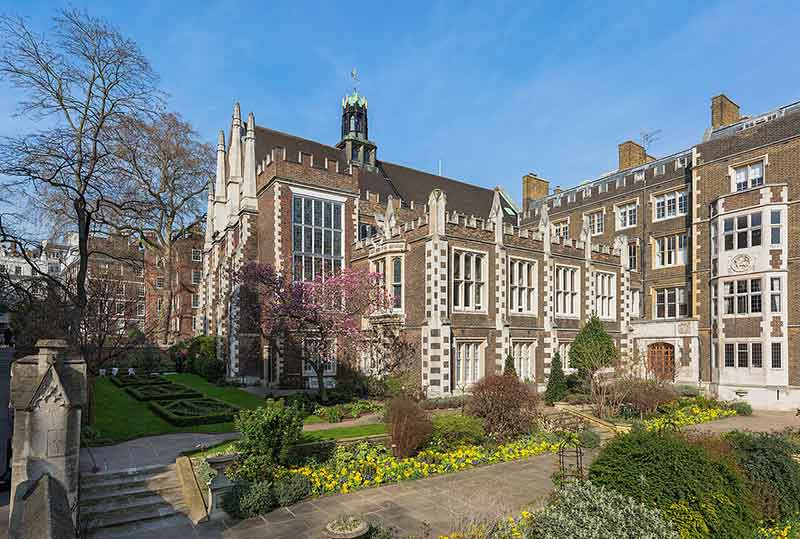
Middle Temple Hall, London, England
The couple honeymooned in Europe, enjoying a shared love of history and classics, and took the occasion to be painted together by the great Sir Benjamin West. By that point the marriage had produced a child, and baby Middleton was included in the lavish portrait. This inclusion is touching, considering that West’s painting became the only contemporary portrait of Middleton remaining to us, and is symbolic of his remarked-upon devotion to family—a noble characteristic that was used quite cruelly against him in the future War for Independence.
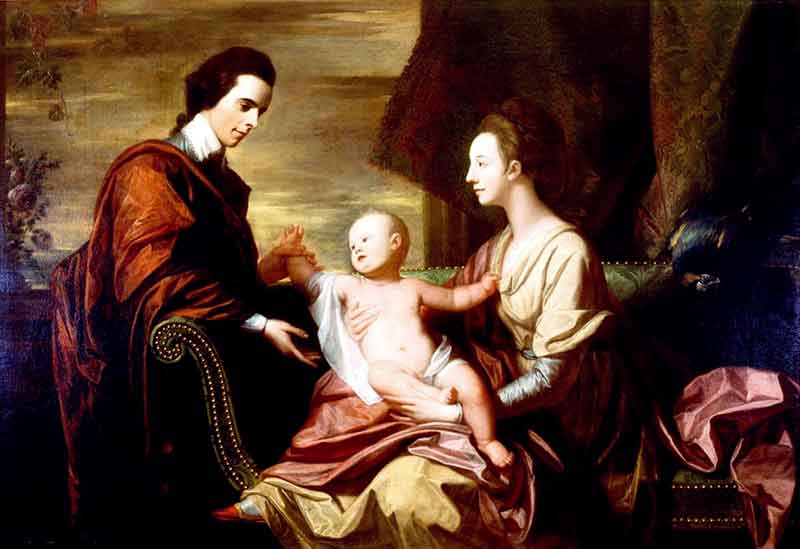
Arthur Middleton, his wife Mary, and their infant son Henry, 1771
The young Middletons returned from their foreign sojourns in 1771, taking up residence at their vast rural plantation, Middleton Place, and seemingly destined for the placid life of the gentry. Yet soon, a sharper edge than his European upbringing had promised became apparent in young Arthur. He began to write periodicals under the pseudonym of Andrew Marvell—borrowed from the famous 17th-century English poet, satirist and assistant to Oliver Cromwell. These writings were ferociously antagonistic to British overreach and were set forth with the meticulousness of a scholar, thus bringing Arthur into the ranks of those defenders of English law who found commonality in past struggles against tyranny.
When the crisis with Britain deepened, Arthur emerged as a leader of the most extreme Whig faction in South Carolina. He supported the intimidation of crown officials with tar-and-featherings, and argued for the confiscation of Loyalist estates. He most wisely organized raids on royal armories, getting hold of the public store of arms before any of the royal appointees, including the governor, could do the same. All of this before 1776, and at the beginning of that year he sat on the Council of Safety that effectively governed the colony without royal approval. In this capacity he helped draft South Carolina’s first constitution and, when his father, Henry Middleton, declined to continue his appointment in the Continental Congress, Arthur took his place.
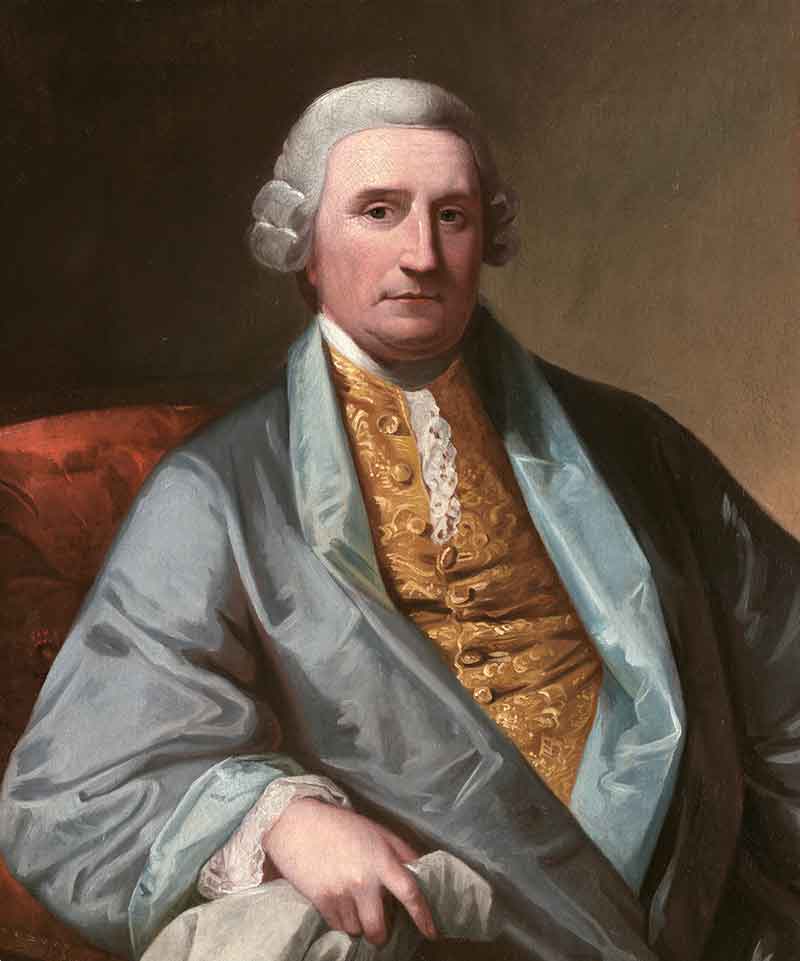
Henry Middleton (1717-1784), Arthur’s father
The Carolina delegates made an impact in Congress, marked for their flamboyance and vicious tempers more than anything else. What little record we have consists of John Adams marking Middleton to be more ferocious than his fellows, while John Hancock remarked admiringly upon his fine clothes.
Initially South Carolina refused to vote for separation, providing no end of grief for those delegates seeking unanimity. It seemed there was no lack of hatred for Britain in them, but they did not feel compelled to cast their lot in with the other twelve colonies. Indeed, while deliberations for declaring independence were underway in June of 1776, South Carolina’s militia had rebuffed a significant British invasion at Sullivan’s Island in the harbor of Charleston. This seemed to suggest her ability to handle her own affairs should it come to outright war.
Edward Rutledge, brother to the governor and leader of the South Carolina delegation in Congress, pressed further for a solidified confederation and an assurance of foreign alliances before committing to wholesale treason. But, after nine colonies voted for independence in the first vote held on July 1, Rutledge asked for another to be held the next day. Thus on July 2nd, South Carolina and Rhode Island tipped the scales, with New York’s abstention, and the die was cast.
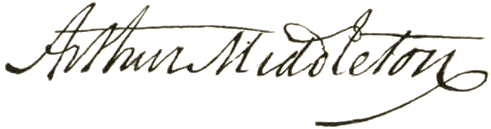
Middleton’s signature
Three fellow South Carolinians affixed their names alongside Arthur’s, providing with their vote the crucial sway of America’s most prestigious colony. Of the four, three of these men would suffer imprisonment before the war was won. At age thirty-four, Arthur was the senior delegate.
He wrote exultingly (but in a poetic code) to his colleague William Henry Drayton from Philadelphia, “the plant which you have been nursing has thriven amazingly, its roots have reach’d this place & sprung up in full vigour…”
Middleton continued on as a member of Congress until the close of 1777, uprooting his young family so they might be with him in Philadelphia. He then returned to South Carolina to help manage his parents’ estates and defend his colony, as in the final years of the war the southern colonies took center stage.
War in the Carolinas became typified by a special sort of savagery not previously indulged in by either side. There were many factors for that, including the protracted nature of the war and the growing desperation for a decisive action. Added to that was the threat of slave revolts, the hampering of a weak government, and the change of tactics to those of guerrilla warfare and brutal reprisal. The Carolinas had far greater divided loyalties than any other region, creating a civil war inside the war. Those loyalists whom Arthur Middleton had in the early days eyed with suspicion, and whose disenfranchisement he had advocated, proved lethal in their support of the crown. Neighbors betrayed neighbors, entire congregations were decimated, plantations ransacked and the horrors of war brought fully to the doorstep of ordinary citizens.
Charleston was put under siege by the British in 1780 and Arthur Middleton, as a member of the militia, went there to serve in its defense. The forces arrayed against the patriots overwhelmed them, and finally on May 12, 1780, the American defenders of Charleston surrendered.
It was a devastating loss both strategically and for morale; the British took over 5,500 able-bodied American men as prisoners, including the highly targeted signers of the Declaration of Independence: Arthur Middleton, Edward Rutledge, and Thomas Heyward, Jr.
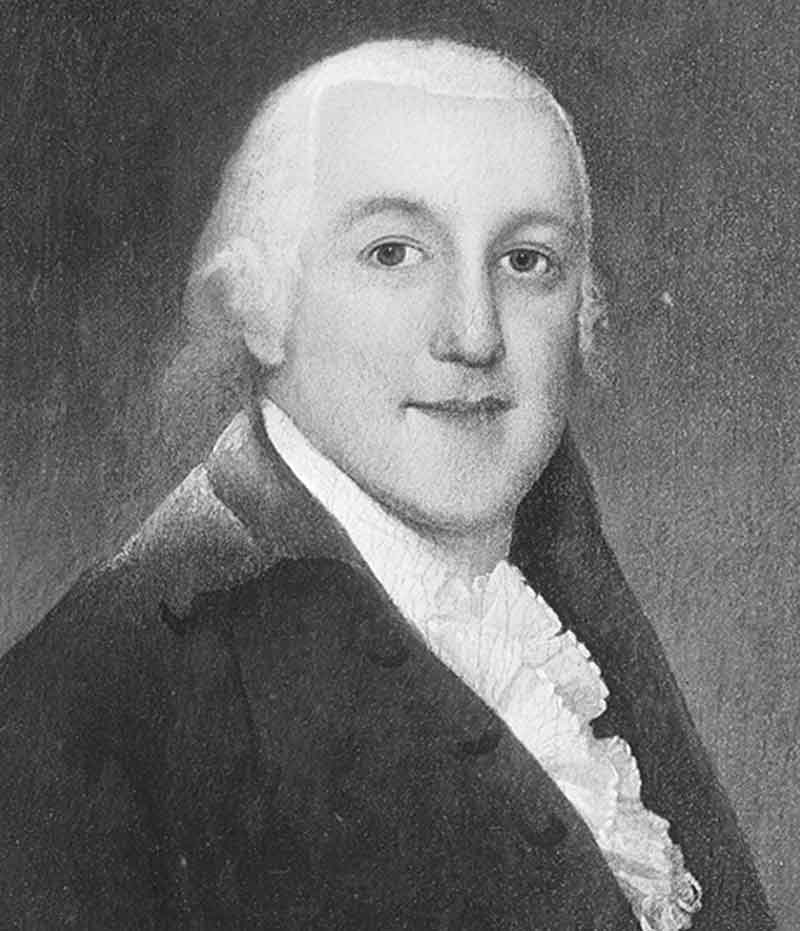
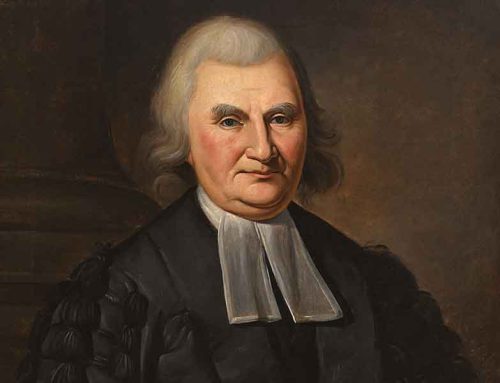
Edward Rutledge (1749-1800)
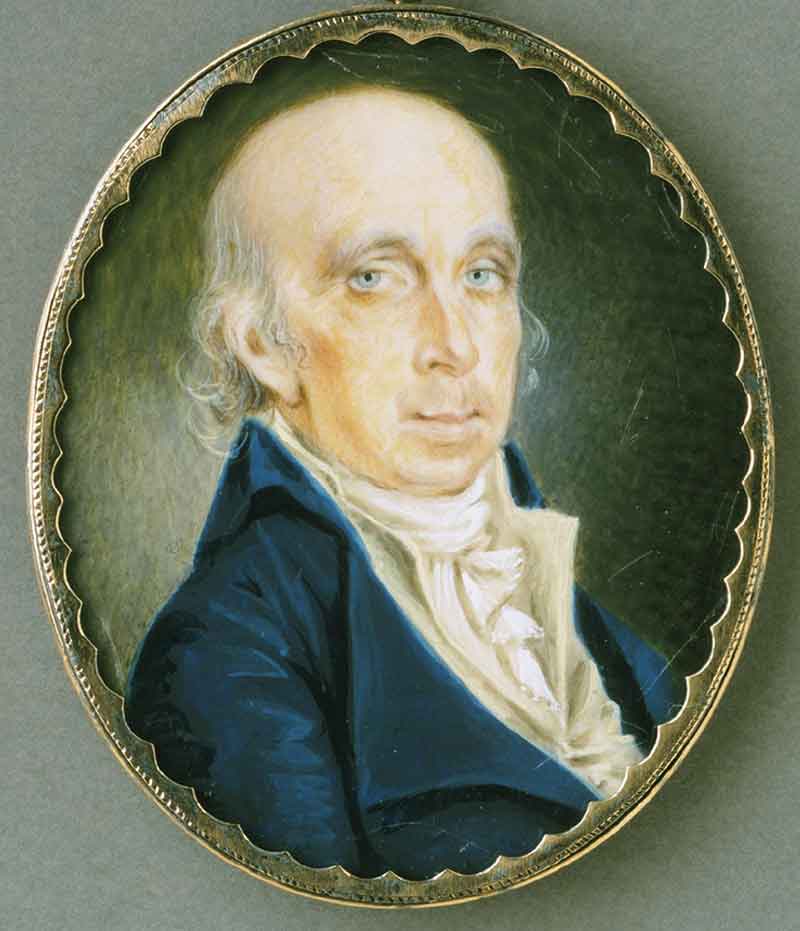
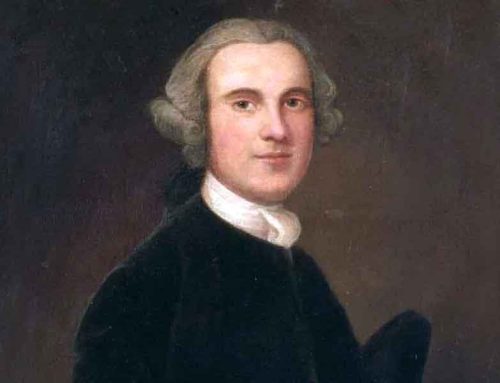
Thomas Heyward Jr. (1746-1809)
Middleton and the other captives were sent by sea to St. Augustine, Florida, still under British control, where he was kept in the Castillo de San Marcos under cruel and harsh confinement for fourteen long months. While he languished there, the British paid his defenseless family a visit.
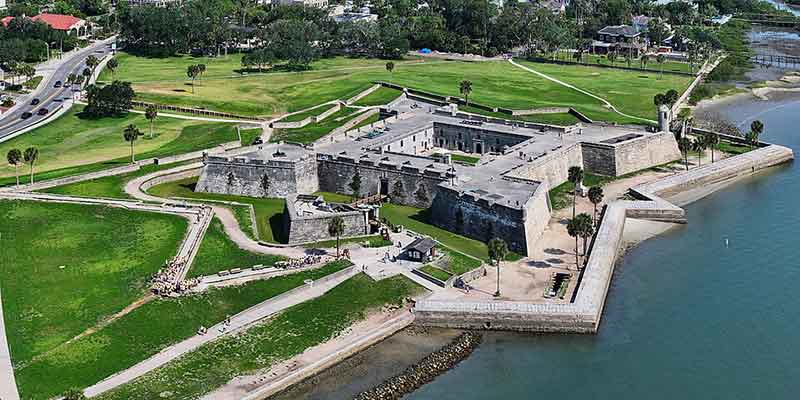
Castillo de San Marcos, St. Augustine, Florida
Arthur Middleton’s family barely escaped with their lives by fleeing to the countryside during repeated raids on their plantation. When they returned, it was to find all portable valuables carried off. Those priceless effects too heavy to move were vandalized. Bureaus had axes taken to them, every painting not looted had its canvas slashed through with knives, and in typical fashion, the crops had been burned. Worse than all that, the British carried off over 200 of Middleton’s slaves, which they then sold in the British West Indies.
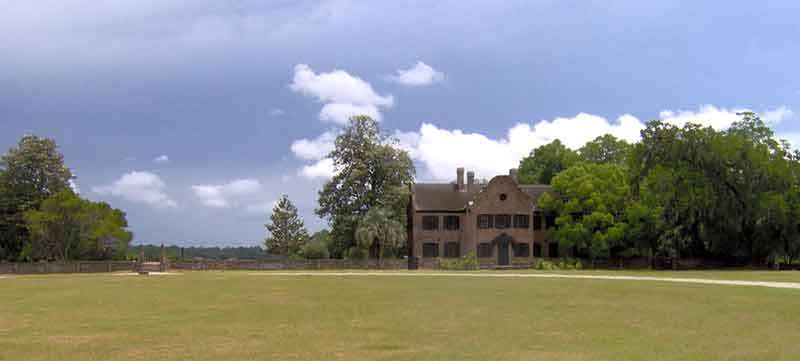
The surviving south wing of Middleton Place, Dorchester County, South Carolina—the main house once stood in the gap in the treeline
Due to this intentional impoverishment, being left no means to feed her children and remaining slaves, Mary Middleton was forced to ask for help from the British authorities. According to her account, they behaved decently enough when she name-dropped her loyalist relations, but it was a humiliation that Arthur Middleton would never forgive them for.
Upon his release, Arthur returned to Congress, elected in the certainty he would promote a newly independent South Carolina’s interests. There, with characteristic intensity, Arthur argued that Lord Cornwallis should be executed and not paroled, citing the war crimes he had allowed. Cornwallis would eventually be exchanged in a prisoner swap for fellow South Carolinian—Middleton’s friend and mentor, President Henry Laurens.
Middleton would later serve in the state legislature and as a trustee of the College of Charleston, but his priority in the postwar years became his family and the rebuilding of his estates. He became famous for his generous hospitality and, in an act of a much-tempered man, advocated for his loyalist neighbors to be able to retain their property in the new nation.
Arthur Middleton did not live long to enjoy the peace and civil liberty he had sacrificed so much to ensure: weakened by imprisonment, he died of fever on New Year’s Day 1787, only six years after being released from captivity. He was just forty-four years old, and left behind his wife Mary and their eight children; two sons, and six daughters.
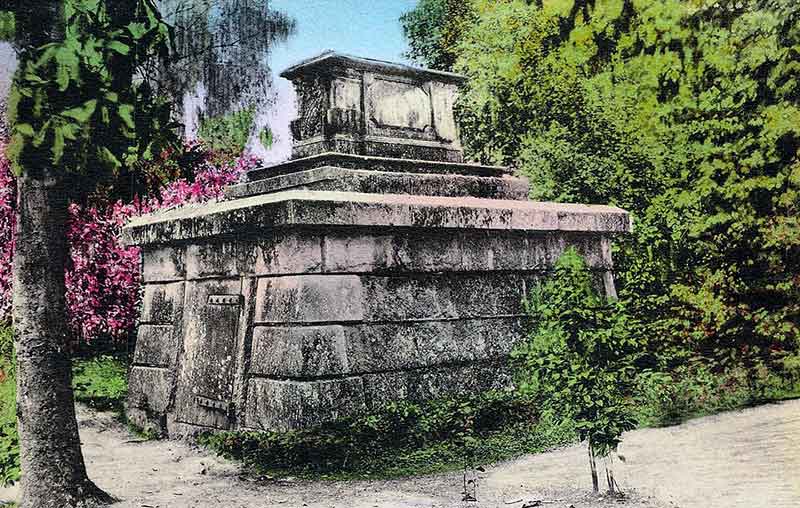
Tomb of Arthur Middleton at Middleton Place, Dorchester County, South Carolina
He was buried in the family tomb in the Gardens at Middleton Place. The South-Carolina Gazette remembered him as “A complete philanthropist, but the firmest of patriots; cool, steady, and unmoved, at the general wreck of property and fortune, as far as he was personally concerned, but with a heart melting for the sufferings and woes of others. Accomplished in letters, in the sciences, and fine arts; a model of private worth and public virtue; a good citizen. A good father, and an exemplary husband.”
Arthur Middleton had inherited a great name and a great estate, risked both, endured imprisonment, and left behind a signature that still binds his state to the glorious cause of 1776. His children, being his most lasting legacy, would all hold honored positions in their newly free country and contribute to South Carolina’s luster.
Image Credits: 1 Middle Temple (wikipedia.org) 2 Family Portrait (wikipedia.org) 3 Henry Middleton (wikipedia.org) 4 Signature (wikipedia.org) 5 Edward Rutledge (wikipedia.org) 6 Thomas Heyward (wikipedia.org) 7 Castillo de San Marcos (wikipedia.org) 8 Middleton Place (wikipedia.org) 9 Tomb (wikipedia.org)