John Milton Ducks Charles II, 1660

2019-08-30T23:25:50-05:00August 26, 2019|HH 2019|

“I will lead the blind by a way they do not know, In paths they do not know I will guide them I will make darkness into light before them And rugged places into plains These are the things I will do, And I will not leave them undone.” —Isaiah 42:16

John Milton Ducks Charles II, August 27, 1660

Bunhill Fields Cemetery in London contains the earthly remains of many prominent dissenters or “non-conformists” of England’s history. As an almost unknown historic site to most people, among the two thousand or so markers, Bunhill’s tombs include those of John Bunyan, author of Pilgrim’s Progress, John Owen, renowned Puritan theologian and chaplain to Oliver Cromwell, novelist Daniel Defoe, George Fox, who is considered the father of “Quakerism,” Isaac Watts, the father of English hymnody, and Susannah Wesley, the twenty-fifth child in her family and mother of nineteen, including the preachers and hymn-writers John and Charles. Along with Bunyan, perhaps the most universally known denizen of Bunhill is John Milton, the Puritan poet, political polemicist, civil servant, and historian of the 17th century—the author of Paradise Lost.
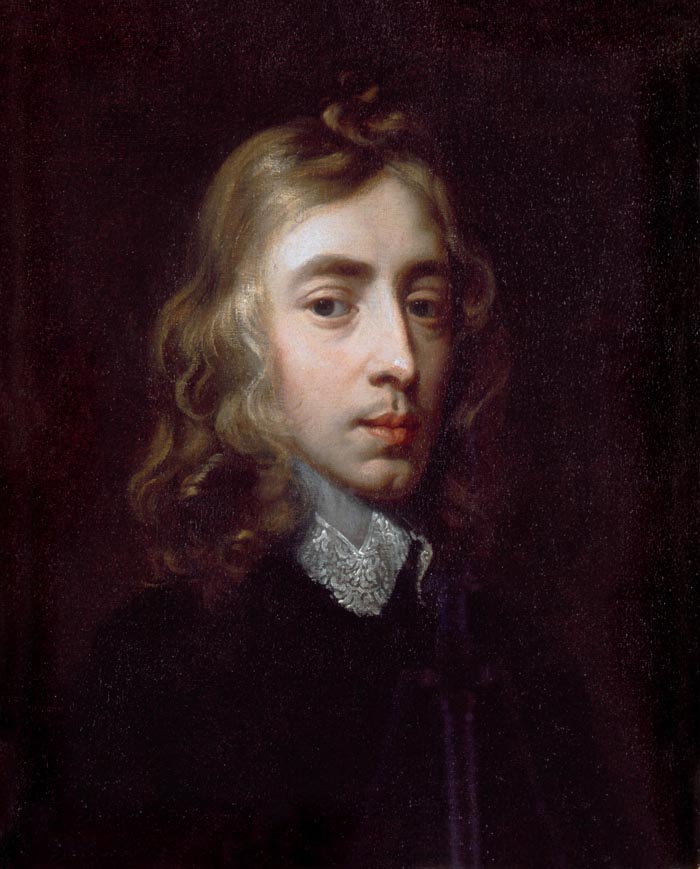

John Milton (1608-1674)

John Milton was born in London in 1608, which makes him a contemporary of Charles II, Samuel Rutherford, John Owen, Oliver Cromwell, and the men of the Westminster Assembly that produced the famous Confession of Faith. His father had abandoned the Roman Catholic religion of the Milton family and had prospered greatly as a scrivener in London. Young John’s education came from a Scottish private tutor who proved his worth and John’s native genius by qualifying him to enter Christ’s College, Cambridge in 1625, to prepare for ministry in the Church of England. He befriended Roger Williams, later of Rhode Island fame, who taught him Dutch in exchange for lessons in Hebrew.
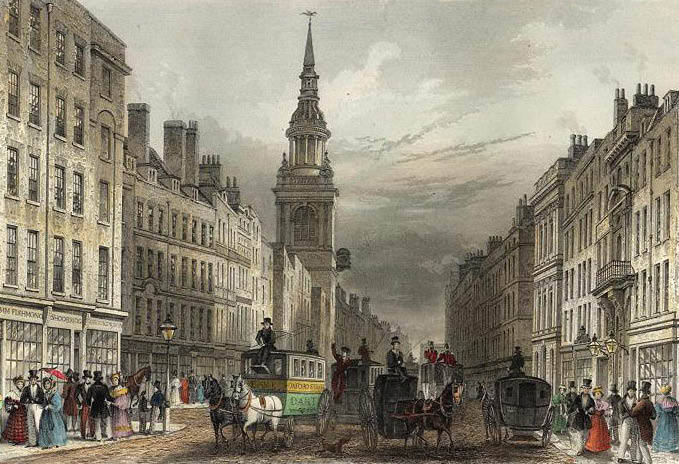

An 1837 view of Cheapside street in London where Milton was born
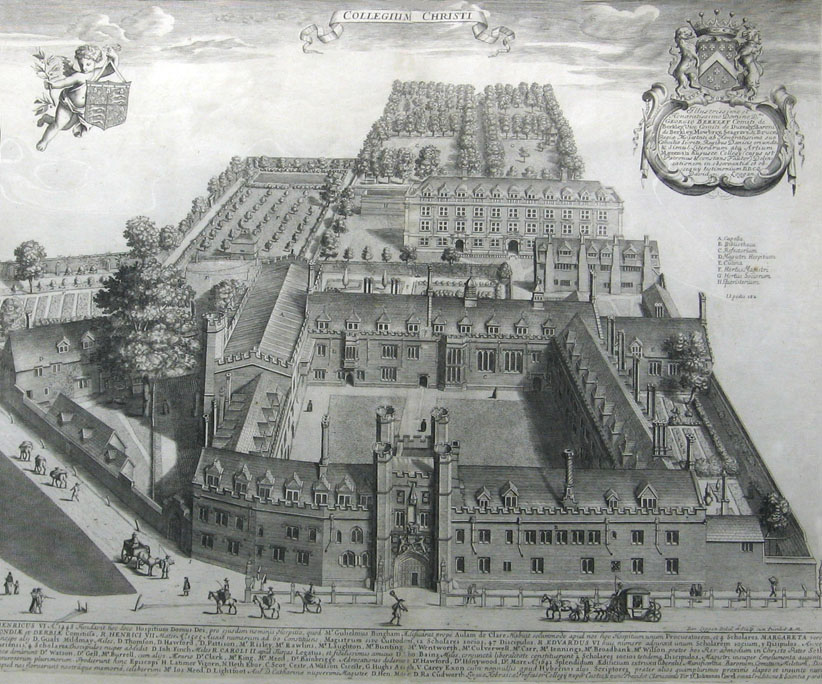

Christ’s College, Cambridge, founded in 1437

Milton’s first publications date from this period, mostly poetry. Of serious demeanor, he also was unafraid of criticizing the curriculum of the college and would later serve as an educational reformer. From 1635-41 Milton’s autodidactic nature enabled him to conduct intensive study on his own at his father’s home, mastering at least six languages as well as history and philosophy, making him, perhaps, the most knowledgeable poet in history. He spent more than a year travelling across Europe, conversing with and learning from intellectuals, linguists, poets, and artists. He met Galileo, at the time under house arrest in Italy. He studied Roman Catholicism in practice, toured the Vatican library, and spent time in Geneva, Switzerland. The peripatetic genius was now providentially ready for his life’s work and literary immortality during the upheavals of the English Civil Wars, Interregnum and Restoration of the Stuart monarchy.
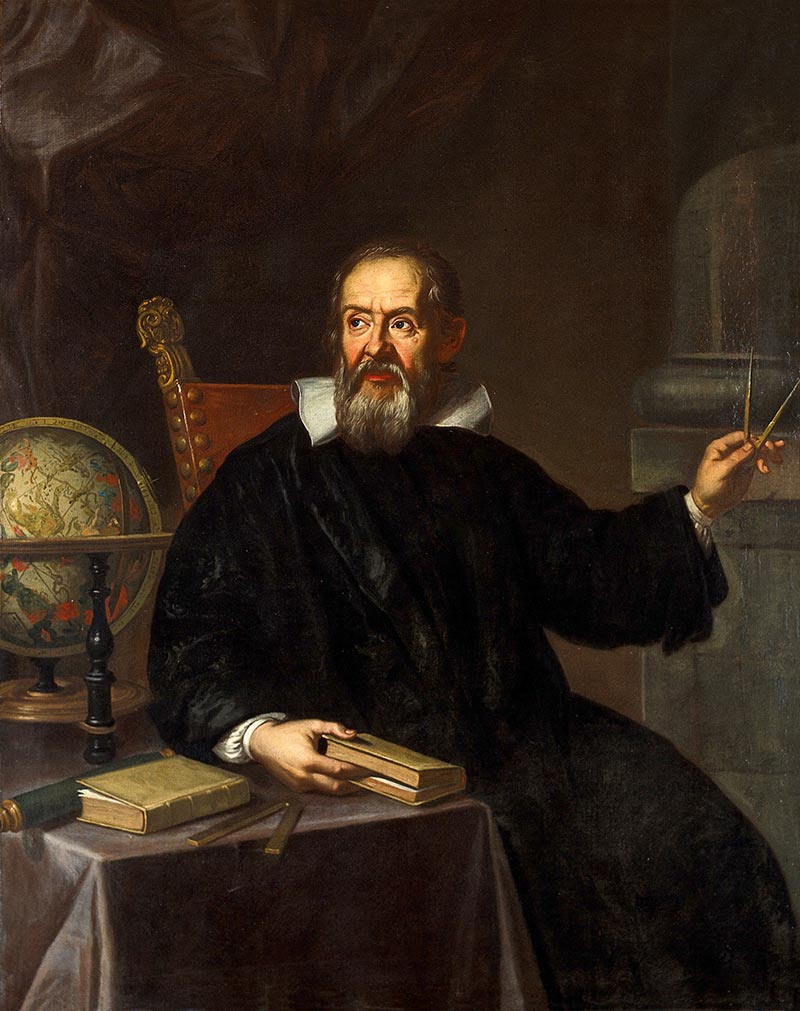

Italian astronomer, physicist and engineer Galileo Galilei (1564-1642)

Milton’s Puritan convictions took immediate wings with written tracts against prelacy and Erastianism, and he taught in a school. The thirty-five-year-old poet and pamphleteer married a sixteen-year-old bride, who deserted him within thirty days. They reconciled and had four children together, although Milton published several controversial pamphlets arguing that divorce was biblical, a position for which he was roundly condemned. Among his most admired works was Areopagitica, a treatise on liberty which identified him with the views of Parliament in the ongoing controversy with King Charles I. Milton supported the Commonwealth and republican ideals regarding the King’s accountability to the people. Milton also agreed with and justified the regicide of Charles, in disagreement with his Scottish brethren. Parliament hired him in 1649 as a propagandist and correspondence secretary to foreign powers.
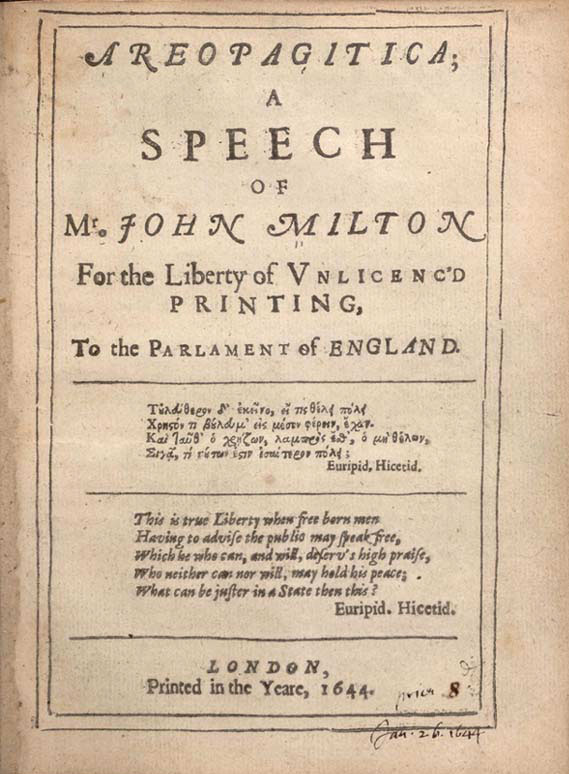

First addition title page of Miltson’s Areopagitica from 1644

Although Milton wrote, often in Latin, polemical defenses of the English revolt against the king and in justification of Parliament’s actions, his eyesight declined until he was totally blind by 1652 (age 44). He nonetheless continued writing poetry and propaganda, with great success, by dictation to an amanuensis. His greatest work, the blank-verse epic poem Paradise Lost and the follow up Paradise Regained were produced over a six-year period through dictation to copyists and to his own daughters.
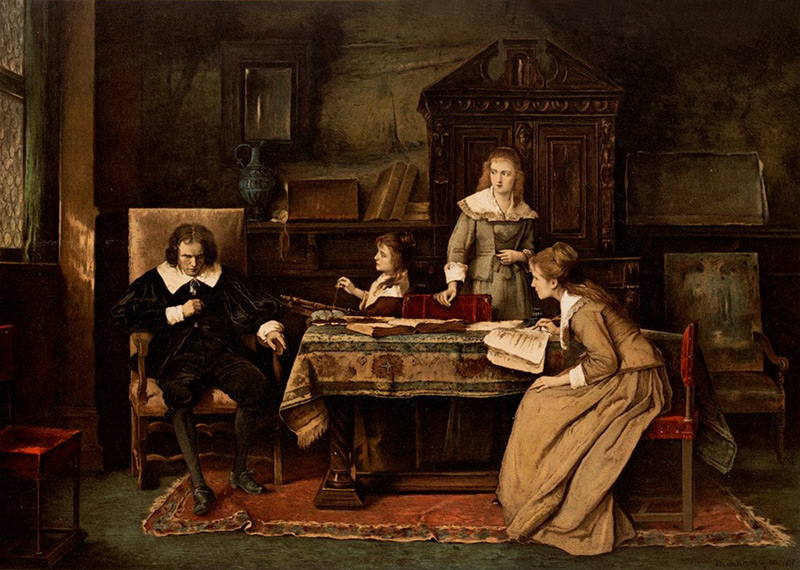

Having become totally blind by 1652, Milton is shown dictating Paradise Lost to his daughters

The collapse of the Commonwealth did not deter Milton from continued political writing against the monarchy and the new public sentiment that brought about its Restoration under Charles II.

As a supporter of the regicide, Milton would become a target of the new king, whose refusal to pardon anyone who had played any role in the execution of his father placed the blind poet in mortal jeopardy. His friends forced him into hiding when Charles arrived in England. They held a mock funeral for Milton on August 27, 1660. Charles II commented that he “applauded his [Milton’s] policy in escaping the punishment of death by a reasonable show of dying,” but insisted on a public spectacle nonetheless by having Milton’s writings burned by the public hangman.
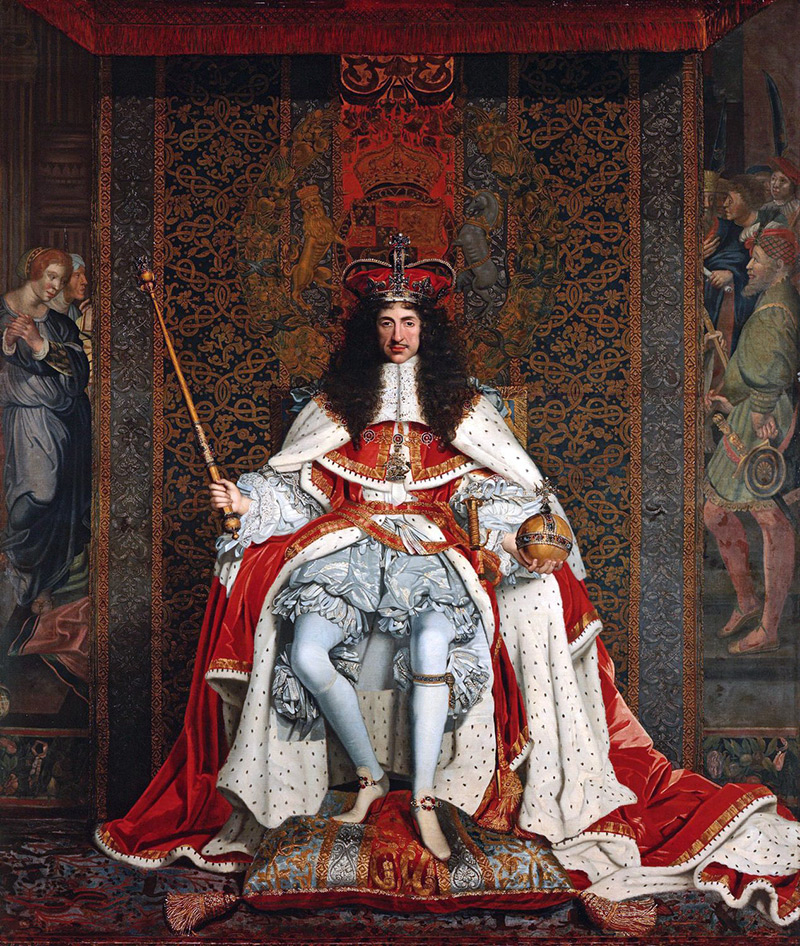

The coronation of King Charles II of England (1630-1685)

The Puritan poet reemerged after a general pardon, was imprisoned, and released, likely due to political friends in high places. He died, aged sixty-four in 1674. His theological views were sometimes considered heterodox by the best Puritans and his political views came close to getting him executed. His poetry, however, has endured as some of the greatest works in the English language, especially Paradise Lost; much of his greatest work was written during his twenty-two years of blindness.
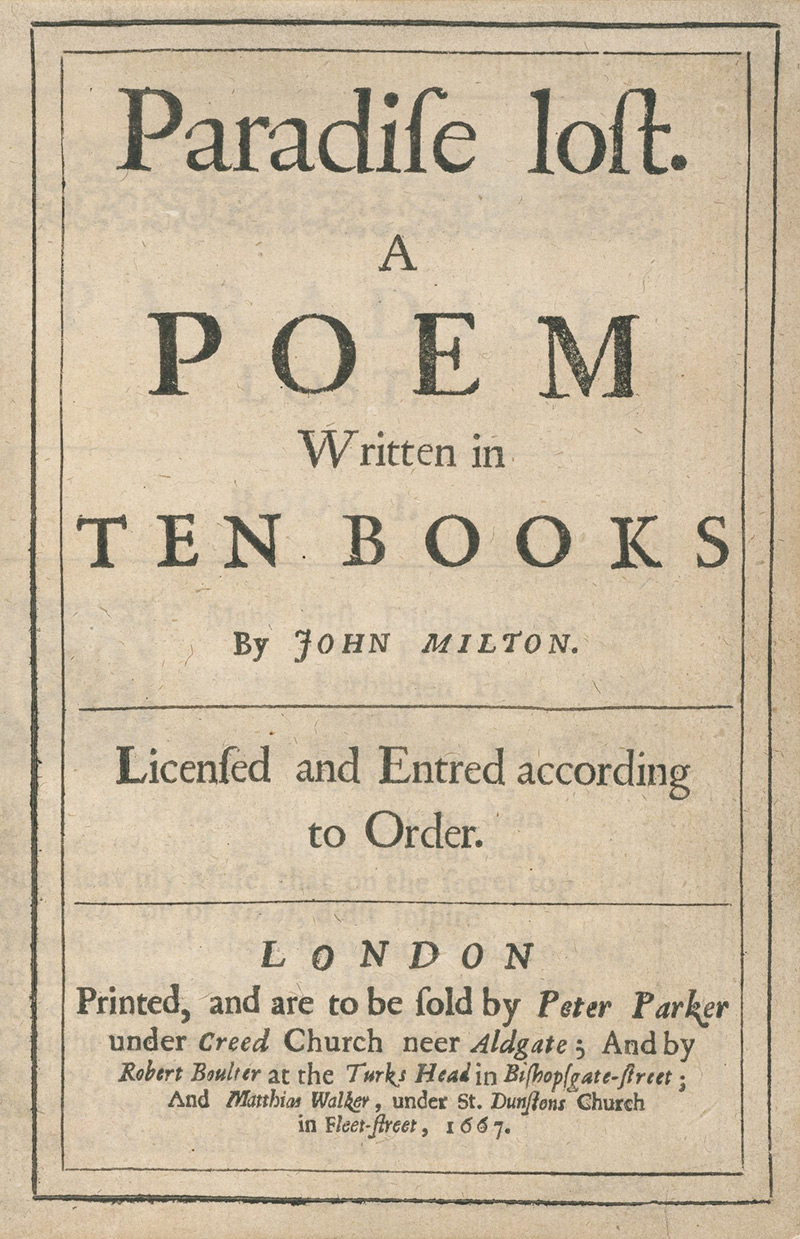

Title page from Milton’s Paradise Lost, 1667

Leon Trotsky Assassinated, 1940

2019-08-19T18:36:35-05:00August 19, 2019|HH 2019|

“All they that hate me love death.” —Proverbs 8:36b

Leon Trotsky Assassinated, August 20, 1940

The names most commonly associated with the Bolshevik Revolution that overthrew the Czar of Russia, Nicholas II, are the Russian revolutionary Vladimir Lenin and the Ukrainian “Iron Man” Joseph Stalin. Very few of their comrades survived both the revolution and its consolidation. Just as well-known at the time, and the man most identified with the creation of the Soviets, an architect of the terrorism of Communist policies, and one of the longest surviving of the revolutionaries was Leon Trotsky. He garnered many followers in the United States and England, and his memory has been kept alive by socialist ideologues ever since his assassination by secret agents of the Soviet Union in 1940.
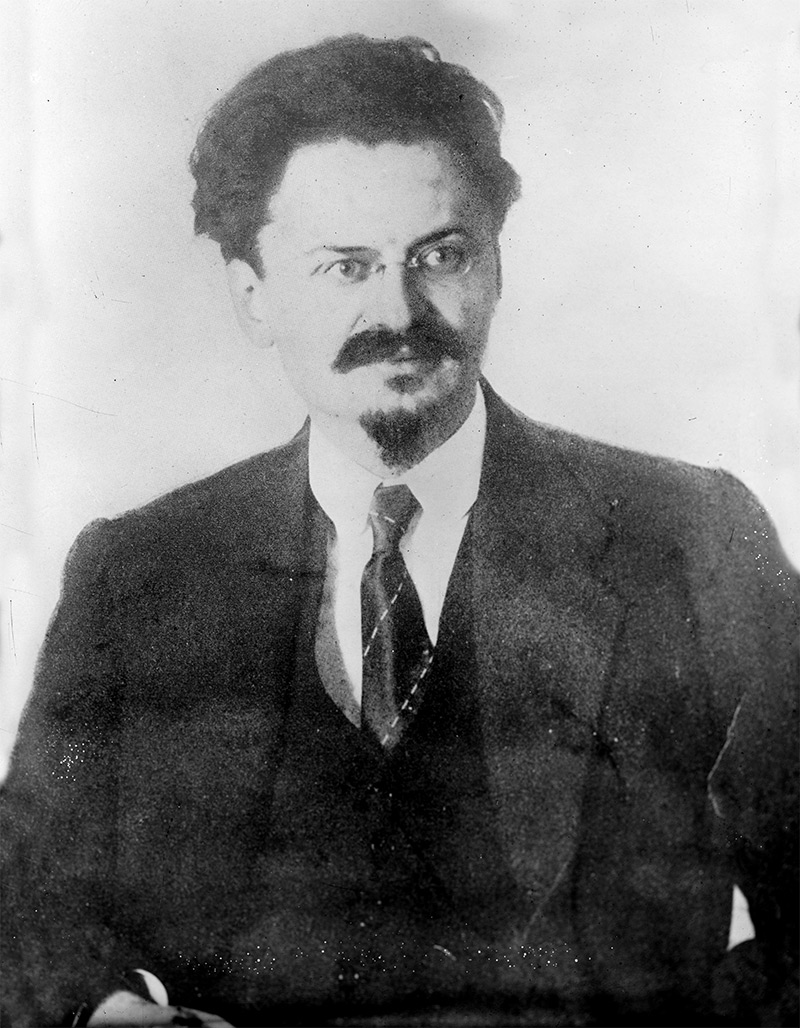
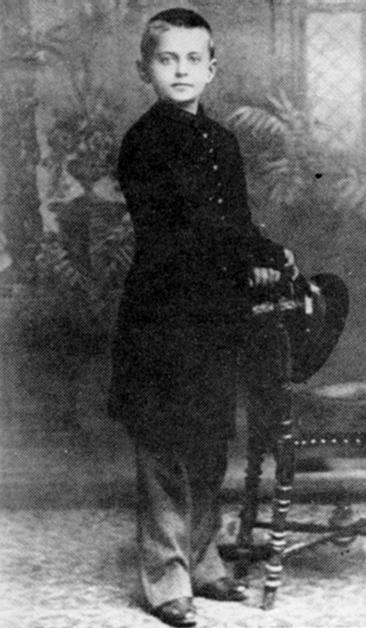
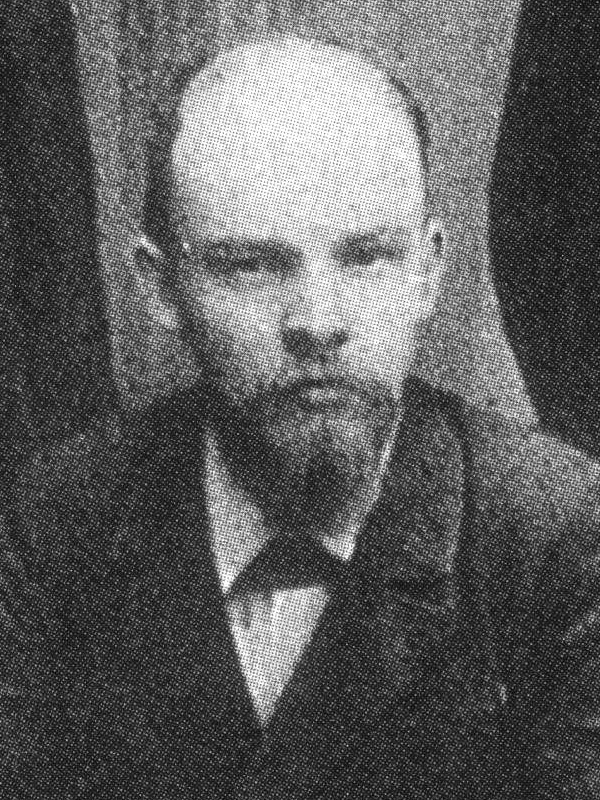
Leon Trotsky, born Lev Devidovich Bronstein (1879-1940)

Born Lev Devidovich Bronstein in 1879, on a remote farm of a well-to-do Jewish family in the Ukraine, Trotsky attended school in the port city of Odessa, where he excelled in his pursuit of a mathematics degree. He got involved in political opposition to the Russian monarchy, and dropped his studies to support agrarian socialist populism. He converted to Marxism through the influence of the woman who become his first wife. His writing and agitation to organize radical students and industrial workers landed him in prison in 1898. He and his wife were exiled together to Siberia, and there had two children.

They all escaped from their Siberian captivity and Lev immigrated to London, changed his name to Leon Trotsky and joined with Lenin as a writer and theoretician of Russian Marxism. He also remarried. Eventually the Russian cell in London divided into two major factions, the Mensheviks and Bolsheviks. The latter group believed in violent revolution and close-knit, revolutionary cells. The Mensheviks tended to be more moderate and many of them thought revolution could be brought about by peaceful means. Trotsky supported the huge labor strikes in St. Petersburg and joined the local Soviet under an assumed name. Before long, he became the director. Arrested again and exiled to Siberia, Trotsky again escaped and made his way to London to continue support of revolution. He wrote for and supported Socialist parties in Switzerland and Germany while agitating for radical change in Russia.


Lev Devidovich Bronstein at age 8


Vladimir Ilyich Ulyanov, best known by his alias Vladimir Lenin (1870-1924) in 1897


Joseph Vissarionovich Stalin (1878-1953) in 1902

Although living in New York City when the Czar was overthrown in 1917, Trotsky returned to Russia (after arrest by the British in Canada). Joining the Bolsheviks, Trotsky became the “People’s Commissar” and took a strong hand in the new Communist state’s foreign policy. There was great opposition to the Bolshevik takeover by Mensheviks, Socialist Revolutionaries, Czarists, and Western countries. Trotsky built up the “Red Army,” from 800,000 to 3,000,000, turning them into a well-disciplined and efficient fighting force, which fought and won a protracted civil war against the more numerous, but totally non-unified, sixteen factions and foreign troops of the “White Army,” including the United States.

The Communists “translated their revolutionary faith into practical instruments of power.” They nationalized banks and industry, requisitioned the food sources from the peasants, and used terror to annihilate resistance and consolidate centralized government. The Central Committee of the “Soviet Union” fought among themselves over strategies of control and expansion.


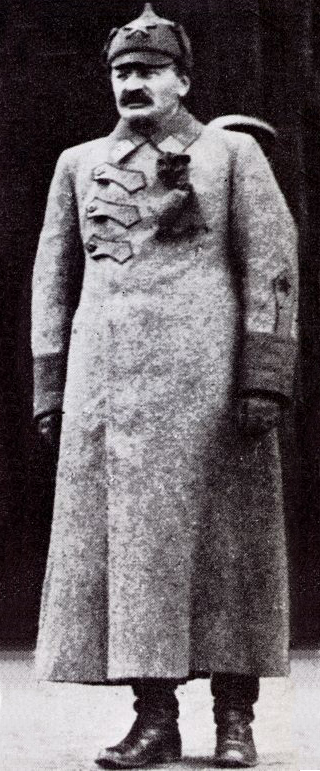
Trotsky in 1918 in military garb, including the budenovka hat, symbol of the Red Army

“Trotsky bears a great deal of responsibility both for the victory of the Red Army in the civil war, and for the establishment of a one-party authoritarian state with its apparatus for ruthlessly suppressing dissent… He was an ideologist and practitioner of the Red Terror. He despised ‘bourgeois democracy’; he believed that spinelessness and soft-heartedness would destroy the revolution, and that the suppression of the propertied classes and political opponents would clear the historical arena for socialism. He was the initiator of concentration camps, compulsory ‘labour camps,’ and the militarization of labour, and the state takeover of trade unions. Trotsky was implicated in many practices which would become standard in the Stalin era, including summary executions.” —Historian Vladimir Chernyaev


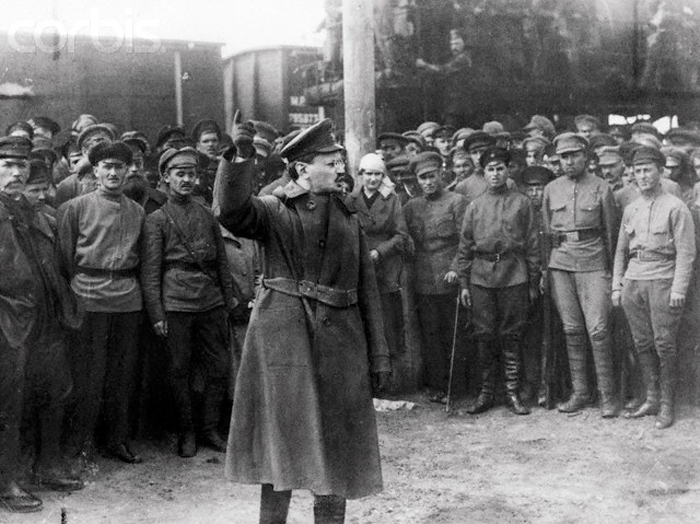
Leon Trotsky addresses soldiers of the Red Army during the Polish-Soviet War

With the deteriorating health of Lenin, he and Trotsky sought to devise a strategy that would make Trotsky the General Secretary of the Party. Stalin formed a “troika” to insure his own control of the Party when Lenin died. After the death of Lenin, Trotsky remained the most popular and powerful leader of the Communist party, though Stalin’s factions never stopped plotting his downfall. A veneer of solidarity kept the peace until 1927 when Trotsky was expelled from the Soviet Union, first into exile in Kazakhstan, then to Turkey. His followers all publicly admitted their mistaken allegiance to Trotsky, and most of them were murdered during the purges of 1936-38.

Trotsky lived in a number of different countries who offered him asylum, finally settling in Mexico, where he met with American and Chinese Communists to carry the Revolution to their respective nations. After several failed attempts, Stalin’s assassins finally caught up to Trotsky. The NKVD hitman Ramon Mercader mortally wounded him with an ice axe at his Mexico City home.


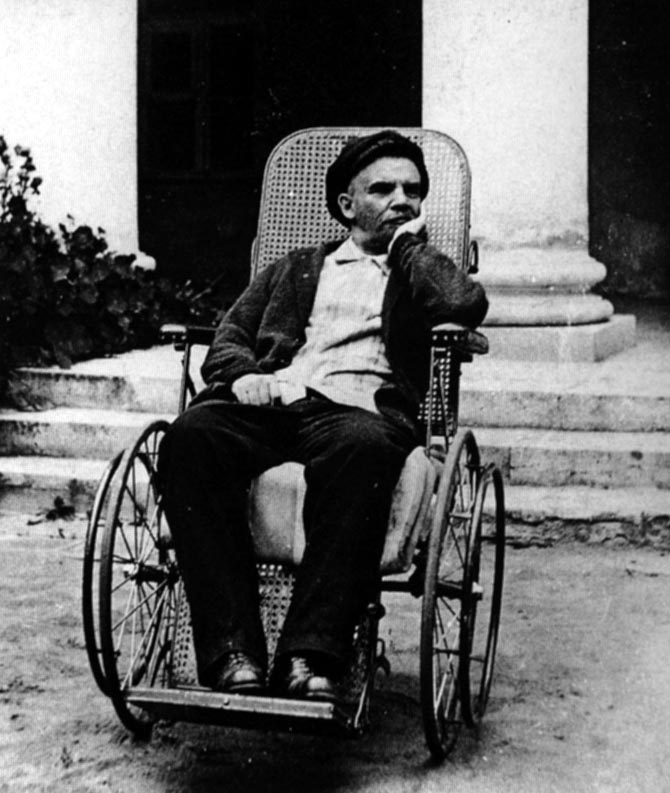
A wheelchair-bound Vladimir Lenin in 1923


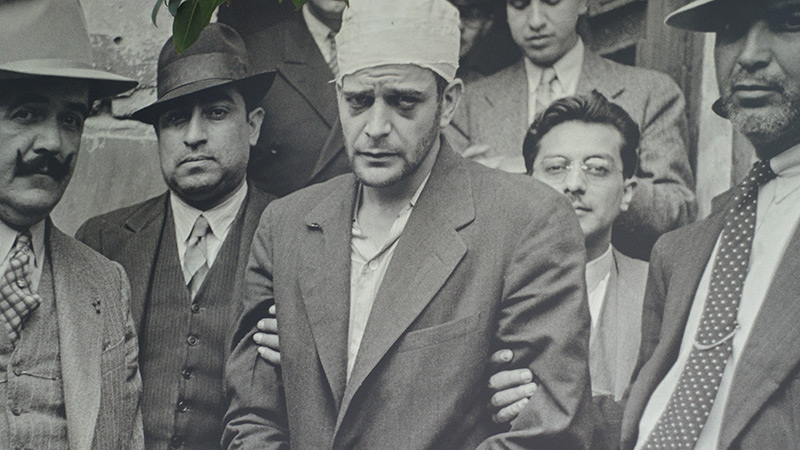
NKVD hitman Ramón Mercader (1913-1978) is arrested in Mexico City following his assassination of Leon Trostky, August 20, 1940

Leon Trotskys’s writings and legacy did not die with him and his admirers continued to advance his ideas in the United States and other countries. His home in Mexico is now a museum run by his grandson, but his memory lives in the deep shadows of the grave with those of his comrades and opponents who await Judgement Day for their atheism, their revolutionary crimes, and their rejection of Christ.

The Birth of David Crockett, 1786

2019-08-17T20:22:18-05:00August 12, 2019|HH 2019|

“I have set watchmen upon thy walls, O Jerusalem, [which] shall never hold their peace day nor night: ye that make mention of the LORD, keep not silence…” —Isaiah 62:6

The Birth of David Crockett, August 17, 1786

“Be sure you are right, then go ahead!”

The Crocketts were primarily of French Huguenot descent. They eventually made their way to western Carolina and, like thousands of others of their countrymen, settled in the mountainous frontier in times of bitter conflicts. Most of Crockett’s family were massacred by Indians, but David’s father, John, was away on militia duty and missed out on the raid. During the War for Independence, John Crockett joined his fellow over the mountain men at the Battle of King’s Mountain and returned home only to move further west into the area that became part of the state of Tennessee. David grew up in the rough and tumble world of economic difficulty, hard work, and manhood by the age of twelve.


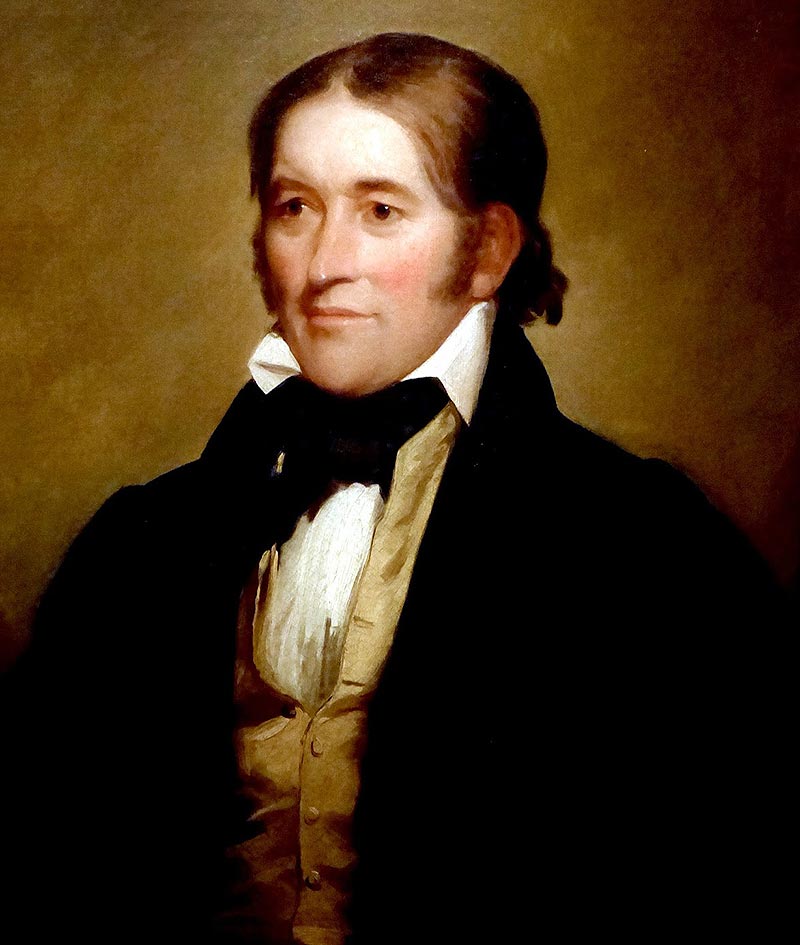
David Crockett (1786-1836)

David held jobs that forced him to travel extensively, primarily in Virginia and Tennessee. He helped his father pay off debts and, on the day before his birthday in 1806, he married Polly Finley, with whom he sired two boys and a girl. After the death of his wife, he married a widow with two children, and had three more of his own, thus eventually becoming the father of eight, a typical frontier family.


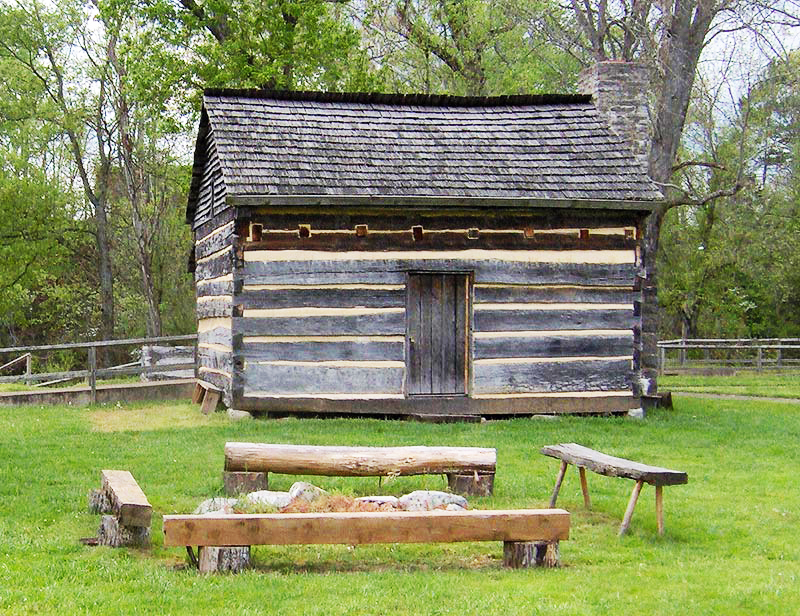
A replica of John Crockett’s family cabin where Davy Crockett was born at the Davy Crockett Birthplace State Park

War came to Tennessee in 1812 with the Fort Mims massacre in Alabama, followed by General Andrew Jackson’s call for volunteers to avenge the victims and protect Tennessee. As the saying went at the time, “you don’t tell a Tennessean what the fight is about, just where it is” and, true to form, the frontiersmen gathered to settle scores with the Creek Indians, a war that would greatly advance the fortunes of General Jackson. David Crocket joined in and became a respected leader himself, so much so that he was appointed as a justice of the peace and Lieutenant Colonel of militia after the war. In 1821 Crockett was elected to the state General Assembly. Three principles seem to have been at the center of his political philosophy: opposition to Andrew Jackson and candidates supported by him, advocacy for the interests of the poor on the frontier, and rejection of proposals contrary to the Constitution, whether state or federal.


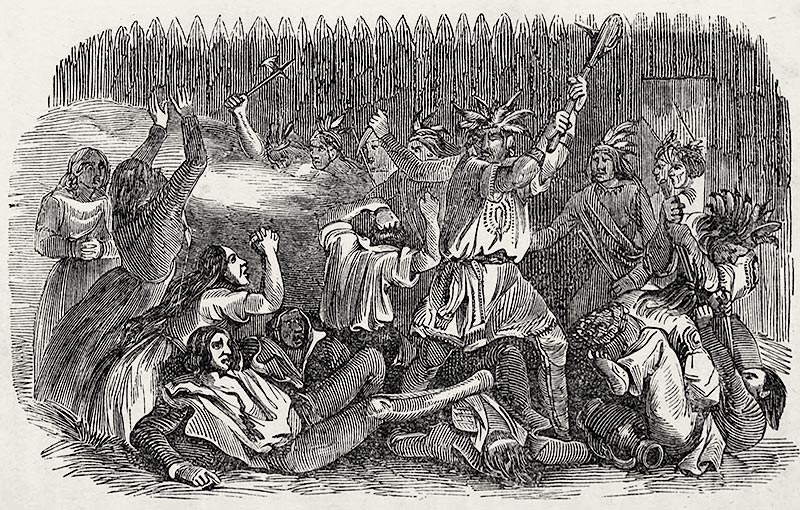
Fort Mims Massacre (August 30, 1813) about 35 miles North of present-day Mobile, Alabama

Crockett had moved so often and lived in so many different counties, he was known throughout his region. Never particularly successful in business or farming, he had well-honed skills at hunting, telling stories, and effective frontier oratory, the latter which he employed in his legislative positions in Tennessee and in the United States House of Representatives. He was elected to serve in Washington, D.C. for two terms, 1827-1831. Crockett was the only Tennessee delegate to vote against Jackson’s Indian Removal Act, which cost him his seat in the U.S. House but earned a letter of thanks from Cherokee Chief John Ross. He was returned to the House for one more term in 1833. He published an autobiography in 1834.

The Texas Revolution inspired men young and old across the South, especially in Tennessee. Hundreds of families headed west, leaving the letters GTT scrawled on the walls of their cabins—Gone To Texas. Ex-Congressman David Crockett, fed up with politics and attracted to the cause of Texas Independence, and eager for a fresh start for his family in the seemingly limitless vista west of the Mississippi, left his family to await his call, and travelled to the scene of the action, with thirty fellow Tennesseans, “armed to the teeth.”


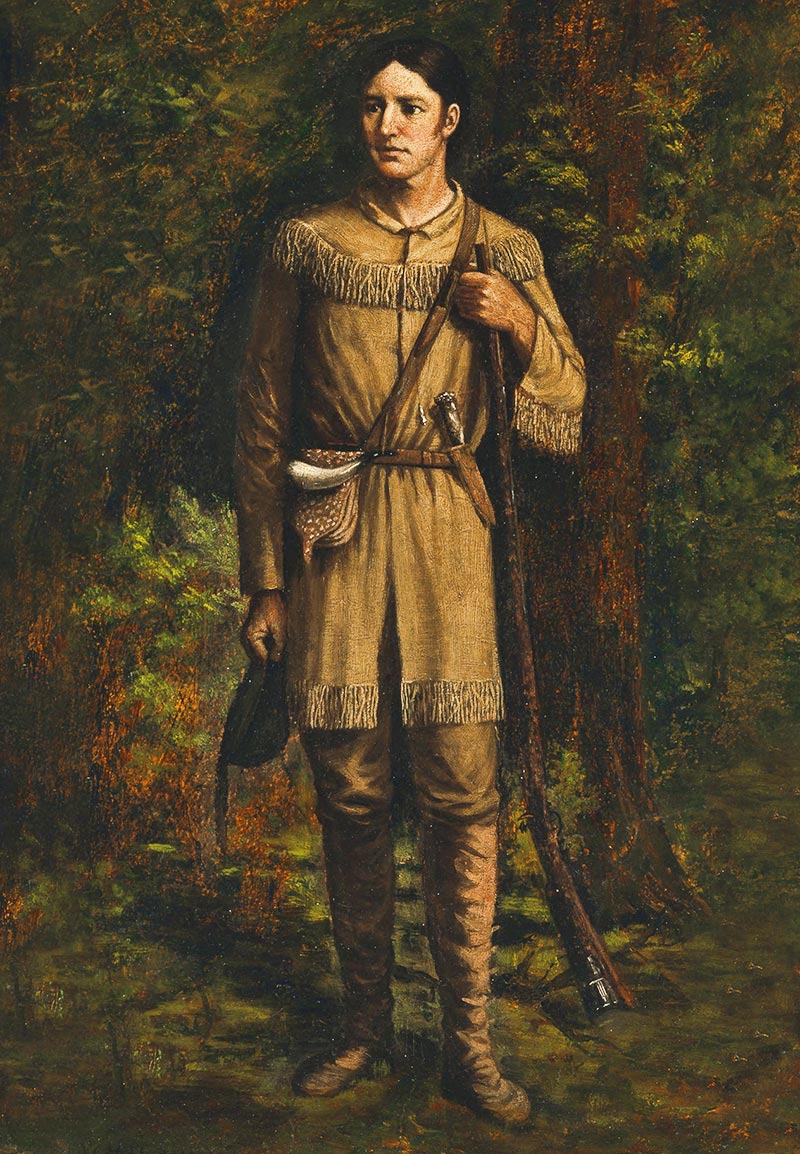
Davy Crockett, by William Henry Huddle, 1889

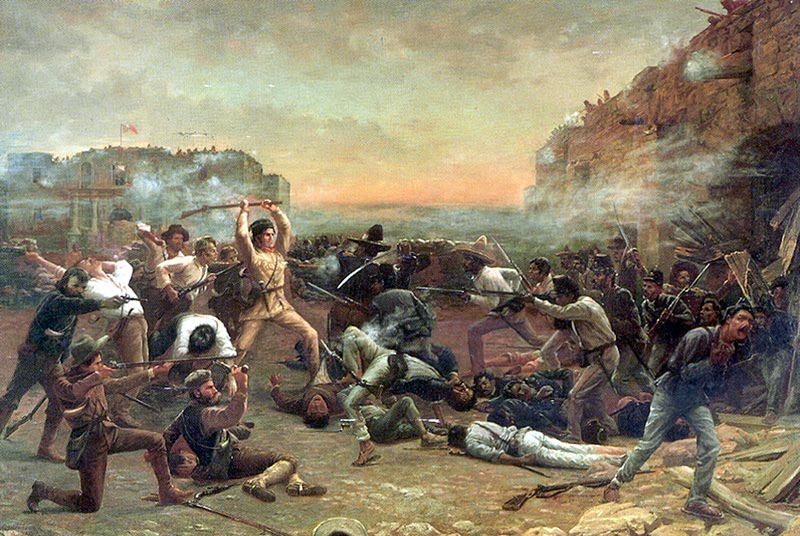
On January 14, 1836, David Crockett signed an oath in Nachedoches, Texas, swearing allegiance to the Provisional Government of the Republic of Texas, and with five other men, made his way to San Antonio de Bexar, where a handful of Texians had seized an old Spanish mission called the Alamo, to await reinforcements or a Mexican army of retaliation. Crockett arrived on February 8, and the army of General Antonio de Santa Ana on the 23rd, sealing the doomed garrison inside their adobe walls. A siege ensued which lasted until March 6, when the Mexican General decided to force the issue and attacked with overwhelming force. There are many books and speculative accounts concerning the fall of the Alamo and the role played by David Crockett. Popular movies and songs have dramatized the ninety-minute fight, creating in the mind of the American public an image of what might have occurred. David Crockett’s role in the battle and last moments in combat are the subject of much speculation and disagreement. What is certain is the willingness of the defenders, or most of them, to die for Texas independence, a goal achieved in the months ahead by the efforts of General Samuel Houston.


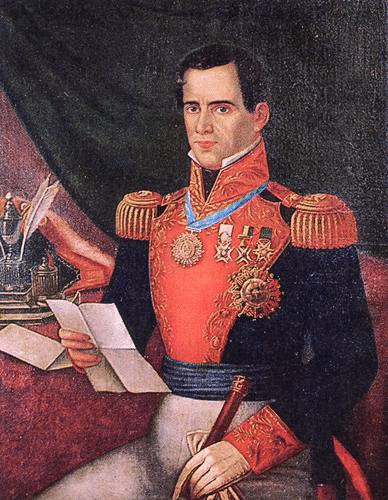
Antonio López de Santa Anna (1794-1876)


The Fall of the Alamo or Crockett’s Last Stand, by Robert Jenkins Onderdonk

While the current interpreters of the Alamo are interested in continuing accuracy, if not for storytellers and parents that know the duty to keep our history, with all its tales of courage and heroism and providence, David Crockett could disappear from our collective memories, or be at risk of becoming one of our greatest villains. This is why we exist, to tell the tales and equip you to do the same.


  1. The Autobiography of David Crockett, by David Crockett
  2. Three Roads to the Alamo, by William C. Davis

Cane Ridge Revival, 1801

2019-08-05T15:24:53-05:00August 5, 2019|HH 2019|

“Not by works of righteousness which we have done, but according to his mercy he saved us, by the washing of regeneration, and renewing of the Holy Ghost; which he shed on us abundantly through Jesus Christ our Savior;” —Titus 3:5,6

Cane Ridge Revival, August 6-12, 1801

There were still a few people living who remembered the “Great Awakening” of the 1740s when Jonathan Edwards, George Whitfield, Gilbert Tennant, Samuel Davies and other preachers witnessed the “outpouring of the Holy Spirit” in America. Since that time, the United States had come into being, George Washington had recently died, and multiple thousands of Americans had moved westward into Kentucky, Tennessee, and the Ohio Valley. Most church denominations had been unable to keep up with hardy frontiersmen due to a lack of men with formal theological training and the hardships of pioneer travel and settlement. Lack of spiritual sustenance or fellowship and the opportunity to hear preaching after years of benign neglect brought several thousand frontier people together at Cane Ridge, Kentucky in 1801. The spiritual dry spell in America was about to end in dramatic fashion, and prompt a new religious awakening that would last for decades, strike many different geographical areas, and spawn a plethora of counterfeit “revivals” and cults.


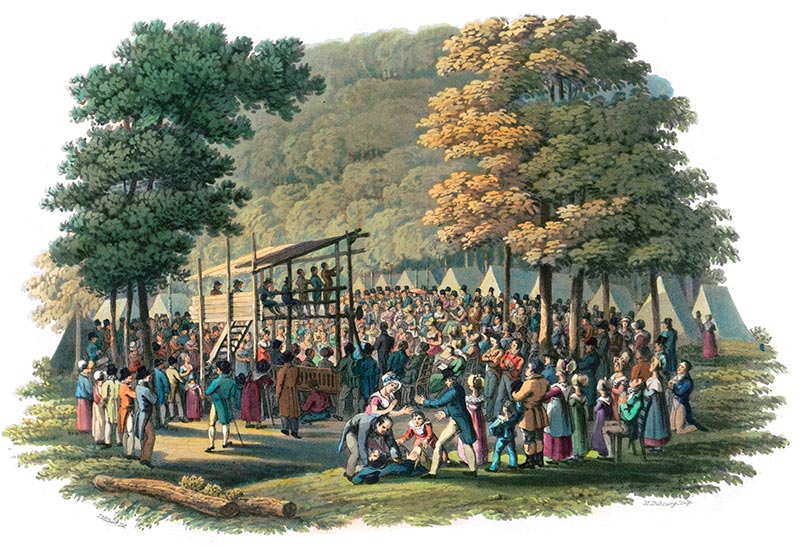
1819 print of a Methodist camp meeting in North America

Small congregations of Presbyterians, Baptists, and Methodists were scattered throughout the region. Some of the Scots-Irish and Scottish immigrants from Virginia and North Carolina had been able to retain some of their religious tradition, but vital “heart-religion” was not as apparent as in generations past. One of the practices that came from Scotland was known as “Holy Fairs,” more usually called “camp meetings” in America, in which multiple congregations would gather for a week or so to celebrate the sacrament of the Lord’s Supper. One such occasion called by frontier pastor James McGready, attracted eighteen Presbyterian and an unknown number of Baptist and Methodist preachers to Cane Ridge in Bourbon County Kentucky, in August of 1801. While there had been revivals of vital spiritual awakening in the late 1790s, no one had ever witnessed the scale and impact of what occurred on that occasion.


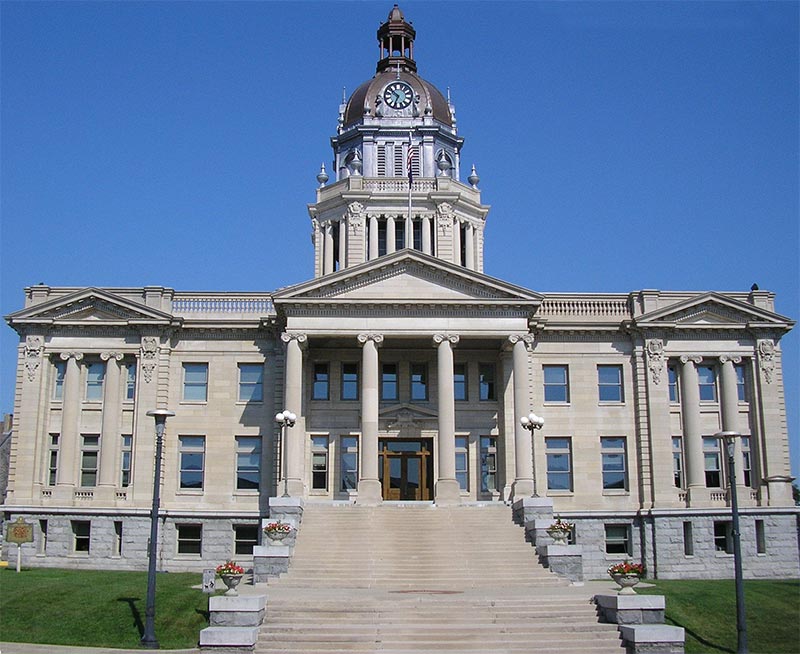
Courthouse of Bourbon County, named in honor of the French House of Bourbon in gratitude for King Louis XVI’s assistance during the American War for Independence


The Holy Fair, by Robert Bryden

People travelled many miles to attend the preaching and communion—some estimated between 20-25,000 attendees arrived to camp there for a week, till they ran out of food. The population of the Kentucky capital in Lexington was less than 2,000. Street after street of wagons and tents, full of families hungry for the Word of God, listened intently to the Gospel preaching. None who attended ever forgot the effect on thousands of hearers. Emotions ran high and physical reactions to conviction of sin took various forms among many. It was not uncommon for people to faint or fall into a stupor. Others danced and shouted, while some laughed with the relief from sin. Altogether, the Cane Ridge “revival” resulted in the founding of numbers of new churches of all three denominations. While their theology differed in various ways, the proclamation of the Gospel had a unifying effect during the awakening.


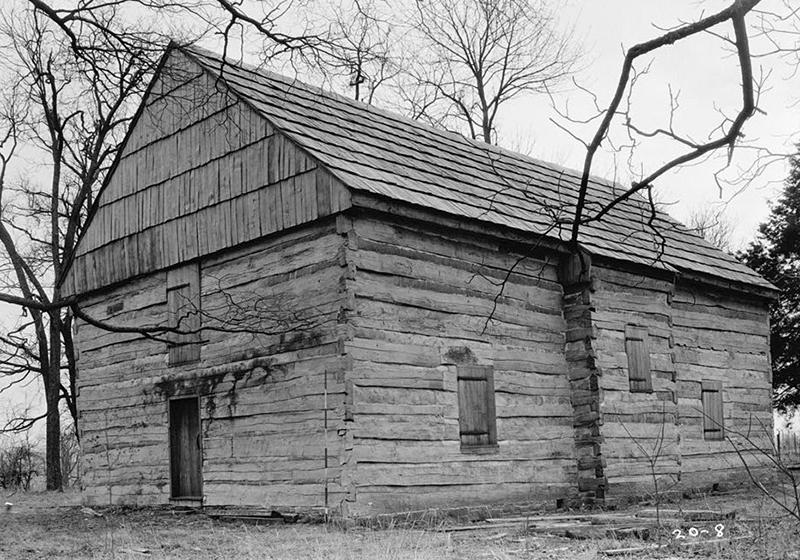
Cane Ridge Meeting House in 1934, the site of the revival in 1801 hosted by the local Presbyterian congregation that met in the building

The spiritual impact of Cane Ridge extended to other states, both west and east. Revivals in New York, including New York City, Pennsylvania, Ohio and across the South, occurred in following years. While the Presbyterians were initially the most active and successful church planters with men trained at Princeton and Hamden-Sydney, by 1820 the Methodists and Baptists had streaked past the “confessional” churches in adherents on the frontier, since their ministers, initially, needed only “feel the call” and not be formally educated in the original biblical languages, hermeneutics, or systematic theology. Their hardiness and appeal to the individual attracted many who lived with uncertainty and death daily. With the revivals came new denominations, founded by former Presbyterians and Baptists, as in the “Christian Church” of Alexander Campbell and Barton W. Stone, or the Cumberland Presbyterians. Cults, such as Mormons, Spiritualists, and Jehovah’s Witnesses evangelized alongside the traditional groups. A radical change from the historic Calvinism of the Scots and Scots-Irish produced a “revivalism” by rejecting the doctrines of Grace and replacing them with a more man-centered gospel, manifested in innovations in evangelistic meetings. The “Second Great Awakening” is a subject broad and deep with many historic convolutions, some of which survive to this day. Historians trace many of the “reform movements” of the 19th Century to the religious ferment set loose.


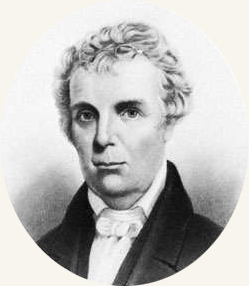
Barton W. Stone (1772-1844), American evangelist during the Second Great Awakening (c. 1790-1840)

Cane Ridge has gone down in history as the largest spiritual awakening, and perhaps the most far-reaching on the frontier, in American history.


  1. Revival and Revivalism: The Making and Marring of American Evangelicalism 1750-1858, by Ian Murray
  2. Holy Fairs: Scotland and the Making of American Revivalism, by Leigh Eric Schmidt
  3. A Religious History of the American People, by Sydney Ahlstrom

Go to Top